Getting a phone number and SIM in Egypt
Get an Egyptian number early so your bank, your school and delivery drivers can reach you. Here's how the carriers work, what ID they want, and when an eSIM makes sense.
AbroadPin team7 min read
Contents
A local line is one of the first things to sort out in Egypt, ideally in the same week you land. Your bank, your school's HR office, landlords and couriers all expect an Egyptian number, and the phone you use for it is the phone you'll use for almost everything else. The part that takes thought is timing: some options open up only once your residence permit is issued, so many teachers start simple and switch later. For pay, the work permit and who hires, see the main guide to teaching in Egypt.
Why an Egyptian number matters
Plenty of daily life runs through your phone number rather than an app login or an email address:
- Your bank. Egyptian banks send one-time passwords and alerts by text, and InstaPay checks that the number on your phone matches the one your bank holds. Our guide to opening a bank account in Egypt explains why it's worth getting the SIM first.
- School and paperwork. HR will put a local number on your file, and clinics, landlords and government offices usually confirm things by call or text.
- Deliveries and rides. Couriers and drivers ring when they're at the gate or the corner. Doing that on a roaming foreign number gets expensive fast.
- Colleagues and parents. School messaging groups are often built around local numbers, so you'll want yours on the list from your first week.
The carriers
Egypt has four mobile networks: Orange, Vodafone, Etisalat and WE, the last of which belongs to Telecom Egypt [2]. All four sell voice, mobile internet and 4G service [2]. The market is large: mobile subscriptions reached 106.2 million in December 2023 [2].
The choice usually comes down to price, which carrier your colleagues use, and how easy the carrier's shop and app are for you. Ask at school before you buy. If most staff are on one network, calls and bundles within that network can work out cheaper, and someone can walk you through the app in English.
Your first days: a prepaid line

Prepaid is the usual start for a new arrival. You pay up front, you can't run up a bill, and you aren't tied to a contract if your plans change in the first months.
- Go to the carrier's own shop. Carrier shops sell new lines and set them up for you. Buying there also means the line is registered in your own name, not a reseller's.
- Bring your passport. Lines are registered to a named person, so expect the staff to take your details and check your ID.
- Pick a plan or a bundle in the shop. Vodafone sorts its plans into Red, Flex and a prepaid range called El-Kart, which it describes as having its lowest minute price [3]. Orange's range includes Alo, Kart El Kebir bundles, FREEmax, Ogold and Premier [4].
- Test it before you leave. Make a call, send a text and load a web page while you're still at the counter.
- Write down the basics. Note your new number, the plan name, how to check your balance and how to top up.
eSIM: when it works for you
An eSIM saves a physical card, and it lets your Egyptian line and your home number sit side by side on one phone. Before you fly, check that your phone is unlocked and supports eSIM.
Orange's eSIM page sets out how it works there [1]:
- Who can get one. New and existing customers can get an eSIM, and for foreigners the page asks for a valid residence [1]. So if you've only just arrived, start with a physical SIM and convert once your residence permit is issued.
- Where. You can swap an existing line to an eSIM in the Orange Max it app, but a brand new eSIM line, moving an eSIM to another phone, replacing a lost one and going back to a physical SIM all need a visit to an Orange shop [1].
- What it costs. Changing a physical SIM to an eSIM costs EGP 300, moving from one eSIM to another also costs EGP 300, and a new eSIM line costs EGP 350 [1].
- How you pay. In the app you can pay by credit card or from an Orange Cash wallet; otherwise the fee comes off a prepaid balance or goes on a Premier bill [1].
- How many fit on a phone. A phone can store up to 10 eSIM profiles, but only 2 can be active at the same time, depending on the handset [1].
The app swap asks you to scan your ID front and back and to enter your maternal grandfather's name as a check [1]. If that step doesn't work with your documents, do the swap in a shop instead.
What plans cost
The carriers sell most plans through their apps and shops, and the plan pages we read on 5 November 2026 didn't print monthly prices for their main bundles [3][4][5]. So check the price in the shop or in the carrier's app on the day you buy, and ask whether it includes tax.
What the pages do show is how a prepaid tariff is put together. Orange's Alo plan, for example, charges a flat rate for each minute, text or megabyte, includes a daily WhatsApp allowance with a fair use limit of 20 MB, and lets you pick up to 3 favourite numbers for EGP 1 a month each [5]. Existing prepaid users can move to it by dialling #100# or #0#, calling 400 or using the app [5].
When you compare offers, ask these questions in the shop:
- How long does the bundle last before it has to be renewed?
- Does it renew automatically from your balance, or do you have to buy it again?
- What happens when the data runs out? Some plans slow down, others start charging per megabyte.
- Can you share your connection as a hotspot for your laptop?
If you'll be doing lesson planning or online tutoring at home, a fixed home line may suit you better than a large mobile bundle. MyLifeElsewhere puts a 50 Mbps or faster home connection at EGP 786.06 a month in Cairo and EGP 745.16 in Alexandria [6].
The ID rules for registering a number
- One person, one record. Your line is linked to the ID you showed when you bought it. Don't lend it, and don't use a line registered in someone else's name, because the line stays the responsibility of whoever it's registered to.
- Residence matters. Some services, including Orange's eSIM, ask foreigners for valid residence [1]. Keep your residence permit current and show the new one to your carrier when it's renewed.
- Phones from abroad. Egypt has its own rules on registering mobile phones brought into the country and on the duty owed on them. Check the current rules with Egyptian customs or your carrier before you fly, and keep the receipt for any phone you buy.
- Lost phone. Report it to your carrier straight away so the line can be blocked. At Orange, a lost or deleted eSIM is replaced in a shop [1].
Moving to a longer term plan
Once your residence permit is in your hand, this is a sensible order:
- Decide whether to keep the same number. Your bank, school and InstaPay all know it by now, so staying on it saves a lot of updating.
- Ask about a monthly plan in the shop. Bring your passport and residence permit, and ask about the contract length and any fee to end it early.
- Convert to an eSIM if you want one. At Orange that costs EGP 300 in the app [1].
- Update everyone if the number changes. Tell HR and your bank, then update InstaPay and your delivery apps.
Keeping your number from home
Your home number is often what your bank, tax office and two-step logins back home depend on. A few ways to keep it alive:
- Ask your home carrier before you leave for the cheapest plan that keeps the line open, and whether it can become an eSIM.
- Run both lines on one phone. A phone that takes a physical SIM and an eSIM can hold your Egyptian line and your home number together.
- Turn off data roaming on the home line. Leave it on for calls and texts only, so security codes still arrive without surprise charges.
- Move logins to an authenticator app wherever your bank and email allow it, so a lapsed home number can't lock you out.
When you leave Egypt for good, move your bank and app logins off your Egyptian number before you let the line go.
Ready to look for a post? Browse teaching jobs in Egypt and contact the schools directly.
Sources and photo credits
- 1.Orange Egypt, eSIM (read 5 November 2026)
- 2.Wikipedia, Telecommunications in Egypt (read 5 November 2026)
- 3.Vodafone Egypt, Rate plans (read 5 November 2026)
- 4.Orange Egypt, Home page and tariff plan menu (read 5 November 2026)
- 5.Orange Egypt, Alo prepaid tariff (read 5 November 2026)
- 6.MyLifeElsewhere, cost of living in Alexandria vs Cairo (prices updated November 2026)
Photos
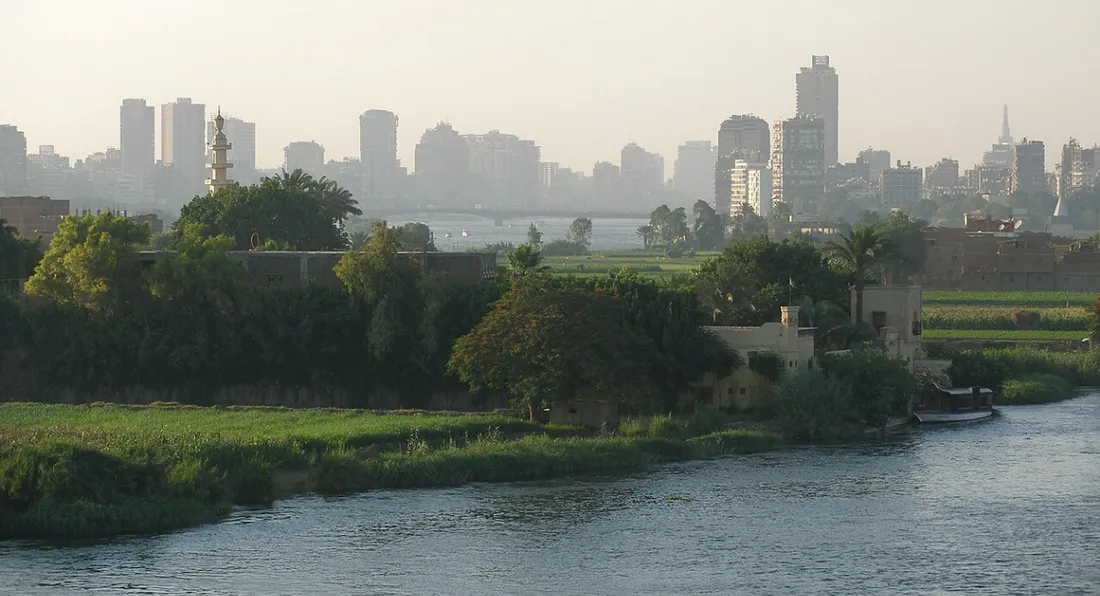
- Cairo's skyline across the Nile.: Vyacheslav Argenberg, CC BY 4.0, via Wikimedia Commons
- Outside Terminal 3 at Cairo International Airport.: Alensha, CC BY-SA 4.0, via Wikimedia Commons
Get new jobs in Egypt by email
One email a week with the jobs added since the last one. Free, with no account.
Nothing is sent until you open the link we email you. Choose a role, a pay level or daily emails
We use your address only to send the alerts you ask for, and every email has a one-click unsubscribe link. The privacy notice says how long we keep it, and the terms of use cover the alerts.
We check this guide again by February 3, 2027. Rules change, so confirm visa steps with the embassy and your school before you go. First published November 5, 2026. Spotted something out of date? Tell us. How we write these guides.