Opening a bank account in Mexico
Set up a Mexican bank account, debit card and phone transfers in your first weeks as a teacher. Here is the order the papers come in, what branches ask for, and how to manage until your salary has somewhere to land.
AbroadPin team7 min read
Contents
Banking in Mexico runs on one rule of thumb: residence first, account second. Rankia México says that if you're only in the country on a trip, you can't open an account [4]. The Rio Times found that the big branch banks rarely publish a route to a full account without a resident card, and that branches that bend on this are inconsistent [3]. So the visa and the INM card come first, and the main guide to teaching in Mexico walks through those. This page starts once that card is in your hand.
The order your papers come in
The Rio Times lays out the sequence that saves the most return trips: residency, then your CURP, then your RFC from SAT, then a bank appointment with originals and copies [3].
- Your resident card. This is the migratory document every bank list asks for. Some bank pages still call it the FM2 or FM3, the names of the old migration forms, so don't be thrown when you see them [1] [4].
- Your CURP. This is the population registry code, and The Rio Times describes it as 18 characters long [3]. Banamex only asks for it separately when your resident card doesn't already include it [2]. Rankia México notes it isn't strictly required by law, but banks often ask for it anyway [4]. If your INM process is still open, Infobae explains that foreigners who have started a stay procedure with INM can ask for a temporary CURP at an INM office [8].
- Your RFC. This is your tax number from SAT. BBVA's own guide for foreigners who come to work tells you to register with SAT as part of settling in [10]. Ask your school whether it needs your RFC for payroll, too.
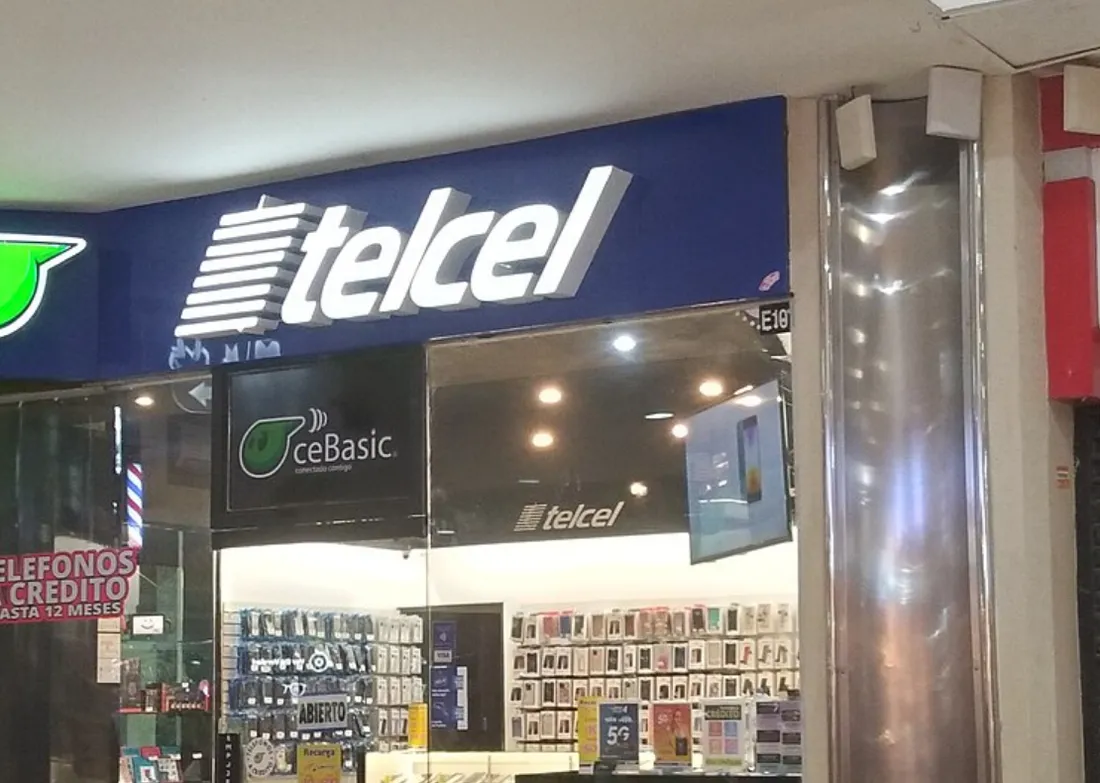
- A Mexican phone number. BBVA lists a Mexican mobile number among its requirements [1]. Get a local SIM before your bank visit.
- Proof of address. Banamex takes a utility bill, a lease or another bank's statement, dated within the last three months [2].
Which banks open accounts for foreign teachers
Most teachers end up at one of the big national banks. The Rio Times names BBVA, Banorte, Santander, Banamex, once called Citibanamex, and HSBC as the traditional banks foreigners deal with [3]. Two of them publish clear rules for foreign residents.
BBVA México
BBVA says foreigners don't need permanent residence to open an account with it [1]. Its list for foreigners asks for:
- a valid official ID, such as your passport [1]
- your migratory form [1]
- your CURP [1]
- a Mexican mobile number [1]
- recent proof of address [1]
- being over 18 and not already holding an active BBVA account [1]
You can open it in the BBVA México app, under "Quiero una cuenta", or at a branch, and BBVA says the app account is active within minutes [1]. You then pick up the physical debit card at any branch at no cost [1]. The account comes with a CLABE, so it can take transfers from other banks and from abroad [1].
Banamex Cuenta Base
Banamex's basic account is open to foreigners living in Mexico who are over 18 [2]. Bring your passport and migratory form, your CURP if the card doesn't show it, and proof of address from the last three months [2]. Banamex lists the account as having no commission, but it does charge a penalty if you fall below the required average monthly balance, so ask what that balance is [2]. The Cuenta Base is opened at a branch, not in the app [2].
The others
Rankia México lists Santander and Scotiabank among the banks with accounts for foreigners [4]. For Scotiabank it lists a valid passport, proof of address no more than three months old, proof of income and your migratory document [4]. Your work contract and a letter from the school usually cover the proof of income. Reader comments under the same article report refusals at some branches even with residence, so if one branch says no, try another [4].
Ask your school first
Before you choose, ask the school which bank it pays salaries through. If it pays into payroll accounts (cuentas de nómina) at one bank, opening there may be the simplest route, and colleagues can tell you which branch is used to foreign staff.
Account levels and deposit caps
Mexican accounts come in levels, and the level decides how much money can go in. Expansión gave these limits in February 2026, with the peso figures worked out at the end of January 2026 [5]:
| Level | Deposit limit | About, in pesos | What you show |
|---|---|---|---|
| 1 | 750 UDIS | 6,521.90 pesos | Name and date of birth |
| 2 | 3,000 UDIS | 26,087.63 pesos | Official ID and address |
| 3 | 10,000 UDIS | 86,958.77 pesos | ID, proof of address, tax certificate, phone and email |
| 4 | No limit | No limit | Level 3 papers plus extra checks, usually in person |
The UDI is an inflation-linked unit, so the peso amounts move over time [5]. Expansión says a level 2 account can be requested remotely [5]. That's handy, but a full salary plus rent money from flatmates can push you towards the cap. If you'll receive more than that, ask the branch for a level 3 or level 4 account, and bring your constancia de situación fiscal from SAT, since level 3 asks for it [5].
Fees to look for
Fees vary a lot by bank and by account, so ask for the fee sheet before you sign. Some things to check:
- Minimum balance penalties. El Cronista reported that Scotiabank charges 200 pesos when you don't keep a minimum balance of 4,000 pesos a month [9]. Banamex's Cuenta Base has no commission but still penalises a low average balance [2].
- Opening and card charges. El Cronista also reported BBVA raising an opening fee from 50 pesos to 62 pesos and Santander adding a 9.90 peso charge on its LikeU digital account, without saying how often they apply [9]. Ask your branch what yours costs.
- Transfers. Nu México's guide says many institutions don't charge for transfers made in the app, but tells you to check your own account's commissions [7].
Cards, transfers and payment apps
The CLABE and SPEI
Your account's CLABE is an 18-digit number that identifies it for transfers between banks [6]. Transfers run over SPEI, the Banco de México system, which Nu México says works 24 hours a day, 7 days a week [7]. You can also send to a 16-digit debit card number [6]. Give your CLABE to your school for payroll, and to anyone paying you for private classes.
DiMo: transfers by phone number
DiMo lets you send and receive transfers with a 10-digit mobile number linked to your account [7]. Expansión says linking is free through your bank's app, website or branch, and the bank must confirm it within one business day [6]. You can link a number to only one account per bank, though it can be linked at more than one bank [6]. New Banco de México rules oblige banks with level 2, 3 or 4 accounts to link a phone number when the holder asks, and give banks until 14 December 2026 to adapt their apps [6]. That makes paying a flatmate or a landlord much quicker once you're set up.
CoDi: paying by QR code
CoDi lets you pay by scanning a QR code in your bank app, and you register for it once, usually with a code sent by SMS [7]. Not every bank offers it, so check your app [7].
Mercado Pago and Nu
The Rio Times describes Mercado Pago as a practical option for payments and for receiving local transfers, but not the same as a full bank account [3]. It says Nu México may let you sign up online with fewer documents than a branch bank, but that you should check each product's rules for residents [3]. A Nu debit account comes with a CLABE in the app and can receive DiMo payments [7].
Getting paid before the account is open
Your first payday may arrive before your card does. A few steps help:
- Tell the school your timeline. Say when you expect the resident card and the account, and ask how it will pay you until then. Get the answer in writing.
- Keep your home account and card working. You'll need them for the first weeks and later for sending savings home.
- Use Wise for money from abroad. The Rio Times says Wise can handle incoming international transfers and multi-currency balances, though it isn't a Mexican bank account [3].
- Know what Mercado Pago can and can't do. It can take local transfers, but The Rio Times says local salary and rent usually need a SPEI account with a CLABE [3].
- Check the first payslip. Once the account is open, give the school your CLABE in writing and make sure the first payment arrives in full.
When the paperwork is done, browse the open teaching jobs in Mexico.
See jobs in Mexico
- Lower Primary Homeroom Teacher, August 2027 (The Wingate School, Mexico City)Mexico City
- Upper Primary Homeroom Teacher, August 2027 (The Wingate School, Mexico City)Mexico City
- Upper Elementary Homeroom Teacher, August 2027 (American School Foundation of Monterrey)Monterrey
- Lower Elementary Homeroom Teacher, August 2027 (American School Foundation of Monterrey)Monterrey
- High School English Teacher (from August 2027) (ASFM, Monterrey)Monterrey
By city: Teaching jobs in Monterrey · Teaching jobs in Mexico City
Sources and photo credits
- 1.BBVA México, guide to a debit card for foreigners in Mexico (read 5 November 2026)
- 2.Banamex, Cuenta Base requirements (read 5 November 2026)
- 3.The Rio Times, Iolanda Fonseca, open a bank account in Mexico as a foreigner in 2026 (12 September 2026)
- 4.Rankia México, María Blanco Martínez, how to open a bank account in Mexico as a foreigner (updated 6 June 2024)
- 5.Expansión, Carolina Aguilar, the account levels and their deposit limits (12 February 2026)
- 6.Expansión, Elizabeth Santiago, the CLABE stays but Banco de México changes how transfers work (12 September 2026)
- 7.Nu México, SPEI, CoDi and DiMo: the differences between digital payments (14 October 2026)
- 8.Infobae México, Selene Joselyn Miranda Lara, CURP for foreigners in Mexico (6 May 2026)
- 9.El Cronista México, BBVA, Santander and HSBC raise charges on digital accounts (7 January 2025)
- 10.BBVA México, requirements to work in Mexico as a foreigner (read 5 November 2026)
Photos
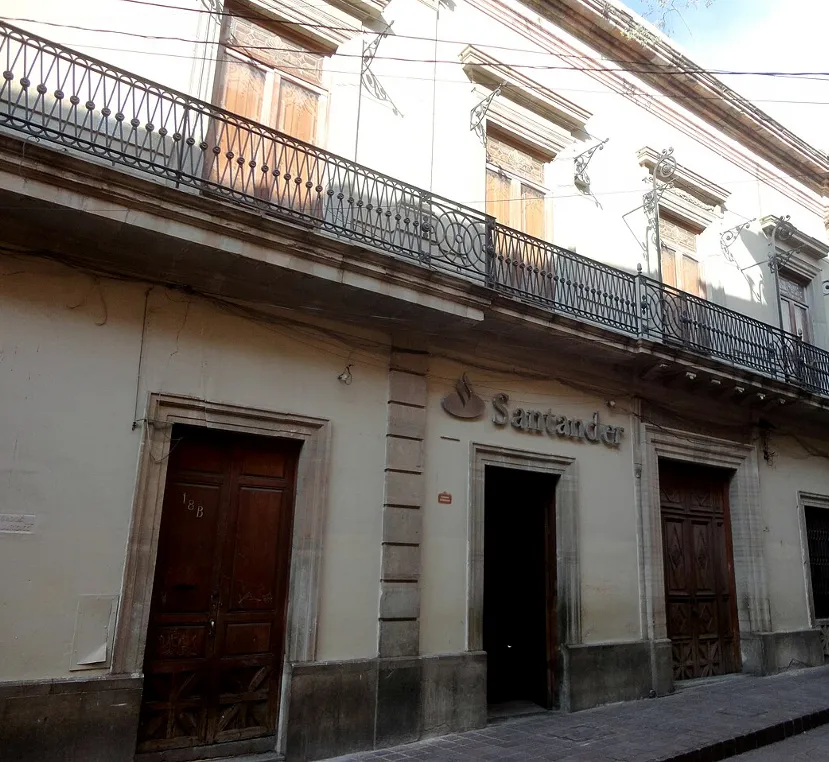
- A Santander branch in a colonial building on Calle Sopeña, Guanajuato.: Juan Carlos Fonseca Mata, CC BY-SA 4.0, via Wikimedia Commons
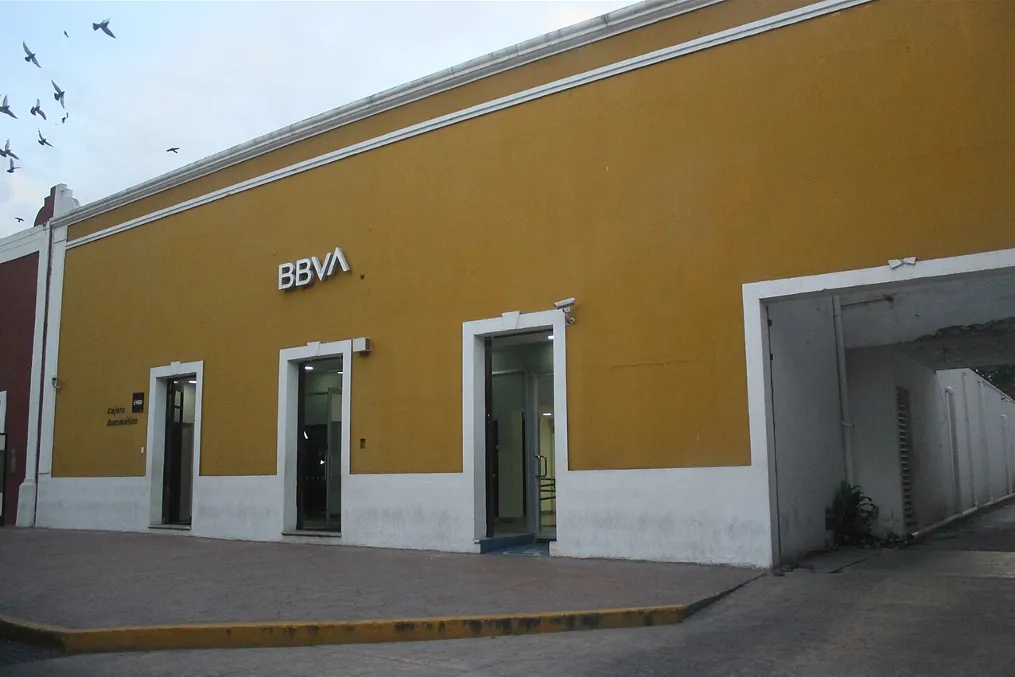
- A BBVA branch with a cash machine room in Valladolid, Yucatán.: Álvaro de la Paz Franco, CC0, via Wikimedia Commons
Get new jobs in Mexico by email
One email a week with the jobs added since the last one. Free, with no account.
Nothing is sent until you open the link we email you. Choose a role, a pay level or daily emails
We use your address only to send the alerts you ask for, and every email has a one-click unsubscribe link. The privacy notice says how long we keep it, and the terms of use cover the alerts.
We check this guide again by February 3, 2027. Rules change, so confirm visa steps with the embassy and your school before you go. First published November 5, 2026. Spotted something out of date? Tell us. How we write these guides.