Getting a phone number and SIM in Mongolia
Get a Mongolian number in your first days so your school, bank and landlord can reach you. Here's a short-stay eSIM for landing, the ID rules behind every line, the carriers to compare and how to hold on to your number from home.
AbroadPin team6 min read
Contents
A Mongolian phone number is one of the first things to sort out after you land in Ulaanbaatar. Your school will want it on day one, banks and landlords ask for it, and many local apps won't let you in without it. The good news is that you can be online within minutes of landing with a short-stay eSIM, then set up a line in your own name once your paperwork starts moving. For pay, permits and the order the visa steps go in, see the main guide to teaching in Mongolia.
The carriers
Mongolia has more than one mobile network to choose from, and Wikipedia's telecoms page lists five [3]:
- Unitel. A GSM operator, listed as having the first nationwide 3G, 4G and 5G network [3].
- Mobicom. Also GSM, and the first mobile operator in the country [3].
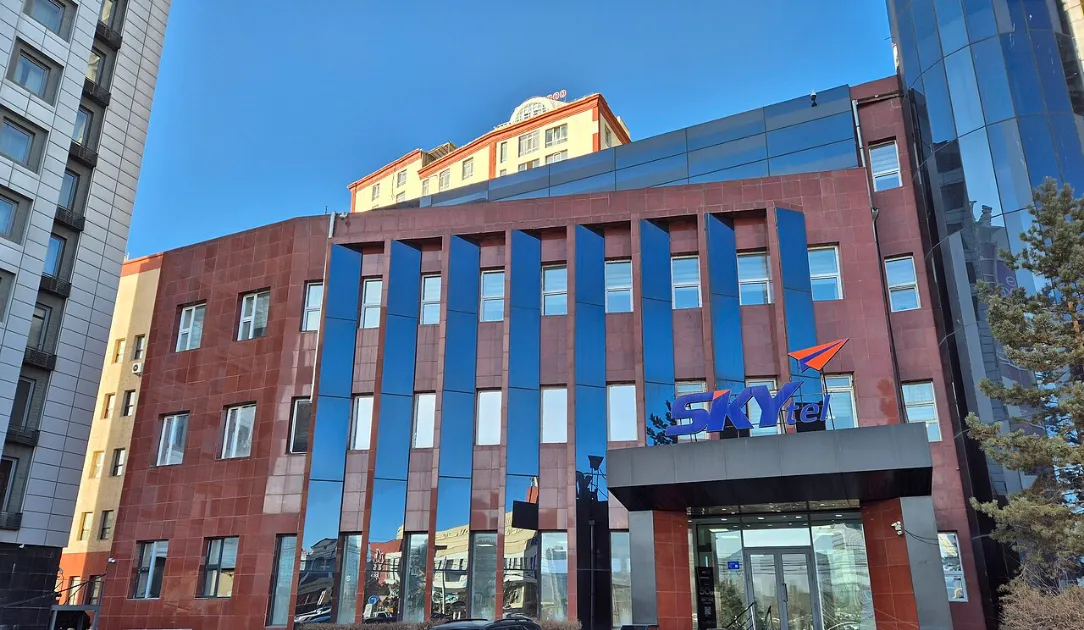
- Skytel. A CDMA operator [3].
- G-Mobile. Set up in 2007 with a focus on rural areas [3].
- ONDO. The newest, set up in 2021 and listed with LTE and 5G service [3].
Before you pick one, ask colleagues which network they use and how well it works in your building. If your school is in an aimag centre or a smaller town, also ask about the roads you'll travel, since that's where a weak signal hurts most.
Your first days: a short-stay eSIM
The quickest start is Unitel's Tour SIM, which it sells as a tourist eSIM [1]. You choose a package, enter your details and pick a VAT type, and the new number comes to you digitally or as a QR code that you load onto your phone [1]. These were the packages when we read Unitel's page on 5 November 2026 [1]:
| Unitel Tour SIM package | Data | Valid for |
|---|---|---|
| ₮25,000 [1] | 15 GB [1] | 10 days [1] |
| ₮40,000 [1] | 25 GB [1] | 20 days [1] |
| ₮70,000 [1] | 50 GB [1] | 30 days [1] |
The page lists data only, so if you expect to make ordinary calls, check whether minutes are included before you pay [1]. It also doesn't say whether you need a passport to buy one, so have it to hand [1].
Before you rely on an eSIM, check two things at home. Your phone must support eSIM, and it must not be locked to your carrier back home. A locked phone won't take a Mongolian SIM of any kind, and getting it opened up is far easier before you leave than from Ulaanbaatar.
A Tour SIM suits the settling-in weeks: house hunting, messaging the school, maps and ride apps. It is sold for short stays, so treat it as a bridge rather than your long-term number.
The ID rules for registering a number
Every line in Mongolia is tied to a named person. The Communications Regulatory Commission, the telecoms regulator, says voice service providers must register each person by surname, given name and civil registration number, and confirm who they are using methods the law approves [2]. Its page names the Law on Communications and a regulation on number registration as the rules behind this [2].
That page doesn't mention passports or say what a foreign customer shows instead [2]. In practice, take your passport to the carrier's shop, and once you have it, your residence card too. Staff will tell you which document they register you against.
Three habits keep things simple:
- Keep the number in your own name. Schools sometimes hand new teachers a spare SIM registered to a staff member. It works until you need to recover the number, prove it's yours to a bank, or move it to a new phone. A line in your own name avoids all of that.
- Give the shop your real local address. Write down your flat's address in Mongolian before you go, as your landlord or school writes it.
- Keep the receipt or contract. It's your proof that the line is yours if the SIM is lost.
Moving to a long-term line
Once you know you're staying for the school year, set up a regular prepaid or monthly line at a carrier's shop. A good moment is after your residence permit is under way. You apply for it at the Immigration Agency within 21 days of entering the country, in person the first time, with your fingerprints and photo taken [4]. The standard service takes 5 working days and costs ₮135,000, with a 7 USD fee for the card itself [4]. Among the papers the agency asks for is an address statement from your local sum or khoroo office, and it's worth keeping a copy for the phone shop and the bank [4].
We couldn't read current prepaid prices on the Mobicom, Skytel, G-Mobile or ONDO sites, so compare plans in person. When you do, ask each shop:
- How much data the plan gives, and what happens to the speed when it runs out.
- Whether it renews by itself from your balance, and on what day.
- How long the number stays yours if you don't top up, for example over a summer trip home.
- Whether you can switch the same number to an eSIM later.
- How to top up: in the carrier's app, through your bank's app, or at a shop.
Write the answers down for each carrier. Prices and packages change, and a plan that looked cheapest at the counter can cost more once its data runs out.
Why a local number matters
A roaming number from home keeps you on messaging apps, but a Mongolian one makes daily life run more smoothly:
- Your bank. Bank staff will want a number for your file, and the app sends sign-in codes by text. Our page on opening a bank account in Mongolia suggests getting your SIM first so the app can be set up at the counter.
- Your school. Timetable changes, sick cover and parents of private students all come by phone.
- Your landlord and deliveries. Couriers, taxi drivers and the building manager call when they can't find your door, and winter is not the time to be standing outside waiting.
- Local apps. Payment, ride and food apps usually sign you up with a local number.
So once the new line works, send the number to your school office, your landlord and your bank the same day.
Keeping your home number
Your bank, tax office and email at home probably send sign-in codes to your home number. If that number lapses while you're in Mongolia, you can be locked out of an account at the worst moment. Before you fly:
- Ask your home carrier for the cheapest way to keep the number active, and what it charges when a text reaches you abroad.
- Run both numbers on one phone. Put the Mongolian line on an eSIM and keep your home SIM in the tray, or the other way round. Turn off mobile data on the home line so roaming charges don't pile up.
- Move codes off text messages where you can. Many services let you use an authenticator app instead, which works on any network.
Mongolia's country code is +976, so give friends and family the full number with that prefix [3].
A quick checklist
- At home: check your phone is unlocked and supports eSIM, and sort out your home number.
- On landing: get online with a short-stay eSIM such as the Tour SIM, or use the school's Wi-Fi for the first night.
- In your first weeks: register a line in your own name at a carrier's shop, with your passport.
- Once your residence card arrives: keep it with your phone contract, and give the number to everyone who needs it.
When you're settled and starting to think about where you'll teach next, have a look at the open teaching jobs in Mongolia.
See jobs in Mongolia
No live jobs in Mongolia right now. New pins go up every day.
Sources and photo credits
- 1.Unitel, Tour SIM tourist eSIM packages (undated, read 5 November 2026)
- 2.Communications Regulatory Commission of Mongolia, questions and answers on mobile services (undated, read 5 November 2026)
- 3.Wikipedia, Telecommunications in Mongolia (read 5 November 2026)
- 4.Immigration Agency of Mongolia, C1 residence permit for employment (undated, read 5 November 2026)
Photos
- Skytel's office building in Ulaanbaatar.: Chongkian, CC BY-SA 4.0, via Wikimedia Commons
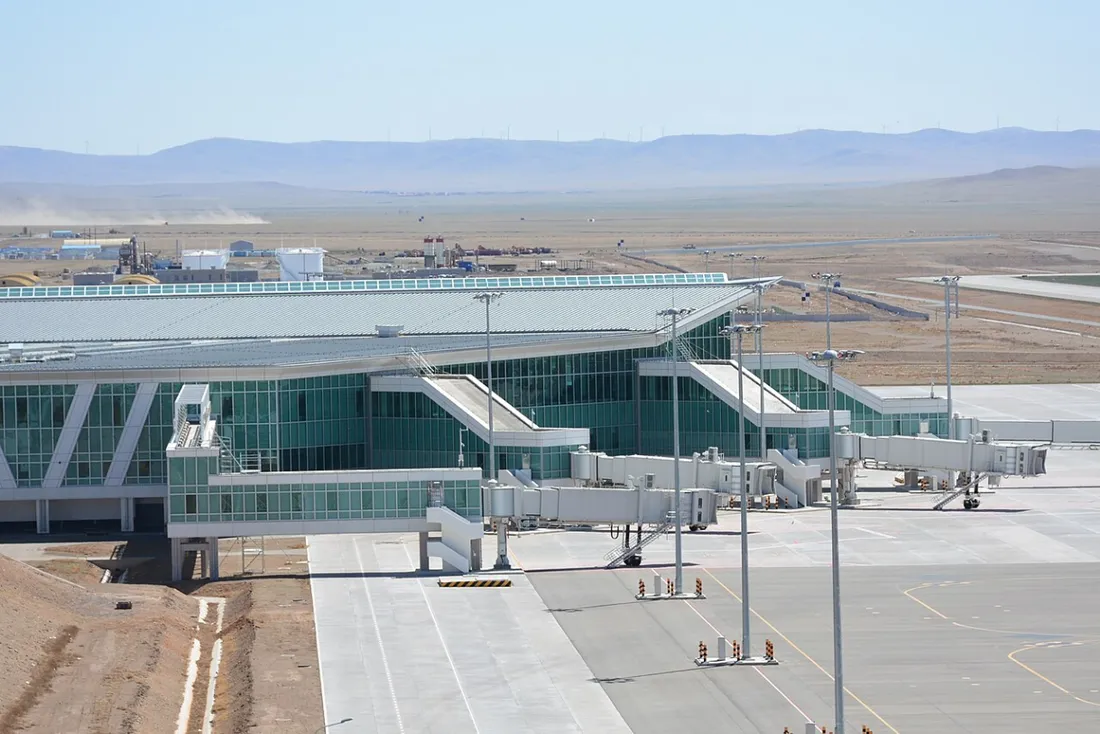
- The terminal at Chinggis Khaan International Airport, which serves Ulaanbaatar.: Nyamdorj, CC0, via Wikimedia Commons
Get new jobs in Mongolia by email
One email a week with the jobs added since the last one. Free, with no account.
Nothing is sent until you open the link we email you. Choose a role, a pay level or daily emails
We use your address only to send the alerts you ask for, and every email has a one-click unsubscribe link. The privacy notice says how long we keep it, and the terms of use cover the alerts.
We check this guide again by February 3, 2027. Rules change, so confirm visa steps with the embassy and your school before you go. First published November 5, 2026. Spotted something out of date? Tell us. How we write these guides.