Opening a bank account in Nepal
Get your Nepali salary into a bank account without a wasted trip to the branch. This covers the papers banks ask for, cards and cash machines, paying by QR code, and sending money home.
AbroadPin team7 min read
Contents
Banks in Nepal do open accounts for foreigners, but they want proof that you live and work there legally. Everest Bank's checklist for a foreign citizen starts with a copy of a valid visa and a copy of your passport [1]. For most teachers that sets the order: job offer, labour permit, work visa, then the bank. The permit and visa steps, pay and living costs are in the main guide to teaching in Nepal. This page picks up once you've landed and want your salary somewhere safe.
Sort the visa before the bank
Your employer applies for your labour permit, and the non-tourist working visa follows. Wait until the visa is in your passport before you go to a branch, because the visa copy is the first thing on the list [1].
Everest Bank also asks for a recommendation letter from your organisation if you're employed by one [1]. Ask your school's office for that letter in your first week. While you're there, ask two more things:
- which bank the school pays salaries from, and which branch handles its foreign staff
- whether the office will come with you, or phone ahead, on your first visit
A transfer between two accounts at the same bank is usually the simplest way to get paid, and staff who've opened accounts for earlier teachers know what that branch wants.
Which banks to try
Nepal has many commercial and development banks, and each sets its own paperwork on top of the central bank's rules. Machhapuchchhre Bank, for example, says its own procedures and Nepal Rastra Bank directives can add to the documents it lists [2].
If your school has no preference, start with a large bank that already deals with foreigners. Mountmania, a Nepal trekking company, names Nabil Bank, Himalayan Bank, Standard Chartered, NIC Asia, Everest Bank and Kumari Bank as banks whose cash machines take most foreign cards [9]. That isn't a promise about opening an account, but it's a sign of branches used to foreign customers. Everest Bank also publishes a separate document list for foreign citizens, which makes it easy to prepare for [1].
What papers to bring
Everest Bank's list for a foreign citizen opening a personal account is [1]:
- a copy of your valid visa
- a copy of your passport
- a recommendation letter from your organisation, if you're employed
- a recent passport-size photo
- any other document the bank decides it needs
Machhapuchchhre Bank's savings account asks for a few more things [2]:
- its account opening form and a KYC form
- a citizenship certificate, a valid passport or another valid government ID
- two recent passport-size photographs [2]
- a National Identity Card, which the bank may let you defer with its approval [2]
The National Identity Card is a Nepali document, so ask the branch how it handles that line for a foreign passport before you fill in the form.
Bring originals and copies of everything, plus your employment contract and your labour permit, even if the list doesn't name them. Banks reserve the right to ask for more [1] [2], and a second trip is the usual cost of a missing page.
A local phone number
Get a Nepali SIM before the bank visit and put that number on the form. Card alerts come by text: Muktinath Bikas Bank, for one, sends an SMS for every card transaction [5]. A home number that doesn't work in Nepal means you'll miss those alerts.
How long it takes and what it costs
None of the bank pages we read give a time to open an account, so ask at the branch whether the debit card and mobile banking are ready the same day or a few days later.
Costs vary by account, so ask for the bank's tariff of charges. Machhapuchchhre Bank's normal savings account gives an idea of what to look for [2]:
- Minimum balance. It can be opened with a zero balance [2].
- Cheque book. The first one is free [2].
- Internet banking. Free for the first year, then the bank's standard charges apply [2].
The same bank lets customers start an application online through its account opening portal [2]. Ask whether that works with a foreign passport, or whether you should simply walk in.
Cards and cash machines
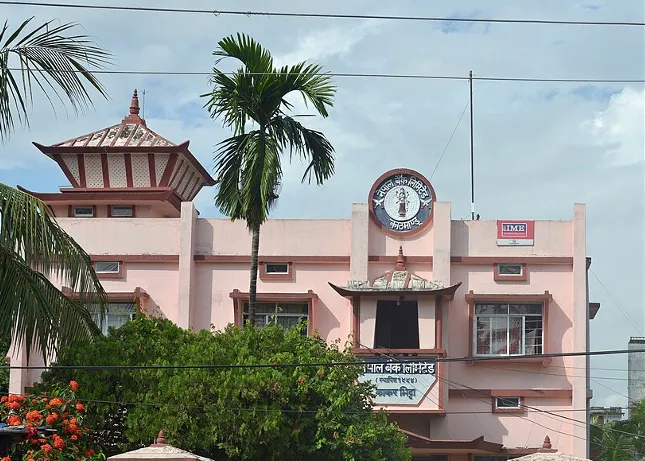
Most teachers live on a debit card, mobile banking and some cash. Nepal Rastra Bank's unified payment directive of April 2026 sets these limits for debit cards at cash machines [4]:
- NPR 500 to NPR 20,000 per withdrawal [4]
- NPR 50,000 a day, which a bank may raise to NPR 100,000 after assessing the customer [4]
- NPR 300,000 a month [4]
The same directive requires every payment card to be chip-based [4].
Ask which network your card runs on and whether it works abroad. Muktinath Bikas Bank's Visa debit card, launched in November 2025, works at Visa machines and shops worldwide and supports tap to pay [5]. Its own cash machines are free, and other banks' machines cost NPR 15 a withdrawal after the first five free ones each month [5]. Fees like these differ from bank to bank, so compare them before you choose.
Wallets and QR payments
Digital wallets such as eSewa, Khalti and IME Pay are run by licensed payment service providers [7], and they're one way to pay a shop's QR code. A bank's own app may do the same job.
The wallet rules changed in 2026. Under an amendment to Nepal Rastra Bank's payment systems directive, new wallet users verify with a National ID at registration, and existing users had until 17 October 2026 to add theirs [7]. That report doesn't say how foreigners register [7]. Khalti's own help page still lists a passport among its accepted KYC documents, and says users who haven't verified are limited to NPR 5,000 a day and a month [6]. So ask each wallet's support team whether a foreign passport is accepted before you rely on one.
The simpler route is your bank. Ask at account opening whether its mobile banking app pays merchant QR codes, and set it up at the counter while staff can help.
Nepal Rastra Bank has also allowed foreigners in Nepal to pay by scanning with QR codes issued in their own countries, through the national payment switch, since a change in March 2024 [8]. The central bank left it to banks to manage the risk and set up their merchants [8], so whether a given shop takes your home app is something to try, not count on.
Getting paid before the account is open
Your first salary may arrive before your account does. Talk to the school about it before your first payday rather than after:
- Ask whether the first month can be paid by cash or cheque, with a written payslip.
- Ask for an advance if your visa or account is still in progress.
- Keep every payslip, since you'll need proof of income later (see below).
Until then you'll draw cash on a foreign card. Mountmania says Nepali cash machines charge NPR 500 to 800 per withdrawal on a foreign card, on top of your own bank's fees [9]. It also warns that a machine's offer to convert the amount into your home currency can cost 3% to 7%, so choose to be charged in rupees [9]. Bring enough money to cover your first few weeks, and take fewer, larger withdrawals.
Sending money home
If you want to send savings home, keep your paperwork in order from the start. Under a Nepal Rastra Bank circular reported in September 2016, foreigners working in Nepal can draw their salary in US dollars from commercial and national-level development banks [3]. The same report said they could send 75% of their income home after tax, with withdrawals capped at USD 3,000 a month and USD 36,000 a year [3].
The documents named then were [3]:
- a recommendation letter from your employer
- your work permit certificate
- your employment contract
- a receipt showing your tax was paid
- proof that your visa is valid
That rule is from 2016 [3], so ask your bank's foreign exchange desk for the current limits and forms. The practical point holds either way: ask your school for a tax payment receipt each time it pays tax on your salary, and keep it with your payslips.
A first-month checklist
- Get your working visa into your passport, then book the bank visit.
- Ask the school for its recommendation letter and the name of its salary bank.
- Buy a Nepali SIM and note the number.
- Take originals and copies of your passport, visa, labour permit and contract, plus photos.
- Ask the branch about its minimum balance, card fees and charges before you sign.
- Set up mobile banking and QR payments before you leave the counter.
- Start a folder for payslips and tax receipts.
Still looking for the job itself? Browse open teaching jobs in Nepal.
See jobs in Nepal
No live jobs in Nepal right now. New pins go up every day.
Sources and photo credits
- 1.Everest Bank, account opening documentation (page modified 28 June 2022, read 5 November 2026)
- 2.Machhapuchchhre Bank, MBL Normal Saving Account (updated 29 September 2026)
- 3.The Himalayan Times, foreigners working in Nepal to be able to draw salary in dollars (13 September 2016)
- 4.ShareSansar, NRB issues unified payment directive with revised ATM limits (17 April 2026)
- 5.ICT Frame, Muktinath Bank introduces Visa debit card (10 November 2025)
- 6.Khalti, KYC help page (undated, read 5 November 2026)
- 7.Gadgetbyte Nepal, National ID verification now mandatory for digital wallets (29 July 2026)
- 8.The Kathmandu Post, Nepal permits digital payments for third country transactions (18 March 2024)
- 9.Mountmania, tourist ATM withdrawals in Nepal (25 May 2026)
Photos
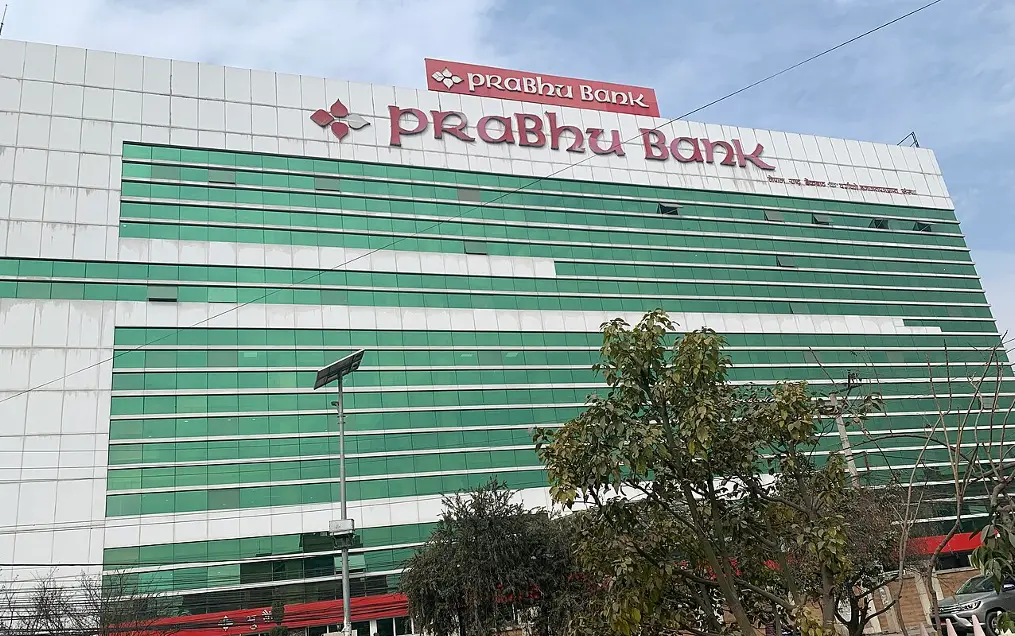
- Prabhu Bank's office on Rudramati Marg, Kathmandu.: Chainwit., CC BY 4.0, via Wikimedia Commons
- A Nepal Bank branch in Kakarbhitta, eastern Nepal.: Christopher J. Fynn, CC BY-SA 4.0, via Wikimedia Commons
Get new jobs in Nepal by email
One email a week with the jobs added since the last one. Free, with no account.
Nothing is sent until you open the link we email you. Choose a role, a pay level or daily emails
We use your address only to send the alerts you ask for, and every email has a one-click unsubscribe link. The privacy notice says how long we keep it, and the terms of use cover the alerts.
We check this guide again by February 3, 2027. Rules change, so confirm visa steps with the embassy and your school before you go. First published November 5, 2026. Spotted something out of date? Tell us. How we write these guides.