Opening a bank account in Turkey
Get your Turkish salary paid on time with an account you can usually open in one branch visit. Here's what to bring, which banks to try, what cards cost and how instant FAST transfers work.
AbroadPin team6 min read
Contents
Sooner or later in your first weeks, the school office will ask for your IBAN. A Turkish account is also how you'll pay rent, split bills with colleagues and pay in shops by QR code. The good news is that the paperwork is short and most of it you'll already have. This page is about the bank side only. For pay, the work permit and the residence rules, see the main guide to teaching in Turkey.
Why your school needs an account
Turkish law makes most employers pay wages by bank transfer, not in cash. Since 1 July 2025, any employer with at least 3 workers must pay the net wage, after the legal deductions, through a bank [6]. Before that date the threshold was 5 workers [6]. Almost every language course, private school and university is above that line, so expect payroll to need a Turkish account in your name.
Ask HR two things in your first days:
- Does payroll use a particular bank? If it does, opening your account there can save a step.
- What happens if your account isn't ready by payday? Ask early, so you're not caught short. Either way, bring enough savings to cover your first month or so.
Which banks open accounts for foreigners
All the big Turkish banks open accounts for foreign residents. A Turkish comparison site names Ziraat Bankası, Garanti BBVA, QNB, İş Bankası, Yapı Kredi and DenizBank as banks foreign customers have had good experiences with, and says Akbank serves foreigners too [3]. Policies differ from bank to bank, so if one turns you away, try another [3].
What helps most is English at the counter:
- İş Bankası has some branches that specialise in banking for expat clients, Wise says [10].
- Garanti BBVA has English-speaking staff in most branches and English phone lines, according to Wise [10].
- Akbank offers expat banking products and English phone service [10].
- Branch location matters. In Istanbul, branches in central areas such as Taksim or Kadıköy often have English support [11].
The Wise comparison dates from August 2022, so check a bank's current English services before you go [10].
What papers to bring
Here's what the banks themselves ask for.
- Your passport. İş Bankası wants a valid passport not older than 10 years, or your residence permit [1]. QNB copies your passport at the branch [2]. Some banks also want a notarised Turkish translation of it [3].
- A Turkish tax number or foreign ID number. İş Bankası accepts either your Foreigner's Identification Number or a tax identification number [1]. If you already have a foreign identification number, you can use it in place of a tax number [3].
- Proof of a Turkish address. İş Bankası takes an electricity, water, gas or phone bill in your name from a Turkish provider, issued within the last 3 months [1]. QNB asks for a utility bill from the last 3 months or a document from a public institution [2]. A lease or title deed is also commonly accepted [3] [4].
- A Turkish mobile number. Most banks need one for security codes and mobile banking, so get a local SIM before you apply [3] [4].
- Your signature. You sign the bank's agreement and a signature form at the branch [2].
A residence permit isn't a legal requirement for an account, but some banks ask for it, and things take longer without one [3]. Your work permit counts as your residence permit, so once it's issued you're in the strongest position.
Getting a tax number
If your residence card isn't through yet, get a tax number (vergi kimlik numarası). The Revenue Administration (GİB) runs an online application for a potential tax number for foreigners [5]. You can also get one at a local tax office (vergi dairesi), where it's free and usually issued within minutes [4]. At QNB, a customer representative will help you if you arrive without one [2].
How long it takes
With all your papers ready, the branch visit itself usually takes 30 to 90 minutes [4]. Hesapkurdu says a foreigner with complete documents can usually open an account within a day [3].
Here's a sensible order for your first weeks:
- Get a local SIM. The bank will send codes to it [3].
- Get your tax number online or at the tax office, unless your residence card is already in your hands [4] [5].
- Sort out proof of address. A lease or a recent utility bill in your name works best [1] [3]. If you live in school housing, ask HR what the bank will accept.
- Visit a branch. Opening fully online or by video call is still rare for foreigners, and most banks want you to come in person [3].
- Collect your card. Debit cards usually arrive within 3 to 7 business days, though some branches hand them over on the spot [3].
- Set up the app and send your IBAN to HR the same day.
Non-residents get stricter treatment. Deal, a real estate firm, says some banks ask non-residents to deposit USD 2,000 to 5,000 as a blocked amount for 1 to 3 months [4]. As a teacher with a work permit you'll be a resident, so this usually won't apply to you.
Fees and cards
Fee schedules vary by bank and change often, so ask for the price list (ücret tarifesi) at the branch. The costs to look at are card issuance, account maintenance, international transfers and SWIFT charges, currency conversion spreads and inactivity charges [4] [10].
Debit and credit cards
Your debit card comes with the account and works in shops and ATMs. Nearly all ATMs in Turkey also let you take out cash with a TR Karekod QR code from your banking app [9].
Credit cards often carry a yearly fee. As examples, a Hesapkurdu page updated in October 2026 listed TRY 1,190 a year for the Axess card and TRY 1,101 for the Bonus card [3]. Ask your bank what it needs from a new arrival before you apply for one.
Paying by phone and FAST transfers
FAST is Turkey's instant payment system, run by the central bank (TCMB) since 8 January 2021 [7]. It moves money between accounts instantly, around the clock, every day of the week [7]. This is how you'll pay back a colleague or send rent to a landlord.
- Limits. Since 4 April 2024, a FAST transfer can be up to TRY 100,000, and a QR payment to a shop up to TRY 250,000 [8].
- No IBAN needed. The easy addressing system (KOLAS) lets you send money to a phone number, ID number, email address, passport number or tax number instead [9].
- QR codes in shops. With FAST-TR Karekod you pay a shop by scanning its code in your banking app, and over 41% of card terminals accepted it in 2025 [9].
- It's widely used. FAST handled 5.4 billion transactions in 2025, through 49 participating banks and payment firms [9].
Once your phone number is linked to KOLAS through your bank, colleagues can pay you without asking for your IBAN.
Sending money home
International transfers from a Turkish bank go by SWIFT, with a transfer fee and a markup on the exchange rate [4] [10]. Delays are common [4]. Compare your bank's rate with a money transfer service before you send a large amount. If your salary is in lira, the rate on the day you send makes a real difference, so check it each time.
When you leave Turkey for good, close the account after your last salary arrives, so it doesn't keep charging fees or sit dormant.
Ready for the next step? Browse open teaching jobs in Turkey and apply to the school directly.
Sources and photo credits
- 1.Türkiye İş Bankası, Become a member of İş Bank family (read 5 November 2026)
- 2.QNB, Open an account: common questions and answers (read 5 November 2026)
- 3.Hesapkurdu, Yabancı uyruklu kişi Türkiye'de banka hesabı açma, a guide for foreigners opening a bank account (updated 8 October 2026)
- 4.Deal Real Estate, Turkey bank account 2026: what foreigners must know (updated 18 February 2026)
- 5.Revenue Administration (GİB), Potential tax identification number application for foreigners (read 5 November 2026)
- 6.EY Türkiye, Social security and labour law circular no. 26 on paying wages through banks (4 June 2025)
- 7.Central Bank of the Republic of Türkiye (TCMB), FAST instant payment system (read 5 November 2026)
- 8.TCMB, Press release 2024-16 on raising the FAST transaction limit (2 April 2024)
- 9.TCMB, 2025 annual report, section 2.5 financial infrastructure (read 5 November 2026)
- 10.Wise, Opening a bank account in Turkey (25 August 2022)
- 11.Istanbul.com, How to open a Turkish bank account (updated 3 November 2026)
Photos
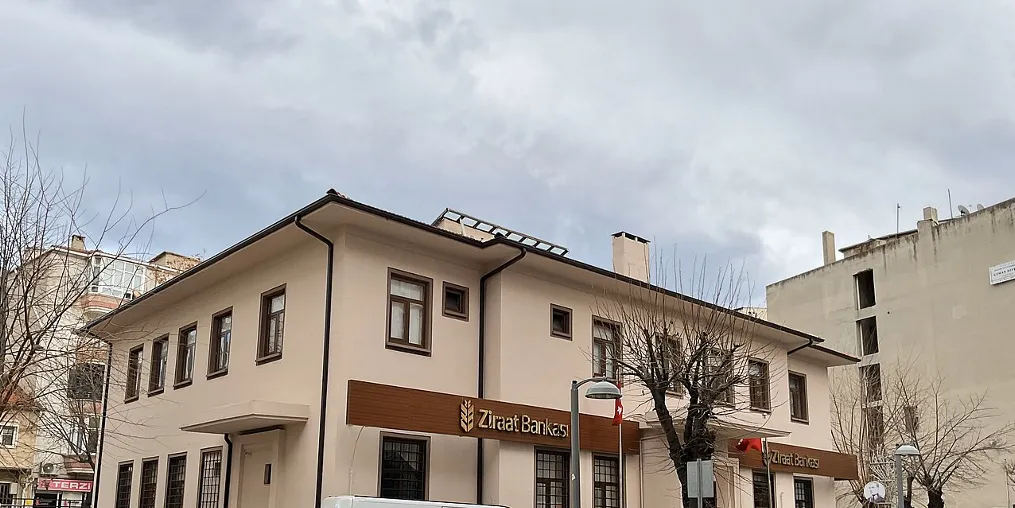
- A Ziraat Bankası branch in Kırklareli. Ziraat is one of the state-owned banks.: Alicembasli, CC BY 4.0, via Wikimedia Commons
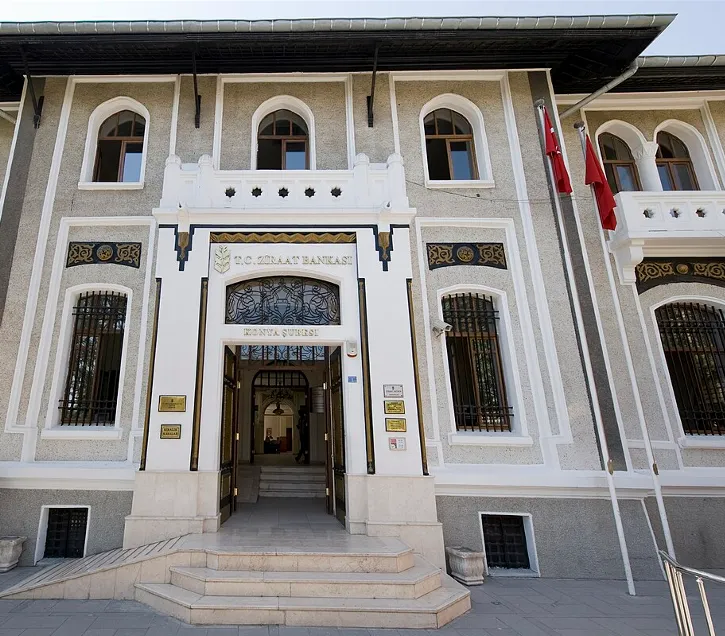
- Ziraat Bankası in Konya. Ask at the branch which card comes with your account and what it costs each year.: Dosseman, CC BY-SA 4.0, via Wikimedia Commons
Get new jobs in Turkey by email
One email a week with the jobs added since the last one. Free, with no account.
Nothing is sent until you open the link we email you. Choose a role, a pay level or daily emails
We use your address only to send the alerts you ask for, and every email has a one-click unsubscribe link. The privacy notice says how long we keep it, and the terms of use cover the alerts.
We check this guide again by February 3, 2027. Rules change, so confirm visa steps with the embassy and your school before you go. First published November 5, 2026. Spotted something out of date? Tell us. How we write these guides.