Opening a bank account in the United Arab Emirates
Your school salary can land in a UAE account you open from your phone. Here's which banks to look at, the papers to bring, the fees to dodge and how your first pay reaches you.
AbroadPin team6 min read
Contents
Your salary in the UAE has to go somewhere, and your school's HR team will ask for an account number in your first weeks. Once your residence visa is through, opening one is mostly paperwork you already have. This page covers the bank side. For the work permit, the teacher's licence and pay, see the main guide to teaching in the UAE.
How your salary gets paid
Private employers registered with MOHRE, the labour ministry, must pay wages on the due date through its Wage Protection System, known as WPS [1]. The money moves through banks, exchange houses or financial institutions authorised by the Central Bank of the UAE [1]. You're paid in dirhams unless your contract names another currency [1].
Last month's salary is due on the first day of each month, and the ministry starts alerts against a late employer from the second day after that [1]. That system is why schools are keen to get your bank details on file early: a teacher with no account is a payroll problem for them too.
If your account isn't open by payday
You can still be paid. Under WPS, an employer can send a worker's salary to an exchange house, which issues a WPS card that you can draw cash from at the exchange house or at WPS machines [2]. That explainer dates from 2020, so ask HR how your school handles a first salary if your account isn't ready [2].
Either way, plan on living off savings for your first few weeks. Your housing and flights may be covered, but food, a SIM card, taxis and deposits come out of your own pocket until the first salary lands.
Which banks teachers use
Most teachers end up with one of two kinds of bank.
- Large local banks. Emirates NBD, ADCB and FAB are the traditional banks that newcomer guides name most often, and you can deal with them at a branch [8]. Mashreq, Dubai Islamic Bank and RAKBANK are common choices too [9].
- App-only banks. Liv, which is backed by Emirates NBD, and Neo, from Mashreq, let you open an account in a phone app [4]. Wio is another app-only bank [8]. You get an IBAN and a debit card like any other account, but there are fewer branch services if something goes wrong [9].
Before you pick, ask HR whether the school has a payroll arrangement with a bank, and ask colleagues which app or branch has given them the least hassle.
What papers banks ask for
Requirements vary a little from bank to bank, but this is the usual list [3][4][8]:
- Your passport. Bring the original, and the bank will take a copy [3].
- Your residence visa. Banks want the visa page that shows you're a UAE resident [4].
- Your Emirates ID. It's the main ID banks rely on [8]. If the card hasn't arrived yet, many banks accept your Emirates ID registration form for now and take the card later [4]. Wio says you can verify with either your Emirates ID or your UAE work visa, plus a selfie [5].
- A salary certificate. Ask HR for a salary certificate or employment letter on school letterhead [4][8].
- Proof of address. A tenancy contract registered with Ejari, or a recent utility bill [8]. If you're in school housing, ask HR what the bank will take instead.
- A UAE mobile number. Get a local SIM before you start. Bank apps send codes to it, and the Aani instant transfer service runs off your registered UAE number [10].
ADCB notes that some banks also ask for a minimum monthly salary of AED 3,000 [3].
Before your residence visa
Until your visa is issued, a bank treats you as a non-resident. Non-residents can usually open only a savings account, with balance limits, no chequebook and extra checks on where the money comes from [4]. For most teachers it's simpler to wait until the visa is done.
How long it takes
Here's the usual order, starting from the day your residence papers are moving.
- Finish the visa steps. The medical test and Emirates ID application come first. Keep the registration form you're given, because a bank may accept it in place of the card [4].
- Get your salary certificate. Ask HR for it in your first days, since every bank will want it.
- Apply. Most banks let you apply in their app or at a branch [3]. Digital banks can take as little as 10 minutes to open an account, while traditional banks take 3 to 7 working days to activate one [8]. Property Finder puts branch applications at two to five business days, depending on compliance checks [9].
- Get your card. With app banks such as Liv and Neo, a courier brings the debit card within a day, Expatica says [4].
- Send your IBAN to HR. Do this the day the account opens, so your name is on the next payroll file.
Expatica's wider estimate, from a day or two up to a couple of weeks, is a fair worst case if your documents are slow [4].
Fees and minimum balances
The fee to watch is the monthly charge for dropping below a minimum balance. Standard accounts tend to ask for about AED 3,000 to 5,000, and banks commonly waive it when your salary is paid into the account [8]. Two key facts statements from Emirates NBD show how it works [6][7]:
| Account | Minimum balance | Fee if you fall below | How to avoid it |
|---|---|---|---|
| Liv Primary Account (May 2025) | AED 3,000 [6] | AED 25 a month [6] | A salary transfer of AED 5,000 or more a month, among other options [6] |
| Emirates NBD current account, Classic package | AED 3,000 monthly average [7] | AED 26.25 a month [7] | Salary accounts don't pay it [7] |
Both list account opening as free [6][7]. Liv's first chequebook is free and later ones cost AED 20 [6]. The Emirates NBD Classic package charges AED 105 if you close the account within 6 months of opening it [7]. Expatica lists AED 2 for using another bank's ATM [4].
Other banks' entry points, as Property Finder gave them in June 2026: FAB asks for AED 5,000 or a salary transfer, and RAKBANK AED 3,000 [9]. Read your own bank's key facts statement before you sign, because the figures change. Liv also gives you a cooling-off period of five business days after you sign the application [6].
Cards, credit and paying by phone

Debit cards
Your debit card comes with the account. Liv's is issued in AED [6]. Wio's card can switch between debit and credit, and can hold AED, USD, EUR or GBP [5]. That's handy for paying for flights home in your own currency.
Credit cards
A credit card usually needs a monthly salary of at least AED 5,000, or a deposit of AED 60,000 instead [4].
Aani for instant transfers
Aani is the UAE's instant payment service, launched by the Central Bank and run by Al Etihad Payments [10]. You send dirhams to someone's UAE mobile number, and the money arrives within 10 seconds, at any hour [10]. It's how you'll split a taxi, pay back a colleague or send rent to a landlord.
- Who's on it. By February 2025, 57 licensed financial institutions had joined, including major banks and exchange houses [11].
- Limits. The platform allows up to AED 50,000 a transfer, and each bank sets its own daily and monthly limits [11]. At Emirates Islamic, for example, mobile number transfers are capped at AED 10,000 per transaction, per account, per day [10].
- No take-backs. A transfer can't be cancelled or changed once it's processed, so check the number first [10].
You switch Aani on in your bank's app and pick one account to receive payments [10].
When you leave
Close the account properly before you fly home for good, after your last salary and end-of-service payment have arrived. Closing usually takes about five days and costs up to AED 100 [4]. Expats usually get about one month of grace after the visa is cancelled, and an account left empty can start charging a monthly fee [4].
Ready for the next step? See teaching jobs in the UAE and apply to schools directly.
See jobs in United Arab Emirates
- Secondary English Teacher (GEMS Westminster School Ras Al Khaimah)Ras Al Khaimah
- Secondary English Teacher, August 2027 (GEMS Wellington Academy Dubai Hills)Dubai
- Secondary English Teacher, January 2027 (NAS Abu Dhabi)Abu Dhabi
- English and Drama Teacher (Uptown International School, Dubai)Dubai
- English Teacher, January 2027 (Taaleem, Dubai)Dubai
See all jobs in United Arab Emirates
By city: Teaching jobs in Dubai · Teaching jobs in Abu Dhabi
Sources and photo credits
- 1.UAE Government portal, Payment of wages (updated 14 October 2026)
- 2.Gulf News, The UAE's Wages Protection System (WPS) explained (updated 2 December 2020)
- 3.ADCB, Money guide for expatriates: current account opening tips (undated, read 4 November 2026)
- 4.Expatica, How to open a bank account in the United Arab Emirates (updated 10 December 2025)
- 5.Wio Bank, Wio Personal (read 4 November 2026)
- 6.Liv by Emirates NBD, Primary Account key facts statement (May 2025)
- 7.Emirates NBD, Key facts statement for current and savings accounts (2021 edition, read 4 November 2026)
- 8.Dubai Money Matters, How to open a bank account in Dubai as a new expat (29 June 2026)
- 9.Property Finder, Best bank in the UAE for expats (updated 16 June 2026)
- 10.Emirates Islamic, Aani instant payment service (read 4 November 2026)
- 11.Al Etihad Payments, UAE instant payments platform Aani signs up 1.5 million users (27 February 2025)
Photos
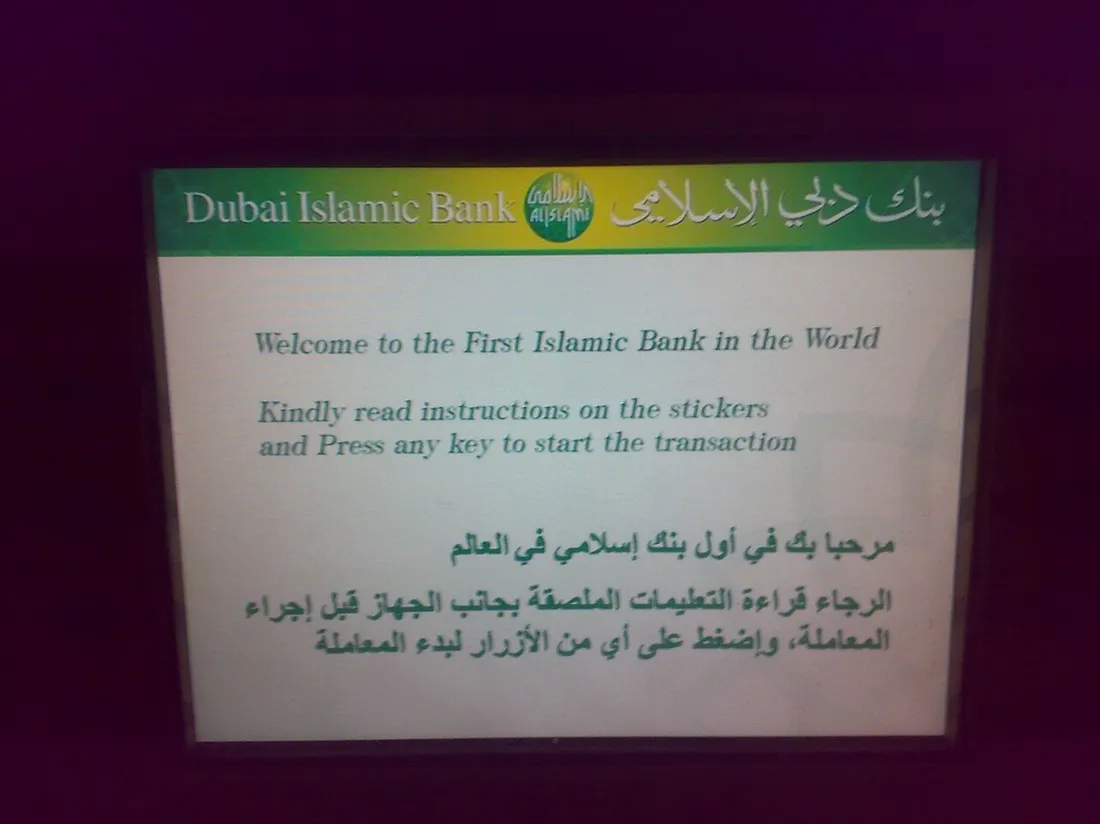
- A Dubai Islamic Bank cash machine screen in English and Arabic.: Bjoertvedt, CC BY-SA 3.0, via Wikimedia Commons
- A Dubai Metro station platform.: Ravi Dwivedi, CC BY-SA 4.0, via Wikimedia Commons
Get new jobs in United Arab Emirates by email
One email a week with the jobs added since the last one. Free, with no account.
Nothing is sent until you open the link we email you. Choose a role, a pay level or daily emails
We use your address only to send the alerts you ask for, and every email has a one-click unsubscribe link. The privacy notice says how long we keep it, and the terms of use cover the alerts.
We check this guide again by February 2, 2027. Rules change, so confirm visa steps with the embassy and your school before you go. First published November 4, 2026. Spotted something out of date? Tell us. How we write these guides.