Opening a bank account in Austria
Get your first Austrian salary straight into your own account by sorting the bank in your first week. Here's what to bring, which banks to try, what accounts cost and how to manage until payday.
AbroadPin team6 min read
Contents
Salaries in Austria are usually paid into an Austrian bank account, so opening one is among the first jobs on your list [6]. Most of the work is in the steps before the bank: once your address is registered, the account itself is usually the easy part, and the law gives anyone living legally in the EU the right to a basic account [4]. This page walks through the order of steps, the papers, the banks, the costs and how to cover the gap before your first pay arrives. For pay, permits and employers, see the main guide to teaching in Austria.
Step 1: register your address
Banks want to see where you live, and in Austria that means the official registration of your home.
- Do it within three days. The law asks you to register within three days of moving into a place [3].
- Go to the right office. That's the Gemeindeamt in a town, the Magistrat in a statutory city, or the Magistratisches Bezirksamt for your district in Vienna [3].
- Bring the form and your passport. Fill in the registration form (the Meldezettel), have the person who provides your housing sign it, and show your passport [3].
- Collect the confirmation. You get a written confirmation of registration, still widely called the Meldezettel, and registering costs nothing [3].
Fulbright adds that the office gives you a 12-digit registration number [1]. Keep the confirmation with your passport: you'll show it at the bank, at the residence permit office and again later.
Step 2: gather your papers
Every bank asks for an official photo ID, which for most teachers from abroad is a passport [6]. Beyond that, banks differ. The welcome center at the University of Salzburg says a bank may also ask for your visa, your work contract and your address registration [6]. Expatica's list is similar: passport, proof of where you live, the Meldezettel, and details of your job [9].
A simple pack covers almost every bank:
- your passport
- your registration confirmation
- your residence permit, once you have it
- your work contract or a letter from your school
Expatica warns that collecting these can mean you can't open an account for the first few weeks after you land [9]. Arriving early and registering on day one shortens that.
Step 3: choose a bank and an account
Austria has plenty of choice. The University of Salzburg lists eight banks with branches in Salzburg, among them Bank Austria UniCredit, BAWAG PSK, Raiffeisenbank Salzburg, Salzburger Sparkasse, Volksbank Salzburg and Oberbank [6]. Online-only banks exist too, and Expatica names N26 as one that runs entirely from your phone [9].
Ask for a salary account
When you open the account, say it's for your salary. Fulbright tells its assistants to open a Gehaltskonto or Girokonto, because the school board can only pay into a current or salary account [1]. A savings account won't do.
Fulbright also asks assistants to get a confirmation from the bank for the school. It may be called an Antrag auf bargeldlose Gehaltszahlung, a Bezugsanweisung or a Kontoerklärung [1]. Ask for it at the counter, or in the app if you open online, and hand it to your school's office.
Opening in a branch or in an app
A branch visit is the safest route if your German is basic, because staff can check your papers on the spot. Many banks also let you open online. The Sparkassen let you start through their George app, choose an account and follow the steps there [7]. A 2023 article written with Erste Bank described a phone process of about 7 minutes using a passport or ID card with a chip, a selfie check and the George app [8]. That article is older, so check what the app accepts for your passport today.
Your right to a basic account
If a bank turns you down for a normal account, you still have a fallback. Since 18 September 2016, every consumer living legally in the EU has had the right to a basic payment account, the Basiskonto, under Austria's Consumer Payment Account Act (VZKG) [4]. Erste's Sparkassen add that this includes people without a fixed address [5].
Here's what the law gives you, according to the Vienna Chamber of Labour (AK Wien) [4]:
- It must be offered. Every bank that offers current accounts to consumers must offer a Basiskonto too, without tying it to other contracts [4].
- It covers daily banking. Deposits and withdrawals, a debit card with cash withdrawals, transfers, direct debits, card and online payments, and online banking where the bank has it [4].
- No overdraft. You generally can't go below zero, and a credit card isn't included [4].
- A fee cap. The bank may charge at most €83.45 a year, or €41.73 a year for groups such as students on a study grant or people on minimum income support [4].
- Ten business days. If you meet the conditions, the bank must open the account within ten business days [4].
- Few reasons to refuse. A bank can only say no if you already have a usable current account in Austria, or in rare criminal cases involving the bank, and it must give its reasons in writing [4].
The Sparkassen version comes with a free debit card for paying and taking out cash, and needs only a valid ID at the appointment [5]. It doesn't allow joint accounts [5].
Fees and what to compare
Fees vary a lot. The University of Salzburg puts yearly account fees anywhere from €0.00 to €200.00 [6]. Sparkasse Bregenz bills its account fees quarterly [7]. It also advertised a year free on its s Plus Konto for new customers, covering account keeping, a debit card and electronic bookings in George, valid until 31 December 2026 [7].
When you compare offers, ask about:
- the monthly or quarterly account fee, and whether it rises after a free first year
- charges for paper statements and for transfers done at the counter
- whether the debit card is included
- fees for taking cash from other banks' machines
Banks publish full price lists in each branch, so ask for one before you sign [5].
Cards and paying by phone
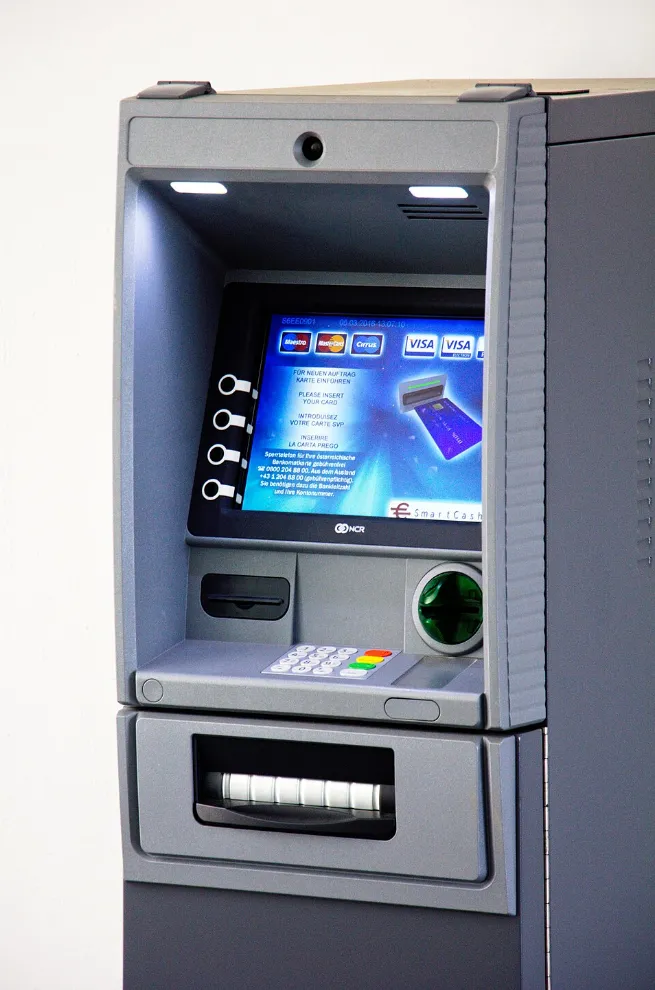
A normal current account comes with a debit card for cash machines and shops [6]. If you open online, the card can arrive by post later. Expatica says cards and PINs usually come in the mail within a few days [9]. The Sparkassen let you load a digital debit card onto your phone and pay with Apple Pay or Google Pay before the plastic card arrives [8]. Sparkasse Bregenz still lists both on its current account page [7].
Cash is still common in Austria, especially for small amounts, so keep some on you for markets, bakeries and smaller cafes [9]. Expatica says that, on older figures, 96% of payments under €10 were made in cash [9].
Getting paid before the account is open
Your first pay usually comes well after your first day, so plan for that gap whatever bank you choose.
- Assistants on the Fulbright program start on 1 October and get their first salary in mid-November, paid into their Austrian account [1].
- British Council assistants may not see a first payment until late November [2]. Past assistants advise budgeting for at least two months without pay, about €1,000 to €2,500 [2].
- Start-up costs come first. Fulbright lists a €130 orientation fee and housing deposits of up to three months' rent as costs to cover from your own money [1].
To get through those weeks, bring savings you can reach from abroad: a home debit card that works at Austrian cash machines, or a card with low foreign fees. Then open the Austrian account as soon as you have your registration, so your first salary doesn't sit waiting while the school asks for your details. If you work for a private language school, ask on day one when payday is and what bank details the office needs.
With kids
If your family comes with you, each person needs their own registration form, children included [3]. The Basiskonto doesn't allow joint accounts, so a couple wanting a shared account needs a regular current account [5]. Sparkasse Bregenz offers free accounts for children and teenagers, which can help older kids manage pocket money [7]. For schools, visas and childcare, see the family section of the main guide.
Ready to look at schools? Browse English teaching jobs in Austria.
See jobs in Austria
- English Teaching Assistant in Austria (USTA 2027 to 2028)Vienna · $2,239 a month
Sources and photo credits
- 1.Fulbright Austria, US Teaching Assistantship Program grant details (read 4 November 2026)
- 2.British Council, English language assistants in Austria (read 4 November 2026)
- 3.Austrian Government, oesterreich.gv.at, registering a new main or secondary residence (updated 13 January 2026)
- 4.Arbeiterkammer Wien, the basic account for everyone (read 4 November 2026)
- 5.Erste Bank und Sparkassen, payment account with basic features (read 4 November 2026)
- 6.Paris Lodron University of Salzburg Welcome Center, bank account (read 4 November 2026)
- 7.Sparkasse Bregenz, current accounts (read 4 November 2026)
- 8.futurezone, opening an Erste Bank account by phone, written with Erste Bank und Sparkassen (30 January 2023)
- 9.Expatica, banking in Austria (updated 27 May 2025)
Photos
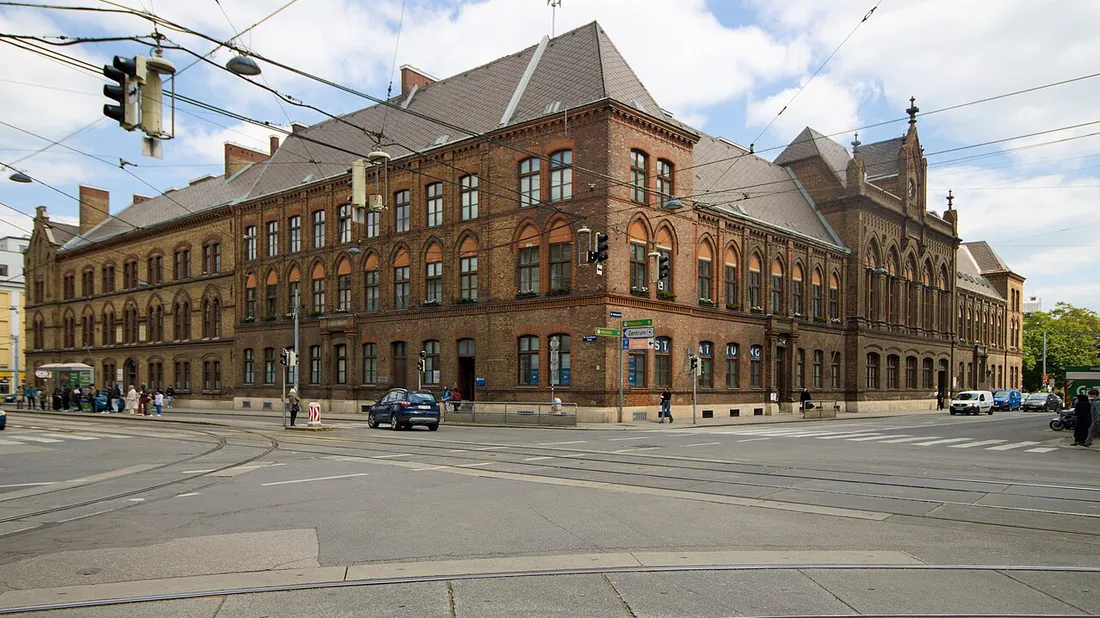
- The district office building for Favoriten, Vienna's 10th district.: Eweht, CC BY-SA 4.0, via Wikimedia Commons
- A cash machine (Bankomat) in Vienna.: Karl Gruber, CC BY-SA 4.0, via Wikimedia Commons
Get new jobs in Austria by email
One email a week with the jobs added since the last one. Free, with no account.
Nothing is sent until you open the link we email you. Choose a role, a pay level or daily emails
We use your address only to send the alerts you ask for, and every email has a one-click unsubscribe link. The privacy notice says how long we keep it, and the terms of use cover the alerts.
We check this guide again by February 2, 2027. Rules change, so confirm visa steps with the embassy and your school before you go. First published November 4, 2026. Spotted something out of date? Tell us. How we write these guides.