Opening a bank account in Brunei
Get your Brunei salary into a local account in your first weeks, with the right papers ready. Here's what banks ask expatriates for, what the accounts cost, and how to pay by phone once you're set up.
AbroadPin team7 min read
Contents
Opening an account in Brunei isn't hard, but it comes near the end of your arrival paperwork rather than the start. Banks want to see that you live and work here legally, and the document that proves it best is the identity card you get after your work pass. Plan your first weeks around that, and keep some money from home to bridge the gap. For the job market, the work pass steps and what schools pay, see the main guide to teaching in Brunei.
The order to do things in
Your school or recruiter handles most of the immigration side, so your job is mainly to keep track of where you are.
- Work pass and identity card. Once your work pass is approved you get a Brunei identity card for foreign residents, often called the green IC. The main guide walks through each step.
- Proof of address. For foreigners, Baiduri Bank accepts either a declaration from your employer in your employment letter or a utility bill no more than 3 months old [1]. If you're in school housing with no bills in your name, the letter is the easier route.
- Proof of employment. Your contract, employment pass, latest payslip or a staff ID, depending on the bank [1] [3].
- The branch visit. Expat Focus says you can start some applications online but need to show your documents in person at a branch, and that you should book an appointment because opening can take a while [9].
- Online banking and the card. Register for the bank's app and collect your debit card, which you'll need for phone payments later.
None of the bank pages we read gives a set number of days for opening an account, so ask the branch when you book.
Which banks open accounts for foreign teachers
Expat Focus names three large local institutions: Perbadanan Tabung Amanah Islam Brunei (TAIB), Baiduri Bank and Bank Islam Brunei Darussalam (BIBD) [9]. It lists Standard Chartered, Maybank, RHB and CIMB as the internationally owned banks, and notes that HSBC sold its Brunei business to Baiduri in 2017 [9]. Most branches have staff who speak English [9].
Two of the big local banks spell out on their own pages that expatriates can open an account:
- Baiduri Bank opens savings accounts for Brunei citizens, permanent residents and foreigners who hold a valid employment pass or contract [2].
- BIBD opens its Easy Saver account for foreign citizens with a valid work or student permit who are 18 or over [3].
For most teachers the practical question is which bank your school already pays staff through. Ask HR on your first day, since a same-bank transfer can be simpler for the first salary run. CfBT, the biggest recruiter of government school teachers, has listed help with banking among the settling-in support it gives new arrivals [10].
What to bring
Bring originals. Baiduri asks foreigners living in Brunei for these [1]:
- your original identity card
- your original passport
- a valid employment pass or contract
- proof of where you live
BIBD's Easy Saver page asks for your original identity card or passport and proof of employment, which can be your latest salary slip, a letter of employment or a valid staff ID [3]. It also says existing customers need fresh proof when they change jobs [3].
Expat Focus gives a longer general list that some branches may ask for, including your visa, rental agreement, employment contract and recent bank statements from home [9]. Its list mentions three months of bank statements, so print them before you fly, while your home account is still easy to reach [9].
Minimum balances and fees
Account terms vary a lot between banks, so compare before you sign. These are the figures on each bank's own pages [1] [2] [3]:
| Bank and account | Opening deposit | Minimum balance |
|---|---|---|
| Baiduri, Brunei dollar savings account | BND 100 | BND 50 |
| BIBD, Easy Saver | BND 500 | BND 1,000 a month |
Baiduri's product sheet, valid as at 31 August 2021, lists these charges on its Brunei dollar savings account [2]:
- BND 2 a month if your average monthly balance falls below the minimum [2]
- BND 10 a month once the account has been inactive for more than 12 months [2]
- BND 50 if you close the account within 6 months of opening it [2]
That last one matters if you're on a short contract. The dormant fee matters when you leave: close the account before you go rather than leaving a small balance behind [2]. BIBD's page doesn't list its fees and points to its schedule of tariffs instead, so ask for it at the branch [3].
Holding pounds, dollars or other currencies
If you want to keep savings in your home currency, both banks offer foreign currency savings accounts. Baiduri's sheet lists a minimum of 500 for EUR, GBP and USD and 1,000 for AUD, CAD and NZD [2]. BIBD's Foreign Savings Account asks for an opening deposit of 500 in EUR, GBP or USD, or 1,000 in AUD, and a monthly balance of 1,000 to earn profit [4].
Debit cards and the banking app
A debit card normally comes with the account. Baiduri's Visa Classic debit card is open to expatriates aged 15 and over who hold a Baiduri savings or current account [5]. Its annual fee is BND 9 with bonus points, or waived if you go without the points [5]. You can withdraw up to BND 2,000 a day at Baiduri ATMs, and tap to pay for purchases under BND 100 [5].
To use Baiduri's b.Digital Personal app, you register with your account details and your Brunei-issued identity card, and the bank sends a one-time PIN by text to the mobile number it has on file [6]. The FAQ doesn't say the number must be local, but a Brunei SIM is the simplest choice, so get one before your bank visit. The app's first transaction also asks for your debit card number and PIN, so collect the card first [6].
Moving money is cheap. Transfers to other Baiduri accounts are free, and the FAQ lists BND 5.10 for a same-day RTGS transfer to another local bank and BND 0.60 for an ACH transfer settled at the end of the day [6]. A notice from 1 January 2024 says the ACH fee was reduced, without giving the new figure, so check the app before you rely on these [6]. Transfers abroad usually arrive 1 to 3 working days after processing, and fees follow the bank's general tariffs [6].
Paying with your phone
Brunei's central bank lists QR code payments among the contactless options alongside debit and credit cards [11].
- Baiduri Qpay runs inside the b.Digital Personal app and is linked to a Baiduri UnionPay debit card, so you pay straight from your account without topping up [7]. It works at merchants that accept UnionPay QR codes, has no annual fee, and is limited to BND 1,000 or 15 transactions a day [7].
- BIBD QuickPay launched in 2018 as a QR payment inside BIBD's mobile app, aimed at small stalls and shops [8]. Check the current app to see how it works today.
If you want Qpay, ask for the UnionPay debit card when you open the account, since Qpay is tied to that card [7].
Getting paid before your account is open
There's usually a gap between your arrival and your first salary landing in a Brunei account, because the bank wants the identity card that comes after your work pass. A few steps make it easier:
- Ask HR in your first week how your first salary will be paid, and whether it can wait until your account is open.
- Ask which bank the school uses and what account details payroll needs, then send them in writing.
- Bring enough savings and a home bank card that works abroad to cover food, transport and a housing deposit until payday.
- Check your first payslip against your contract.
If you're with CfBT, ask about the banking help it describes in its ads [10].
With kids
If your children want their own savings account, Baiduri's Brunei dollar account opens from age 12, and a parent or guardian can open one as trustee for a younger child [1]. For applicants under 12, the parent or guardian provides their own identity card or passport [2]. Baiduri's list of valid passes for foreigners includes the dependent pass, so ask whether a spouse on a dependant pass can open an account in their own name too [1].
Once your papers are in order, you can look at teaching jobs in Brunei and write to the school directly.
See jobs in Brunei
- Primary English Teacher, Expression of Interest for Next Academic Year (CfBT Brunei)Bandar Seri Begawan · $3,125 to $4,492 a month
Sources and photo credits
- 1.Baiduri Bank, Savings account (read 4 November 2026)
- 2.Baiduri Bank, Savings account product disclosure sheet (valid as at 31 August 2021)
- 3.Bank Islam Brunei Darussalam, Easy Saver account (read 4 November 2026)
- 4.Bank Islam Brunei Darussalam, Foreign Savings Account (read 4 November 2026)
- 5.Baiduri Bank, Baiduri Visa Classic debit card (read 4 November 2026)
- 6.Baiduri Bank, b.Digital Personal FAQs (read 4 November 2026)
- 7.Baiduri Bank, Baiduri Qpay (read 4 November 2026)
- 8.Biz Brunei, Scan and pay: BIBD QuickPay enables cashless payment using QR codes (18 August 2018)
- 9.Expat Focus, How to open a bank account in Brunei (undated, read 4 November 2026)
- 10.CfBT Education Services, secondary English teacher, via Tes (closed 9 July 2023)
- 11.Brunei Darussalam Central Bank, Types of digital payments (read 4 November 2026)
Photos
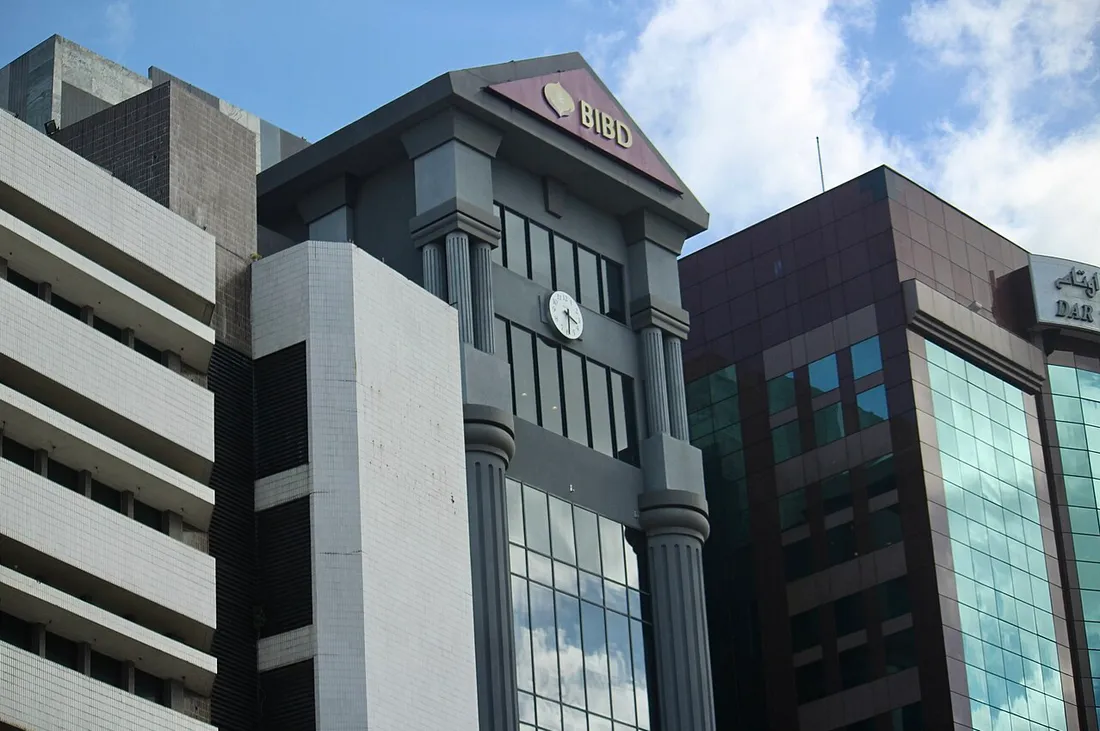
- The BIBD building in Bandar Seri Begawan.: Pangalau, CC BY-SA 4.0, via Wikimedia Commons
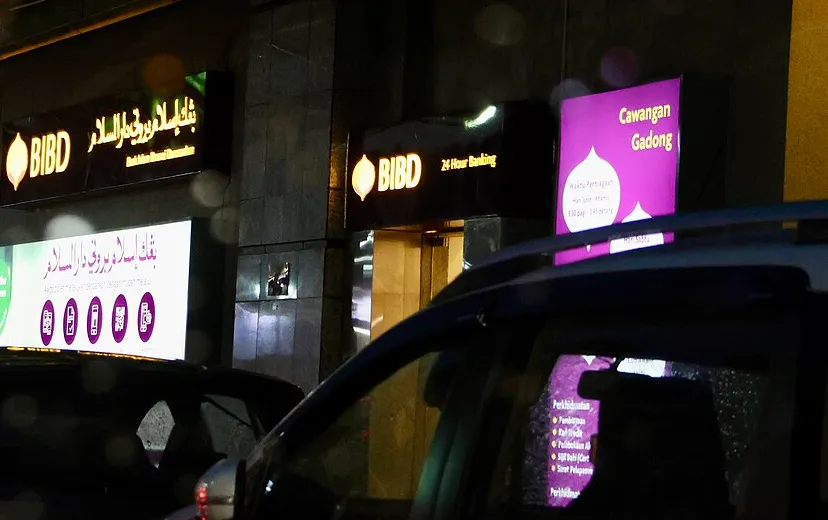
- A BIBD branch with 24-hour banking in Gadong.: Pangalau, CC BY-SA 4.0, via Wikimedia Commons
Get new jobs in Brunei by email
One email a week with the jobs added since the last one. Free, with no account.
Nothing is sent until you open the link we email you. Choose a role, a pay level or daily emails
We use your address only to send the alerts you ask for, and every email has a one-click unsubscribe link. The privacy notice says how long we keep it, and the terms of use cover the alerts.
We check this guide again by February 2, 2027. Rules change, so confirm visa steps with the embassy and your school before you go. First published November 4, 2026. Spotted something out of date? Tell us. How we write these guides.