Opening a bank account in Colombia
Get your teaching salary into a Colombian account, with a card and a payment app, in your first months. Here's what banks ask foreign teachers for, which apps to set up, and how to cope until the first payday.
AbroadPin team6 min read
Contents
In Colombia the order matters. Your work visa comes first, then the cédula de extranjería (the foreigner ID card), then the bank, and the Nequi and DaviPlata phone wallets only open once you have that card [5] [6]. Plan for a few weeks of living on cash and a home card while the papers catch up. The visa and permit steps are in the main guide to teaching in Colombia; this page picks up once you have them.
Which banks open accounts for foreign teachers
The big retail banks are where most foreigners end up. Wise names Banco Colpatria, Banco AV Villas and Banco Caja Social, and notes that foreigners tend to stay with large, well known banks [4]. Bancolombia publishes its own list of papers for foreigners, with a separate line for teachers, which makes it an easy first stop [1].
Requirements change from branch to branch, so Nexo Legal, a Medellín immigration firm, suggests checking the list with the branch before your appointment [3]. If one branch says no, another branch of the same bank, or another bank, may say yes.
Ask your school first
Before you pick a bank, ask the school where it pays salaries. Some employers pay into a payroll account (cuenta nómina) at one bank, and El Cronista notes that some payroll accounts only drop the monthly fee while your salary keeps arriving there [7].
What papers banks ask for
Your ID
The cédula de extranjería is the document banks build the account on. Nexo Legal says it has to be the physical card, that the paper receipt you get while it's being made is refused at most branches, and that a passport on its own usually isn't enough for a full banking relationship [3]. Bancolombia is just as direct: the receipt (the contraseña) can't be used for any transaction [1]. Wise goes further and says a local account isn't possible at all without the cédula, which can't be had on a tourist stay [4].
There's one exception worth knowing. Bancolombia's list for employees, freelancers and teachers asks for your visa, passport or temporary cédula de extranjería, a second photo ID, and a work letter [1]. So if your card is still on its way, a Bancolombia branch is the place to try with your visa and passport, since most other branches will want the card itself [3].
Your work letter
Bancolombia wants a carta laboral that gives the company's name, your income and how long you'll be employed [1]. Ask the school's office for it in your first week, on letterhead and signed, in Spanish. Wise also lists a signed employment contract and your employer's address and contact details for some accounts [4], so bring the contract too.
Proof of address and a local phone number
Bring a lease or a recent utility bill as proof of address [4]. Nexo Legal says banks may also ask for proof of income or where your money comes from, and that a Colombian phone number is needed in most cases for checks and alerts [3]. Get a local SIM before the bank visit, because the bank uses that number for its checks and alerts [3].
Opening the account, step by step
- Book or walk in at a branch. Bancolombia asks foreigners to bring original documents to a physical branch [1].
- Bring copies. For a savings account opened at a branch, Bancolombia asks for your original ID and a copy enlarged to 150% [2].
- Fill in the forms. You complete the bank's account form there, with your fingerprint and signature [2].
- Deposit, or not. Bancolombia says you don't need any money to open a savings account [2]. Other banks may want a minimum opening deposit, so ask [3] [4].
- Pick up your card. Wise says the debit card is usually handed over more or less on the spot [4].
- Install the app and log in before you leave, while staff can help with the setup.
How long does it take? Nexo Legal puts the step from visa to cédula at several weeks, depending on the visa category, and the step from cédula to account at the same day to a few days once you hold the card [3].
Fees and the 4x1000 tax
Monthly fees
Many accounts charge a monthly fee (cuota de manejo), but not all. El Cronista counted 21 of the 29 banks that offer savings accounts as having a savings account with no monthly fee, in February 2026 [7]. Ask for the account's fee sheet before you sign, and ask whether the fee goes away when your salary is paid in.
The 4x1000
Colombia charges a tax on money moving out of accounts, the gravamen a los movimientos financieros, known as the 4x1000: four pesos of every 1,000 pesos you withdraw, transfer or pay [8]. One savings account can be exempt while its monthly movements stay under 350 UVT, a limit Portafolio put at 16,473,000 COP a month for 2024 [8]. The exemption isn't automatic. You ask the bank to mark the account you want exempt, and you get it on one account only [8].
Cards, transfers and payment apps
Nequi and DaviPlata
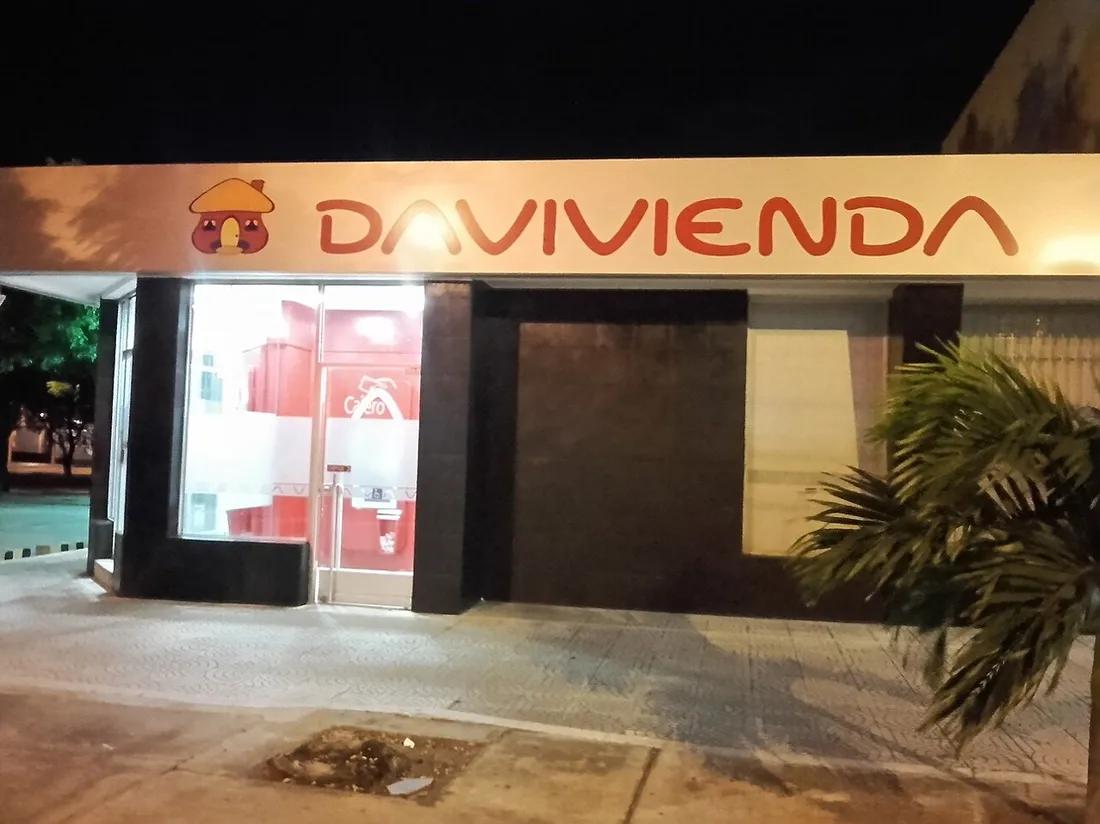
Nequi and DaviPlata are phone wallets tied to a Colombian mobile number, and DaviPlata belongs to Davivienda [7]. They're handy for splitting bills, paying a landlord or taking payment for a private class.
- Who can open one. Foreigners living in Colombia can open Nequi from age 18 with a valid cédula de extranjería or a PPT, the permit for Venezuelans [5]. Colombia One gives the same two documents for DaviPlata [6].
- Phone number. Nequi needs an active Colombian mobile line, and each person can only have one Nequi account, tied to the phone number, the ID and the email [5].
- Card costs. Colombia One lists a Nequi digital Visa card at 3,000 COP and a plastic card at 22,000 to 25,000 COP, with no monthly fee on either [6].
- Using it abroad. Nequi adds 3% on top of the Visa rate for payments to foreign merchants, per Colombia One [6].
- Cash. DaviPlata money can be withdrawn at Davivienda cash machines and at corresponsales bancarios, the small shops that act as bank counters [6].
Bre-B instant transfers
Bre-B is an instant payment system set up by Banco de la República, the central bank, and it moves money between different banks and wallets [9]. It went live on 6 October 2025, and Noticias RCN reported that transfers carry no cost for users [11]. Forbes Colombia noted before launch that each bank decides whether to charge its own customers, so check your bank's app [10]. Bancolombia says transfers arrive instantly and the system runs 24/7 [9].
To receive money you register a key (llave) in your bank's app, under a Bre-B or "Tus llaves" button [11]. A key can be your mobile number, your ID number, your email, or a short username with an @ [9] [11]. Once your account is open, give your landlord and your tutoring clients your key instead of the long account number.
Getting paid before the account is open
Your first salary may arrive before your cédula and account do. A few things help:
- Tell the school your timeline. Say when you expect the cédula and ask how it will pay you until then, and get the answer in writing.
- Ask for the work letter early. Bancolombia's list needs it, and it's the one paper only your employer can give you [1].
- Bring enough to live on. Rent, a deposit and the first weeks of food come from savings or a home card until the first deposit lands.
- Keep your home account working. You'll want it for the first weeks and later for moving savings home.
- Check the first payslip. Once the account is open, give the school its details in writing and check the first payment arrives in full.
When the paperwork is done, look at the open teaching jobs in Colombia.
Sources and photo credits
- 1.Bancolombia, documents a foreigner needs to open a Bancolombia savings account (18 December 2023, read 4 November 2026)
- 2.Bancolombia, requirements to open a savings account at a branch (2 October 2026)
- 3.Nexo Legal, banking in Colombia as a foreigner with a cédula de extranjería (27 July 2026)
- 4.Wise, how to open a bank account in Colombia as an American (updated 23 November 2023)
- 5.Noticias RCN, the minimum age to open a Nequi account for Colombians and foreigners (15 July 2025)
- 6.Colombia One, Nequi and DaviPlata for foreigners in Colombia (14 March 2026)
- 7.El Cronista, how to open a savings account with no monthly fee in Colombia in 2026 (6 February 2026)
- 8.Portafolio, the monthly cap on 4x1000-free movements in Colombia (27 June 2024)
- 9.Bancolombia, Bre-B instant payments (undated, read 4 November 2026)
- 10.Forbes Colombia, frequently asked questions about Bre-B (15 July 2025)
- 11.Noticias RCN, how to register your key in Bre-B and use it (6 October 2025)
Photos
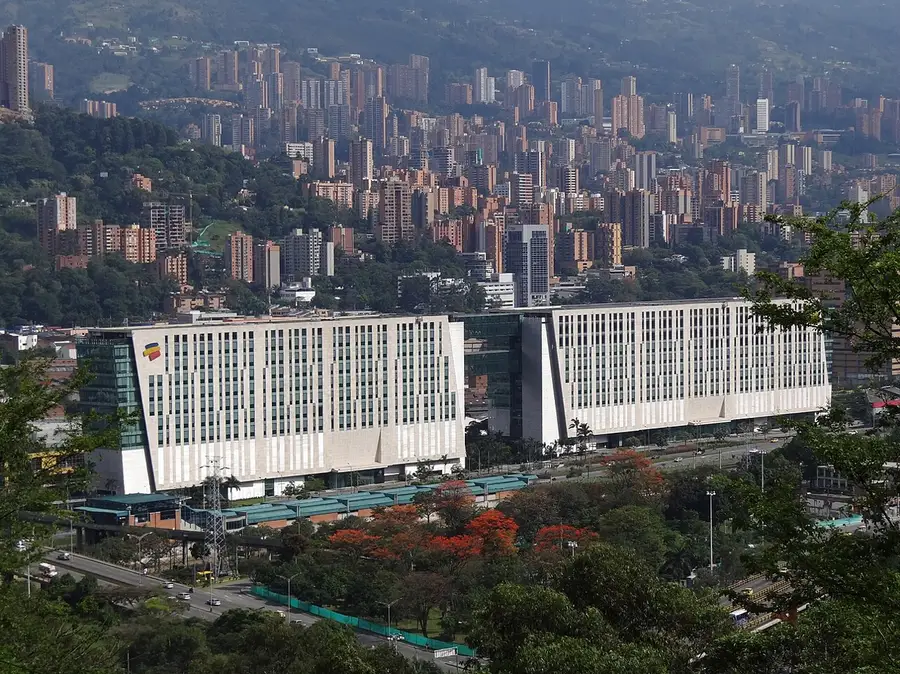
- The Bancolombia headquarters in Medellín.: Petruss, CC BY-SA 4.0, via Wikimedia Commons
- A Davivienda cash machine room in Cúcuta.: EEIM, CC BY-SA 3.0, via Wikimedia Commons
Get new jobs in Colombia by email
One email a week with the jobs added since the last one. Free, with no account.
Nothing is sent until you open the link we email you. Choose a role, a pay level or daily emails
We use your address only to send the alerts you ask for, and every email has a one-click unsubscribe link. The privacy notice says how long we keep it, and the terms of use cover the alerts.
We check this guide again by February 2, 2027. Rules change, so confirm visa steps with the embassy and your school before you go. First published November 4, 2026. Spotted something out of date? Tell us. How we write these guides.