Getting a phone number and SIM in France
Get a French number in your first days so bank codes, school messages and deliveries reach you. Here's how to buy a SIM, what carriers ask for, what plans cost and how to keep your home number.
AbroadPin team7 min read
Contents
A French number is one of the cheapest things you'll set up after the move, and it makes the bigger jobs easier. Banks, landlords, your school office and parcel services all expect one. Most plans have no contract at all, so you can start small and change later. The catch for new arrivals is the order of steps: the cheapest plans want French bank details, while the bank wants a phone number. This page shows how to get round that in the right order, with prices from the carriers' own pages. For pay, permits and employers, see the main guide to teaching in France.
Two kinds of plan
You'll see two main options in shops and online.
- Prepaid (carte prépayée). You buy a SIM, put credit on it and top up when it runs low. Lycamobile, for example, sells prepaid plans with no commitment and gives the SIM and eSIM away free [4]. This is the easy start if you don't have a French bank account yet.
- No-contract monthly plans (forfait sans engagement). You pay each month by direct debit and can leave when you like. Free Mobile, RED by SFR and B&You by Bouygues Telecom all sell these with no commitment [1] [2] [3]. They give far more data for the money, but you'll usually need a French IBAN to sign up. B&You, for instance, says you don't have to send any document, only the IBAN from your RIB, the bank details slip French banks give you [3].
Many teachers do both: a prepaid SIM in the first week, then a monthly plan once the bank account is open, keeping the same number.
The ID rule
France doesn't sell anonymous SIM cards. A crowd-edited prepaid SIM wiki notes that showing photo ID when you buy is a legal requirement, and that a passport or driving licence is usually enough [6]. The same wiki says activation can take up to 48 hours, so don't buy your card on the morning you need it [6].
What to bring to the shop:
- Your passport, or your national ID card if you're an EU citizen.
- An unlocked phone, so it accepts a French SIM.
- Your French address, if you already have one.
- Your RIB, if you're signing up for a monthly plan.
If you buy a SIM online or in a supermarket rather than a carrier's own shop, expect to send a copy of your ID or activate the line on the carrier's website before it works [6].
The main carriers
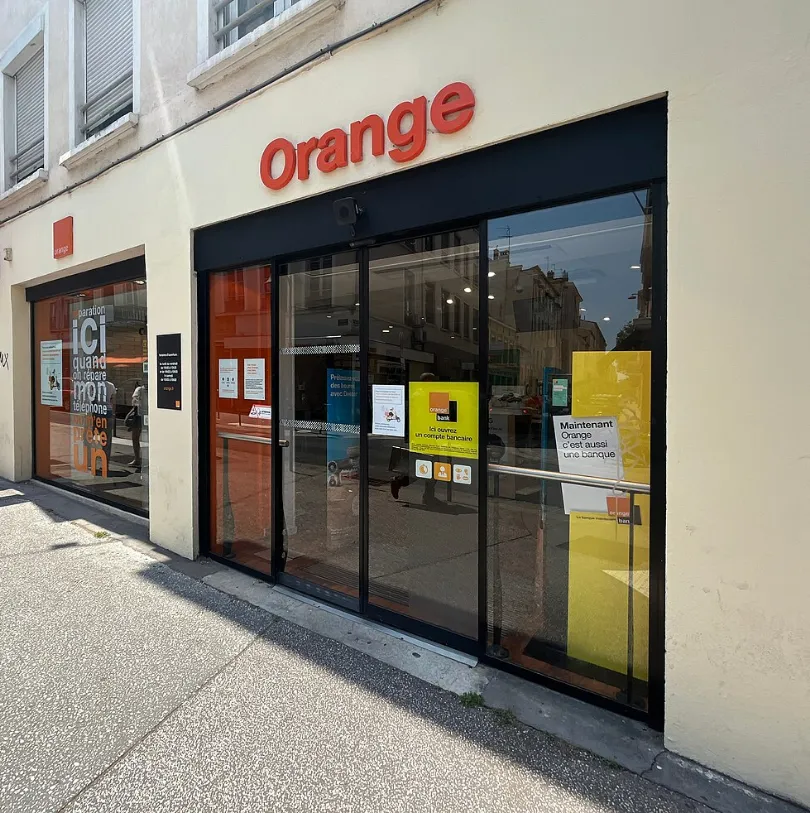
France has four mobile networks: Orange, SFR, Bouygues Telecom and Free Mobile [6]. Each sells its own plans, and Orange, SFR and Bouygues also run cheaper online brands (Sosh, RED by SFR and B&You). Smaller brands such as Lycamobile and La Poste Mobile rent space on these networks [6].
The big carriers' own shops are the easiest place to get help in person. The online brands keep prices down by doing nearly everything through their websites and apps, so be ready to sign up on your phone or laptop.
What plans cost
Prices below are the no-contract plans the carriers showed on their own pages on 5 November 2026 [1] [2] [3]. The RED by SFR and B&You plans all include unlimited calls and texts within France [2] [3].
| Brand and plan | Price a month | Data in France | Data abroad, EU included |
|---|---|---|---|
| RED by SFR 1Go | €1.99 | 1 GB | 1 GB [2] |
| B&You 1Go | €1.99 | 1 GB | 1 GB [3] |
| B&You 20 Go 4G | €8.99 | 20 GB | 20 GB [3] |
| RED by SFR 40Go | €9.99 | 40 GB | 15 GB [2] |
| RED by SFR 120Go 5G | €12.99 | 120 GB | 30 GB [2] |
| B&You 100 Go 5G | €13.99 | 100 GB | 35 GB [3] |
| RED by SFR 250Go 5G | €15.99 | 250 GB | 35 GB [2] |
| Free 5G+ | €19.99 | 350 GB | 35 GB [1] |
A few more things worth knowing:
- Free's Forfait 2€. It starts at €2 a month with 2 hours of calls, which suits a teacher who mostly lives on Wi-Fi [1].
- Free's Série Free. It costs €12.99 a month for one year with 110 GB, then becomes the Forfait Free 5G+ [1]. Check the later price before you sign up, since the first-year price doesn't last.
- Free Max. At €29.99 a month it has unlimited data in mainland France and unlimited data in more than 140 destinations abroad [1].
- Start-up costs. B&You charges €1 for the SIM card, €1 for activation on the first bill and €5 if you cancel [3]. Free charges €10 for a new SIM after a loss or theft, or to change the card's size [1].
- Call limits. RED by SFR caps each call at 3 hours and allows calls to 200 different numbers a month [2]. That won't touch normal use.
- New-customer offers. RED by SFR says its offers are for new customers [2]. Prices can change, so read the price on the order page before you confirm.
If you're a language assistant, the first salary can arrive weeks after you start, so a cheap plan for the first months is a sensible choice.
eSIM or a physical card
An eSIM saves a trip to a shop and a wait for the post. Free says your eSIM is ready as soon as you subscribe to one of its mobile plans [1]. Lycamobile offers eSIMs on its prepaid plans as well [4].
Check two things on your phone before you choose:
- It isn't locked to your carrier at home. A locked phone will reject a French SIM or eSIM.
- It supports eSIM. Look in the settings or on the maker's page. If not, take a physical card.
Your first days in France
What you use before you have a French number depends on where your current SIM comes from.
- Coming from elsewhere in the EU. Your current SIM keeps working in France at home prices, with no roaming surcharge [5]. Read your plan's fair use terms, because they can set a ceiling on use abroad [5].
- Coming from the US, the UK or anywhere outside the EU. The EU rules give you no protection, so roaming can be expensive. Look up your plan's daily or weekly travel pass, or leave data off and lean on Wi-Fi at the airport, the hotel and the school.
Don't plan to live on a SIM from another EU country for the whole year. The EU ties free roaming to the country where you have stable links, such as living, working or studying there [5]. If your use over 4 months shows you're mostly abroad, the carrier can ask why and give you 14 days to answer before charging [5].
Why a French number matters
- The bank. Card payments online and logins to your banking app are confirmed with a code sent by text, and some French payment apps need a mobile number your bank has checked.
- School. Secretaries and fellow teachers text about cover lessons, room swaps and staff meetings.
- Flat hunting. Agencies and private owners often reply to an enquiry by phone, and a French number is easier for them to call back.
- Everyday admin. Parcel lockers, doctors' booking sites and the health insurance office send texts with codes and reminders.
Keeping your number when you switch
Once you have a French number, you can carry it to another carrier. To keep it, you need your RIO code, which you get by calling 3179 from the phone whose number you want to keep [2]. Give the code to your new carrier when you sign up, and it handles the move.
Some carriers help with the cost of leaving. RED by SFR refunds up to €5 of termination fees if you send your final bill from the last 3 months [2]. Free refunds up to €10 if you keep your number and ask within 4 months of activating your new SIM [1].
Keeping your home number
Your number from home is often the key to accounts you still need: your home bank, a credit card, tax filings, loan servicers. If it lapses, a login code can go to someone else or nowhere.
- Run two lines on one handset. Put the French SIM in as an eSIM and leave your home SIM in the tray, or the other way round. Turn off data on the home line so it only receives texts.
- Shrink the home plan. Many carriers have a low-cost keep-the-number or prepaid plan. Ask what incoming texts cost while you're in France before you switch.
- Swap text codes for an app. Before you leave, move as many accounts as you can to an authenticator app, which works without any SIM.
Your first month, step by step
- Before you fly, check your phone is unlocked and supports eSIM, and sort out your home number.
- On arrival, use Wi-Fi or an EU SIM for the first days [5].
- Buy a prepaid SIM with your passport, and allow up to 48 hours for it to work [6].
- Give the number to your school, your bank and your landlord.
- Once you have a RIB, move to a no-contract monthly plan if you want more data, and take your number with you using the RIO code from 3179 [2].
When you're connected, browse the open jobs in France.
See jobs in France
- English Teaching Assistant in France (TAPIF 2027 to 2028)Paris · $1,117 a month
Sources and photo credits
- 1.Free Mobile, mobile plans, eSIM, fees and number transfer refund (read 5 November 2026)
- 2.RED by SFR, no-contract mobile plans, call limits and the RIO code (read 5 November 2026)
- 3.Bouygues Telecom, B&You no-contract plans, fees and what you need to subscribe (read 5 November 2026)
- 4.Lycamobile France, prepaid plans with free SIM and eSIM (read 5 November 2026)
- 5.European Commission, Your Europe, mobile roaming costs in the EU (last checked 7 January 2026)
- 6.Prepaid Data SIM Card Wiki, France, crowd-edited (read 5 November 2026)
Photos
- An Orange shop on the Grande-rue de la Croix-Rousse in Lyon.: Benoît Prieur, CC0, via Wikimedia Commons
- A plane at the gate, seen from Terminal 2E at Paris Charles de Gaulle airport.: Jorge1767, Public domain, via Wikimedia Commons
Get new jobs in France by email
One email a week with the jobs added since the last one. Free, with no account.
Nothing is sent until you open the link we email you. Choose a role, a pay level or daily emails
We use your address only to send the alerts you ask for, and every email has a one-click unsubscribe link. The privacy notice says how long we keep it, and the terms of use cover the alerts.
We check this guide again by February 3, 2027. Rules change, so confirm visa steps with the embassy and your school before you go. First published November 5, 2026. Spotted something out of date? Tell us. How we write these guides.