Opening a bank account in Panama
Get your teaching salary into a Panamanian account, with a debit card and Yappy on your phone. Here's what banks ask foreign teachers for, what it costs, how long it takes, and how to manage until the first payday.
AbroadPin team7 min read
Contents
Panama has a big banking sector and it uses the US dollar, but that doesn't make opening a personal account quick. Banks here check your identity and where your money comes from, and newcomers without ties to Panama can be asked for more [3] [4]. The good news for teachers is that a job in Panama gives you most of what the banks want to see. The residence and work permit steps are in the main guide to teaching in Panama; this page covers the bank side.
Which banks to try
Most foreigners end up at one of the large local banks. Reside Panama, a relocation firm, names Banco General, Banistmo, Global Bank and Multibank, and says most Americans start with Banco General or Banistmo [3]. Finantres, a Spanish-language finance site, also covers Banco Nacional de Panamá (the state bank) and BAC [2].
A few points help you choose:
- Banco General is one of the best known private banks, and it's the bank behind Yappy, the phone payment app many people here use [5] [6]. Telemetro counted more than 75 branches across the country in 2023 [1].
- Banistmo belongs to the Bancolombia group, and its app now links to Yappy too [5] [8].
- Banco Nacional de Panamá is the state bank. Finantres says it sends foreigners' applications for a detailed review at the branch [2].
- BAC asks foreigners for a passport and a migration card for some of its accounts, according to Finantres [2].
Ask your school first
Before you pick, ask the school's office where it pays salaries and whether it has a usual bank for staff. A school that already pays teachers at one bank can often give you the letter that bank expects, and you'll avoid waiting for transfers between banks on payday.
What papers banks ask for
Each bank sets its own list, and branches don't always agree, so call or visit before you go with everything. These are the papers that come up again and again.
Your ID
- Passport. Every bank asks for a valid one [1] [2] [3].
- A second photo ID. Banistmo asks non-residents for a passport and a second document with a photo [2]. NDM, a firm based in Panama, gives a driving licence or national ID card from home as examples [4].
- Your residence card, once you have it. Reside Panama says many banks now strongly prefer a Panamanian residency card, and that residents generally find the process much smoother than people still on a tourist entry [3].
Banco General asks foreigners for a valid passport or a cédula E, the ID card for permanent residents [1]. If you don't have a cédula E, it also asks you to show a link to Panama (vínculo con Panamá) [1]. Telemetro doesn't say what counts as that link, so ask the branch whether your work contract or a letter from your school will do [1].
Proof of income and a work letter
Banks want to see where your money comes from. Ask your school for a signed letter on letterhead, in Spanish, giving your job, your salary and your start date, and bring your contract as well. NDM lists employment contracts and an employer reference among the papers banks accept [4].
There's a shortcut for small balances. At Banco General, if your savings will stay under $5,000.00, you only sign a sworn income declaration the bank gives you when you open the account [1].
A bank reference letter
This is the paper that surprises most newcomers. Banco General asks foreigners for a bank reference letter [1], and NDM says banks may want one or two [4]. Reside Panama says it should come from your current bank at home [3]. Some banks also want a personal reference from a lawyer, an accountant or an employer [3] [4].
Ask your home bank for the letter before you fly, because it's slow to arrange from abroad. Bring recent statements from that account too, since NDM lists the last six months of bank statements among the papers some banks request [4].
Proof of address and a phone number
Bring a utility bill or your lease as proof of address [3] [4]. NDM says some banks accept an address abroad for non-residents, while others insist on one in Panama [4]. Get a Panamanian SIM before the appointment. Banks ask for your contact details, and Yappy sends money by mobile number [1] [7].
Opening the account, step by step
- Check the list with the branch. Ask for the exact papers for a foreign employee, and whether they need originals, copies or certified copies [3].
- Fill in the forms. Expect a know-your-customer form and questions on how you'll use the account, such as receiving a salary and paying rent [2].
- Pay the opening deposit. Holafly, an eSIM company that writes about life abroad, puts opening deposits at 50 to 500 dollars depending on the account [5]. Banco Nacional publishes a minimum of B/.10 for a local personal savings account, and BAC starts some accounts from 10 dollars [2].
- Wait for approval. Holafly says checks can take up to a week [5]. Reside Panama puts it at one to three weeks from application to final approval [3].
- Collect your debit card. A savings account generally comes with one, for shops and cash machines across the country [4].
- Set up the app and Yappy while you're still in the branch, so staff can help if something doesn't work.
Once you hold a cédula, some banks let you open an account online or partly online [2]. Banco General's online route asks you to scan your ID, enter your address, contact and job details, choose a debit card and create your login [1].
If you're a US citizen
Expect more paperwork. Reside Panama says US reporting rules under FATCA make banks stricter with Americans, that reviews can take longer, and that some smaller banks or branches don't take US clients at all [3]. That's another reason most Americans start at Banco General or Banistmo [3].
Fees
Most charges are small, but they add up over a year. Holafly gives these ranges [5]:
- Monthly maintenance of about $5 to $15 if your balance falls below the minimum [5].
- International transfers at $20 to $40 each, depending on the bank and destination [5].
- Credit cards with annual fees of $25 to $100 [5].
Holafly adds that accounts for non-residents can carry higher maintenance fees [5]. Ask for each bank's fee sheet before you sign, and check the minimum balance against what's left in your account in the last week of the month.
Cards, cash and Yappy
Your home card in the meantime
Until your account opens, you'll live on cash and a card from home. Reside Panama says Banco General and Banistmo cash machines take foreign cards reliably [3]. Your home bank's own fees still apply, so check them before you leave.
Yappy
Yappy is how people in Panama split bills, pay small shops and send money to each other. It's Banco General's instant payment service, and you send money to someone using their mobile number [7]. In May 2025 it had more than 1.5 million users, about 45% of Panamanians over 18 [7].
- Who can use it. You need an account at a bank that's connected to Yappy [9]. In October 2026 that meant Banco General, Banistmo, St. Georges Bank, Caja de Ahorros, Credicorp Bank, Davivienda, MetroBank and Banisi [8].
- Where it lives. Some banks run Yappy inside their own app, and others through the separate Yappy app [8].
- Limits. In April 2024 Newsroom Panama gave a minimum of $0.01 and a maximum of $9,999.00 per transfer [6].
BAC, Global Bank and Banco Nacional weren't on that October 2026 list [8]. If you want Yappy from day one, that's worth weighing when you choose a bank.
Getting paid before the account is open
The permit, the residence card and the account rarely line up with your first payday. Plan for a gap:
- Bring savings. Rent, a deposit and the first weeks of food come out of your own money until a salary lands.
- Agree the first payment in writing. Ask the school how it will pay you if your account isn't ready, and when the first payment is due.
- Request your papers on day one. The work letter and any reference only come from your employer, so ask in your first week.
- Keep your home account open. You'll use it now for cash, and later when you send savings home.
- Check the first payslip. Make sure the salary arrives in full and the deductions match your contract.
When your banking plan is in place, browse the open teaching jobs in Panama.
See jobs in Panama
No live jobs in Panama right now. New pins go up every day.
Sources and photo credits
- 1.Telemetro, how to open a Banco General account: guide and requirements (31 July 2023)
- 2.Finantres, how to open a bank account in Panama: requirements and steps (updated 19 October 2026)
- 3.Reside Panama, how to open a bank account in Panama as a foreigner in 2026 (undated, read 5 November 2026)
- 4.NDM, opening a bank account in Panama (updated 16 July 2026)
- 5.Holafly, the best banks in Panama for foreigners (updated 7 July 2025)
- 6.Newsroom Panama, Banco General Yappy makes an important update (27 April 2024)
- 7.La Estrella de Panamá, Caja de Ahorros joins Yappy (6 May 2025)
- 8.La Estrella de Panamá, how Yappy will work inside Banistmo's mobile banking (7 October 2026)
- 9.Newsroom Panama, Yappy now with more banks and more clients (5 September 2024)
Photos
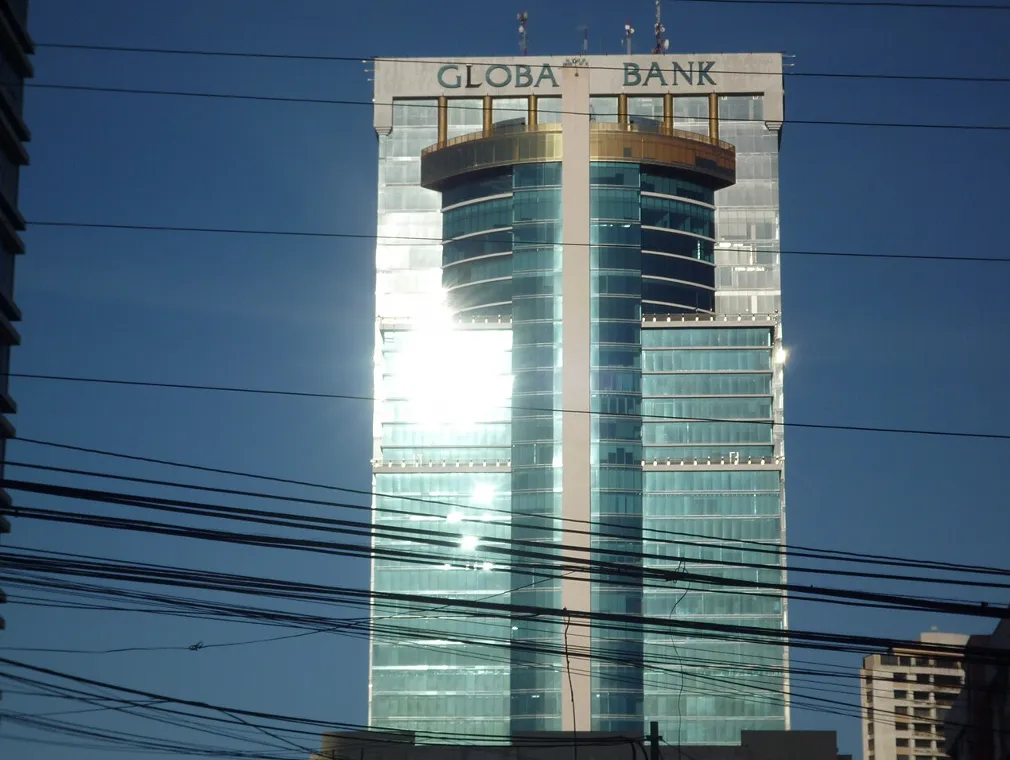
- Global Bank's tower in Panama City.: 123Hollic, CC BY-SA 4.0, via Wikimedia Commons
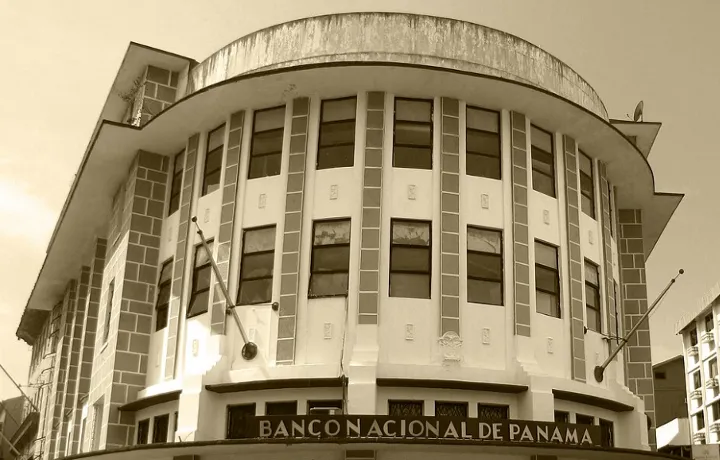
- A Banco Nacional de Panamá branch in Panama City.: RicardoAndres39, CC BY-SA 4.0, via Wikimedia Commons
Get new jobs in Panama by email
One email a week with the jobs added since the last one. Free, with no account.
Nothing is sent until you open the link we email you. Choose a role, a pay level or daily emails
We use your address only to send the alerts you ask for, and every email has a one-click unsubscribe link. The privacy notice says how long we keep it, and the terms of use cover the alerts.
We check this guide again by February 3, 2027. Rules change, so confirm visa steps with the embassy and your school before you go. First published November 5, 2026. Spotted something out of date? Tell us. How we write these guides.