Finding an apartment in Poland
Rent a flat in Warsaw or Kraków without overpaying in your first weeks. Here's what places cost, how much cash to have ready, how address registration works and what to check before you sign.
AbroadPin team8 min read
Contents
Most English teachers in Poland find their own flat. Language schools may help you look, but you'll usually sign the lease and pay the deposit yourself. The two things that catch newcomers out are how much cash a landlord wants before you get the keys, and the short deadline for registering your address if you're from outside the EU. This page covers both, plus what rent costs in the two cities with the most teaching work. For pay, permits and the main employers, read the guide to teaching in Poland.
School housing or your own lease
Start with your offer, because it decides how much of this you do alone.
- Language schools tend to help rather than house you. SPEED School of English's 2025 ad lists assistance in finding suitable accommodation and an airport pick-up, but doesn't say it provides a flat [5].
- International schools and universities set their own packages, so ask directly whether housing or an allowance is part of yours.
If your school offers help, ask what it covers: viewings with a Polish speaker, a recommended agent, or a first few weeks somewhere temporary. Then book a short stay for your arrival, so you can see flats in person before you commit to a year.
Rooms or a whole flat
You'll see everything from older apartment blocks to modern flats, houses and duplexes [3]. Unfurnished places are more common than furnished ones, though appliances such as a stove, a fridge and a dishwasher are often provided [3]. Air conditioning is rare, so think about summer if you're on a top floor [3].
A single teacher usually chooses between a small studio of your own and a room in a shared flat. A room costs less and often comes with a furnished kitchen, which helps when you arrive with two suitcases. A studio gives you quiet for marking and evening lessons online. Whichever you pick, ask exactly what furniture stays, because an empty flat means buying a bed in your first week.
Where people look
Flats are advertised online and in Polish daily newspapers [3]. Expat Arrivals suggests that renters who don't speak Polish use a real estate agent [3]. Agents usually charge at least a month's rent once you've signed, so ask who pays the fee before your first viewing [3].
Colleagues are the quickest shortcut. They know which landlords answer the phone, which buildings are near your school, and roughly what a fair rent is this year. Many language school jobs run in the afternoon and evening, so a short trip home matters more than a fashionable address.
Location shapes the price. In Warsaw, flats near the metro cost more, while places further from the centre are cheaper but have fewer services nearby [3].
What rent costs in Warsaw and Kraków
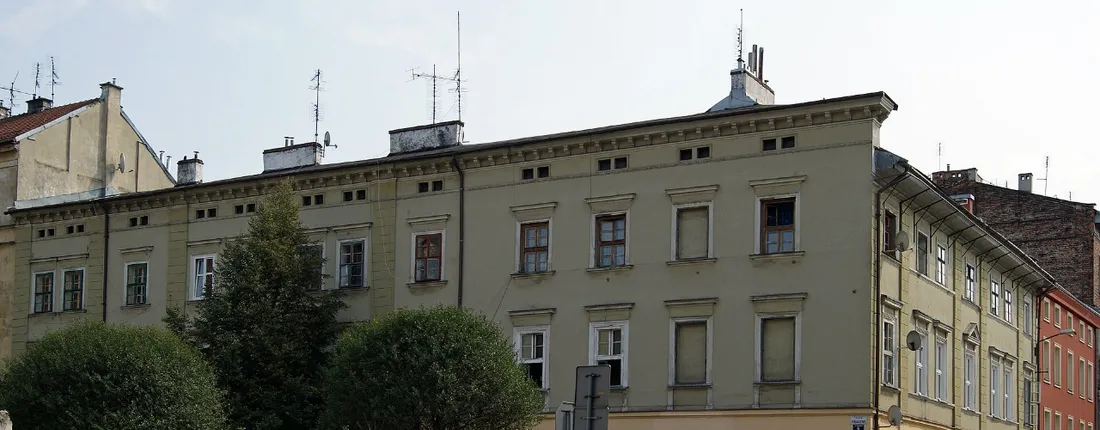
OnGeo's study of average asking rents in April 2026 gives these monthly figures by flat size [2].
| Flat size | Warsaw | Kraków |
|---|---|---|
| Under 40 m² | 2,960 zł | 2,420 zł |
| 40 to 59 m² | 3,092 zł | 3,070 zł |
| 60 to 89 m² | 6,090 zł | 4,284 zł |
| 90 m² and over | 10,075 zł | 6,131 zł |
These are prices landlords advertised, not what tenants finally agreed [2].
Numbeo's crowd-sourced figures for Warsaw, last updated on 3 November 2026 and based on 2,059 entries from 321 people over the past year, run higher [1]:
- One-bedroom flat in the centre: about 4,568 zł a month, with entries ranging from 4,000 to 6,000 zł [1].
- One-bedroom flat outside the centre: about 3,627 zł a month, with entries ranging from 2,870 to 4,500 zł [1].
- Three-bedroom flat in the centre: about 8,571 zł a month [1].
- Three-bedroom flat outside the centre: about 5,862 zł a month [1].
Numbeo's page for Kraków, last updated on 4 November 2026 from 1,474 entries by 155 people, gives these averages [6]:
- One-bedroom flat in the centre: about 3,616 zł a month, with entries ranging from 3,200 to 4,500 zł [6].
- One-bedroom flat outside the centre: about 2,815 zł a month, with entries ranging from 2,500 to 3,500 zł [6].
- Three-bedroom flat in the centre: about 5,980 zł a month [6].
- Three-bedroom flat outside the centre: about 4,688 zł a month [6].
So in Warsaw, budget somewhere between 3,000 zł and 4,600 zł for a small place of your own, depending on how central you want to be [1] [2]. In Kraków, Numbeo's one-bedroom averages run from about 2,800 zł outside the centre to 3,600 zł in it [6]. On OnGeo's asking rents, Kraków's small flats ask about 540 zł a month less than Warsaw's, while mid-sized ones cost about the same [2].
Deposits and money up front
Landlords often ask for a deposit of one to three months' rent, and some want six months paid up front [3]. Add the first month's rent and, if you used one, the agent's fee of at least a month's rent [3].
As an example, on a 3,627 zł flat outside central Warsaw, one to three months' deposit comes to roughly 3,600 to 10,900 zł before the first rent and any agent's fee [1] [3]. Your first salary may land a few weeks after you start, so plan that cash before you fly.
To get the deposit back:
- Get a receipt or a bank transfer record for every payment, with the date, the amount and what it covers.
- Take dated photos of every room, the meters and each appliance on the day you move in.
- Agree in writing what condition the flat must be in when you leave, and how soon the deposit comes back.
What the lease should say
Rental agreements in Poland are usually flexible and set between tenant and landlord [3]. That means the details are yours to agree, so get them on paper. A written lease, an umowa najmu, is also one of the documents you'll show when you register your address [4].
Settle these before you sign:
- Length and notice. How long the lease runs, how much notice either side gives, and what happens if you leave early.
- The full monthly cost. Which bills are in the rent and which come on top.
- Repairs. Who pays when the boiler, the washing machine or the fridge breaks.
- An inventory. A list of furniture and appliances, signed by both of you.
- The language. Ask for an English copy next to the Polish one, or have a colleague read it with you.
Bills and internet
Gas, water and electricity are usually paid by the tenant on top of rent, and building costs such as cleaning and gardening are extra too [3]. Ask the landlord for the total you'll pay each month, not just the rent figure in the advert.
For Warsaw, Numbeo puts basic utilities for a flat of about 85 m² at about 1,280 zł a month, covering electricity, heating, cooling, water and rubbish [1]. Broadband of 60 Mbps or more averages about 63 zł a month, and a mobile plan with 10 GB or more of data about 35 zł [1]. In Kraków the same averages are about 1,265 zł for utilities and 68 zł for broadband [6]. Heating is the big seasonal swing, so ask what last winter's bills came to.
Registering your address
Poland's government says that if you live in Poland, you register your permanent or temporary address with the local municipal office, the urząd gminy [4]. Registration is free, though a certificate of temporary registration costs 17 zł [4].
The deadline depends on your passport [4]:
- EU and EFTA citizens and their families register no later than the 30th day after moving in, and can do it online with a trusted profile or a qualified signature [4].
- Everyone else registers in person, no later than the 4th day after moving in, and can't do it online [4].
Bring a valid passport or other travel document, your lease or another document showing your right to live there, and, if you're from outside the EU, your visa or residence card [4]. The owner or other person with legal title to the flat confirms on the form that you live there [4]. When you register in person, the official registers you straight away [4]. Ask your landlord before you sign whether they'll confirm the form, because you'll need them within days of moving in.
Scams and common problems
Most trouble comes from paying before you've checked who you're paying.
- Paying for a flat you haven't seen. Photos don't show the noise, the stairwell or the heating. View in person, or have a colleague go for you.
- A landlord who isn't the owner. Ask to see something that shows they have the right to rent the flat out, since you'll need that kind of document for registration anyway [4].
- Cash with no receipt. Pay by bank transfer to the person named in the lease.
- A landlord who won't confirm your registration. You need the owner's confirmation on the form, so settle this before you pay anything [4].
- A bigger deposit than you planned for. Six months up front isn't unheard of, so know your limit before viewings [3].
- Agent fees nobody mentioned. Ask at the start, since a fee of a month's rent or more is common [3].
With kids
Families usually look at flats of 60 m² or more. OnGeo's April 2026 asking rents put a flat of 60 to 89 m² at 6,090 zł a month in Warsaw and 4,284 zł in Kraków, and one of 90 m² or more at 10,075 zł and 6,131 zł [2]. Numbeo puts a three-bedroom flat outside the centre at about 5,862 zł a month in Warsaw and 4,688 zł in Kraków [1] [6]. That gap is where Kraków makes the biggest difference to a family budget [2]. Choose the school first and the flat second, since a short school run matters every day. School fees, family visas and health cover are in the main guide.
Your first months, in order
- Ask your school what housing help it gives, and which areas colleagues live in [5].
- Book a short stay for your first weeks while you view flats in person.
- Set aside cash for one to three months' deposit, the first month's rent and any agent's fee [3].
- Agree the rent, the bills, the notice period and the inventory in a written lease [3].
- Register your address at the municipal office, within 4 days if you're from outside the EU and 30 days if you're from the EU or EFTA [4].
- Photograph the flat and the meters on move-in day, and keep every receipt.
Once you know which part of town suits you, look at teaching jobs in Poland near there.
See jobs in Poland
No live jobs in Poland right now. New pins go up every day.
Sources and photo credits
- 1.Numbeo, cost of living in Warsaw in złoty (last updated 3 November 2026)
- 2.OnGeo, rent ranking of 30 Polish cities, April 2026 asking rents (20 May 2026)
- 3.Expat Arrivals, accommodation in Poland (undated, read 5 November 2026)
- 4.Gov.pl, registering a permanent or temporary address for foreigners (updated 11 March 2026)
- 5.SPEED School of English, teacher vacancy in Wrocław via The TEFL Academy (31 March 2025)
- 6.Numbeo, cost of living in Kraków in złoty (last updated 4 November 2026)
Photos
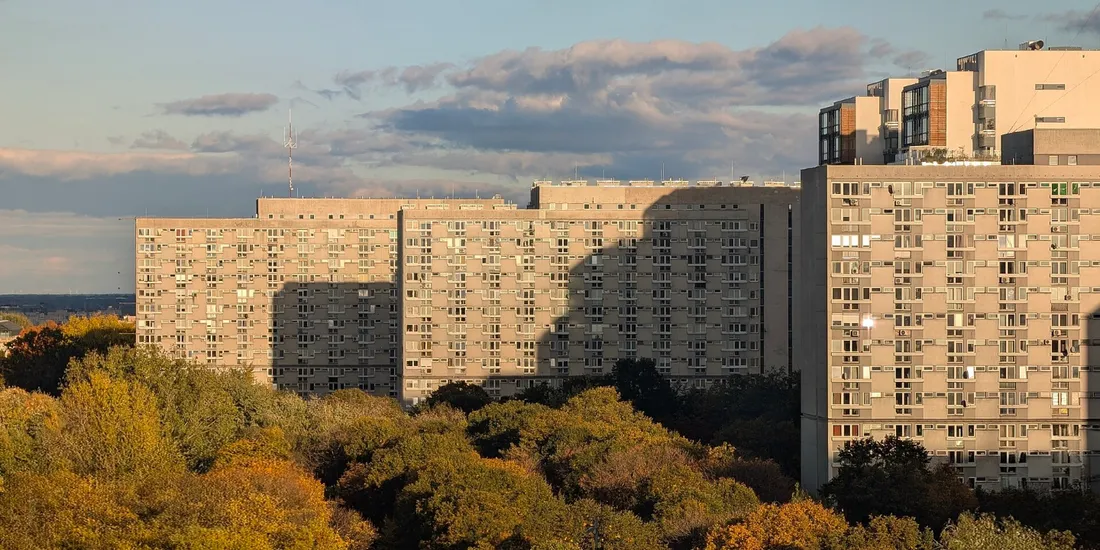
- Large apartment blocks of the Za Żelazną Bramą estate in Warsaw.: Oleslawlama, CC BY-SA 4.0, via Wikimedia Commons
- An older tenement building in the Kazimierz district of Kraków.: Zygmunt Put, CC BY-SA 4.0, via Wikimedia Commons
Get new jobs in Poland by email
One email a week with the jobs added since the last one. Free, with no account.
Nothing is sent until you open the link we email you. Choose a role, a pay level or daily emails
We use your address only to send the alerts you ask for, and every email has a one-click unsubscribe link. The privacy notice says how long we keep it, and the terms of use cover the alerts.
We check this guide again by February 3, 2027. Rules change, so confirm visa steps with the embassy and your school before you go. First published November 5, 2026. Spotted something out of date? Tell us. How we write these guides.