Opening a bank account in Poland
Have your Polish pay land in an account of your own within weeks of arriving. Read on for the papers banks want, where to apply, what it costs and how payday works before the account exists.
AbroadPin team7 min read
Contents
Polish law makes a bank transfer the normal way to pay a salary [6], and BLIK, the code system built into Polish banking apps, turns up at shop tills, cash machines and in apps between friends. So a Polish account in złoty is worth sorting out in your first weeks. There's no single national rulebook for this: a regional university's welcome centre for foreign staff says each bank opens accounts for foreigners on its own criteria, and those criteria can change [2]. Below you'll find the banks to ask, the papers to have ready, branch versus online, fees, cards and BLIK, and how your pay reaches you if the account isn't open yet. For permits, contracts and salaries, see the main guide to teaching in Poland.
Banks foreign teachers use
You won't be short of choice. The Poznań University of Economics and Business tells its international researchers that the banks most popular with residents and non-residents alike are Alior Bank, BNP Paribas, PKO BP, Santander, mBank, Bank Pekao, Bank Millennium and Nest Bank [1]. The Warsaw University of Life Sciences gives a similar list for its newcomers, adding ING and Credit Agricole [3].
A few details from those lists help you pick:
- Credit Agricole and Bank Millennium have ready-made document lists for foreigners [1].
- Bank Millennium and Nest Bank take applications online, and Millennium can send the contract by courier [1].
- Erste Bank Polska says a foreigner can open an account only at a branch, not online [4].
If you're near a big university, its welcome point for foreign staff is worth a visit too. These offices deal with incoming researchers every term, and the three used for this page all give banking advice [1] [2] [3].
Papers to bring
Every bank will want two things from you: proof of who you are and proof that you're in Poland legally [1]. What counts for the second part depends on the bank and on where your passport is from.
EU citizens can open an account at Erste Bank Polska with a foreign passport or a national ID card [4].
Teachers from outside the EU need an identity document plus one paper that proves your legal stay. Erste Bank Polska lists these options [4]:
- a residence card with your PESEL number on it
- a certificate from your employer or other proof that you work in Poland
- a student or school ID, or other proof of study
- proof that you own property in Poland
Other banks accept other papers. The Poznań university lists an ID card, a driving licence, a declaration of residence, a residence visa or a letter from a Polish university confirming researcher status, depending on the bank [1]. Since a certificate from your employer is on Erste's list, ask your school for one in your first week, before your residence card arrives [4].
Two extra asks catch people out:
- A tax residence certificate. Non-residents without a residence card are often asked for one from their home country, and an Erste adviser may ask for it too [1] [4].
- Your foreign tax number. Erste asks you to give your tax identification number from any country other than Poland in a statement about where you pay tax [4]. Look it up before you go, since it may sit on a home tax return or payslip.
PESEL and your address
PESEL is the Polish personal ID number. Some banks ask for it and some don't, so ask on the phone before you visit [1] [3]. The Warsaw university says you get a PESEL at your local municipal office [3].
The same office handles residence registration, which matters because a declaration of residence is one of the papers some banks accept [1]. If you're from outside the EU, the government says you must register at your address by the fourth day of living there, in person at the municipal office, with your travel document, your visa and proof of your right to the flat [5]. EU citizens have until the 30th day and can register online with a trusted profile [5]. Registering is free, and a certificate of temporary residence costs PLN 17 [5].
Before you go to the branch
Phoning first saves a lot of time. Both the Poznań and Rzeszów universities tell their foreign staff to call the bank's hotline, say which residence document they hold, and ask [1] [2]:
- which documents you need to open an account
- whether the bank needs a PESEL number
- whether there's a branch nearby with service in English
- whether the app and online banking work in English or another language you read
Expect to sign in person even where you can start online. The Rzeszów centre says only a few banks accept an application online and that signing the agreement still means a branch visit [2]. At Erste you'll need to be at least 18 to open its standard account [4].
How long it takes
None of the bank or university pages read for this guide give a set time. Erste says only that opening an account is quick and easy once you have the papers [4]. Plan for at least one branch visit and a wait for your card by post.
Fees and what to compare
Polish banks publish fee tables, and at some banks the monthly fees drop to nothing if you use the card enough. Erste's Konto Smart is one example, with these terms as of 9 January 2026 [4]:
| Erste Konto Smart | Age 18 to 25 | Age 26 and over |
|---|---|---|
| Keeping the account | 0 zł | 0 zł with card or BLIK payments of at least 300 zł, otherwise 6 zł |
| Debit card | 0 zł with at least one card or BLIK payment a month, otherwise 9 zł a month | 0 zł with the same 300 zł in payments, otherwise 9 zł a month |
The page gives no period for the 300 zł in payments, so ask at the branch [4]. For customers aged 26 and over it also lists 0 zł for cash at Erste's own machines, for standard and instant transfers in the app and for BLIK phone transfers [4]. For customers aged 18 to 25 it lists 0 zł for withdrawals at other banks' machines in Poland and at all machines abroad [4].
When you compare banks, ask about:
- what you need to do each month to keep the account free
- fees at other banks' cash machines
- costs for money coming in from abroad
- a foreign currency account, if you'll be sending money home: Erste mentions Konto24 walutowe for euros, US dollars and pounds sterling [4]
Cards, BLIK and paying by phone
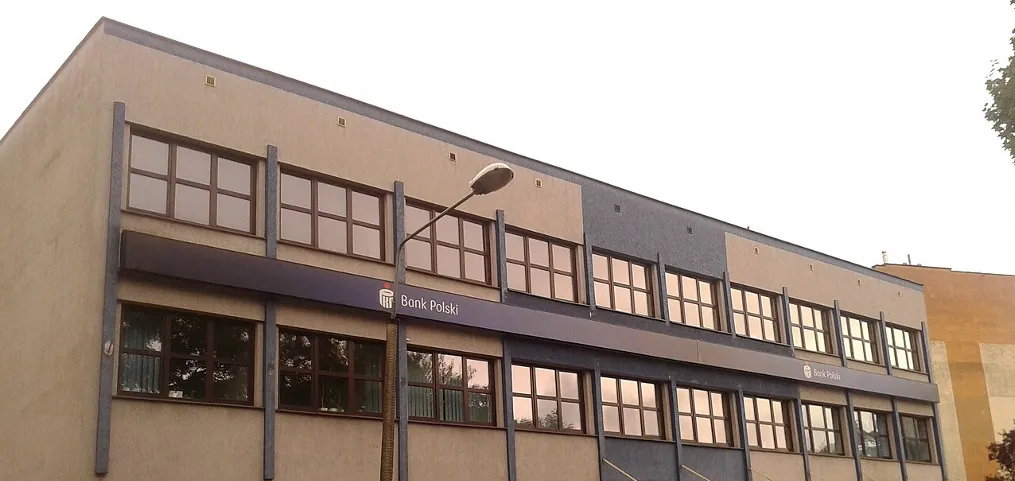
Your debit card comes by post, and that has one catch for new arrivals. The Rzeszów centre says no Polish bank sends cards abroad, so you need a Polish address to receive yours [2]. Give the bank an address where you'll actually be living, not your home address.
Until the card turns up, BLIK can fill the gap. It's a code you generate in your bank's app and type in at a till, a cash machine or an online checkout. Erste's glossary describes a BLIK cash withdrawal as one made at a cash machine or card terminal with no payment card at all [4]. BLIK phone transfers let you send money to someone using only their phone number, at 0 zł on Erste's account for over-26s [4]. Because the codes are made in the app, getting a Polish phone number and the app working on day one is a good idea.
A word on fraud. The Rzeszów centre warns that a bank never asks for your card number by phone, text message or any other way [2]. If someone does, hang up and call the number on the bank's own website.
Getting paid before the account is open
If you're on an employment contract (umowa o pracę), the Labour Code decides how your pay reaches you. Since 1 January 2019, Article 86 says wages go to the payment account you give your employer [6]. You can still ask to be paid in cash, by a request on paper or in electronic form [6] [7].
The ifirma.pl guide to the change says that if your employer doesn't have your account details when payday comes, it pays you in person instead [6]. In practice that means:
- Tell the school office in your first week that your account is on the way, and ask what date payday falls on.
- Hand over the account number in writing as soon as the bank gives it to you, so your next salary goes straight in [6].
- Bring enough savings on a home card to cover your first rent and deposit, since your first pay may come weeks after you land.
These rules cover employees. If you teach on a civil-law contract instead, the Labour Code doesn't decide how you're paid, so ask each school how and when it pays before you sign.
Once your account is sorted, take a look at English teaching jobs in Poland.
See jobs in Poland
No live jobs in Poland right now. New pins go up every day.
Sources and photo credits
- 1.Poznań University of Economics and Business, banking for international researchers and visitors (undated, read 5 November 2026)
- 2.University of Rzeszów Welcome Centre, personal bank account for incoming staff (undated, read 5 November 2026)
- 3.Warsaw University of Life Sciences (SGGW) Welcome Point, useful information, bank account (undated, read 5 November 2026)
- 4.Erste Bank Polska, how to open a bank account as a foreigner, written for the bank by Bluerank (as of 9 January 2026)
- 5.Gov.pl, register for permanent or temporary residence, for foreigners (updated 11 March 2026)
- 6.ifirma.pl, changes to how wages are paid from 2019 (14 November 2018, updated 16 July 2024)
- 7.Poradnik Przedsiębiorcy, wages paid to the employee's account (2021)
Photos
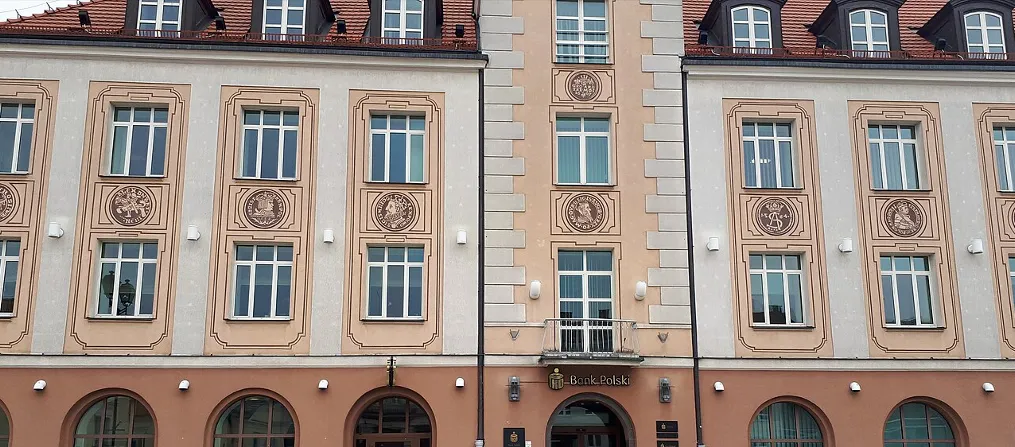
- PKO Bank Polski's branch on Rynek Kościuszki in Białystok.: Rakoon, CC0, via Wikimedia Commons
- A PKO Bank Polski branch in Toruń.: Grzegorznadolski, CC0, via Wikimedia Commons
Get new jobs in Poland by email
One email a week with the jobs added since the last one. Free, with no account.
Nothing is sent until you open the link we email you. Choose a role, a pay level or daily emails
We use your address only to send the alerts you ask for, and every email has a one-click unsubscribe link. The privacy notice says how long we keep it, and the terms of use cover the alerts.
We check this guide again by February 3, 2027. Rules change, so confirm visa steps with the embassy and your school before you go. First published November 5, 2026. Spotted something out of date? Tell us. How we write these guides.