Getting a phone number and SIM in Singapore
Get online in Singapore the day you land, then switch to a local plan once your work pass arrives. Here's what a passport covers, what it doesn't, and what plans cost.
AbroadPin team6 min read
Contents
Getting online in Singapore is easy. Getting a local number that lasts takes one more step. A card bought on your passport gets you going in your first weeks, but it's meant for visitors, and the long-term line comes once you hold a Singapore-issued ID. This page covers both stages, the main carriers, what plans cost and how to keep your home number. For pay, work passes and schools, see the main guide to teaching in Singapore.
Two stages: passport first, then your work pass
Think of your phone in two parts.
- Arrival. You buy a tourist SIM or eSIM and register it with your passport. Singtel sells its hi! Tourist Plans to foreign passport holders only, and says a passport registration gives you data-only features at first [1].
- Settled. Once you have Singpass, the national digital ID, or an original Singapore-issued ID such as your work pass card, you can register a line for the long term [1].
The passport stage has a clock on it. Singtel's page gives a 30-day registration period on a passport, and says you can only extend it by re-registering at an authorised Singtel hi! retailer with Singpass or a Singapore-issued ID within those 30 days [1]. It adds that re-registering converts the line to postpaid, which counts toward a limit of 10 postpaid mobile lines, while a tourist plan before conversion counts toward a limit of 3 prepaid lines [1].
So if your work pass card isn't ready in time, plan on a second tourist plan rather than one card for the whole wait. The main guide explains how the pass and the card get issued after you land.
What to bring
- Your original passport. The Prepaid Data SIM Card Wiki says shops need the original, and a photocopy won't do [4]. Its figures date from 2023, so expect the same rule but ask at the counter [4].
- Your work pass card or Singpass, later. These are the documents for the long-term step [1].
- A phone that takes any SIM. A phone tied to your home carrier won't take a Singapore card, so ask your carrier to release it before you fly.
Buying a SIM or eSIM on arrival
The simplest route is an eSIM bought online before you fly. Singtel sells its tourist plans as eSIMs through online shops, sends a confirmation by email after payment, and lets you collect a physical SIM free at its listed collection points instead [1]. You can't edit an eSIM order after checkout, so check the plan and your phone's eSIM support first [1].
Singtel listed these hi! Tourist Plans on its own page in November 2026 [1]:
| Plan | Price | Valid for | Data in Singapore |
|---|---|---|---|
| hi! Tourist Plan | S$10 | 7 days from purchase | 500GB |
| hi! Tourist Plan | S$15 | 30 days from purchase | 500GB, plus roaming data |
| hi! Tourist Plan | S$30 | 30 days from purchase | 1000GB, plus roaming data |
| hi! 2-in-1 EZ Link Tourist Plan | S$18 | 30 days from registration in Singapore | 500GB, plus roaming data |
Figures are from Singtel's tourist plan page [1]. The S$18 plan includes S$3 of transport value, so it doubles as a starter card for the trains and buses [1].
One catch matters for a new teacher. Singtel's page says calls and texts aren't included by default, and you turn them on at a selected Singtel hi! retailer in Singapore with your passport [1]. Do that in your first days, since your school, a landlord and your bank may all want to call or text you.
At the airport
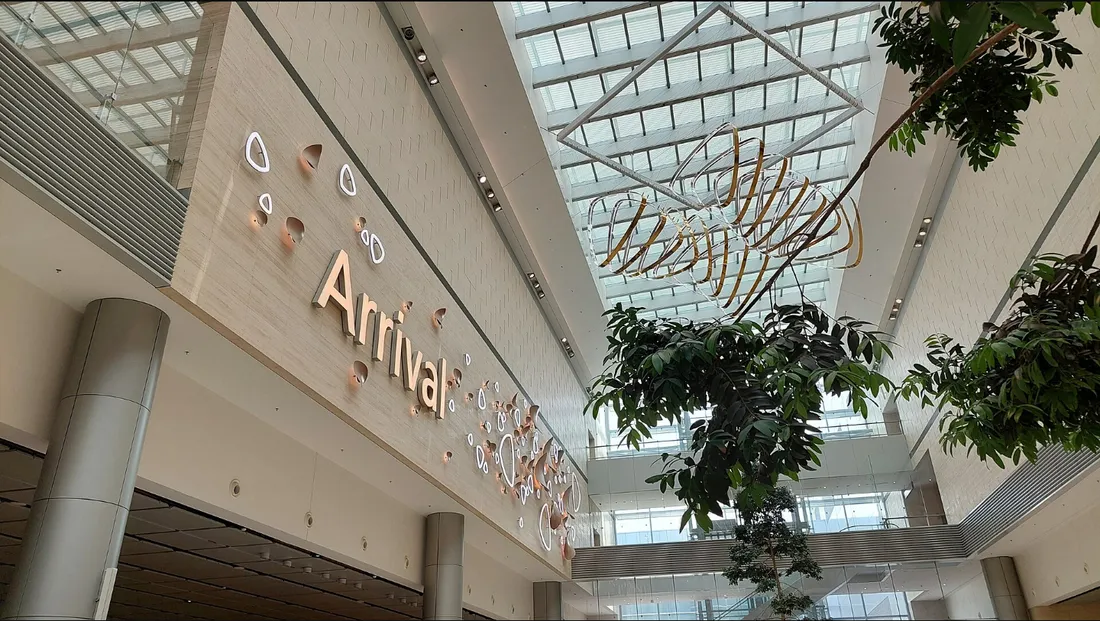
The Prepaid Data SIM Card Wiki describes tourist SIMs on sale at Changi Airport: Singtel cards at currency exchange counters, StarHub cards at a UOB foreign exchange counter that takes cash only, and M1 tourist SIMs in all three arrival halls [4]. That information is from 2023, so the counters may have changed [4]. The same wiki says the cheapest starter packs are rarely sold at the airport [4].
The main carriers
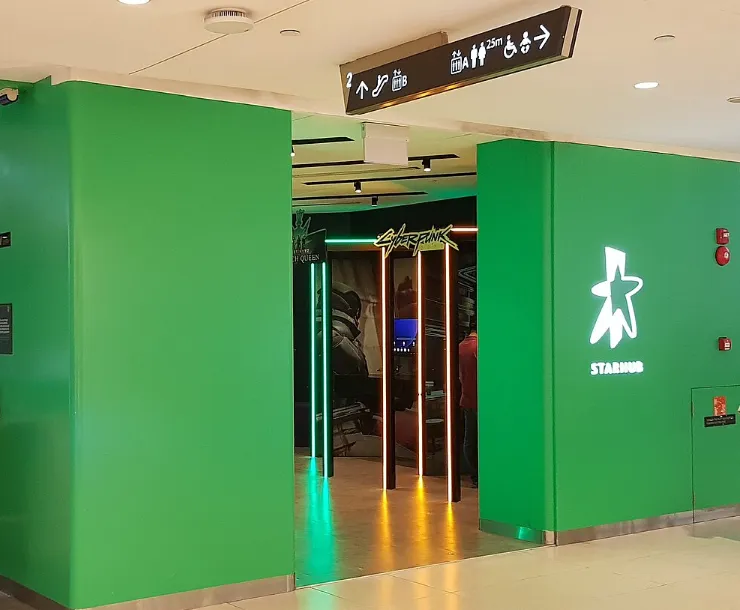
The wiki names four network operators: Singtel, StarHub, M1 and SIMBA, which used to trade as TPG Telecom [4]. Beside them sit smaller brands that run on one of those networks; the wiki gives giga as one that uses StarHub's network [4].
Smaller brands often sell SIM-only plans with no contract, and that's where the low monthly prices are. Before you sign up, check two things the plan pages below don't spell out:
- Whether you qualify. Neither SIMBA's nor giga's plan page states its rules for foreigners or work pass holders, so ask what ID the sign-up needs [2] [3].
- How you pay. The 2023 wiki says giga bills a credit card each month [4]. Ask whether a foreign card works, or wait until your local bank card arrives.
What a monthly plan costs
Carriers change prices often, so take these as a snapshot from November 2026 [2] [3].
SIMBA lists plans by 30-day cycle, all on eSIM and 5G, with unlimited calls to Singapore mobile numbers, unlimited local texts and rollover of unused data and talktime for up to 6 cycles [2]:
| SIMBA plan | Price |
|---|---|
| 500GB | S$10 per 30 days |
| 600GB | S$12, S$15 or S$18 per 30 days, depending on roaming and minutes |
| 700GB | S$20 per 30 days |
| 800GB | S$25 per 30 days |
Prices are from SIMBA's home page [2]. It also lists 90-day options at S$30 and S$39 for 600GB [2].
giga sells SIM-only plans with no contract and eSIM enabled, priced by the month [3]:
| giga plan | Price |
|---|---|
| 4G 100GB | S$10.90 a month |
| 4G 200GB | S$12.90 a month |
| 5G 300GB | S$15.90 a month |
| 5G 400GB | S$18.90 a month |
| 5G 800GB | S$0.90 the first month, then S$19.90 a month |
Prices are from giga's home page [3]. Several plans include texts and minutes as a set number each month rather than unlimited, so check the allowance if you call a lot [3].
Put next to the tourist plans, a local SIM-only plan costs about the same per month as Singtel's S$15 tourist plan, and keeps your number for good [1] [2] [3]. The big three carriers also sell postpaid plans with phones, which you can compare in their shops once you have your work pass card.
Why a local number matters
A Singapore number is how much of daily life reaches you.
- Your bank. Banks send one-time codes and alerts by text, and you'll register a mobile number when you open an account. Our guide to opening a bank account in Singapore covers the papers.
- Scam protection. The telecoms regulator, IMDA, runs anti-scam measures for calls and texts and has a self-help SIM card checker, with its own questions and answers on its anti-scam page [5].
- Everyday things. Food delivery, ride apps, your condo management and the school office will all expect a local number.
Keep your number active. A line that lapses can be passed on to someone else later, and the codes for your bank go with it.
Keeping your home number
Your home bank and email will probably keep texting your old number, so sort this out before you leave.
- Use two lines in one phone. Singtel's page notes that a dual-SIM phone can run a physical SIM and an eSIM together [1]. Put your home number on one and the Singapore number on the other.
- Find the cheapest way to hold it. Ask your home carrier for its lowest plan that keeps the number, and whether texts reach you while roaming.
- Move codes off text where you can. Switch important accounts to an authenticator app or email sign-in, so a lapsed home number doesn't lock you out.
When your phone is sorted, see who's hiring in the open jobs in Singapore.
See jobs in Singapore
- Founding Teacher of English (SPGS International School Singapore)Singapore
- English Language Teaching Specialist, entry level (Geniebook Singapore)Singapore
- English Teacher, Grades 7 to 12, March 2027 (Singapore Korean International School)Singapore
- Homeroom Teacher, maternity cover, one-year contract (SJI International Elementary School, Singapore)Singapore
- English Literacy Teacher (I Can Read, Singapore)Singapore
By city: Teaching jobs in Singapore
Sources and photo credits
- 1.Singtel, hi! Tourist Plans (undated, read 5 November 2026)
- 2.SIMBA, mobile plans on its home page (undated, read 5 November 2026)
- 3.giga, SIM-only plans on its home page (undated, read 5 November 2026)
- 4.Prepaid Data SIM Card Wiki, Singapore (figures dated 2023, read 5 November 2026)
- 5.Infocomm Media Development Authority, anti-scam measures (updated 4 November 2026)
Photos
- The arrival hall at Changi Airport Terminal 4, above the immigration area.: Michael, Public domain, via Wikimedia Commons
- A StarHub shop in Tampines.: Earthkingfather, CC BY-SA 4.0, via Wikimedia Commons
Get new jobs in Singapore by email
One email a week with the jobs added since the last one. Free, with no account.
Nothing is sent until you open the link we email you. Choose a role, a pay level or daily emails
We use your address only to send the alerts you ask for, and every email has a one-click unsubscribe link. The privacy notice says how long we keep it, and the terms of use cover the alerts.
We check this guide again by February 3, 2027. Rules change, so confirm visa steps with the embassy and your school before you go. First published November 5, 2026. Spotted something out of date? Tell us. How we write these guides.