Teaching English in Singapore
Teaching jobs in Singapore pay well, and the work pass rules tell you which offers can bring your family. New salary floors start on 1 January 2027, so this covers both sets, plus rent, school fees and visas for your children.
AbroadPin team9 min read
Contents
Singapore at a glance
| Employment Pass floor | S$5,600 a month at age 23 or below, S$6,000 for new applications from 1 January 2027 [1] |
|---|---|
| S Pass floor | S$3,300 a month at age 23 or below, S$3,600 for new applications from 1 January 2027 [3] |
| Bringing family | A fixed monthly salary of at least S$6,000 for a Dependant's Pass [5] |
| International school base pay | S$48,000 to S$60,000 a year with up to 2 years' experience (Suraasa, May 2026) [7] |
| School year | January in government schools, August to June in most international schools [12] [7] |
| Rent, one-bed | About S$2,979 a month central vs about S$1,978 outside the centre (Numbeo) [9] |
Who hires English teachers in Singapore
Singapore runs its schools in English, so the classic "conversation class" job you find in much of Asia is rare here. Most work for foreign teachers sits in four places.
- International schools. Suraasa, a teacher training company, calls these the home of most teaching jobs for foreign educators, and says they usually ask for a bachelor's degree and a recognised teaching qualification [7]. You'd be teaching a subject or a primary class, often in a British, IB or American curriculum, not running TEFL lessons.
- Private schools. Suraasa notes these register with the Committee for Private Education and pay less than international schools, with fewer benefits [7].
- Enrichment and tuition centres. This is the closest thing to a language school job. Centres teach English, phonics and creative writing to primary and lower secondary children after school and at weekends. One recruiter ad for an enrichment centre asks for a diploma or degree in English, linguistics or early childhood education and 2 years in a similar centre [8]. The same ad lists 3 weekdays plus 2 weekend days, which is normal for a sector that teaches when children are out of school [8].
- Government schools under MOE. The Ministry of Education does its hiring centrally. Suraasa says it gives priority to citizens and permanent residents and sometimes hires foreign teachers on contracts of 1 to 3 years for shortage subjects such as Chinese, Malay and Tamil [7].
Universities and adult language schools hire too, but they post far fewer roles and rarely publish pay, so ask each one directly.
What it pays
Few schools publish salaries. The figures below come from one recent teacher training guide and a live recruiter ad, so read them as rough bands, not offers [7] [8].
| Employer | Pay as the source gives it | Source and date |
|---|---|---|
| International schools, up to 2 years' experience | S$48,000 to S$60,000 a year, base | Suraasa, May 2026 [7] |
| International schools, 3 to 5 years | S$60,000 to S$80,000 a year, base | Suraasa, May 2026 [7] |
| International schools, 6 to 10 years | S$80,000 to S$110,000 a year, base | Suraasa, May 2026 [7] |
| Private schools, classroom teachers | S$36,000 to S$65,000 a year | Suraasa, May 2026 [7] |
| MOE schools, graduate starting pay | About S$42,000 to S$50,000 a year | Suraasa, May 2026 [7] |
| English teacher, enrichment centre (recruiter ad) | S$4,000 to S$5,000 a month | GrabJobs ad, read 4 Nov 2026 [8] |
Some notes on reading that table:
- Packages add a lot at international schools. Suraasa lists housing allowances of S$2,200 to S$4,800 a month and one-off relocation help of S$3,000 to S$8,000, and says benefits at top schools often add 30 to 50% on top of base pay [7].
- MOE pay has moved since. MOE raised salaries for Education Officers by 2% to 9% from 1 October 2026, after the guide above was written [6]. Suraasa also says foreign contract teachers usually sit in the lower to middle part of the scale [7].
- The enrichment ad isn't consistent. It gives S$4,000 to S$5,000 at the top and S$5,000 plus a bonus in the text, so confirm the figure in your contract [8].
- Check pay against the work pass floor. An offer below the minimum for the pass your employer applies for can't be approved, so the next section matters before you say yes [1] [3].
Work passes and the minimum you need
Singapore doesn't have a teacher visa. You work on a work pass that your employer applies for, and the pass depends mostly on your salary.
Employment Pass
The Employment Pass (EP) is for professionals, and it's the usual pass for international school teachers [7]. The Ministry of Manpower (MOM) sets these rules [1]:
- Salary. At least S$5,600 a month at age 23 or below, rising with age to S$10,700 at 45 and above, outside financial services [1].
- From 2027. New applications from 1 January 2027 need at least S$6,000, rising to S$11,500 at 45 and above [1]. Renewals feel the change for passes expiring from 1 January 2028 [1].
- COMPASS. After the salary test, most applications must score 40 points on MOM's points framework [1].
- Degree. MOM doesn't make a degree compulsory for the EP. A candidate without a degree-equivalent qualification scores zero on that one criterion and needs the 40 points from the others [1]. Schools usually want the degree anyway [7].
S Pass
The S Pass is for mid-level skilled staff, and it's the pass that fits many enrichment centre salaries. MOM's floor is S$3,300 a month at age 23 or below, rising to S$4,800 at 45 and above [3]. New applications from 1 January 2027 need S$3,600, rising to S$5,100 [3]. Each company also works within an S Pass quota and pays a levy, which MOM covers on a page of its own, so a small centre may have no room for another pass holder [3].
Step by step for an EP
MOM sets out the order like this [2]:
- Your employer applies. It needs your written consent, applies online and pays a S$105 fee [2]. MOM aims to process it or give an update within 10 business days [2].
- In-Principle Approval. If it's approved, your employer sends you the IPA letter. It works as a single-entry visa, valid for 6 months, and says whether you need a medical exam [2].
- Arrive in Singapore. Show the IPA at immigration and do any medical exam it asks for [2].
- Pass issued. Your employer gets the pass issued while you're in the country, for S$225 [2]. The notification letter that follows lets you start work while you wait for the card [2].
- Fingerprints and photo. If the letter says so, register them within 2 weeks of issuance, by appointment [2].
- Card. It arrives within 5 working days of registration, and you can also view a digital pass in the SGWorkPass app [2].
Cost of living in central Singapore and the suburbs
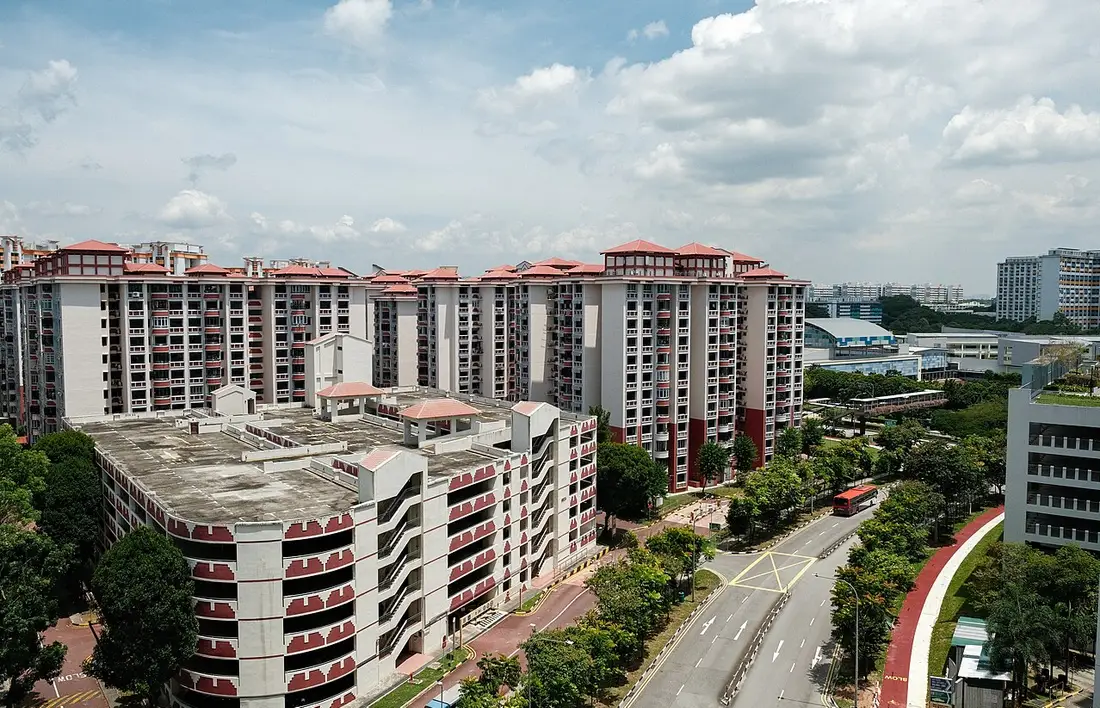
Singapore is one city, so the real choice is between a flat near the centre and one further out on the train lines. These are Numbeo's crowd-sourced averages, read on 4 November 2026 and based on 4,782 entries in the past 12 months [9].
| Item | Price |
|---|---|
| One-bed flat, city centre, a month | About S$2,979 |
| One-bed flat, outside the centre, a month | About S$1,978 |
| Three-bed flat, city centre, a month | About S$5,252 |
| Three-bed flat, outside the centre, a month | About S$3,139 |
| Utilities for about 85 m2, a month | About S$147 |
| Internet, a month | About S$47 |
| Cheap restaurant meal | S$13 |
| Public transport pass, a month | S$100 |
Moving out of the centre saves about S$1,000 a month on a one-bed flat, and over S$2,000 on a three-bed [9]. Transport is cheap next to rent, so a longer train ride is often the easier trade [9].
Put the rent next to the pay. On the enrichment ad's S$4,000 to S$5,000 a month, a central one-bed takes well over half your salary, while a flat outside the centre or a shared place leaves more room [8] [9]. Renting a room in a shared flat is another way to keep the cost down.
When schools hire
Government schools start their year in January, which is also when children who pass the international student admissions test begin [12]. Most international schools run from August to June [7]. Suraasa puts their peak recruitment between September and February, with most vacancies posted from October to January, a smaller round from March to May and some mid-year posts for January starts [7].
So if you want an August 2027 international school start, the October to January window is the time to apply [7]. Enrichment centre ads don't follow one fixed season, so ask each centre when its new classes start.
Red flags and staying legal
MOM publishes its rules in plain terms, so most problems can be spotted before you fly.
- Starting before the pass is issued. MOM's process has the pass issued while you're in Singapore, and it's the notification letter that lets you start work [2]. A school asking you to teach on arrival before that step is asking you to take the risk.
- An offer below the floor. If the salary is under the EP or S Pass minimum for your age, MOM won't approve the pass, whatever the school tells you [1] [3].
- Being asked to pay for insurance. For S Pass holders the employer must buy medical insurance, and MOM says the cost can't be passed on to workers [4].
- Family promises on a low salary. A school may say your family can come, but the Dependant's Pass needs a fixed salary of at least S$6,000 a month, counted on your pay alone [5]. An EP at S$5,600 doesn't meet it [1] [5].
- Fuzzy pay in the ad. If the ad gives two figures, as the enrichment ad above does, get one number in the contract [8].
When the paperwork looks right, have a look at open jobs in Singapore.
Moving with kids
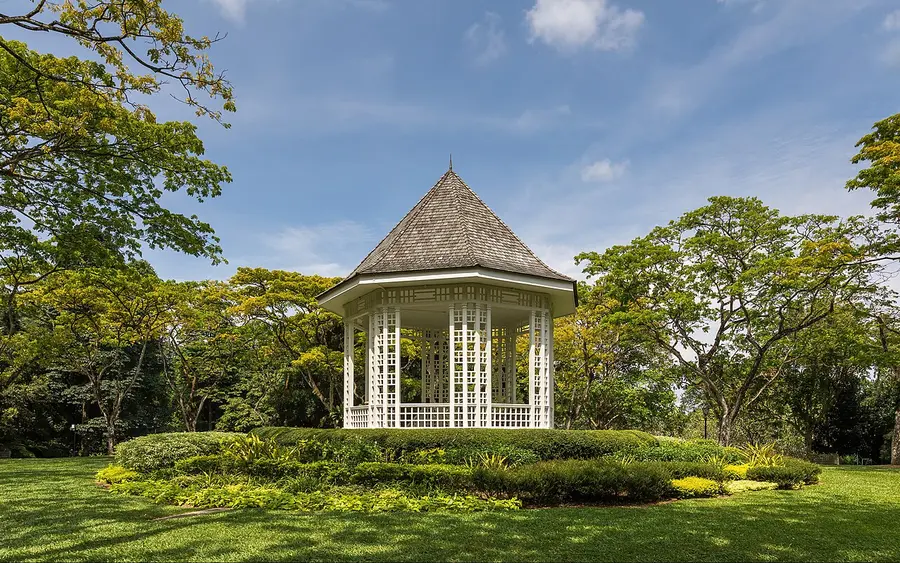
School fees are the biggest cost of moving with children, so do the sums before you accept an offer [13].
Visas for your spouse and children
A Dependant's Pass covers a legally married spouse and unmarried children under 21, including adopted children [5]. MOM's rule is a fixed monthly salary of at least S$6,000, based on your own salary and not your household's [5]. On a lower salary, ask your employer what other options apply before you plan the move.
School options
International schools are where most expat children go, and the fees reflect it. iSchoolAdvisor's 2026 guide gives these yearly tuition ranges, lowest to highest grade [13]:
| School | Yearly tuition |
|---|---|
| Dulwich College (Singapore) | S$36,500 to S$54,400 |
| Canadian International School | S$32,000 to S$53,400 |
| Dover Court International School | S$32,500 to S$52,000 |
| St. Joseph's Institution International | S$30,800 to S$45,500 |
| One World International School | S$13,500 to S$32,000 |
Add one-off costs: the same guide puts application and assessment fees at S$2,000 to S$4,000 and some schools charge a yearly building levy of S$2,000 to S$5,000 per child [13]. Numbeo's average for an international primary school is S$27,800 a year [9].
Government schools take international students when there are places. Children apply through AEIS, a test held in Singapore, for Primary 2 to 5 and Secondary 1 to 3 [12]. The 2026 tests ran from 1 to 3 September, successful children start the following January, and placement depends on vacancies and where you live [12]. MOE's 2026 monthly fees for non-ASEAN international students were S$1,035 in primary, S$2,190 in secondary and S$2,540 at pre-university [10]. ASEAN students paid S$595, S$1,090 and S$1,290 [10]. MOE says fees for international students include GST, and its fees page has a checker for the current rates [11].
Will your employer help with tuition?
At some international schools, yes. Suraasa lists a 50 to 100% tuition reduction for teachers' children at the school as a common benefit, though not a universal one [7]. Enrichment centre ads rarely mention it, and the one we read doesn't [8]. Ask how many children it covers and get it in your contract.
Childcare
Numbeo puts full-day private preschool at about S$1,090 a month per child, with a range of S$600 to S$1,700 [9].
Healthcare and insurance
S Pass employers must buy medical insurance with a claim limit of at least S$60,000 a year, a rule in place since 1 July 2023 [4]. MOM's page says nothing about your spouse or children, so don't assume they're covered [4]. Ask any employer whether its plan extends to dependants, and budget for private family cover if it doesn't.
See jobs in Singapore
- Founding Teacher of English (SPGS International School Singapore)Singapore
- English Language Teaching Specialist, entry level (Geniebook Singapore)Singapore
- English Teacher, Grades 7 to 12, March 2027 (Singapore Korean International School)Singapore
- Homeroom Teacher, maternity cover, one-year contract (SJI International Elementary School, Singapore)Singapore
- English Literacy Teacher (I Can Read, Singapore)Singapore
By city: Teaching jobs in Singapore
Sources and photo credits
- 1.Ministry of Manpower, Employment Pass eligibility (updated 3 November 2026)
- 2.Ministry of Manpower, apply for an Employment Pass (updated 15 June 2026)
- 3.Ministry of Manpower, S Pass eligibility (updated 1 September 2026)
- 4.Ministry of Manpower, medical insurance for S Pass holders (updated 18 September 2026)
- 5.Ministry of Manpower, Dependant's Pass eligibility (updated 14 March 2024)
- 6.Ministry of Education, salary adjustments to MOE schemes of service (16 March 2026)
- 7.Suraasa, how to teach in Singapore in 2026: salaries, requirements and schools (29 May 2026)
- 8.Search Avenue via GrabJobs, English teacher at an enrichment centre (read 4 November 2026)
- 9.Numbeo, cost of living in Singapore (read 4 November 2026)
- 10.Ministry of Education, revised school fees for non-citizens for 2024 to 2026 (18 October 2023)
- 11.Ministry of Education, school fees (updated 16 October 2026)
- 12.Ministry of Education, Admissions Exercise for International Students (updated 17 July 2026)
- 13.iSchoolAdvisor, international school costs in Singapore, 2026 fee guide (12 May 2026, reviewed September 2026)
Photos
- Pioneer Primary School in Tengah, a new public school in western Singapore: Sgwikicontributor, CC BY-SA 4.0, via Wikimedia Commons
- Public housing (HDB) blocks in Jurong West, in Singapore's western suburbs: Brhb25, CC BY-SA 4.0, via Wikimedia Commons
- The bandstand in the Singapore Botanic Gardens, a park popular with families: Basile Morin, CC BY-SA 4.0, via Wikimedia Commons
Get new jobs in Singapore by email
One email a week with the jobs added since the last one. Free, with no account.
Nothing is sent until you open the link we email you. Choose a role, a pay level or daily emails
We use your address only to send the alerts you ask for, and every email has a one-click unsubscribe link. The privacy notice says how long we keep it, and the terms of use cover the alerts.
We check this guide again by February 2, 2027. Rules change, so confirm visa steps with the embassy and your school before you go. First published November 4, 2026. Spotted something out of date? Tell us. How we write these guides.