Getting a phone number and SIM in Taiwan
Get online the day you land in Taiwan, then move to a lasting local number with your ARC. Here's which card to buy at the airport, which IDs to carry, what plans cost and how to hold on to your home number.
AbroadPin team8 min read
Contents
Getting a phone sorted in Taiwan happens in two steps for most new teachers. You buy a short-term visitor card at the airport so maps and messages work from day one, then you switch to a number you can keep once you have your Alien Resident Certificate (ARC) and know where you're living. This page covers both steps, the paperwork shops ask for, what the big carriers charge and what to do about the number you already have. For pay, work permits and employers, read the main guide to teaching in Taiwan.
The carriers you'll see
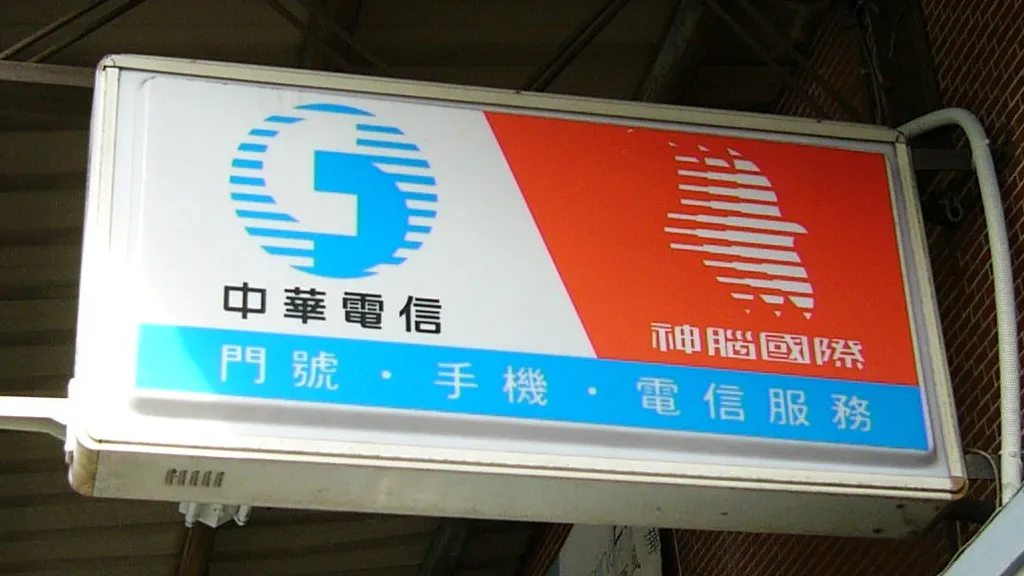
The carriers you'll see most are Chunghwa Telecom, Taiwan Mobile and FarEasTone. All of them sell prepaid cards and monthly contracts, and each has its own stores plus partner shops. Chunghwa Telecom also sells through the Senao chain of authorised service centres [1].
The prices on this page come from Chunghwa Telecom's and FarEasTone's own pages as they stood on 5 November 2026 [1] [2] [4] [5]. Taiwan Mobile's current prepaid and contract prices aren't confirmed here, so compare them in one of its stores before you sign anything.
Step one: a visitor card at the airport
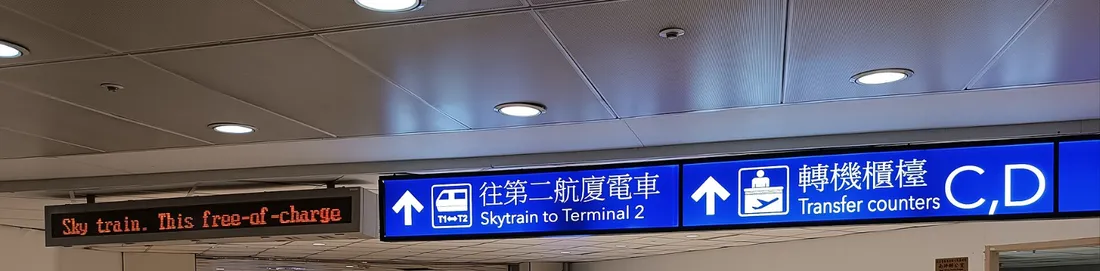
You can buy a short-term card the moment you clear immigration. Chunghwa Telecom says its tourist cards are sold at the four major airports and at its stores across Taiwan, and that they work as soon as they're set up [1]. FarEasTone sells its visitor card at a counter at Taoyuan International Airport and in its own stores around the island [3]. Its page says online pre-booking is coming soon, so for now you buy in person [3].
Here's a sample of Chunghwa Telecom's tourist card prices, all with unlimited data for the period [1]:
| Card | Price | Days | Extras |
|---|---|---|---|
| 4G | NT$300 | 5 | NT$50 call credit [1] |
| 4G | NT$700 | 15 | NT$100 call credit [1] |
| 4G | NT$1,000 | 30 | NT$430 call credit [1] |
| 5G | NT$1,600 | 30 | 30GB hotspot and NT$200 call credit [1] |
| 5G | NT$3,300 | 90 | 90GB hotspot and NT$500 call credit [1] |
FarEasTone's visitor card also gives unlimited data for its period, and on its 5G cards it adds a hotspot allowance [3]. Once that hotspot allowance is used up, sharing stops but your own data keeps going [3]. Its page didn't list prices, so ask at the counter.
A few things to know before you pick one:
- The number ends with the card. FarEasTone counts the days from activation, with 24 hours as one day, and the number expires on its own when the time runs out [3]. You can't extend the card or top it up [3].
- Call credit is a bonus that expires. Anything left on a FarEasTone visitor card when it ends is lost, with no refund [3].
- Buy for the gap you expect. A teacher who'll have an ARC in a few weeks can often get by on a 30-day card, while someone with a slower start may want a longer one [1].
- eSIM is possible. FarEasTone sells its visitor card as a physical SIM or an eSIM, and links to a list of phones that work with it [3].
Because the number disappears at the end, don't give a visitor card number to your bank, school office or landlord as your lasting contact.
The two IDs a shop asks for
Taiwanese carriers ask for two original identity documents (雙證件), often called "double ID". Chunghwa Telecom asks for the applicant's two original IDs for a regular prepaid card, applied for in person at a counter or a Senao centre [1]. FarEasTone asks for two IDs for a new monthly line, a new prepaid line and an eSIM [4].
For a tourist card, Chunghwa Telecom lists what counts as the second document. You choose one of these [1]:
- an entry permit issued by the National Immigration Agency
- a visa
- a tourist permit
- a resident certificate (your ARC)
- an international student card
If you have none of those, it accepts an official photo ID from your home country, such as a national ID card or driving licence [1]. Its page doesn't spell out what counts as a foreigner's first ID, so carry your passport and, once you have it, your ARC to every phone shop visit.
The carriers' pages don't set out a separate list for foreign residents signing a monthly contract. Ask in the store what they need from an ARC holder, and whether a work contract or proof of address helps.
Step two: a number you keep
Once your ARC is in hand, you have two ways to get a lasting number.
A regular prepaid card
A regular prepaid number suits teachers who don't want a contract. Chunghwa Telecom says each prepaid number stays valid for 180 days from the date it's set up [1]. Its current regular prepaid plans include these [1]:
- 6GB for NT$300, valid 60 days, with NT$50 of call credit [1]
- 24GB for NT$599, valid 60 days, with NT$50 of call credit [1]
- 24GB for NT$599 over 30 days, then slowed to 10Mbps, with NT$50 of domestic call credit [1]
- 36GB for NT$799 over 30 days, then slowed to 10Mbps, with NT$50 of domestic call credit [1]
- 60GB for NT$999, valid 60 days, with NT$100 of call credit [1]
Chunghwa Telecom charges NT$0.03 a second for voice calls on the volume plans [1]. Ask how topping up affects the expiry date, so you don't lose the number your bank and school have on file.
A monthly plan
A monthly plan (月租) costs less per gigabyte if you use your phone a lot. Chunghwa Telecom's home page advertised 4G plans from NT$299 a month and 5G plans from NT$599 a month [2]. FarEasTone's plan page advertised unlimited data deals for new lines and for numbers moved from another carrier at NT$199 and NT$499 a month, and a 5G plan at NT$599 a month [5].
Those are headline offers, and neither page set out the contract length or the full terms [2] [5]. Before you sign, ask:
- how many months the contract runs and what leaving early costs
- whether the offer price lasts the whole contract or only the first months
- whether "unlimited" slows down after a certain amount
- whether your contract can run past the end date on your ARC
Both carriers' offers mention moving a number in from another network (攜碼), so changing carrier later doesn't have to mean a new number [5].
eSIM
An eSIM saves you from swapping cards and lets one phone hold two lines. FarEasTone sends the eSIM as a QR code that your phone scans to download the line [6]. Its rules are worth knowing [4]:
- Where to apply. A new prepaid eSIM is done only in a FarEasTone direct-operated store, and a monthly line's eSIM in a direct-operated or franchise store, with two IDs in both cases [4].
- The fee. Setting up an eSIM costs NT$300 each time, though FarEasTone waives it during a promotion for first-time eSIM applicants and some others, with no end date given [4].
- One scan only. Each QR code installs once and can't be reissued online, so a lost code means a store visit [4].
- New phone, new trip. Moving the eSIM to another phone is done in a store [4].
- Two lines on one phone. FarEasTone notes that iPhone 13 and later models can hold two eSIM profiles, and an iPhone can run a physical SIM and an eSIM together [4].
Before you fly, check that your phone is unlocked and supports eSIM. A phone locked to your carrier at home won't take a Taiwanese card.
Why a local number matters
A data-only setup gets you through the first days, but a Taiwanese number soon becomes part of daily life:
- Your bank. Banks want a phone number on file, and security codes for online banking and card payments usually arrive by text.
- Payment and delivery apps. Many local apps sign you up with a phone number, and couriers call or text when a parcel arrives.
- Your school and landlord. Your school office will want a number to reach you about schedule changes, and a lease usually asks for one.
- Clinics and government offices. Appointment reminders and follow-up calls go to the number you give.
So plan to have your lasting number by the time you open your bank account, and give it to your school, bank and landlord as soon as you have it.
Keeping your home number
Your bank, tax office and email accounts at home may still send sign-in codes to your old number. Losing it can lock you out when you least expect it. Before you leave:
- Ask your home carrier about a low-cost plan that keeps the number active, and what a text received abroad will cost.
- Use a dual-SIM phone. With your home line on one slot and a Taiwanese eSIM or SIM on the other, you keep both numbers on one phone [4]. Turn off mobile data and roaming on the home line.
- Move codes to an authenticator app wherever a service allows it, so you depend less on texts to your old number.
With kids
If your children need phones, Chunghwa Telecom has parent and child prepaid plans for a child's card for ages 7 to 17 [1]. They include 1.5GB for NT$99 over 30 days and unlimited data capped at 5Mbps for NT$399 over 30 days [1]. The application asks for two IDs, the household registration booklet (戶口名簿) and a guardian present [1]. If your family has no household registration booklet, ask the store what an ARC holder can show instead. Chunghwa Telecom doesn't accept tourist card applicants under 18 unless a parent or guardian comes to the counter with both people's two IDs [1]. FarEasTone advertises a child line at NT$149 [5].
Putting it together
- Before you fly, check your phone is unlocked and supports eSIM, and sort out your home number.
- At the airport, buy a visitor card long enough to cover the wait for your ARC [1] [3].
- When your ARC arrives, take it and your passport to a carrier store for a prepaid number or a monthly plan [1] [4].
- Give the new number to your school, bank and landlord.
Settled and thinking about your next contract? Browse the open jobs in Taiwan.
See jobs in Taiwan
- Applied English Faculty, two posts, Assistant Professor or above, August 2027 (Taipei Tech)Taipei
- Full-time Applied English Teacher, Lecturer or above (Chaoyang University of Technology, Taichung)Taichung
- Grade 8 English Language Arts Teacher, 2027-28 (HIA Zhubei)Zhubei
- Middle School English Teacher with Grade 6 Skills for Success (TAS Taipei)Taipei
- English Teaching Flagship grant, August 2027 (Fulbright Taiwan, nationwide)Taipei · $1,656 to $1,969 a month
By city: Teaching jobs in Taipei
Sources and photo credits
- 1.Chunghwa Telecom, new prepaid card plans and application rules (read 5 November 2026)
- 2.Chunghwa Telecom, home page plan offers (read 5 November 2026)
- 3.FarEasTone, visitor internet card (undated, read 5 November 2026)
- 4.FarEasTone, eSIM service (undated, read 5 November 2026)
- 5.FarEasTone, voice and data plans (read 5 November 2026)
- 6.FarEasTone, applying for and using an eSIM (3 August 2025)
Photos
- The sign of a Chunghwa Telecom and Senao authorized dealer, photographed in 2010.: Solomon203, CC BY-SA 3.0, via Wikimedia Commons
- Signs to the Skytrain and the transfer counters inside Taoyuan International Airport, photographed in March 2024.: Meutnake Ah ManHO, CC0, via Wikimedia Commons
Get new jobs in Taiwan by email
One email a week with the jobs added since the last one. Free, with no account.
Nothing is sent until you open the link we email you. Choose a role, a pay level or daily emails
We use your address only to send the alerts you ask for, and every email has a one-click unsubscribe link. The privacy notice says how long we keep it, and the terms of use cover the alerts.
We check this guide again by February 3, 2027. Rules change, so confirm visa steps with the embassy and your school before you go. First published November 5, 2026. Spotted something out of date? Tell us. How we write these guides.