Finding an apartment in Thailand
Find a flat in Thailand at a fair rent, with a deposit you get back and no surprise bills. Here's how condos and apartment buildings differ, what Bangkok and Chiang Mai cost, and the address report your landlord files.
AbroadPin team8 min read
Contents
Renting in Thailand is mostly simple, and plenty of buildings are used to foreign tenants. What catches new teachers out is smaller: a deposit that doesn't come back in full, a power bill that looks high, or an address report nobody filed. This article covers where to look, what you pay up front, how a condo lease differs from a room in an apartment building, and what to check before you hand over cash. For pay, visas and the work permit, start with the main guide to teaching in Thailand.
School housing or renting yourself
Ask your employer about housing before you sign the contract, not after you land.
- An allowance built into pay. Some international schools fold housing into the salary. Garden International School Bangkok, for example, tells prospective staff that its salary is inclusive of a housing allowance [4]. That means you find and pay for the flat yourself.
- A room the school arranges. Some schools and agencies have a building they place new teachers in, or a contact who rents to them. This saves you a search in your first weeks, but ask who signs the lease and what happens to the deposit if you leave early.
- Nothing at all. Many jobs leave housing to you, so compare the pay with the rents below before you accept.
Whatever the offer, get it in writing: the amount, whether it's paid monthly or in a lump sum, and whether it changes if your contract does.
A sensible first move is a short stay in a serviced room or a furnished condo for a few weeks while you learn the area around your school. Expat Arrivals notes that short lets are usually furnished, and points to condos managed by one company, serviced apartments and holiday rentals as the flexible options [3].
Condo or apartment building
"Apartment" covers two different set-ups in Thailand, and the lease feels different in each.
Condos. Each unit in a condominium has its own owner, and the building shares facilities such as a pool or gym [3]. Condos are often furnished or come with some appliances [3]. Your landlord is usually that one owner, or an agent acting for them, so you deal with the owner about repairs and the deposit.
Apartment buildings. These are whole blocks run by one owner, either part of a large development or a converted house [3]. You rent from the building's office, often on the same contract every tenant signs. Serviced apartments are often converted hotel rooms and can cost more [3].
Houses and townhouses. Detached houses are mostly found outside the big city centres and give families more space [3]. Townhouses share walls and rise over several floors, and Expat Arrivals calls them one of the most popular types [3].
Furniture
Don't assume a flat comes furnished. Expat Arrivals says most rentals in Thailand are unfurnished, that many are better described as semi-furnished with basics such as a washing machine, and that furniture is often leased under a separate agreement [3]. Ask exactly what stays in the unit, and photograph it on move-in day.
Where to look
- Rental portals. DDproperty, part of the PropertyGuru group, lists condos and houses for rent across Thailand and has an English version and a condo directory [7]. Search by the BTS, MRT or district near your school.
- Agents. Expat Arrivals says agents are usually free for tenants because the landlord pays their commission [3]. A good agent can also explain the lease.
- Walking the area. Many buildings put up a "for rent" sign out front, and Expat Arrivals suggests picking an area and exploring it on foot [3]. This works especially well for apartment buildings outside the centre.
- Colleagues. The teacher you're replacing often knows which landlords return deposits.
Don't count on haggling. Expat Arrivals says bargaining over rent usually isn't an option, since many landlords would rather leave a unit empty [3].
What rent looks like in Bangkok and Chiang Mai
These are Numbeo's crowd-sourced averages. Both pages showed a last update of 4 November 2026, based on 1,415 entries for Bangkok and 854 for Chiang Mai over the previous 12 months, and both were read on 5 November 2026 [1] [2].
| Monthly rent | Bangkok | Chiang Mai |
|---|---|---|
| 1-bedroom, city centre | 24,275.38 baht | 16,550.00 baht |
| 1-bedroom, outside the centre | 11,600.00 baht | 10,642.86 baht |
| 3-bedroom, city centre | 78,437.50 baht | 35,125.00 baht |
| 3-bedroom, outside the centre | 30,124.30 baht | 22,600.00 baht |
Numbeo shows a range of 16,000 to 40,000 baht for a central one-bedroom in Bangkok, so a smaller or older unit can come in well under the average [1]. Moving out of the centre cuts the average one-bedroom rent by about half in Bangkok and by over a third in Chiang Mai [1] [2].
Money up front and the lease
Have cash ready before you start viewing. Expat Arrivals says to expect a deposit of two months' rent, plus the first month's rent paid in advance [3]. That's about three months' rent on the day you sign [3].
Expat Arrivals reports that a landlord who owns more than five units, houses or townhouses can only collect a one-month deposit [3]. So an apartment building owner with many rooms falls under that limit, while the owner of a single condo does not [3].
The lease itself:
- Length. Expat Arrivals gives 12 months as the standard in Bangkok, and says owners you deal with directly may accept 6 months [3].
- Language. Ask for a version you can read in English, with the deposit, the notice period and the rules on early exit written down.
- Getting the deposit back. The landlord has to return the deposit if there's no damage, but doesn't have to pay interest on it [3]. Deductions can cover damage, professional cleaning, removing things you leave behind and replacing lost keys [3].
- Your passport details. Your landlord reports your address to immigration (see below), so expect them to ask for a copy of your passport.
Utilities and internet
Tenants normally pay electricity, water and phone on top of the rent [3]. Expat Arrivals says electricity is the most expensive of these [3].
| Monthly cost | Bangkok | Chiang Mai |
|---|---|---|
| Electricity, heating, cooling, water and rubbish, about 85 m2 | 3,397.57 baht | 2,094.75 baht |
| Broadband, 60 Mbps or more, unlimited | 601.70 baht | 674.33 baht |
Those are Numbeo's averages for the two cities [1] [2]. A few habits keep the bills fair:
- Ask how power and water are billed. In some buildings the landlord bills you, and Expat Arrivals warns that such utility bills may be inflated and that the landlord may choose the providers [3]. Ask for the rate per unit before you sign, and whether you can see the original bill from the provider [3].
- Read the meters on day one. Take a dated photo of each meter so you don't pay for the last tenant's use [3]. In serviced apartments the meters are often outside the unit, so make sure you're reading your own [3].
- Sort internet early. Ask at the viewing whether the building already has a connection, and whether the cost is in the rent.
TM30: the address report your landlord files
TM30 is the report of a foreigner's address to immigration, and the Thaiger says your landlord or hotel files it [5]. Its relocation checklist puts confirming the TM30 in your first week, because later steps depend on it [6].
One of those steps is the certificate of residence, which immigration issues against your TM30 registration [5]. Some bank branches ask for that certificate, and the Thaiger says it's valid for about 30 days and can be used for a Thai driving licence too [5].
So, when you move in:
- Ask the landlord or building office whether they've filed your TM30, and ask for a copy [6].
- If you move, ask the new landlord to file a new report for the new address.
- Keep the copy with your passport and work permit papers.
Scams and problems to avoid
Most rentals go smoothly. These habits cover the usual problems.
- See the unit before you pay. Be wary of anyone who wants a deposit by transfer for a flat you haven't viewed, or who sends photos but can't show you the door.
- Check who you're paying. In a condo, ask the person to show they own the unit or have the owner's written authority to rent it. In an apartment building, pay at the office and get a receipt.
- Record the condition. Photograph every room, the furniture and any damage on move-in day, and send the photos to the landlord so you both have a dated copy, since deposits can be cut for damage and cleaning [3].
- Get receipts for everything. Keep the signed lease, deposit receipt and each month's rent receipt until the deposit is back in your account.
With kids
Families need more room, and the gap between the two cities is large. A central three-bedroom averages 78,437.50 baht a month in Bangkok against 35,125.00 baht in Chiang Mai [1] [2]. Outside the centre, a three-bedroom averages 30,124.30 baht in Bangkok and 22,600.00 baht in Chiang Mai [1] [2].
Before you sign a family lease, time the school run at rush hour. If your employer covers family travel, ask about housing for a family too: Garden International School Bangkok, for one, provides flights for a legal spouse and up to two dependent children on overseas hire contracts [4].
Your first months, step by step
- Ask your school what housing help it gives, and get the answer in writing [4].
- Book a short furnished stay near your school for your first few weeks [3].
- Save for about three months' rent to move in [3].
- View units, read the lease in English, and check how power and water are billed [3].
- Photograph the meters and the condition of the flat on move-in day [3].
- Confirm the landlord has filed your TM30 in your first week [6].
When you're settled and thinking about your next contract, look at the open teaching jobs in Thailand.
See jobs in Thailand
- Early Years Homeroom Teacher, 2027-2028 (BCIS Chiang Mai)Chiang Mai
- Head of English, August 2027 (Regents International School Pattaya)Pattaya
- Nursery and Kindergarten English Teacher, January 2027 (Essential partner school, Srinagarindra Bangkok)Bangkok
- Kindergarten English Teacher, start now (Essential partner school, Sathorn Bangkok)Bangkok · $1,327 to $1,415 a month
- Year 1 and Year 4 Homeroom Teacher (Sarasas Ektra School Bangkok)Bangkok
By city: Teaching jobs in Bangkok
Sources and photo credits
- 1.Numbeo, cost of living in Bangkok (last update shown 4 November 2026, read 5 November 2026)
- 2.Numbeo, cost of living in Chiang Mai (last update shown 4 November 2026, read 5 November 2026)
- 3.Expat Arrivals, accommodation in Thailand (undated, read 5 November 2026)
- 4.Garden International School Bangkok, information for prospective new staff (section headed 2024 to 2025, page modified 19 March 2026, read 5 November 2026)
- 5.The Thaiger, opening a Thai bank account as a foreigner (updated 10 September 2026)
- 6.The Thaiger, relocation checklist for moving to Thailand (updated 4 September 2026)
- 7.PropertyGuru, DDproperty Thailand property portal in English (read 5 November 2026)
Photos
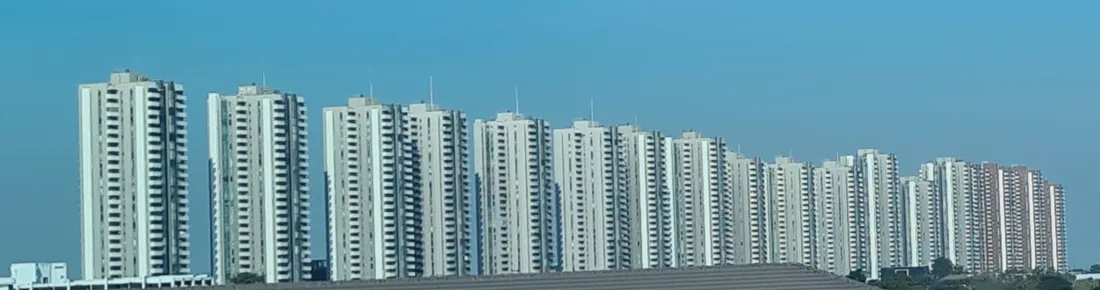
- A row of condominium towers in Bangkok.: Bienvenue en Thaïlande, CC BY-SA 4.0, via Wikimedia Commons
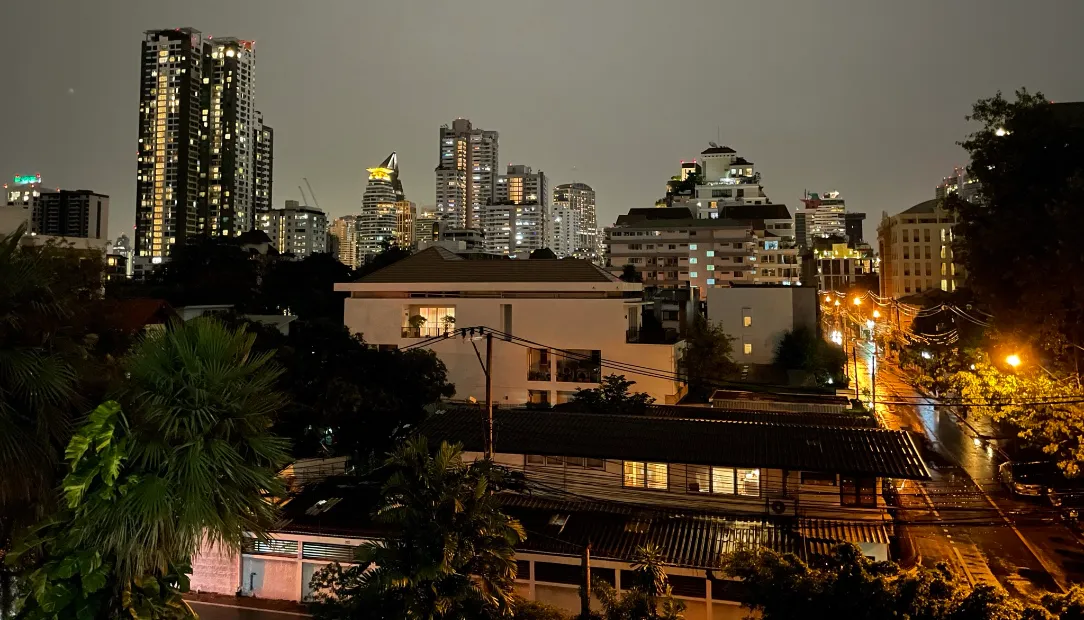
- Low-rise homes and condominium towers off Sukhumvit Soi 31 in Bangkok, at night.: Slyronit, CC BY-SA 4.0, via Wikimedia Commons
Get new jobs in Thailand by email
One email a week with the jobs added since the last one. Free, with no account.
Nothing is sent until you open the link we email you. Choose a role, a pay level or daily emails
We use your address only to send the alerts you ask for, and every email has a one-click unsubscribe link. The privacy notice says how long we keep it, and the terms of use cover the alerts.
We check this guide again by February 3, 2027. Rules change, so confirm visa steps with the embassy and your school before you go. First published November 5, 2026. Spotted something out of date? Tell us. How we write these guides.