Finding an apartment in Vietnam
Find a flat in Hanoi or Ho Chi Minh City without paying for surprises. Here's what rent costs, what landlords ask for up front, how address registration works and which deals to walk away from.
AbroadPin team8 min read
Contents
Most foreign teachers in Vietnam rent their own place. Language centres rarely hand you a flat, but renting is fairly quick once you're in the country and know where you'll be teaching. The two things that trip people up are paying too much in advance and forgetting that your address has to be registered with the police. This page covers both, plus what rent looks like in the two big cities. For pay, permits and the main employers, see the guide to teaching in Vietnam.
School housing or your own lease
Check your offer before you start looking, because the answer depends on the kind of employer.
- Language centres usually help with the first few days, not the whole year. ILA, one of the large chains, lists up to 6 nights' accommodation on arrival as a benefit, with no housing allowance mentioned [6].
- Public school programs may offer nothing on housing at all. Washington English Center's 2026 ad for Hanoi and Hung Yen offers visa sponsorship but says nothing about a flat or an allowance [7].
- International schools are where housing shows up in the package. All four Ho Chi Minh City listings on Randstad's Vietnam page included housing alongside flights and medical cover, though none stated an amount [8].
If your contract includes housing, ask whether it's a flat the school chooses or a monthly allowance, and whether you can top it up to rent somewhere else. If it doesn't, plan to spend your first week or two in a guesthouse or short stay while you look, which is what many newcomers do [3].
Serviced apartments, local flats and houses
You'll see three broad kinds of place advertised.
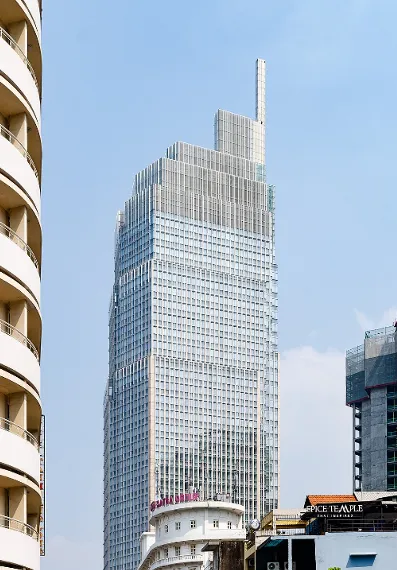
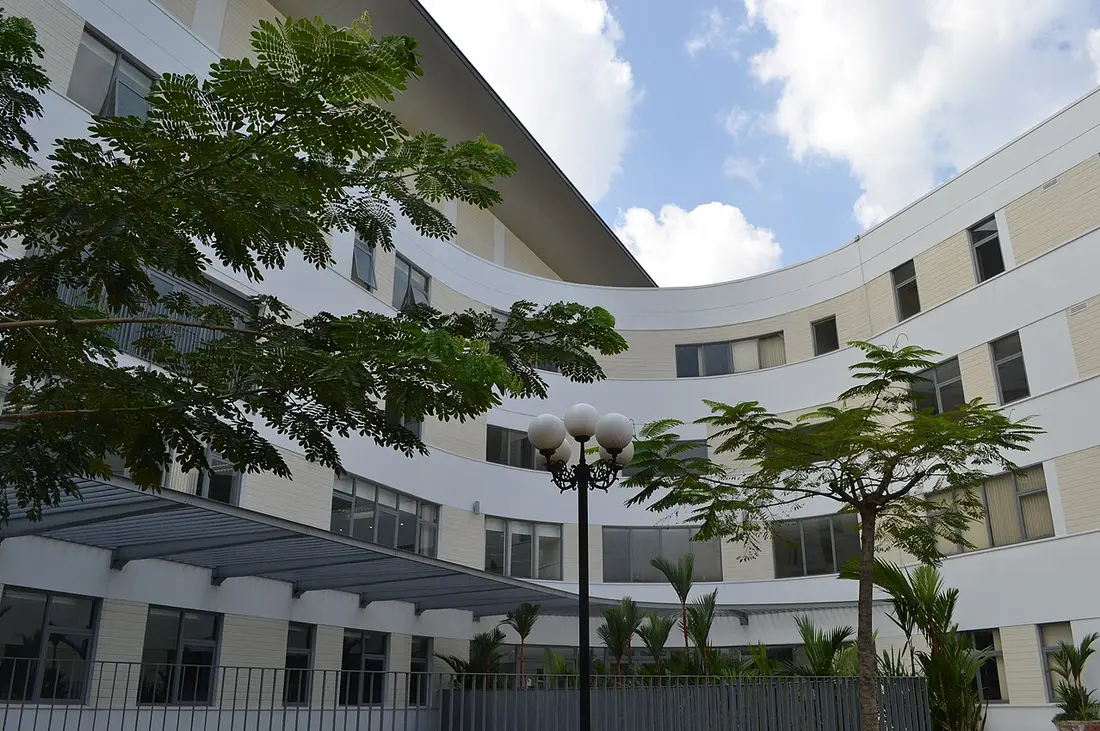
- Newer apartment buildings. These are increasingly common in Ho Chi Minh City and often come with a gym, a pool and a laundry area [4]. Rent is higher, but there's usually building management to call when something breaks.
- Serviced apartments. Furnished flats rented by the month, which can include cleaning and some bills. They suit your first months, while you learn the city, but ask exactly which bills are in the price.
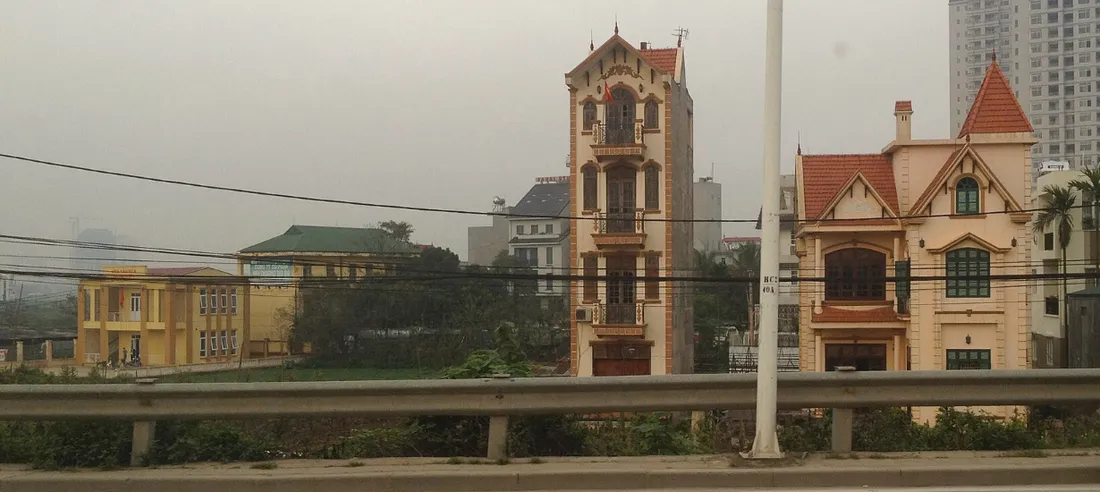
- Local houses and older blocks. Older apartment blocks sit alongside new ones, and tall, narrow houses, including colonial-era ones in Ho Chi Minh City, are often tucked off the main streets [3] [4]. They can be cheaper per room and roomier, especially further out, where homes tend to be bigger [3]. Expect to deal with the landlord directly, often in Vietnamese.
In Ho Chi Minh City, rentals usually come with at least a fridge and a stove, and a furnished place can be agreed with the landlord [4].
Where to look
Most foreigners find a place through word of mouth, their employer or a real estate agent [3]. In Ho Chi Minh City, an agent is the quickest route, and both big cities have property websites aimed at foreigners [3] [4]. Colleagues at your school are the best first ask: they know which buildings take foreign tenants and which landlords are easy to deal with.
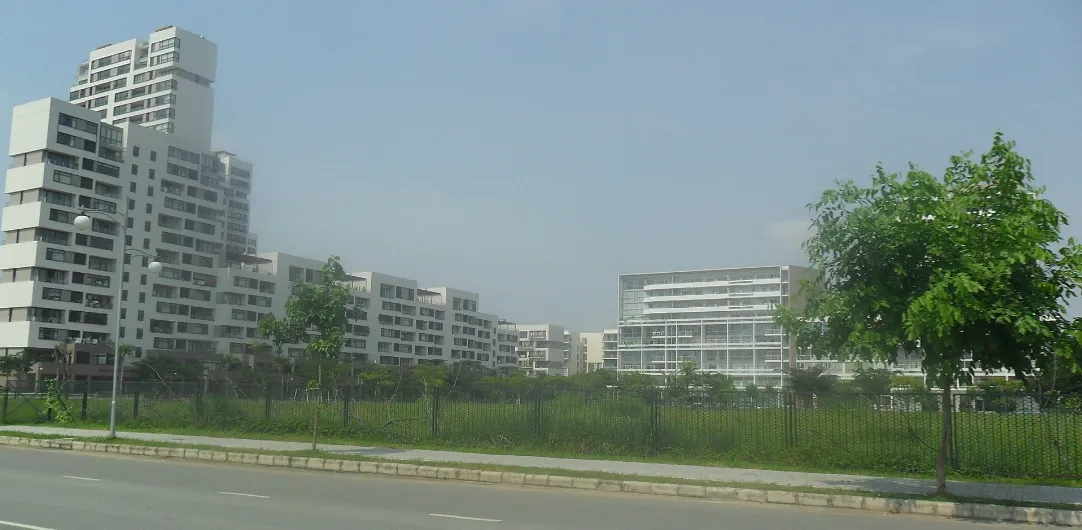
In Ho Chi Minh City, the areas with the most foreigners include those long known as District 7, with its Phu My Hung area, and Districts 1 and 2, closer to the tourist centre around Pham Ngu Lao [4]. In practice, most teachers pick a neighbourhood by the commute. Many teach at several sites or late in the evening, so living near your main centre saves a lot of time on a motorbike or in a taxi.
An agent can also negotiate the lease for you if you don't speak Vietnamese [3]. Ask up front who pays the agent, since you shouldn't assume it's the landlord.
What rent costs in Hanoi and Ho Chi Minh City
These are Numbeo's crowd-sourced monthly averages, from its Hanoi page updated on 1 November 2026 and its Ho Chi Minh City page updated on 5 November 2026 [1] [2].
| Monthly rent | Hanoi | Ho Chi Minh City |
|---|---|---|
| One bedroom, city centre | About 11.3 million VND | About 16.0 million VND |
| One bedroom, outside the centre | About 7.5 million VND | About 7.7 million VND |
| Three bedrooms, city centre | About 22.7 million VND | About 34.2 million VND |
| Three bedrooms, outside the centre | About 14.1 million VND | About 18.1 million VND |
Averages hide a wide spread. Numbeo's entries for a central one-bedroom in Ho Chi Minh City ran from 12 million to 25.5 million VND a month [2]. A small room in a local house will sit well below the average, and a serviced flat in a new tower well above it. Rent is often fixed for the whole lease, so a good deal at the start lasts [3].
Deposits and rent in advance
The usual ask is a deposit of one or two months' rent [3] [4]. Ask how often rent is due as well, and whether you can pay monthly, since your first pay may not arrive until a few weeks after you start.
Some landlords ask for the whole lease in advance. That isn't the norm, and Expat Arrivals advises against it [3]. If you lose your job or have a problem with the flat, getting a year's rent back is hard.
Get every payment in writing, with the amount, the date and what it covers. Before you hand over a deposit, agree in the contract what condition the flat has to be in for you to get it back, and take dated photos of every room on move-in day.
What a lease asks of foreigners
The standard lease runs one or two years [3]. Landlords renting to a foreigner have to report the tenant's details to the authorities, so expect to give a copy of your passport, your work visa and your employer's address [3]. If your work permit or residence card isn't ready yet, tell the landlord, since you'll need to give updated papers later.
Points to settle before you sign:
- Length and notice. What happens if you leave early, and how much of the deposit you lose.
- Bills. Whether electricity and water are billed at the official rate or at a rate the landlord sets.
- Repairs. Who pays for the air conditioner, the water heater and anything else that breaks.
- The language. Ask for an English copy next to the Vietnamese one, or have a colleague read the Vietnamese, because the terms can be hard to agree across a language gap [4].
Registering where you live
Vietnam requires every guest staying in a hotel or a private home to be registered with the local police, whatever their nationality [5]. A hotel does this when it takes your passport [5]. When you stay in a private home, registration has to happen within 24 hours, at the local police station, and some provinces allow it online [5].
For a rented flat, the landlord normally handles the report, which is why they ask for your passport and visa [3]. Ask your landlord to confirm it's done, and register again each time you move. This address registration is separate from the temporary residence card your employer applies for, which the main guide covers, but keeping it in order makes that card and other paperwork simpler.
Utilities and internet
Numbeo's averages for an 85 square metre flat put basic utilities at about 2.2 million VND a month in Hanoi and about 2.6 million VND in Ho Chi Minh City [1] [2]. That covers electricity, cooling, water and rubbish, so your own bill depends mostly on how much you run the air conditioner. Home internet of 60 Mbps or more averages about 226,000 VND a month in Hanoi and about 263,000 VND in Ho Chi Minh City [1] [2].
Ask whether internet is part of the rent or a separate bill, and check the speed on a viewing before you sign if you plan to teach online.
Scams and problems to avoid
Most problems come from paying before you've checked.
- Paying for a place you haven't seen. Expat Arrivals advises against signing before you've seen the property in person [3] [4]. Online photos don't show the noise, the smell of the stairwell or the water pressure.
- Paying the whole year up front. It isn't the norm, and it leaves you with no leverage if things go wrong [3].
- Cash with no receipt. Pay by bank transfer to the person named in the lease, or get a signed receipt for every payment.
- No police registration. Every tenant has to be registered, so a landlord who won't do it leaves you out of step with the rules [5].
- Building work next door. New construction can be noisy, including at weekends, so walk around the block before you commit [3].
With kids
Families usually need two or three bedrooms. On Numbeo's averages, a three-bedroom flat outside the centre costs about 14.1 million VND a month in Hanoi and about 18.1 million VND in Ho Chi Minh City [1] [2]. Suburban homes tend to be larger, so many families trade a longer commute for more room [3]. Pick the school first and then the flat, since a school bus route or a short ride matters more each day than an extra room. Schools, fees and dependent visas are in the main guide.
Your first months, in order
- Ask your employer what housing help is in the contract, and whether a colleague can recommend a building or agent.
- Book a short stay for your first week or two while you view places [3].
- View in person, compare a few places and agree the deposit, payment schedule and bills in writing [3].
- Hand over copies of your passport and visa, and confirm your address is registered with the police [3] [5].
- Photograph the flat on move-in day and keep every receipt.
Once you know which part of town you want to live in, have a look at teaching jobs in Vietnam near there.
See jobs in Vietnam
- Secondary English Teacher and Head of Department, 2027-28 (AIS Ho Chi Minh City)Ho Chi Minh City
- Primary EAL Teacher, 2027-28 (European International School Ho Chi Minh City)Ho Chi Minh City
- Secondary English Teacher with Drama, August 2027 (BIS Ho Chi Minh City)Ho Chi Minh City
- Secondary English Teacher, KS3 to IB Diploma, August 2027 (BIS Ho Chi Minh City)Ho Chi Minh City
- Secondary English Teacher, August 2027 (BVIS Ho Chi Minh City)Ho Chi Minh City
By city: Teaching jobs in Ho Chi Minh City · Teaching jobs in Hanoi
Sources and photo credits
- 1.Numbeo, cost of living in Hanoi (updated 1 November 2026)
- 2.Numbeo, cost of living in Ho Chi Minh City (updated 5 November 2026)
- 3.Expat Arrivals, accommodation in Vietnam (undated, read 5 November 2026)
- 4.Expat Arrivals, accommodation in Ho Chi Minh City (undated, read 5 November 2026)
- 5.US Department of State, Vietnam international travel information (updated 25 January 2024)
- 6.ILA Vietnam, ESL teacher vacancy via The TEFL Academy (read 5 November 2026)
- 7.Washington English Center, English teacher in Hanoi or Hung Yen, via The TEFL Academy (2 June 2026)
- 8.Randstad, international teaching jobs in Vietnam (read 5 November 2026)
Photos
- Tall, narrow houses beside a road in Hanoi, with an apartment tower behind.: David McKelvey, CC BY 2.0, via Wikimedia Commons
- Apartment buildings in the Phu My Hung area of Ho Chi Minh City.: Violetbonmua, CC BY-SA 3.0, via Wikimedia Commons
Get new jobs in Vietnam by email
One email a week with the jobs added since the last one. Free, with no account.
Nothing is sent until you open the link we email you. Choose a role, a pay level or daily emails
We use your address only to send the alerts you ask for, and every email has a one-click unsubscribe link. The privacy notice says how long we keep it, and the terms of use cover the alerts.
We check this guide again by February 3, 2027. Rules change, so confirm visa steps with the embassy and your school before you go. First published November 5, 2026. Spotted something out of date? Tell us. How we write these guides.