Opening a bank account in Vietnam
Get your teaching salary into a Vietnamese bank account without wasted trips to the branch. Here's which banks foreign teachers use, what to bring, what it costs and how paying by QR code works.
AbroadPin team8 min read
Contents
In Vietnam the bank account comes after the visa paperwork, not before it. Banks want to see that you're here to stay, which for most teachers means a work permit or a temporary residence card. Once you have those, opening the account is a short visit. The fiddly part is the face check that now sits behind every banking app, and keeping your documents up to date with the bank afterwards. For pay, the work permit steps and what a month costs, read the main guide to teaching in Vietnam.
Which banks foreign teachers use
Most teachers end up at one of the big local banks or one of the foreign banks with branches in the cities.
- Vietcombank, Techcombank and BIDV are the three local banks that Vietnam Teaching Jobs, a teacher recruiter, suggested for foreign teachers in November 2025 [3]. Vietcombank's and BIDV's apps both come with an English option [3].
- Branch and ATM reach is the main difference. Statrys counted more than 3,000 Vietcombank ATMs, more than 2,000 for BIDV and more than 1,000 for Techcombank in April 2026 [4].
- HSBC and Standard Chartered suit teachers who prefer a global bank, but each had only around 20 ATMs, according to Statrys [4].
- Banks tied to your home country are worth a look too. Woori Bank Vietnam, for example, publishes its own instructions for Korean and other foreign customers [1].
Before you choose, ask your school which bank runs its payroll. Getting paid inside the same bank is usually simplest, and HR often knows which branch handles foreign staff well.
What papers banks ask for
The rules for payment accounts come from the State Bank of Vietnam. Circular 25/2025/TT-NHNN, issued on 31 August 2025, updated the rules on payment accounts [6]. Under it, a foreign national can open an account with a passport or another identity document issued abroad [5]. Foreigners living in Vietnam also show an entry visa, a document in place of a visa, or proof of visa exemption [5].
Banks then add their own asks. Pulling together the lists from Vietnam Teaching Jobs and Statrys, bring:
- Your passport, with at least 6 months left on it, and a photocopy [3] [4].
- Your visa or temporary residence card, original and copy [4].
- Your work permit, which Vietnam Teaching Jobs calls the most common document for teachers [3].
- Proof of your address, usually a rental contract, though a landlord's letter or a utility bill in your name can work [3].
- A Vietnamese phone number, already active before you go in [3].
- Your work contract or a letter from the school, and your tax code if you'll be paid a salary [3].
- Some cash for the first deposit.
Statrys adds that some branches want non-Vietnamese documents notarised or translated, so call the branch first [4]. A phone number matters beyond the form, because Circular 25 adds a phone number check when a customer registers to use an account electronically [6].
Which visa counts
Banks sort foreign customers into residents and non-residents. Woori Bank Vietnam counts you as a resident if you hold a resident card or a visa of 12 months or more, and as a non-resident on an NG, NN or DH visa or if you don't meet that test [1].
Statrys reports that most banks open accounts for work permit or TRC holders, generally with at least 12 months left on the residence document, and that tourist visa holders are generally not accepted [4]. Vietnam Teaching Jobs says some banks may offer restricted accounts to short-stay visa holders [3]. In practice, plan your bank visit for after your employer has your work permit and TRC in hand.
How long it takes
With papers ready, Statrys puts the branch visit at about one to two hours [4]. Most major banks don't let foreigners open an account online, so expect to go in person [4].
A typical sequence, from the two guides:
- At the counter: the bank checks your documents and takes your face scan [3] [6].
- Same day: many banks hand over a temporary card, according to Statrys [4].
- About a week later: the chip card arrives within 5 to 7 working days [4].
- Full use: Vietnam Teaching Jobs suggests allowing 1 to 2 weeks before the app and card all work [3].
Fees and minimum balances
The big local banks are cheap to run. Vietnam Teaching Jobs found that opening an account was free at Vietcombank, Techcombank and BIDV in November 2025, with free transfers inside the same bank [3]. The foreign banks charge a monthly fee if your balance drops too low. Statrys gave these figures in April 2026 [4]:
| Bank | Opening deposit | Minimum balance | Fee if below it |
|---|---|---|---|
| BIDV | Not stated | 50,000 VND | Not stated |
| HSBC Vietnam | 300,000 VND | 3 million VND a month | 200,000 VND a month |
| Standard Chartered | 1,000,000 VND | 1 million VND a month | 100,000 VND a month |
Other charges to expect, all from Vietnam Teaching Jobs in November 2025 [3]:
- Transfers to another bank cost about 2,000 to 6,000 VND at Vietcombank and 2,000 to 5,000 VND at Techcombank [3].
- Using another bank's ATM costs about 3,000 to 5,000 VND [3].
- Techcombank charged no monthly fee on eligible accounts, and BIDV offered fee-free packages with conditions [3].
Treat these as a guide and check the tariff at the branch. Both sources say fees vary by account type and change over time [3] [4].
The face check and keeping the bank updated
This is the part that trips up new arrivals. Since 1 July 2024, a face check has been needed for app transfers of 10 million VND or more, and for transfers adding up to more than 20 million VND a day [2]. From 1 January 2025, under Circular 17/2024/TT-NHNN, customers without a face check on file can't make digital transactions on mobile [2]. Foreign customers bring a valid passport to a branch to register it [2]. Since 1 December 2025, banks also have to meet account holders in person and check their face at the counter when an account is opened [5] [6].
Your documents expire, and the bank needs to know when they're renewed. Woori Bank Vietnam's rules show what can happen [1]:
- If your face check isn't on file, counter services still work, but transfers out and online transactions are paused [1].
- If your passport, visa or residence card expires and you don't bring in the new one, transfers out and withdrawals stop at every channel, including the counter [1].
- Updates to your passport, visa or residence card are made at the counter [1].
So each time your TRC or work permit is renewed, take the new card to the bank in the same week.
Cards, VietQR and e-wallets
Your account comes with a debit card. HSBC's Visa debit card, for example, needs a VND account, has no annual fee and is free to issue the first time [8] [9]. Foreigners need at least 12 months of residency on their papers and at least 2 months left on their visa to get it [9]. Withdrawals are free at HSBC and Visa or Plus ATMs in Vietnam, up to 20,000,000 VND a day, and spending abroad carries a 4% fee [9].
Day to day, most payments go by QR code. VietQR is the national QR standard, built by the National Payment Corporation of Vietnam (NAPAS) with 14 banks at launch and now run across 40 participating units [7]. Once your banking app works, you can scan a VietQR code at a cafe, a market stall or your landlord's phone and pay straight from your account.
E-wallets like MoMo and ZaloPay are widely used too [7]. Wise notes that MoMo payments go through a linked bank account, and that e-wallets have to check identity documents and face data before an account is switched on, often in person [7]. Open the bank account first, then the wallet.
Getting paid before the account is open
Your first payday may come before your account works, especially if your TRC is still being processed. A few steps help:
- Ask HR in your first week which bank pays salaries, and whether they can hold your first payment until your account is ready.
- Give payroll your details in writing, with your name exactly as it is in your passport.
- Arrive with savings and a home card for the first month's rent, deposit, a SIM and food. Foreign cards pay about 30,000 to 55,000 VND a withdrawal at Vietnamese ATMs, and local machines often cap each withdrawal at 2 to 3 million VND [3]. Take out the most you can each time.
- Use an app that takes foreign cards while you wait. VNPAY lets visitors link an international Visa, Mastercard or JCB card and pay by scanning QR codes [7].
- If you're paid in cash, count it in front of the person paying you and get a signed note of the amount to keep with your contract.
Leaving Vietnam
When your contract ends, tell the bank before you go. Woori Bank Vietnam asks residents who are returning home to visit at least 1 month before leaving, with a change request form, their ID, an air ticket and a letter from the employer confirming the job has ended [1]. Ask your own bank what it needs, because an account left with expired documents stops working for transfers [1].
With kids
Banks set age limits on cards: HSBC sets 18 as the minimum age for its debit card [9]. Circular 25 lets banks open accounts electronically for individual customers aged 15 to 18, which may help older teenagers later on [6]. If your children go to a private or international school, ask the finance office early whether it takes fees by bank transfer, VietQR or card, and in which currency.
When your banking plan is sorted, browse teaching jobs in Vietnam and contact schools directly.
See jobs in Vietnam
- Secondary English Teacher and Head of Department, 2027-28 (AIS Ho Chi Minh City)Ho Chi Minh City
- Primary EAL Teacher, 2027-28 (European International School Ho Chi Minh City)Ho Chi Minh City
- Secondary English Teacher with Drama, August 2027 (BIS Ho Chi Minh City)Ho Chi Minh City
- Secondary English Teacher, KS3 to IB Diploma, August 2027 (BIS Ho Chi Minh City)Ho Chi Minh City
- Secondary English Teacher, August 2027 (BVIS Ho Chi Minh City)Ho Chi Minh City
By city: Teaching jobs in Ho Chi Minh City · Teaching jobs in Hanoi
Sources and photo credits
- 1.Woori Bank Vietnam, instructions for foreign customers on updating information under Circulars 17/2024 and 18/2024 (12 December 2024, updated 4 March 2026)
- 2.Vietnam Economic News (Cong Thuong), cashless payment requires biometric updating from 1 January 2025 (24 December 2024)
- 3.Vietnam Teaching Jobs, best local banks for foreign teachers in Vietnam (24 November 2025)
- 4.Statrys, best banks for foreigners living in Vietnam in 2026 (April 2026, read 5 November 2026)
- 5.LuatVietnam, summary of new provisions of Circular 25/2025/TT-NHNN on payment accounts (11 September 2025)
- 6.Vietnam Banks Association, press release on Circular 25/2025/TT-NHNN (9 September 2025)
- 7.Wise, the complete guide to using VietQR for foreigners (4 June 2026)
- 8.HSBC Vietnam, account FAQs (undated, read 5 November 2026)
- 9.HSBC Vietnam, international Visa debit cards (undated, read 5 November 2026)
Photos
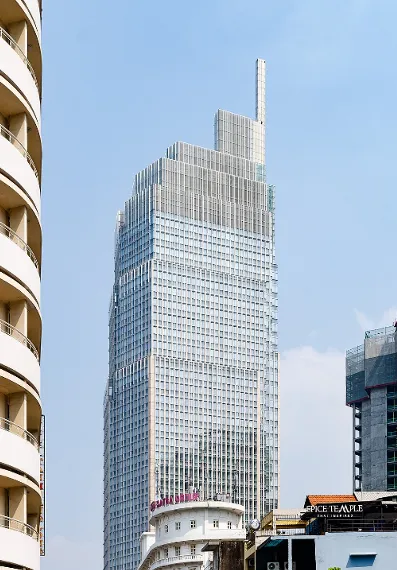
- Vietcombank Tower in central Ho Chi Minh City.: Steffen Schmitz, CC BY-SA 4.0, via Wikimedia Commons
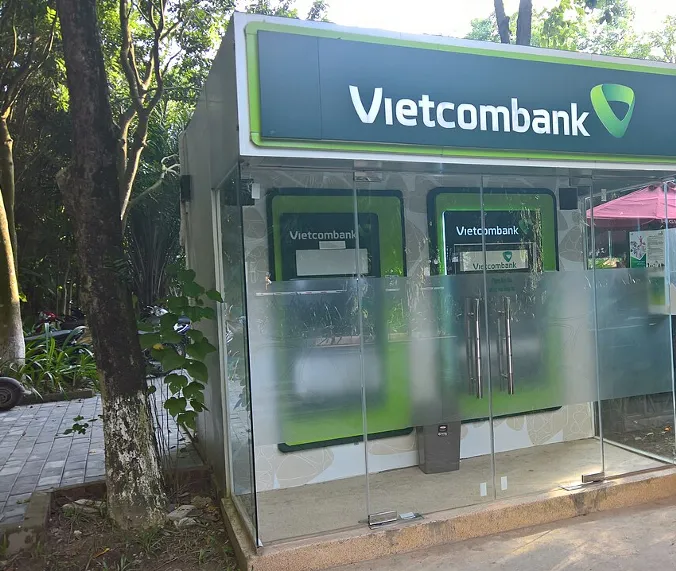
- A Vietcombank 24-hour ATM booth.: Donald Trung, CC BY-SA 4.0, via Wikimedia Commons
Get new jobs in Vietnam by email
One email a week with the jobs added since the last one. Free, with no account.
Nothing is sent until you open the link we email you. Choose a role, a pay level or daily emails
We use your address only to send the alerts you ask for, and every email has a one-click unsubscribe link. The privacy notice says how long we keep it, and the terms of use cover the alerts.
We check this guide again by February 3, 2027. Rules change, so confirm visa steps with the embassy and your school before you go. First published November 5, 2026. Spotted something out of date? Tell us. How we write these guides.