Teaching English in Chile
Teach English in Chile with your work permit approved before you fly and a clear idea of the pay. Chile wants the paperwork done from abroad, so this walks through it, then covers rent in Santiago and Valparaiso and schools for your kids.
AbroadPin team9 min read

Contents
Chile at a glance
| Institute pay | USD 750 to 1,000 a month (International TEFL Academy, October 2026) [2] |
|---|---|
| Work permit | Up to 2 years on an employment contract, extendable for 2 more [1] |
| Where to apply | Online with the Servicio Nacional de Migraciones, from outside Chile [1] |
| After approval | 90 days to enter Chile on your Estampado Electrónico [4] |
| School year | March to December, with hiring peaks in March to April and July to August [2] |
| Rent, one-bed central Santiago | About CLP 508,400 a month (Numbeo) [5] |
Who's hiring in Chile
Most foreign teachers in Chile work for one of five kinds of employer, and the pay and hours differ a lot between them.
- Language institutes. Much of the work is business English for companies and their staff [2].
- English Opens Doors (EOD). A volunteer program run by Chile's Ministry of Education with the United Nations Development Programme, placing volunteers in urban and rural public schools [7]. It pays a stipend, not a salary, and you live with a host family [2] [7].
- Private tutoring. One-to-one lessons, paid by the hour, which many teachers add on top of institute work [2].
- Private and international schools. Bilingual and British-style schools in Santiago charge full private fees and mostly look for qualified classroom teachers rather than new TEFL graduates.
- Online teaching. Another way to add paid hours around a thin timetable [2].
Most institute contracts are built around the hours you teach, so ask how many hours a week are guaranteed and whether travel time between clients is paid.
What institutes, tutoring and EOD pay
Pay in Chile is modest, and few employers print it in their ads. These are the figures published by teacher training sites, with their dates [2] [7].
| Work | Published pay | Source and date |
|---|---|---|
| Language institute, business English | USD 750 to 1,000 a month | International TEFL Academy, October 2026 [2] |
| Private tutoring | USD 10 to 20 an hour | International TEFL Academy, October 2026 [2] |
| English Opens Doors | A stipend of USD 100 (about CLP 65,000) a month, with host family housing and meals | International TEFL Academy, October 2026 [2] |
| English Opens Doors | Around CLP 70,000 a month, with free accommodation | Teast, May 2025 [7] |
| Online teaching | USD 5 to 20 an hour | International TEFL Academy, October 2026 [2] |
Put those next to the cost of living. The same International TEFL Academy article suggests budgeting USD 650 to 1,000 a month to live [2]. So a full timetable at an institute covers a modest life, and tutoring is what gives you some room. The article puts start-up costs, covering your first month, at USD 1,850 to 2,250 [2]. Bring savings.
The EOD stipend is meant to cover transport and other costs of teaching, since the host family covers room and board [2]. It runs for a semester or a full school year, and it's a way to live and teach in Chile rather than a way to save [7].
What the law and employers ask for
The work permit itself has a short list of personal documents. SERMIG, the national migration service, asks for these for the paid-work temporary residence [1]:
- A passport valid for at least 1 year from the day you apply [1].
- A criminal record certificate from your home country and anywhere you've lived in the last 5 years, no more than 60 days old [1].
- A recent colour photo on a white background, with no glasses or hat [1].
- An employment contract or a job offer from an employer based in Chile, with the employer's tax file and proof it can afford to hire you [1].
SERMIG's list for this permit doesn't include a degree or a teaching certificate [1]. Those are employers' asks, and they vary. Teast reports that EOD asks for at least a high school diploma, prefers a bachelor's, and prefers a TEFL or TESOL certificate too [7]. Institutes set their own asks, so read each ad. A course with real observed practice makes you easier to place.
Documents issued outside Chile must be apostilled or legalised, and anything not in Spanish or English needs an official translation [1]. Public documents count as current for 60 days from issue and private ones for 30, unless the document says otherwise [1]. That timing matters: order your police check last.
The work permit, step by step
The permit you want is the temporary residence for foreigners doing paid work, set out under Law 21.325 [1]. SERMIG takes applications for it from abroad only [1].
- Get a contract or an offer. Your employer signs the employment contract before a Chilean notary, and you sign it before the Chilean consulate where you live [1]. On the offer route, the offer letter is notarised in Chile and you sign your acceptance at the consulate [1].
- Gather your papers. Passport, criminal record certificate and photo, plus the employer's documents [1]. Apostille what needs it [1].
- Apply online. On SERMIG's portal, choose the temporary residence for foreigners outside Chile, fill in your details, pick "Motivos Económicos" and paid work, upload the documents and pay the fee [3]. SERMIG says the fee depends on what you apply for and may be waived for some nationalities [3].
- Watch your email. SERMIG sends everything by email: first a receipt, then a notice when your file is being reviewed [3].
- Enter Chile. When the permit is approved you get an Estampado Electrónico, which is your proof of the visa [4]. You have 90 days to enter Chile with it, or it lapses [4].
- Get your ID card. Book a Registro Civil appointment for your first cédula de identidad within 30 days of arriving [4]. The Universidad Católica guide lists a reference fee of CLP 4,270 for 2025 [4]. The card gives you your RUN, which banks and phone companies ask for [4].
How long the permit lasts depends on the route. On an employment contract it's up to 2 years, and it can be extended for 2 more [1]. On a job offer you get 90 days, and you must hand in the final contract within 45 days of arriving to get a 1 year extension [1]. In both cases the clock starts when you enter Chile [1].
Cost of living: Santiago and Valparaiso
The two cities come from different crowd-sourced sites, so compare them loosely. Santiago is from Numbeo, read on 4 November 2026, in pesos [5]. Valparaiso is from Livingcost, updated 21 June 2026, in US dollars [6].
| Item, a month | Santiago (Numbeo) | Valparaiso (Livingcost) |
|---|---|---|
| One-bed flat, centre | CLP 508,400 | USD 428 |
| One-bed flat, outside the centre | CLP 393,400 | USD 343 |
| Utilities | About CLP 125,800 | About USD 66 for one person |
| Internet | About CLP 20,700 | USD 20 |
| Transport pass | CLP 40,000 | About USD 47 |
| One person's costs without rent | About CLP 645,200 | USD 492 |
A cheap restaurant meal in Santiago is about CLP 10,000, and a single metro or bus ride about CLP 800 [5]. In Valparaiso, Livingcost puts a set lunch at about USD 10.70 [6].
Rent is the big cost in Santiago: a flat outside the centre saves about CLP 115,000 a month over a central one [5]. Sharing, or living further out on a metro line, makes institute pay go further. Valparaiso is cheaper on Livingcost's figures, with one person's total at USD 937 a month with rent [6]. It's a much smaller city than Santiago, so line up work before you move there.
When schools hire
Chile's school year runs from March to December, and hiring peaks in March to April and again in July to August [2].
EOD has two intakes. Teast reports a March start with applications from September to November, and a July start with applications from February to April [7]. Check the dates with the program before you plan around them, since they can change from year to year.
Because SERMIG wants the permit applied for from abroad, it pays to job hunt early [1]. If you're aiming for a March start, a contract signed in the southern spring gives the consulate, the apostilles and the online file time to move.
Red flags and staying legal
The main risk in Chile is the paperwork, not the pay. A few things to watch:
- "Come as a tourist and we'll sort it out." SERMIG's paid-work permit is applied for from outside Chile [1]. An employer that won't start the process before you fly is asking you to work outside the rules it describes.
- No notary, no contract. The contract has to be signed by the employer before a Chilean notary [1]. A school that won't do that can't support your file.
- Paid only for teaching hours. If classes are at clients' offices, travel time is unpaid and hours aren't guaranteed, a month can come in under the USD 750 to 1,000 range [2].
- Old documents. A criminal record certificate older than 60 days won't be accepted [1].
- Missing the window. Enter Chile within 90 days of approval and book your ID card within 30 days of arriving [4].
When the paperwork plan is clear, look through open jobs in Chile.
Moving with kids
Chile is easier with a family if one of you has a well-paid job lined up. Put a year of school fees next to a year of institute pay before you commit [2] [8].
School options
Private and international schools in Santiago teach in English or bilingually and charge in UF, a unit tied to inflation, so the peso price changes over time [8]. The Grange School lists 2026 fees of UF 270 a year in tuition, a yearly matrícula of UF 14, and a one-time joining fee of UF 200, or UF 170 if a sibling is already there [8].
Joining fees are a big extra in Chile. Meganoticias reported these in May 2025, with its own peso conversions [9]:
| School | One-time joining fee |
|---|---|
| Nido de Águilas | 350 UF, about CLP 13.6 million |
| The Grange School | 200 UF, about CLP 7.81 million |
| Craighouse | 160 UF, about CLP 6.25 million |
| Lincoln International Academy | 100 UF, about CLP 3.9 million |
For a broad average, Numbeo puts a year of international primary school in Santiago at about CLP 9.78 million [5]. Livingcost gives about USD 12,034 a year in Valparaiso [6].
Local public and subsidised schools teach in Spanish. That works best with younger children or a family staying several years, and it costs far less.
Will your employer help with tuition?
Don't count on it. The institute and EOD figures we read are a salary or a stipend with no family package [2] [7]. EOD places volunteers with host families, so it doesn't suit a family move [7]. If you're hired by an international school as a classroom teacher, ask whether tuition for staff children is part of the offer and get it in writing.
Visas for your spouse and children
A temporary residence holder can include family as dependants, as set out in article 74 of Law 21.325, and SERMIG lists this option on the paid-work permit page [1]. The online form asks whether each person applies as the holder or a dependant [3]. If your family follows later, the Universidad Católica guide describes a family reunification residence, with apostilled or legalised marriage and birth certificates and a notarised statement that you'll support them [4].
Childcare
Numbeo puts a full-day private preschool in Santiago at about CLP 426,900 a month per child [5]. Livingcost gives about USD 482 a month for daycare or preschool in Valparaiso [6].
Healthcare
Chile has a public health fund, FONASA, and private insurers called ISAPREs. Ask your employer which one your contract pays into and whether your spouse and children can be added. If you'll be on a stipend or freelance, price private family cover before you arrive.
See jobs in Chile
No live jobs in Chile right now. New pins go up every day.
Sources and photo credits
- 1.Servicio Nacional de Migraciones (SERMIG), temporary residence for foreigners doing paid work (updated 18 December 2025)
- 2.International TEFL Academy, how much English teachers make in Chile (1 October 2026)
- 3.Servicio Nacional de Migraciones help centre, step by step guide to the paid-work permit application (read 4 November 2026)
- 4.Pontificia Universidad Católica de Chile, Trámites migratorios 2026 guide for foreign students (March 2026)
- 5.Numbeo, cost of living in Santiago (read 4 November 2026)
- 6.Livingcost, cost of living in Valparaiso (updated 21 June 2026)
- 7.Teast, English Opens Doors Program in Chile (updated 7 May 2025)
- 8.The Grange School, valores y costos for 2026 (read 4 November 2026)
- 9.Meganoticias, joining fees at Chile's best known private schools (6 May 2025)
Photos
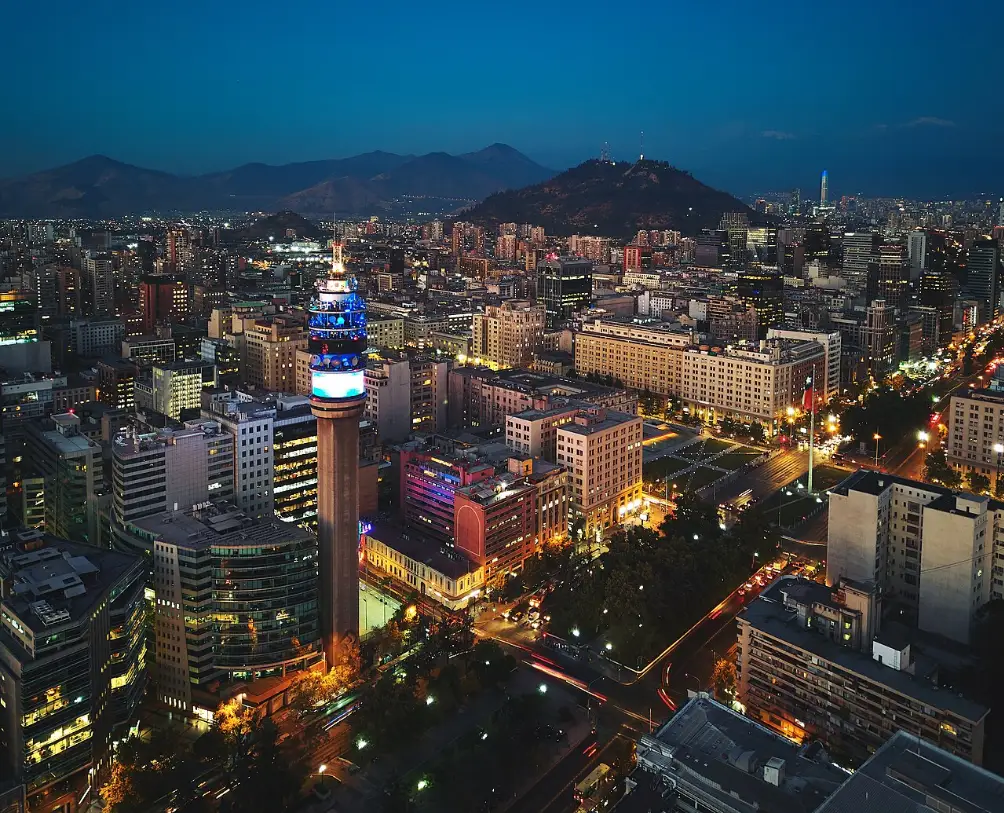
- Plaza de Armas, Santiago: WeHaKa, CC BY-SA 4.0, via Wikimedia Commons
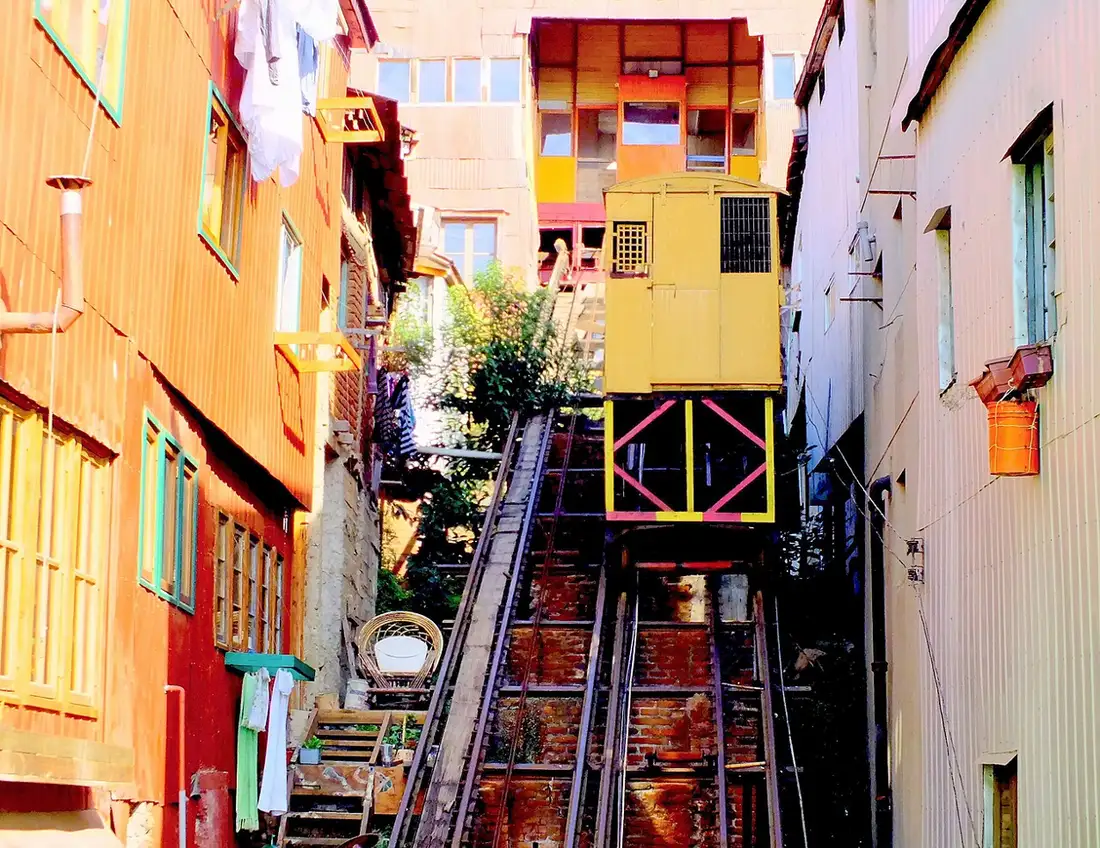
- Ascensor Mariposa, one of the hillside lifts in Valparaiso: Yanquele Arévalo, CC BY-SA 3.0, via Wikimedia Commons
Get new jobs in Chile by email
One email a week with the jobs added since the last one. Free, with no account.
Nothing is sent until you open the link we email you. Choose a role, a pay level or daily emails
We use your address only to send the alerts you ask for, and every email has a one-click unsubscribe link. The privacy notice says how long we keep it, and the terms of use cover the alerts.
We check this guide again by February 2, 2027. Rules change, so confirm visa steps with the embassy and your school before you go. First published November 4, 2026. Spotted something out of date? Tell us. How we write these guides.