Opening a bank account in Chile
Have your salary landing in a Chilean account with a debit card soon after your ID card arrives. Here is the order to do it in, what the CuentaRUT costs, and how to get paid before it's open.
AbroadPin team6 min read
Contents
In Chile, almost everything about banking hangs on one card: the cédula de identidad for foreigners, which carries your RUN. Once it's in your wallet, the state bank's basic account is free and quick to open. Before then, most doors stay shut, so your first few weeks need a plan B for money. This page walks through the order to do things in, which banks and apps to try, what they cost, and how your school can pay you while you wait. For the work permit and pay side, see the main guide to teaching in Chile.
Start with your cédula
Banks and apps in Chile key your account to the RUN on your foreigner's ID card, so that card comes first.
- Book the Registro Civil appointment early. The Universidad Católica guide for foreign arrivals says to book within 30 days of reaching Chile [4]. It lists a reference fee of CLP 4,270 for 2025, paid in cash or by card depending on the office [4].
- Wait for the email. The Registro Civil emails you when the card is ready to collect, and you can follow its status on the Registro Civil site [4]. The guide gives no fixed waiting time, so plan for a gap [4].
- Collect it and keep it with you. The same guide says the RUN is what you need to open a bank account and sign up for a phone plan [4]. Some online sign-ups, such as Scotiabank's, also ask for the card's serial number [8].
A temporary tax number is not a shortcut. Expat.cl, an expat guide, says the CuentaRUT needs the definitive RUT that comes with your residence and ID card, and that a temporary one is not enough [5]. Monedario, a Chilean personal finance site, notes that once you have the cédula, the tax office registers you automatically under your RUN, so you don't need a separate tax number for banking [7].
The CuentaRUT at BancoEstado
For most new teachers, the first account is the CuentaRUT at BancoEstado, the state-owned bank. ChileAtiende, the government's services portal, says it is open to Chileans and foreigners with a valid cédula, from age 12, with no proof of income or credit history [1]. Expat.cl calls BancoEstado the only bank that consistently works with temporary residents [6].
It's a cuenta vista, a basic account with a debit card, and the account number is simply your RUN without the check digit [1]. That makes it easy to hand to your school's payroll.
How to open it
- In the BancoEstado app. You can apply straight from the app [1]. Monedario says the app route needs a Chilean mobile number, so get a local SIM first [7].
- Online, then a branch. Fill in the form on BancoEstado's site with your cédula, then go to a BancoEstado or BancoEstado Express branch to sign the contract and pick up the card [1].
- At a branch. You can also do the whole thing in person at either kind of branch [1].
The card is handed over only inside Chile [7]. Expat.cl reports that after applying online and choosing a branch, people had their card within an hour [5].
What it costs
ChileAtiende lists these prices for the CuentaRUT [1]:
| Item | Price |
|---|---|
| Opening and monthly upkeep | Free |
| Transfers to any bank, since 15 April 2026 | Free |
| Withdrawals at BancoEstado ATMs, branches and CajaVecina | Free |
| Withdrawal at another bank's ATM | CLP 300 |
| Balance check at another bank's ATM | CLP 100 |
| Replacement card, at a branch | CLP 1,000 |
| Replacement card, delivered home | CLP 4,900 |
| Purchases or withdrawals abroad | 1.9% of the amount, at least USD 0.5 |
CajaVecina points are counters in neighbourhood shops where you can take out cash and check your balance at no cost [1]. Using the card abroad has to be switched on in the app or online banking first [1].
Limits to know
The CuentaRUT caps how much it holds and moves. Meganoticias reported these limits from BancoEstado on 30 October 2026 [2]:
- Balance: at most CLP 5,000,000 [2].
- Money in: up to CLP 4,000,000 a calendar month in deposits and transfers received, reset on the 1st [2].
- Transfers out: up to CLP 2,000,000 a day through the app or online banking [2].
- New recipients: for the first 24 hours, CLP 200,000 per new account and CLP 600,000 across all new accounts [2].
- Cash: CLP 400,000 a day at BancoEstado ATMs, and CLP 200,000 a day at other banks' ATMs or at CajaVecina [2].
The new-recipient rule catches people out on rent day. Add your landlord as a recipient a day before you need to pay them.
Other banks and current accounts
A cuenta corriente, the full current account with a credit line, is harder to get as a newcomer. Expat.cl says banks usually want a new client form, your ID, proof of address and proof of income such as payslips or foreign bank statements [5]. It suggests banks look for at least 4 to 5 months on a permanent contract and a salary above CLP 800,000, and that some ask for 3 to 6 months with your current employer [5]. It adds that banks often ask for a term deposit of CLP 400,000 to 1,200,000 as a guarantee, depending on income [5].
What individual banks ask for, as summarised by finance sites:
- Santander, Cuenta Más Lucas: a valid cédula and the bank's own credit check, with approval not assured for every foreigner [7].
- BCI, Cuenta Digital: a valid cédula, proof of income and a credit check [7].
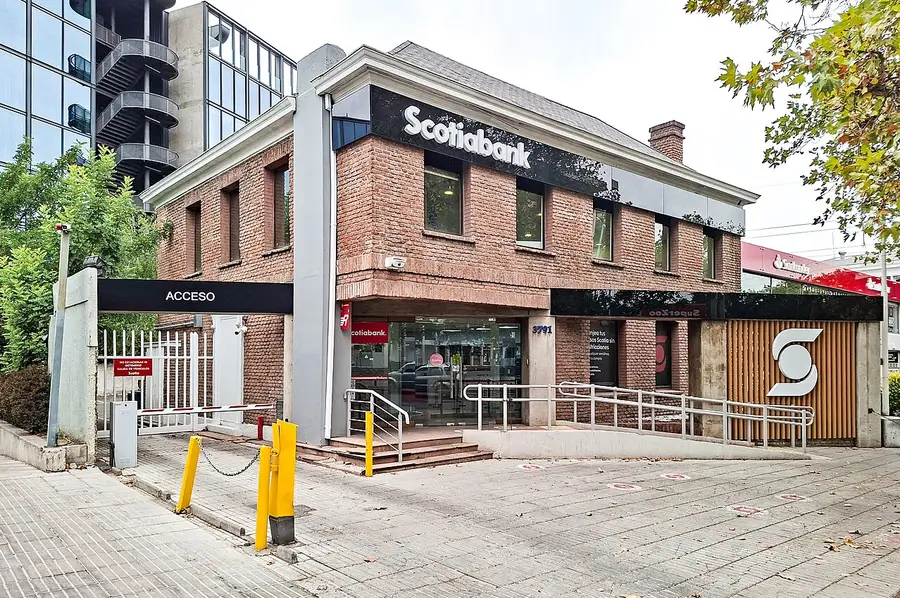
- Scotiabank: Rankia, a personal finance site, says its current account plans need a valid cédula and a clean payment record, and its FAQ answer for foreigners mentions permanent residence [8]. The ScotiaZero plan has no minimum income and no monthly fee [8].
- Itaú and Santander mainly serve clients with steady high income or significant assets, according to Expat.cl [6].
On a first temporary residence and institute pay, the CuentaRUT is the realistic start. Ask again after a few months of payslips.
Cards, transfers and apps
Day to day, Chileans pay by debit card and by bank transfer. Expat.cl reports that debit cards make up 37% of card-terminal payments and that transfers between banks arrive straight away [6]. Keep your RUN and account details in your phone's notes, since anyone paying you by transfer will ask for them.
- Digital wallets. Tenpo and MACH work much like a basic account with less paperwork, says Expat.cl [5]. Monedario reports that Tenpo still asks for a RUT and a physical Chilean cédula to sign up [7].
- Your home card. Foreign Visa and Mastercard cards are taken in most shops, restaurants and online services, so keep one active for your first weeks [6].
- Email alerts. Banks send transfer notices by email, so check your bank has the right address [6].
Getting paid before the account is open
Your first payday may come before your cédula does. Chilean labour law gives you options, and you choose them, not the employer.
- Cash is the default. The Dirección del Trabajo, the labour inspectorate, explains that article 54 of the Labour Code says wages are paid in legal tender [3].
- Cheque or vale vista, if you ask. A vale vista is a bank draft in your name. The Dirección del Trabajo says wages can be paid by cheque or vale vista only at the worker's request, given in writing [3]. Expat.cl notes that you can cash a vale vista or deposit it once you have an account [5].
- Deposit, if you ask. Paying into an account is allowed when you request it and the money is available on the payday in your contract [3].
So write a short signed note asking for a vale vista until your account is open, then switch to a CuentaRUT deposit. Bring enough savings to cover the weeks before then.
With kids
Children can have a CuentaRUT from age 12 [1]. Between 12 and 17 they open it with a legal representative, such as a parent registered with the Registro Civil, and both need a valid cédula [1]. Monedario warns that the app route for minors doesn't always work for foreign children or parents, so plan on a branch visit [7]. Wait until your child's own cédula arrives before you try.
When the account is open and the first salary has landed in full, have a look at open jobs in Chile.
See jobs in Chile
No live jobs in Chile right now. New pins go up every day.
Sources and photo credits
- 1.ChileAtiende, CuentaRUT BancoEstado requirements, channels and fees (read 4 November 2026)
- 2.Meganoticias, CuentaRUT maximum balance and limits on deposits, transfers and withdrawals (30 October 2026)
- 3.Dirección del Trabajo, how wages may be paid: cash, cheque, vale vista or deposit (updated 7 October 2021)
- 4.Pontificia Universidad Católica de Chile, Trámites migratorios 2026 guide for foreign students (March 2026)
- 5.Expat.cl, how to open a bank account in Chile: CuentaRUT, cuenta vista, cuenta corriente (updated 19 June 2026)
- 6.Expat.cl, banks in Chile, an expat banking guide (updated 19 June 2026)
- 7.Monedario, finances for migrants in Chile (22 June 2026)
- 8.Rankia Chile, Scotiabank accounts and requirements to open one (updated 24 September 2026)
Photos
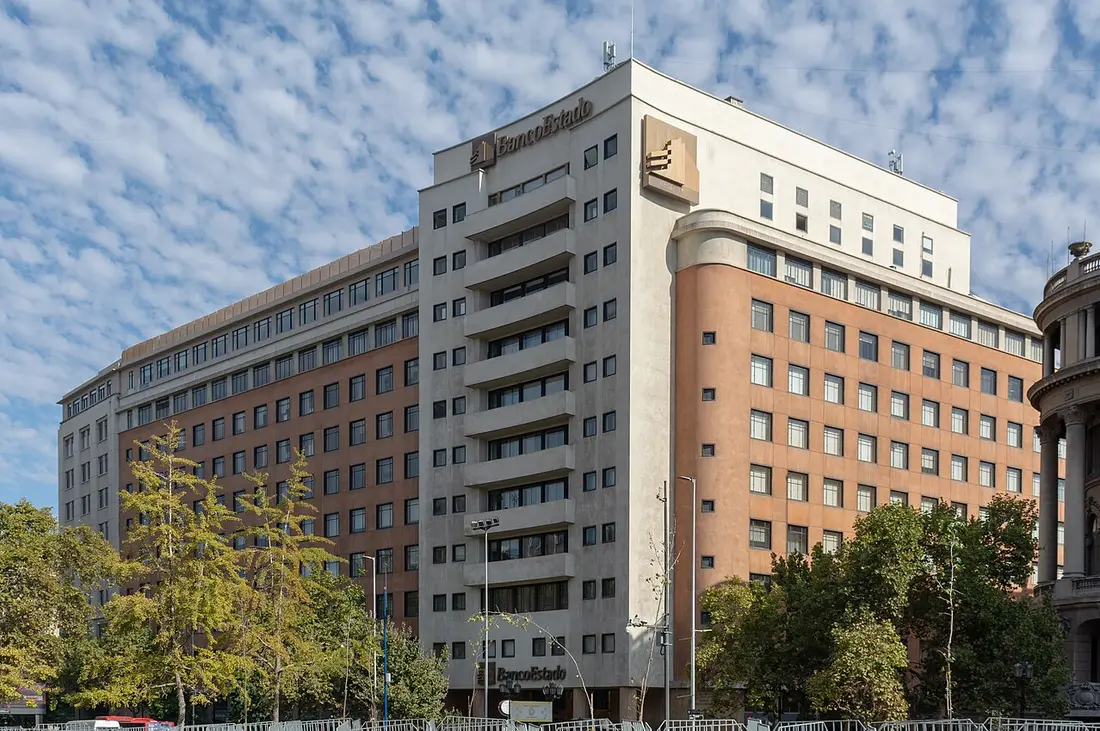
- The BancoEstado head office in central Santiago.: Carlos Figueroa, CC BY-SA 4.0, via Wikimedia Commons
- A Scotiabank branch in Vitacura, Santiago.: Carlos Figueroa Rojas, CC BY-SA 4.0, via Wikimedia Commons
Get new jobs in Chile by email
One email a week with the jobs added since the last one. Free, with no account.
Nothing is sent until you open the link we email you. Choose a role, a pay level or daily emails
We use your address only to send the alerts you ask for, and every email has a one-click unsubscribe link. The privacy notice says how long we keep it, and the terms of use cover the alerts.
We check this guide again by February 2, 2027. Rules change, so confirm visa steps with the embassy and your school before you go. First published November 4, 2026. Spotted something out of date? Tell us. How we write these guides.