Finding an apartment in Chile
Rent a flat in Santiago at a fair price, with a deposit and lease you understand. Here's what a room or one-bed costs, what landlords ask of a foreign tenant and how to budget for bills.
AbroadPin team8 min read
Contents
Most teachers in Chile rent on their own, and the flat itself is usually the easy part. What catches people out is the cash needed before your first payday, a landlord who wants a Chilean guarantor, and winter bills. This article takes those in order, with current rents for Santiago and Valparaiso. Pay, the work permit and your ID card are in the main guide to teaching in Chile.
School housing or renting yourself
Ask about housing before you accept an offer.
- English Opens Doors. Volunteers live in a homestay with a local family, and the monthly stipend of CLP 65,000 is meant for costs like local transport [5]. You won't need a lease.
- Language institutes. International TEFL Academy lists rent and utilities among a teacher's monthly costs, and puts start-up costs, which can include a security deposit and the first month's rent, at USD 1,850 to 2,250 [5]. Plan on finding your own place.
- Private and international schools. If a school hires you on a full contract, ask whether housing or an allowance is part of it, and whether the school will act as your guarantor (see below).
Many newcomers stay in a hotel or a short let first, such as a serviced flat taken for a few weeks, and sign a long lease once they know the city [3].
Rooms, flats and houses
Most rentals in Santiago are either piezas, single rooms, or apartments, with houses also on offer [4]. In the city, most people rent a flat, and renting a room in a shared flat is the cheaper choice [3]. Houses and cabins turn up more in small towns and the countryside [3].
Listings say whether a place is furnished.
- Amoblado (furnished). The flat comes fully stocked, usually down to pans, plates and cutlery [3]. In Santiago, furnished flats usually cost more [4].
- Sin muebles (unfurnished). You may get an oven and hob and little else [3]. Expat Arrivals' Santiago page says an unfurnished flat may come with no appliances at all, so ask the landlord to include at least a fridge and an oven [4].
Where to look
Personal contacts are the most common route in Santiago: colleagues, neighbours and shopkeepers in the area you want [4].
Other routes:
- Websites. Portalinmobiliario lists flats, CompartoDepto lists rooms in shared flats, and Vivastreet and ACOP also carry rentals [3] [4].
- Facebook groups and newspapers. Santiago's daily papers and local Facebook groups carry rental ads [3] [4].
- Signs. Once you're in a neighbourhood, look for se arrienda (for rent) signs on buildings [3].
- Agents and relocation firms. They work with foreign tenants in the big cities and make things simpler, but they cost more [3] [4]. In Santiago, the agent's fee is usually split between tenant and landlord, so ask your share before you view [4].
Expat Arrivals says even basic Chilean Spanish helps, and a local friend at viewings may get you a better deal [4].
Neighbourhoods in Santiago
Expat Arrivals names Providencia and Ñuñoa as popular areas, Las Condes as a wealthier area with many foreign residents, and La Reina as a cheaper option that's still pleasant [4]. Traffic in Santiago can be heavy, so pick a place near your school or on a direct metro or bus line [3].
Valparaiso and Viña del Mar
Expat Arrivals describes Valparaiso and Viña del Mar as popular cities with foreign residents and visitors [3].
What rent costs in Santiago and Valparaiso
These are Numbeo's crowd-sourced monthly averages in pesos. The Santiago page was last updated on 1 November 2026 from 996 entries by 89 contributors over 12 months [1]. The Valparaiso page was last updated on 2 October 2026 from 20 contributors over 18 months, and Numbeo marks some of its figures as estimates, so treat it as a rough guide [2].
| Monthly cost | Santiago | Valparaiso |
|---|---|---|
| One bedroom, city centre | CLP 503,312.50 | CLP 451,851.67 |
| One bedroom, outside the centre | CLP 332,384.62 | CLP 375,185.00 |
| Three bedrooms, city centre | CLP 996,666.67 | CLP 656,036.78 |
| Three bedrooms, outside the centre | CLP 739,615.38 | CLP 533,333.33 |
| Basic utilities, 915 sq ft flat | CLP 145,513.82 | CLP 113,767.91 |
| Broadband, 60 Mbps or more | CLP 18,530.00 | CLP 18,635.00 |
Behind each average is a wide spread. Santiago's entries for a central one-bed ran from CLP 320,000 to CLP 890,000 a month, and for one outside the centre from CLP 280,000 to CLP 700,000 [1]. Expat Arrivals says rent is often negotiable, so use these figures when you talk price [3].
Put rent next to your pay before you sign. International TEFL Academy suggests budgeting USD 650 to 1,000 a month for all living costs, and says Santiago costs more than other parts of Chile [5]. On institute pay, look at rooms in shared flats and one-beds outside the centre first.
Deposit, guarantor and money up front
The deposit (garantía)
Landlords generally ask for a deposit of at least one month's rent, and some ask for more [3] [4]. International TEFL Academy counts the deposit and the first month's rent among your start-up costs [5]. Get a receipt for every payment, and have the contract say when and how the deposit comes back.
A Chilean guarantor
Some landlords want a Chilean guarantor (aval) [3]. In most cases a foreign tenant's employer takes that role [3] [4]. Ask your school early whether it will sign as guarantor or give you a letter for the landlord.
If you can't find a guarantor, Expat Arrivals says tenants can usually negotiate a larger security deposit instead [3] [4]. Agree the amount in writing, and check the contract calls it deposit, not rent in advance.
Your RUT and papers
Your cédula de identidad carries your RUN, also called the RUT, a unique number you need to open a bank account and sign up for a mobile plan [6]. You book the appointment for your cédula within 30 days of arriving [6]. Until the card arrives, ask each landlord whether your passport and permit will do, and keep scans of them and your job contract on your phone.
The lease (contrato de arriendo)
Leases are either for a fixed term or open-ended [3]. A fixed-term lease generally runs 12 months, though landlords may agree to a shorter or longer one, and in Santiago a shorter lease usually costs more [3] [4]. On a fixed-term lease you're generally bound for the whole term unless the landlord agrees otherwise [3].
The more flexible open-ended leases let you leave after giving one month's notice [3]. Give it in writing, ideally by registered post or a notarised letter, since leaving without proper notice can cost you the deposit [3].
Before you sign, check:
- the rent, the day it's due and how you pay it
- the deposit and the conditions for getting it back
- which bills are included, and any building fees for parking, storage or a pool [3]
- the notice period on both sides
Make a full inventory of the flat's condition and furniture part of the lease, because you're liable for damage beyond normal wear and tear [3] [4]. A lawyer or relocation company can explain the contract [3].
Utilities and internet
Utilities are often not included in the rent, and water, gas and electricity are fairly expensive in Chile [3]. Heating costs can climb in winter because many homes lack insulation [3]. The Numbeo averages in the table give a monthly budget for basic utilities and broadband [1] [2]. Ask the landlord for a rough figure for the bills in that flat before you sign [4].
A few practical points from Expat Arrivals:
- Power. Chile runs on 220V at 50Hz with Type C and Type L plugs, power cuts happen, especially in the rainy season, and a surge protector is worth having [3].
- Gas. Cities mostly have piped gas, while bottled gas is more common in the countryside, and either the landlord or the tenant may set it up [3].
- Water. Tap water is safe to drink in most cities, and drought makes saving water important [3].
- Internet. The main providers are Movistar, Entel and Claro, and service in cities is generally reliable [3]. If you plan to teach online, test the connection at the viewing.
Scams and traps to avoid
- Paying for a place you haven't seen. Wait until you, or someone you trust, has viewed it. A short let first gives you that time [3].
- A price far above the averages. Rent is often negotiable, and the Numbeo ranges above give you a fair starting point [1] [3].
- No inventory. Without one, it's your word against the landlord's when the deposit is due back [3] [4].
- Cash with no receipt. Pay by bank transfer to the person named on the lease, or get a signed receipt each time.
- The wrong person. Check that the person taking your money owns the flat or has the owner's authority, and that the name matches the contract.
With kids
Plan on two or three bedrooms for a family. On Numbeo's averages, a three-bed outside the centre costs about CLP 739,615.38 a month in Santiago and about CLP 533,333.33 in Valparaiso [1] [2]. Some foreign residents prefer a gated complex in one of Santiago's pricier areas [4]. Pick the school first and then the flat, since being close to school, work and public transport matters every day [3] [4]. For a younger child, Numbeo puts a full-day private preschool in Santiago at about CLP 439,555.56 a month [1]. School fees and dependant visas are in the main guide.
Your first months, in order
- Ask your employer what housing help is in the contract, and whether it will act as your guarantor [3].
- Book a short let for your first weeks while you view places [3].
- Book your cédula appointment within 30 days of arriving [6].
- View in person, compare prices with the Numbeo ranges and agree the deposit, rent and bills in writing [1].
- Do the inventory with the landlord and photograph every room on move-in day [3].
- Set money aside for winter heating [3].
When you know which part of town suits you, look at teaching jobs in Chile near there.
See jobs in Chile
No live jobs in Chile right now. New pins go up every day.
Sources and photo credits
- 1.Numbeo, cost of living in Santiago in pesos (updated 1 November 2026)
- 2.Numbeo, cost of living in Valparaiso in pesos (updated 2 October 2026)
- 3.Expat Arrivals, accommodation in Chile (undated, read 5 November 2026)
- 4.Expat Arrivals, accommodation in Santiago (undated, read 5 November 2026)
- 5.International TEFL Academy, how much English teachers make in Chile (updated 1 October 2026)
- 6.Pontificia Universidad Católica de Chile, Trámites migratorios 2026 guide for foreign students (March 2026)
Photos
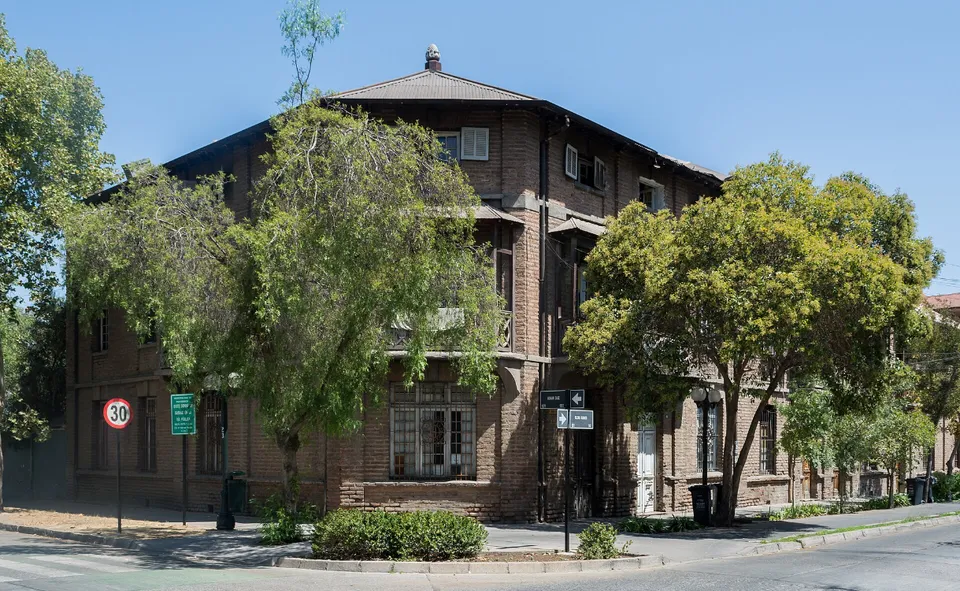
- An older brick building on a street corner in Providencia, Santiago.: Carlos Figueroa, CC BY-SA 4.0, via Wikimedia Commons
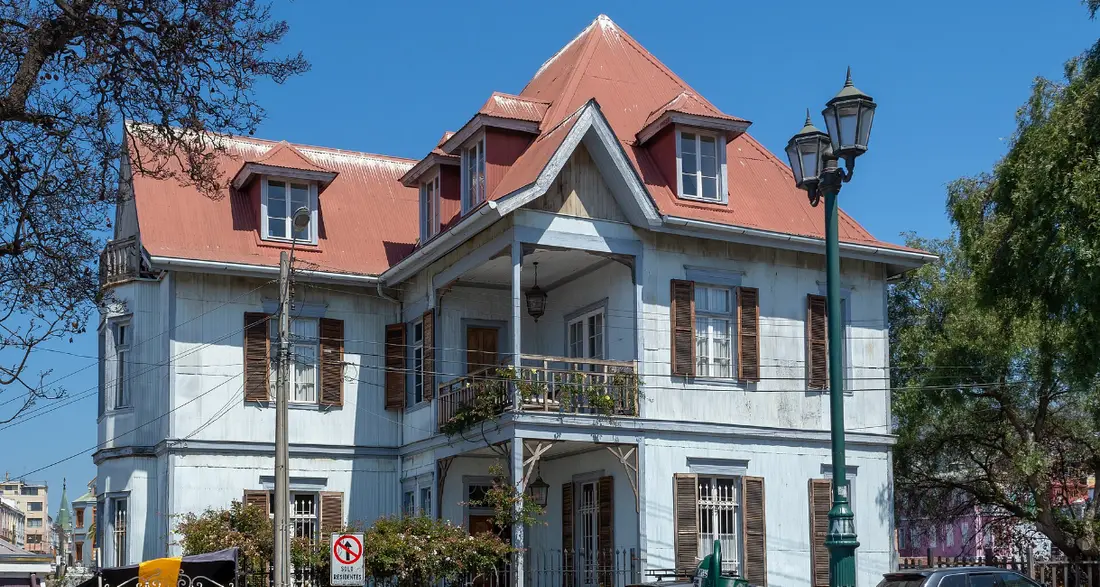
- A wooden house on Cerro Alegre in Valparaíso.: Carlos Figueroa Rojas, CC BY-SA 4.0, via Wikimedia Commons
Get new jobs in Chile by email
One email a week with the jobs added since the last one. Free, with no account.
Nothing is sent until you open the link we email you. Choose a role, a pay level or daily emails
We use your address only to send the alerts you ask for, and every email has a one-click unsubscribe link. The privacy notice says how long we keep it, and the terms of use cover the alerts.
We check this guide again by February 3, 2027. Rules change, so confirm visa steps with the embassy and your school before you go. First published November 5, 2026. Spotted something out of date? Tell us. How we write these guides.