Opening a bank account in Hong Kong
Get your Hong Kong salary into a local account in your first weeks and keep monthly fees off it. Here's what banks ask for, when to open with your new ID card and how FPS transfers work.
AbroadPin team7 min read
Contents
Your school will pay your salary by bank transfer, so a Hong Kong account is one of the first jobs on your list after you land. You don't need permanent residence to open one, and the big banks have routes for people who've only just arrived [1] [8]. The catch is timing: the quickest and cheapest ways in open up once you hold your Hong Kong Identity Card. This page covers the papers, the banks, the fees and your first payday. For pay, the visa and the employers themselves, see the main guide to teaching in Hong Kong.
What banks ask you to bring
HSBC's own checklist gives a fair picture of what the large banks want, and it sorts people by residence status [1].
- Non-permanent residents aged 18 or over, which covers teachers on an employment visa: a Hong Kong Identity Card with proof of nationality, or a valid travel document showing your name, date of birth, nationality and document number, plus proof of your current address [1].
- Non-residents aged 18 or over: you must be physically in Hong Kong, with a valid travel document and proof of your current address [1].
Proof of address is the part to plan for. HSBC accepts 16 kinds of document, among them a utility bill, a bank statement or a tax demand note issued within the last 3 months [1]. It won't take a post office box or a "care of" address, and it wants proof of your permanent address too if that differs from where you live now [1]. For non-residents it also accepts a government photo driving licence or national ID card that shows your current address [1].
The Hong Kong Monetary Authority (HKMA), which supervises the banks, says its anti-money-laundering guideline, revised in October 2018, only requires banks to collect customers' address information [9]. Banks still set their own document lists, so if you don't have a bill in your name yet, ask the branch what it will accept before you go.
Bring proof of the job as well. The University of Hong Kong tells new staff to bring a letter of appointment and a certifying letter from their department along with ID and address proof [5]. Wise's guide adds a valid visa and an employment contract or letter [8]. A short letter on school letterhead confirming your post covers most of this.
Your first weeks, in order
- Get a local phone number. App banks check who you are by text message, and ZA Bank, for one, asks for a valid Hong Kong mobile number [4].
- Sort out an address document. HKU lists a tenancy agreement, or a phone, TV or utility bill from the last 3 months, as proof of current address [5]. If you're in school housing, ask the school for a letter or a copy of the agreement.
- Apply for your Hong Kong Identity Card. Wise reported in September 2023 that the application is free and takes around 7 working days to process [8]. Check current times with the Immigration Department when you book.
- Open the account. With the new card you can apply in an app in minutes (see HSBC below) or at a branch.
- Give your school the account number. HKU asks new staff to enter theirs on its staff portal so it can pay their salary [5]. Your school will have its own form, so ask payroll which one.
- Register for FPS. Link your phone number or email to the account so people can pay you without your account number (see below).
Which bank to try
HSBC
HSBC's app lets you open an account with a Hong Kong ID card in minutes. You qualify if you hold a new-version card issued in November 2018 or later, are a permanent or non-permanent resident aged 18 to 75, live in Hong Kong and don't already have an HSBC account or credit card [2]. You upload a photo of the card and a selfie, and HSBC says the account is ready in under 5 minutes, with about 10 minutes for the whole application [2]. A Mastercard debit card or UnionPay ATM card is posted to Hong Kong addresses within 4 to 6 working days [2].
You can also start before you fly. HSBC says non-residents can open an account remotely before arriving, and the app accepts 15 kinds of overseas passport, among them Australian, Canadian, Indian, Singaporean, British and US ones, from applicants in designated places [2] [3]. After you arrive, you can also apply at a branch, by phone or through HSBC's digital bankers [3].
Here's the reason to wait for your card if you can. HSBC lists these rules for its everyday HSBC One account, based on your total relationship balance (deposits and investments with HSBC) averaged over the previous 3 months [2]:
| HSBC One account | Minimum total balance | Fee if below |
|---|---|---|
| Opened with a Hong Kong ID card | None | None |
| Opened without one, on or after 1 January 2026 | HKD10,000 | HKD100 a month |
Standard Chartered
Wise's guide, last checked in September 2023, says you can start Standard Chartered's Integrated Deposits Account online but must finish at a branch, and it needs a Hong Kong ID card [8]. The same guide lists a HK$200 fee for closing the account within 3 months of opening it [8]. Check the bank's current tariff before you sign, since those figures are a few years old.
Virtual banks
Hong Kong's app-only banks suit teachers who already have their card. ZA Bank opens accounts for people aged 18 or over with a smart Hong Kong ID card issued on or after 26 November 2018, permanent or non-permanent [4]. You also need a Hong Kong mobile number and a residential address in Hong Kong [4]. ZA Bank says it can't open accounts for people whose tax residency, place of birth or nationality is in certain countries, and its account page doesn't list them, so ask in its chat first [4].
Fees to watch
These are the charges to plan around.
- Low balance fees. The HKD100 a month HSBC charges on HSBC One accounts opened without an ID card from 1 January 2026, when the 3-month average total balance falls under HKD10,000 [2].
- Closing early. Standard Chartered's HK$200 charge for closing within 3 months, as Wise reported it in 2023 [8].
- Other banks' ATMs. Wise notes that using another bank's machine carries a service charge [8].
- Sending money abroad. Wise listed Standard Chartered's international transfer fee at HK$50 online or by app and HK$200 at a branch in 2023 [8]. Compare that with your home bank's charges for receiving money.
FPS and paying by phone
The Faster Payment System (FPS) lets you pay people with just their phone number or email. The HKMA describes it as a platform linking banks and stored value e-wallets, running 24 hours a day, 7 days a week, for person-to-person transfers, e-wallet top-ups and online shopping [6]. You link your mobile number or email to an account in your bank's app, and if you link the same number at several banks, one is set as the default for money coming in [6]. Since 6 December 2020 you can also link your ID card number, but only so institutions that already hold it can pay you [6].
Standard Chartered says FPS transfers in Hong Kong dollars and renminbi are free and real time, with a daily limit you can set up to HK$300,000 [7]. Your own bank will have its own limits, so check them in its app.
FPS payments land almost at once and work like cash, so the HKMA says to check who you're paying and the amount before you confirm [6]. If you think you've paid a scammer, tell your bank or e-wallet and report it to the Hong Kong Police [6].
Getting paid before the account is open
Your first payday may come before your account is ready, especially if your ID card takes a while.
- Ask your school early. Find out the first pay date and how it pays if you don't have a local account by then. Get the answer in writing.
- Open before you land if you qualify. HSBC's remote route for non-residents is there for this [3]. Just keep the low balance fee in mind if you open without an ID card [2].
- Keep your home account working. Tell your home bank you're moving and check what it charges for card payments and cash withdrawals abroad, so you can cover the first weeks.
Once the account is set up, have a look at open teaching jobs in Hong Kong if you're still choosing a school.
With kids
If your children want their own account, HSBC opens accounts for ages 11 to 17, with ID rules that depend on their residence status [1]. If a child has no address proof of their own, HSBC takes the parent's or guardian's [1]. App banks can be stricter: ZA Bank doesn't accept children's ID cards [4].
See jobs in Hong Kong
- Lower School Class Teacher, August 2027 (Harrow Hong Kong)Hong Kong
- English Tutor in Hong Kong schools, August 2027 (Chatteris Hong Kong)Hong Kong · $2,358 a month
Sources and photo credits
- 1.HSBC Hong Kong, points to note for account application (undated, read 5 November 2026)
- 2.HSBC Hong Kong, open an account with the HSBC HK App (undated, read 5 November 2026)
- 3.HSBC Hong Kong, banking in Hong Kong for newcomers (undated, read 5 November 2026)
- 4.ZA Bank, opening an account as a Hong Kong resident (undated, read 5 November 2026)
- 5.The University of Hong Kong, bank account opening for new staff (undated, read 5 November 2026)
- 6.Hong Kong Monetary Authority, Faster Payment System (revised 6 August 2025)
- 7.Standard Chartered Hong Kong, Faster Payment System (undated, read 5 November 2026)
- 8.Wise, how to open a bank account in Hong Kong (updated 29 September 2023)
- 9.Hong Kong Monetary Authority, role of the HKMA in account opening (revised 8 March 2023)
Photos
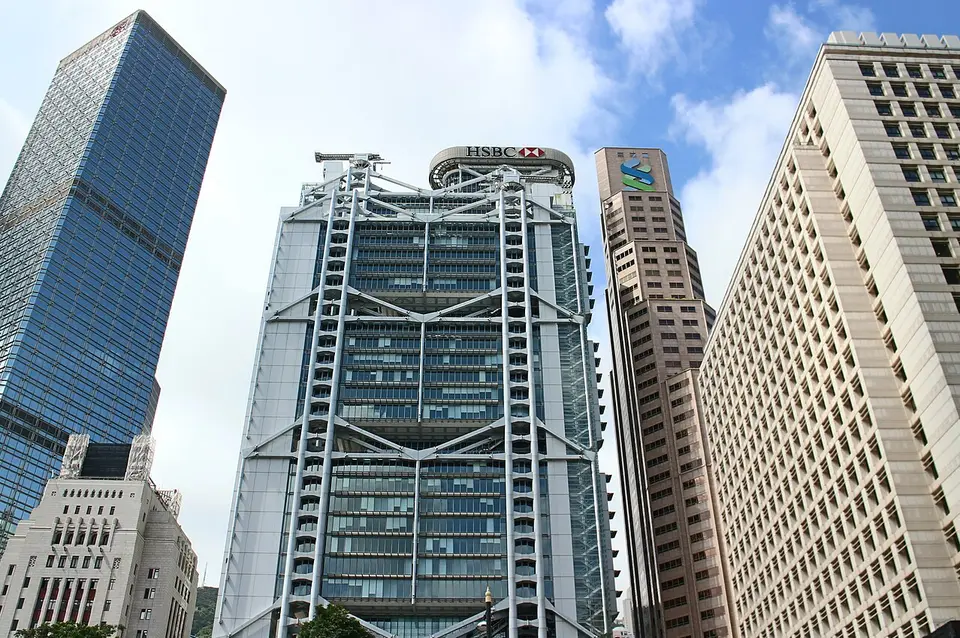
- The HSBC building in Central, with Standard Chartered's tower beside it.: Suicasmo, CC BY-SA 4.0, via Wikimedia Commons
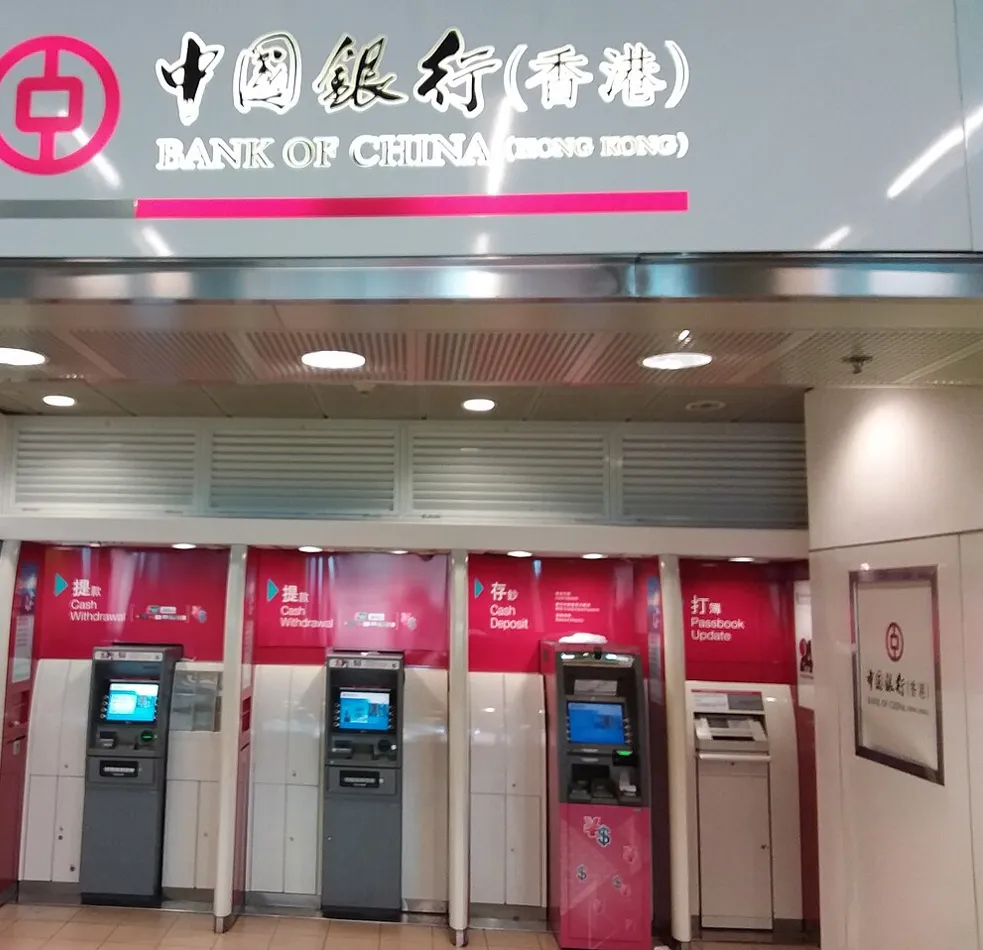
- Bank of China (Hong Kong) cash and deposit machines at Tiu Keng Leng MTR station.: Zheongugbulld, CC BY-SA 4.0, via Wikimedia Commons
Get new jobs in Hong Kong by email
One email a week with the jobs added since the last one. Free, with no account.
Nothing is sent until you open the link we email you. Choose a role, a pay level or daily emails
We use your address only to send the alerts you ask for, and every email has a one-click unsubscribe link. The privacy notice says how long we keep it, and the terms of use cover the alerts.
We check this guide again by February 3, 2027. Rules change, so confirm visa steps with the embassy and your school before you go. First published November 5, 2026. Spotted something out of date? Tell us. How we write these guides.