Getting a phone number and SIM in Hong Kong
Get a Hong Kong number working on your first day, then switch to a plan that suits you. Here's how real-name registration works, who the carriers are and what prepaid cards cost.
AbroadPin team5 min read

Contents
A local number is one of the first things you'll want in Hong Kong. Your school, your landlord and your bank all expect one, and getting it is quick. The one rule to know is that every card has to be registered in your real name before it works. This page walks through buying a card, registering it, choosing a carrier and keeping your home number. For pay, the visa and the schools themselves, see the main guide to teaching in Hong Kong.
Real-name registration, in plain terms
Hong Kong's rules on registering SIM cards took effect on 1 September 2021, and users have had to register with their carrier since 1 March 2022 [1]. The Office of the Communications Authority (OFCA), the telecoms regulator, says the programme is now fully in place [1].
What that means for you:
- Every new card is registered before it's switched on. That covers prepaid cards and monthly service plans alike [1]. A prepaid card only starts working once the carrier has checked your details by hand [1].
- Before you have an ID card, use your passport. If you don't hold a Hong Kong Identity Card, OFCA says you can register with another valid identity document such as a passport or travel document [2]. You also confirm that you don't hold a Hong Kong ID card and haven't registered with another document [1].
- Bring the original. The carrier checks the original document, not a copy [1].
- It's free. Registration costs nothing, and you get a text message once it's done [2].
- There's a cap on prepaid cards. One person can register up to 10 prepaid cards with each local carrier, and there's no cap on monthly plans [1].
Once you hold a Hong Kong ID card, that's the document you register with [1]. Card holders can also register prepaid cards with the government's iAM Smart app [1].
Your first SIM: buy it and register it
Prepaid cards are sold by the carriers and their dealers, and you can register most of them yourself on your phone. OFCA describes the usual steps [1]:
- Put the card in your phone and wait for the text message from the carrier [1].
- Open the carrier's registration page or app and confirm the mobile number or the card's ICCID [1].
- Enter the one-time password if the carrier sends one [1].
- Take a photo of your original passport and check the details the system reads from it [1].
- Accept the terms and finish. A confirmation text arrives when the number is active [1].
If you'd rather have help, some carriers also register cards in their own shops [1]. OFCA keeps a list of every carrier's registration page and hotline, which is handy if a card arrives with no English instructions [3].
Keep the number working after it's on. Carriers spot check registrations, and may ask you by text to confirm who you are, from the sender ID "#SIMREG" [2]. If you don't confirm in time, the card is cancelled and can't be used again [2].
The main carriers
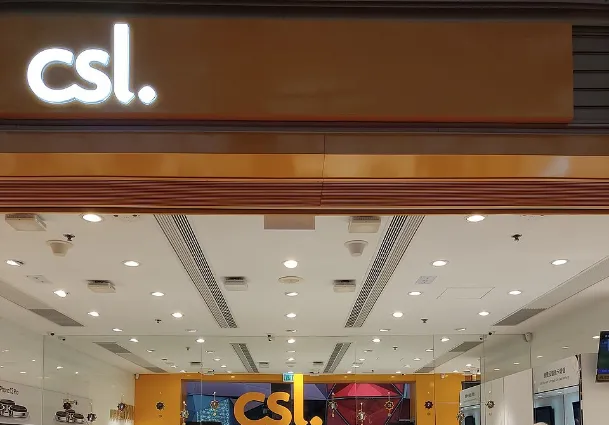
OFCA's list of carriers runs to dozens of brands. These are four of the best known, with their hotlines for registration questions [3]:
- csl, run by HKT: hotline 179 179 [3]
- 3HK, run by Hutchison: hotline 1033 [3]
- SmarTone: hotline 2880 2688 [3]
- China Mobile Hong Kong (CMHK): hotline 12580 [3]
China Unicom (CUniq), China Telecom and many smaller brands appear on the same list [3]. A smaller brand can be cheaper, but check which network it uses and whether its registration page and helpline work in English before you buy.
What prepaid cards cost
Carriers change prices and bundles often, so treat these as a snapshot. csl listed these prepaid cards on its own site when we read it in November 2026 [4]:
| csl prepaid card | Price | What csl's page says |
|---|---|---|
| 5G Discover Hong Kong Tourist Prepaid SIM | HK$58, HK$88 or HK$118 | 15 GB, 50 GB or 80 GB, aimed at visitors, eSIM supported |
| 6GB Local Prepaid SIM | HK$48 | 6 GB, aimed at residents |
| csl Monthly SIM Card | HK$98 | Flexible local packages, aimed at residents |
| 365-Day China-HK-Macau Roaming Prepaid SIM | HK$148 | 365 days, for frequent trips to the mainland and Macau |
Prices are from csl's prepaid page [4]. The page doesn't give a validity period for every card, so check how many days a card lasts before you top it up or buy a new one.
A tourist card is fine for your first week or two. Once you've settled in, compare it with a resident prepaid card or a monthly plan. You may find it simpler to wait until your Hong Kong ID card is ready, since that's the document you'll register with from then on [1]. Ask the carrier what papers a monthly plan needs before you go to the shop.
eSIM
If your phone takes an eSIM, you can skip the plastic card. csl's tourist card is sold as an eSIM as well [4]. An eSIM still has to be registered in your name, just like a physical card [1]. Before you buy any travel eSIM online, check that it comes with a Hong Kong number and not just mobile internet.
Why a local number matters
A Hong Kong number does more than make calls.
- Bank codes. Since 28 December 2023, Hong Kong has run an SMS Sender Registration Scheme [5]. Texts from registered senders, among them major banks, carriers and government departments, show a sender ID starting with "#" [5]. The scheme only covers Hong Kong numbers used in Hong Kong, so a roaming home number doesn't get that protection [5].
- Your bank account. Banks send sign-in codes and alerts by text, so get the SIM before your branch visit. Our guide to opening a bank account in Hong Kong covers the rest.
- Daily life. Your school, landlord, delivery drivers and building management will all want a local number to reach you.
Keeping your home number
Your home bank and email will probably keep sending codes to your old number, so plan this before you fly.
- If your phone takes two SIMs, or one SIM and an eSIM, you can keep both numbers in the same phone.
- Ask your home carrier what it costs to keep the number on its cheapest plan, and whether texts reach you while roaming.
- Move your important accounts to an email sign-in or an app where you can, so you're not stuck if the home number lapses.
With kids
If your children need phones, the rules are a little different. A user under 16 needs an adult aged 18 or over to endorse the registration, and the adult's details and relationship to the child are registered too [1]. Bring your own passport or ID card along with theirs.
When you're connected and settled, browse the open jobs in Hong Kong.
See jobs in Hong Kong
- Lower School Class Teacher, August 2027 (Harrow Hong Kong)Hong Kong
- English Tutor in Hong Kong schools, August 2027 (Chatteris Hong Kong)Hong Kong · $2,358 a month
Sources and photo credits
- 1.Office of the Communications Authority, Real-name Registration Programme for SIM Cards (undated, read 5 November 2026)
- 2.Office of the Communications Authority, Real-name Registration Programme for SIM Cards, frequently asked questions (undated, read 5 November 2026)
- 3.Office of the Communications Authority, weblinks and contact information for real-name registration of pre-paid SIM cards (undated, read 5 November 2026)
- 4.csl, prepaid SIM cards (undated, read 5 November 2026)
- 5.Office of the Communications Authority, SMS Sender Registration Scheme (revised 30 October 2026)
Photos
- Arrivals Hall A in Terminal 1 at Hong Kong International Airport.: LN9267, CC BY-SA 4.0, via Wikimedia Commons
- A csl shop in Telford Plaza, Kowloon Bay.: FHOONIGM Pingmenu, CC BY-SA 4.0, via Wikimedia Commons
Get new jobs in Hong Kong by email
One email a week with the jobs added since the last one. Free, with no account.
Nothing is sent until you open the link we email you. Choose a role, a pay level or daily emails
We use your address only to send the alerts you ask for, and every email has a one-click unsubscribe link. The privacy notice says how long we keep it, and the terms of use cover the alerts.
We check this guide again by February 3, 2027. Rules change, so confirm visa steps with the embassy and your school before you go. First published November 5, 2026. Spotted something out of date? Tell us. How we write these guides.