Teaching English in Italy
Teach English in Italy knowing what schools pay, which visa route fits you and what Milan and Rome cost. Most work is at private language schools, and your passport decides how much paperwork stands between you and a contract.
AbroadPin team9 min read
Contents
Italy at a glance
| Language school pay | 1,200 to 2,000 euros a month at the upper end (TEFL Org, January 2026) [1] |
|---|---|
| State school assistants | 12 hours a week for 6 to 8 months, starting by 1 October 2026 [2] |
| Work quota 2026 | 76,200 places for non-seasonal employees from outside the EU [4] |
| Rent, one-bed central | About 1,552 euros in Milan vs about 1,189 euros in Rome (Numbeo) [5] |
| Bringing family | Usually two years of legal residence before you can apply [7] |
Who hires English teachers in Italy
Italy has plenty of demand for English but few full-time jobs. Most teachers work for one of these.
- Private language schools. The heart of the market. Chains and family-run schools teach adults after work, teens after school and company classes in offices. Contracts are often by the hour or for the school year, so ask how many hours you're promised.
- Summer camps. English camps for children run through the summer, often in small towns and on the coast. TEFL Org puts camp pay at around 250 euros a week [1]. Ask each camp whether board and lodging are included.
- State schools, through the assistant program. Italy's education ministry places foreign language assistants in state schools under agreements with Austria, Belgium, France, Germany, Ireland, Spain and the United Kingdom [2]. You apply through the program in your own country, not to the school.
- Private and international schools. These hire qualified teachers for full classroom posts, usually with a teaching licence from home. TEFL Org says they often add housing and travel stipends [1].
- Universities. University language centres hire some English language staff, but posts are few.
- Private tutoring. Common as a second income. TEFL Org gives about 25 euros an hour as a typical rate [1].
Milan and Rome have the most work, but most mid-sized towns have a few schools. TEFL Org notes that smaller cities such as Lecce, Perugia and Bologna cost less to live in than Rome, Milan and Varese [1].
What it pays
Italian language schools rarely publish pay, so this table leans on one well-known TEFL provider's survey, last changed in January 2026 [1]. Treat the figures as rough bands and always ask whether a number is gross or net.
| Employer | Pay as the source gives it | Source |
|---|---|---|
| Full-time TEFL teacher, all employers (average) | About 1,793 euros a month | TEFL Org [1] |
| Language schools, top earners | 1,200 to 2,000 euros a month | TEFL Org [1] |
| Language schools in Rome | 10 to 20 euros an hour | TEFL Org [1] |
| Language schools in remote regions | 15 to 25 euros an hour | TEFL Org [1] |
| Private and international schools | 2,500 to 3,500 euros a month | TEFL Org [1] |
| Public schools | 1,500 to 2,200 euros a month, before tax | TEFL Org [1] |
| Summer camps | About 250 euros a week | TEFL Org [1] |
| Private tutoring | About 25 euros an hour | TEFL Org [1] |
What the numbers leave out:
- Hourly pay swings with the calendar. Courses stop over Christmas, Easter and much of the summer. If you're paid by the hour, a quiet month pays less, so get a minimum number of hours in writing.
- Full-time contracts are the exception. TEFL Org says healthcare and paid holidays mostly come with full-time, permanent contracts, which part-time and freelance teachers rarely get [1].
- Assistant pay isn't in the school notice. The 2026 to 2027 notice for schools leaves the monthly amount to the ministry's circular, so check the figure with the program office in your country before you accept [2].
The minimum you need
Two separate things decide whether you can take a job: what the school wants, and what the immigration law requires of you.
What schools ask for. A TEFL, TESOL or CELTA certificate with observed teaching practice is the usual entry ticket at language schools. Many also ask for a degree and some classroom experience, and the better-paid jobs often want both. International schools want a teaching licence or a teaching degree from home.
What the law asks for. Citizens of the EU, the EEA and Switzerland don't need a work visa to take a job in Italy. Everyone else needs a work authorisation (the nulla osta) that the employer requests in Italy before a work visa can be issued, and most of those places come from yearly quotas, explained below [3] [4]. That's the law's rule, not a school's, and it's why many language schools prefer candidates who already have the right to work in Italy.
The assistant program. Who can apply is set by the program office in each of the seven partner countries, so read your own country's call [2].
Work visas and permits, step by step
If you hold an EU, EEA or Swiss passport
You can arrive, sign a contract and start work. You still need an Italian tax code (codice fiscale) for your contract and bank account, and you register your residence with the town hall once you settle.
If you don't
The usual route for an employee runs through the Decreto Flussi, the decree that sets how many non-EU workers can come each year.
- The quota. The decree of 15 October 2025 allows 497,550 entries over 2026 to 2028: 164,850 in 2026, 165,850 in 2027 and 166,850 in 2028 [3]. For 2026, 76,200 of those places are for non-seasonal employees [4].
- The click day. Employers pre-fill the forms online and then submit on fixed days [4]. In 2026 the click days for non-seasonal employees were 16 February for citizens of countries with migration agreements with Italy and 18 February for everyone else [3].
- The nulla osta. If the application is accepted within the quota, the immigration desk (Sportello Unico) at the prefecture issues the work clearance to the employer.
- The visa. With the nulla osta, you apply for a work visa at the Italian consulate in your country.
- The residence permit. After you arrive, you sign the residence contract with your employer at the Sportello Unico and apply for your permesso di soggiorno, which is the card that lets you stay and work.
Quota places are limited, and a school has to be willing to wait months and do the paperwork. Large private and international schools are the most likely to.
A short tourist entry does not give you the right to work. If a school wants you to start before any of the above is in place, see the red flags section.
Cost of living: Milan and Rome
These are Numbeo's crowd-sourced averages, updated on 3 November 2026 for Milan and 2 November 2026 for Rome [5].
| Item | Milan | Rome |
|---|---|---|
| One-bed flat, centre, a month | About 1,552 euros | About 1,189 euros |
| One-bed flat, outside the centre, a month | About 1,024 euros | About 806 euros |
| Utilities for about 85 m², a month | About 222 euros | About 184 euros |
| Meal at a cheap restaurant | 20 euros | 16 euros |
| Monthly transport pass | 39 euros | 35 euros |
| Home internet, a month | About 26 euros | About 28 euros |
Put those rents next to the pay table and the picture is plain: a central one-bed in Milan would take most of even a top language school salary [1] [5]. Many teachers share a flat or live further out on a metro line. Numbeo's Rome page puts a single person's monthly costs before rent at about 878 euros, from an update in December 2025 [6].
When schools hire
Hiring follows the Italian year, which starts in September and slows over the summer.
- Language schools tend to recruit most in late summer for courses that start in the autumn, with a smaller round around January when new courses open.
- The state school assistant program works a year ahead. For 2026 to 2027, schools sent their requests by 10 April 2026, assignments went out around June and July, and assistants start by 1 October 2026 [2].
- Summer camps recruit in the spring for the season.
- International schools follow the international calendar, interviewing in the winter for a start in late August or September.
- Non-EU hires depend on the click days, which for 2026 fell in February [3]. A school that wants you for September needs to start the paperwork early in the year.
Red flags and staying legal
Most schools are honest, but a few habits cost teachers money. Watch for these:
- "Start now, we'll sort the papers later." For non-EU teachers, work starts after the nulla osta, the visa and the permit application, not before [3].
- Pay in cash with no contract. Without a contract you have no sick pay, no holiday pay and no proof of income for a residence permit or a flat.
- Vague hours. On hourly pay, ask for a guaranteed weekly minimum in writing and what happens when a class is cancelled.
- A freelance setup you didn't agree to. Some schools hire teachers as self-employed contractors. That can be legal, but it means you handle your own tax and social contributions, so know which kind of contract you're signing.
- Fees to apply. A school or agency asking you to pay for a job is a reason to walk away.
When your papers are lined up, take a look at open jobs in Italy.
Moving with kids
Italy is a common place to bring a family, but the paperwork for a non-EU family takes time, and international school fees run well into five figures [7] [8].
Where your children can study
International schools suit children who'll move on again, or who don't speak Italian. The International School of Milan lists 2026 to 2027 tuition from 12,900 euros a year for its youngest classes to 27,850 euros for the last two years of secondary [8]. On top of that comes a one-time 2,100 euro admission fee and a 600 euro registration fee [8]. The same listing shows the American School of Milan at 14,150 to 25,950 euros a year and the International School of Monza at 10,700 to 24,650 euros [8]. Numbeo's averages for international primary school are about 23,092 euros a year in Milan and about 21,129 euros in Rome [5].
Italian state schools charge no tuition and take foreign children, with lessons in Italian. Younger children tend to pick up the language fastest. Ask the school about a place well before September.
Private Italian and bilingual schools sit in between on price and are worth asking about locally, as fees vary widely.
Will your employer help with tuition?
Rarely, and almost only at international schools. TEFL Org lists housing and travel stipends as common international school perks but says nothing of tuition [1]. If it matters, ask at the interview how many children are covered and whether it's full or partial, and get it in the contract.
Visas for your spouse and children
Relatives of Italian, EU and EEA citizens don't need the family reunification clearance [7]. For non-EU families, the government's migrant integration portal (updated January 2026) sets out the rules [7]:
- Time first. The person in Italy normally needs at least two years of legal, uninterrupted residence before applying, though EU Blue Card holders are exempt [7].
- Who can come. A spouse aged 18 or over, and unmarried children under 18 [7].
- Income. The yearly social allowance (assegno sociale) is the yardstick, plus half again for each family member [7]. With the 2025 figure of 7,002.97 euros, that comes to about 10,504 euros for one family member and about 14,000 euros for two [7]. For two or more children under 14, the bar is twice the allowance [7].
- Housing. Your home needs a suitability certificate from the town hall, with at least 14 m² for one person, 28 m² for two, 42 m² for three and 56 m² for four [7]. For one child under 14, the owner's consent can be enough [7].
- Timing. The clearance is due within 150 days of the request, the consulate decides the visa within 30 days, and the clearance must be used within six months [7].
If you're coming on a work permit and can't yet meet the two-year rule, plan for a period apart or ask your employer about the Blue Card route before you sign.
Childcare
Numbeo puts a private full-day preschool at about 841 euros a month in Milan and about 435 euros in Rome [5]. Public nurseries (asili nido) cost less but have waiting lists, so apply early through your town hall.
Healthcare for the family
Foreign workers on a contract register with the national health service (SSN) through the local health office (ASL), and family members who join them on a family permit can register too. Freelance and part-time teachers should check their own position, since TEFL Org notes that health benefits mostly come with full-time contracts [1]. Before your family's registration is done, carry private travel or health insurance.
Sources and photo credits
- 1.TEFL Org, teach English in Italy salary (updated 21 January 2026)
- 2.Ufficio Scolastico Regionale per la Sicilia (Ministry of Education and Merit), notice to schools on foreign language assistants for 2026 to 2027 under circular 47 of 30 January 2026 (16 February 2026)
- 3.Ministry of Labour and Social Policies, Flussi 2026 to 2028 decree published (16 October 2025)
- 4.EIG Law, Italy approves 2026 to 2028 immigration quotas for foreign workers (24 October 2025)
- 5.Numbeo, cost of living comparison between Milan and Rome (updated 3 November 2026 for Milan and 2 November 2026 for Rome)
- 6.Numbeo, cost of living in Rome (updated 7 December 2025)
- 7.Integrazione Migranti, government portal on migration and integration, family reunification: who can apply and how (updated January 2026)
- 8.International Schools Database, International School of Milan fees for 2026 to 2027 (read 4 November 2026)
Photos
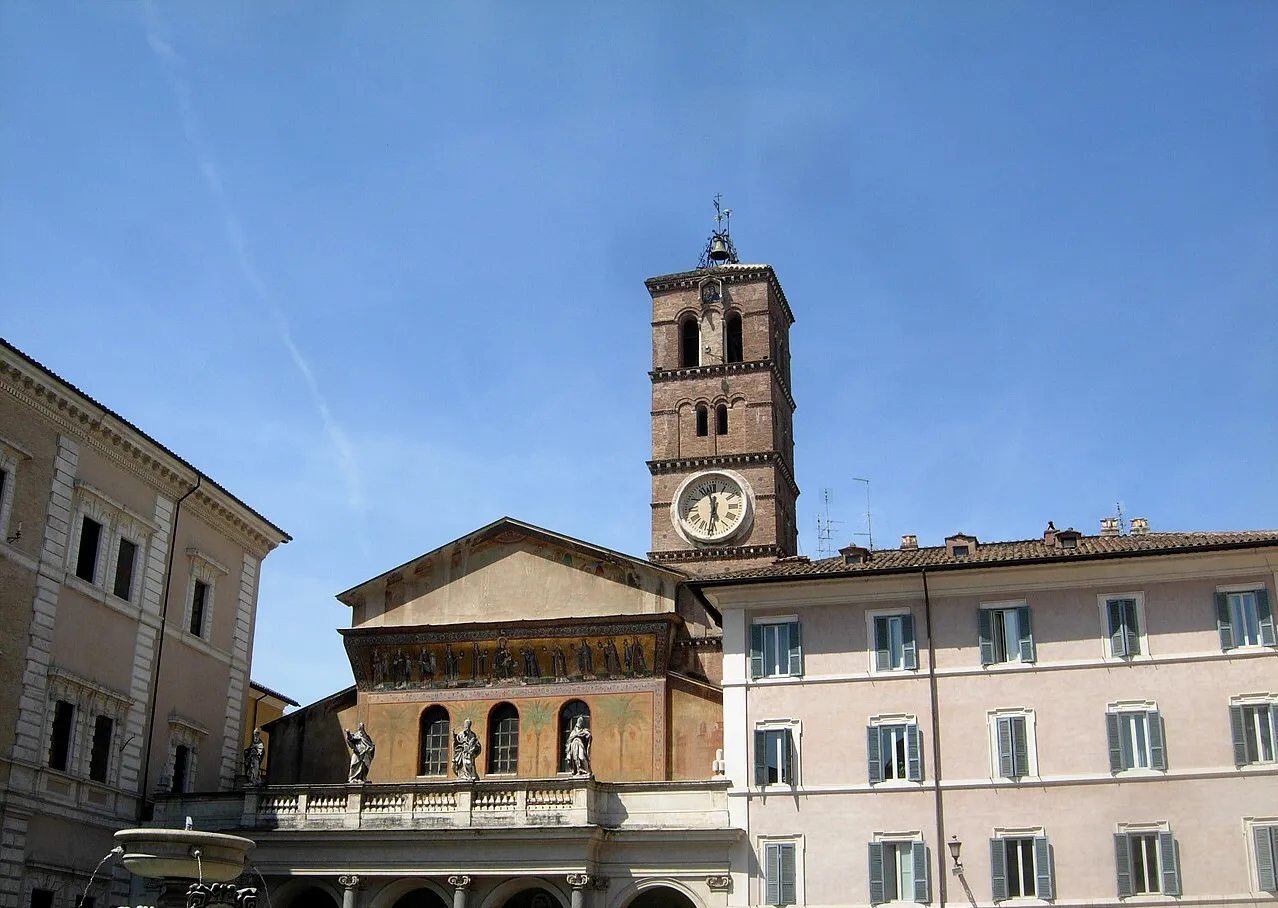
- Piazza di Santa Maria in Trastevere, Rome: Acediscovery, CC BY 4.0, via Wikimedia Commons
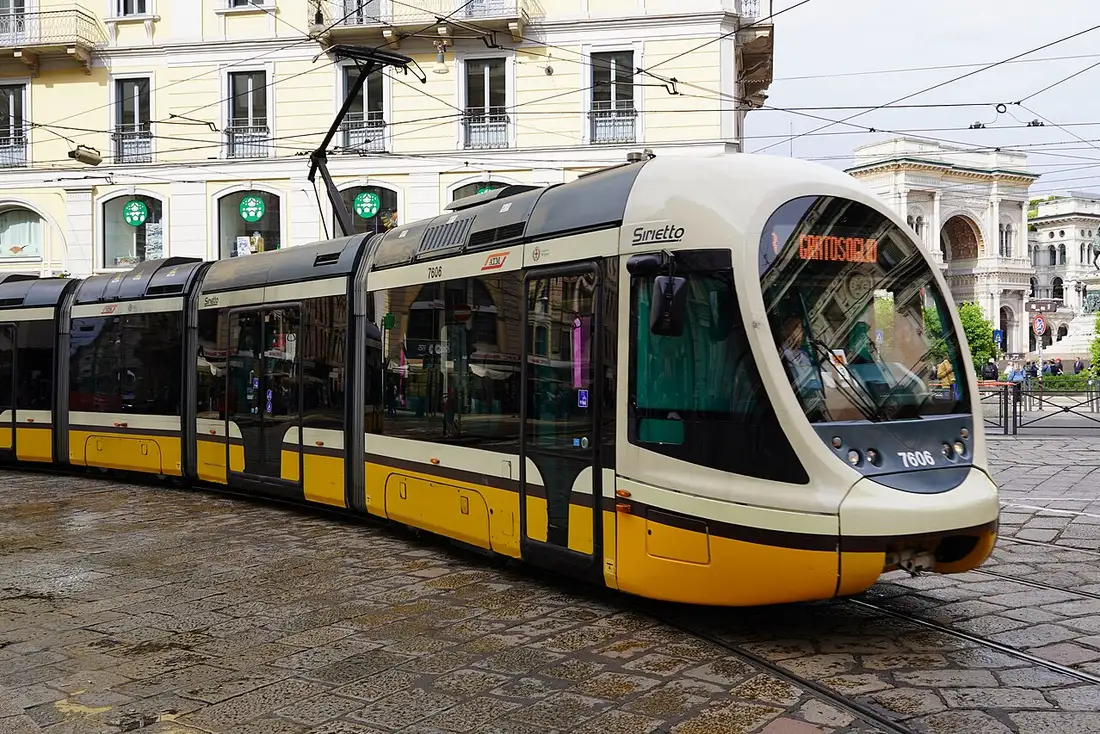
- An ATM tram passing Piazza del Duomo in Milan: Remontees, CC BY-SA 4.0, via Wikimedia Commons
Get new jobs in Italy by email
One email a week with the jobs added since the last one. Free, with no account.
Nothing is sent until you open the link we email you. Choose a role, a pay level or daily emails
We use your address only to send the alerts you ask for, and every email has a one-click unsubscribe link. The privacy notice says how long we keep it, and the terms of use cover the alerts.
We check this guide again by February 2, 2027. Rules change, so confirm visa steps with the embassy and your school before you go. First published November 4, 2026. Spotted something out of date? Tell us. How we write these guides.