Opening a bank account in Italy
Have an Italian account ready before your first payday, so your salary lands without a hitch. Here are the steps, the papers, the banks, the costs and how to cover the first weeks.
AbroadPin team6 min read

Contents
An Italian current account (conto corrente) is what your landlord, phone company and utility bills will expect, and it's where your school will want to send your salary. Since 1 July 2018 Italian employers have had to pay wages by traceable means rather than in cash, so a contract job nearly always needs an account or card in your name [8]. This page walks through the order of steps, what to bring, which banks to try, what it costs and how to get by until the first payment arrives. For pay, visas and who hires, see the main guide to teaching in Italy.
Step 1: get your codice fiscale
Italian banks ask for a codice fiscale, the personal tax code, for every account, non-resident ones included [6]. Where you get it depends on your passport and your permit.
- Non-EU teachers hired from abroad. The immigration desk (Sportello Unico per l'Immigrazione) at the prefecture issues the code together with the entry clearance for a job [1]. That code stays provisional until you receive your residence permit [2].
- Other permit types. For non-EU citizens on other kinds of residence permit, the Questura issues the code [1].
- EU citizens. You apply at an Agenzia delle Entrate office on form AA4/8, with a valid passport or ID card [1].
- Before you fly. You can ask the Italian consulate that covers where you live, sending a copy of your ID and your reason for the request [1].
Keep the paper or card somewhere safe. You'll be asked for the code at the bank, for a phone contract and for a lease.
Step 2: decide whether you open as a resident or a non-resident
Italian banks sort customers by residence. Someone who spends less than 183 days a year in Italy is generally treated as a non-resident and can usually open only an international or foreign-resident account with basic services [7]. Residents get the full range of current and savings accounts [7].
If you're staying for a school year and registering your residence with the town hall, the resident route is the one to aim for. Expect it to take longer if you open as a non-resident or hold a US passport: Global Citizen Solutions puts that at 2 to 3 weeks because of extra compliance checks [6].
Step 3: gather your papers
Each bank, and sometimes each branch, sets its own list, but these come up again and again [7].
- Identity. A valid passport or national ID card [7]. The Local says Intesa Sanpaolo, UniCredit, BPER and Banco BPM don't insist on an Italian-issued ID [7].
- Your codice fiscale. See step 1 [6].
- Your residence permit, if you're from outside the EU. A copy of the permesso di soggiorno is usually asked for [7]. If the card hasn't come yet, bring the receipt from your application: for the basic account below, a permit or renewal receipt is enough, and a Questura receipt with your photo and a stamp counts as a provisional permit [3].
- Proof of address. A bill or a piece of certified mail in your name [7].
- Proof of work. Some banks want to see a job or a place of study, so bring your contract or your appointment letter [7].
- An Italian phone number. Most banks need one, especially the app-only ones [6].
Take originals and a photocopy of each. If your Italian is basic, ask a colleague to come with you to the branch.
Step 4: choose a bank
The big high-street names are Intesa Sanpaolo, UniCredit, BPER and Banco BPM [7]. Poste Italiane also offers BancoPosta accounts, including a basic one covered below [4]. App-only options include N26, Revolut and Wise [6].
These monthly fees come from Global Citizen Solutions' comparison, last updated on 29 September 2026 [6]. Prices change, so check the bank's own sheet before you sign.
| Bank | Account | Monthly fee |
|---|---|---|
| UniCredit | Genius | 1.90 euros |
| Intesa Sanpaolo | Silver | 5.90 euros |
| Banco BPM | BPM 4 YOU | 0 euros for 24 months, then 2 euros with pay over 500 euros or 4 euros without |
| FinecoBank | Classic | 3.95 euros |
| N26 | Standard | 0 euros |
On timing, the same comparison gives about 48 hours at Intesa Sanpaolo and 1 day at UniCredit once your documents are ready, and same day to 48 hours at app-only banks [6]. A high-street bank is still the safest home for a salary, because staff can check your papers in person and fix problems at the desk.
The conto di base: your fallback
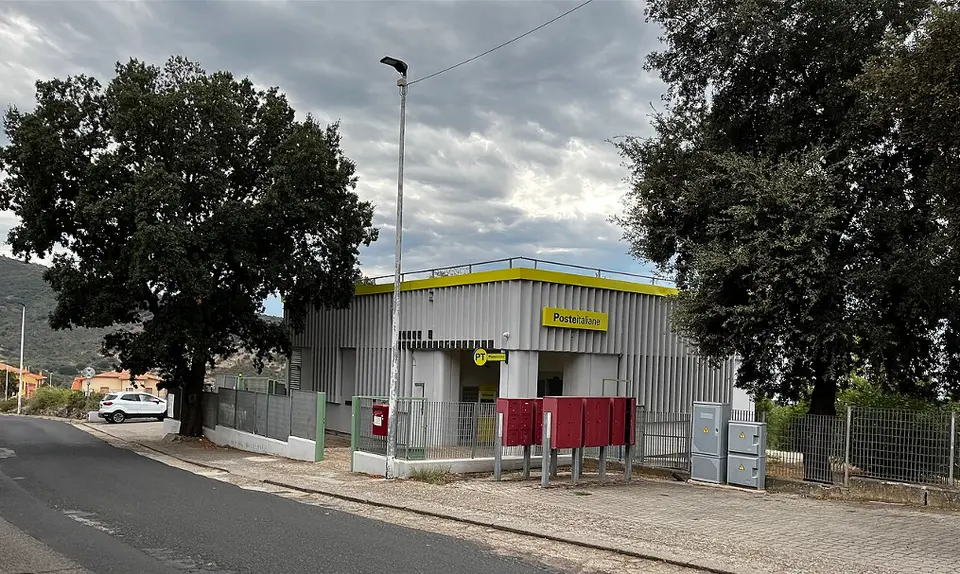
If a bank turns you down for its normal account, Italian law gives you a basic account (conto di base). Banks and Poste have to offer it under an EU directive written into Italy's banking law [5].
- Who has the right. Anyone staying legally in an EU country, with no discrimination, including asylum seekers and people without a fixed address [3].
- What to bring. A valid ID and your codice fiscale [3]. You don't need an Italian identity card, a numeric tax code is accepted, and having no employment contract isn't a valid reason to refuse you [3].
- What it costs. It's free if your ISEE (Italy's household means-test certificate) is below 11,600 euros [3] [5]. Otherwise it carries a single yearly fee [5].
- One per person. You can't hold another payment account that gives the same basic services [4].
Poste Italiane's version shows how this works in practice. Its information sheet in force from 1 October 2026 sets the fee at 30 euros a year, or 2.50 euros a month [4]. That covers a contactless Postepay debit card on the Postamat and Mastercard networks, 36 incoming transfers a year including salary, unlimited withdrawals at Postamat machines and 12 at other Italian banks' machines [4]. On 5 August 2026 the Banca d'Italia asked banks and Poste to promote the account and remove obstacles to opening one [5].
Fees and what to compare
Before you sign, ask for the account's information sheet (foglio informativo) and read the fee lines. Poste's sheet is a good model of what to look for [4].
- The monthly or yearly fee, and whether it drops once your pay goes in. Banco BPM's, for example, depends on a salary of over 500 euros [6].
- Stamp duty (imposta di bollo). Up to 34.20 euros a year, charged for the periods when your balance is above 5,000 euros [4].
- Cash from other banks' machines. On Poste's basic account, each one after the first 12 a year costs 1.75 euros [4].
- Transfers at the counter versus the app. Poste charges 2.50 euros for a transfer at the counter and 1.00 euro online or in the app [4].
- Card replacement. UniCredit's is listed at 5 euros [6].
Cards and paying by phone
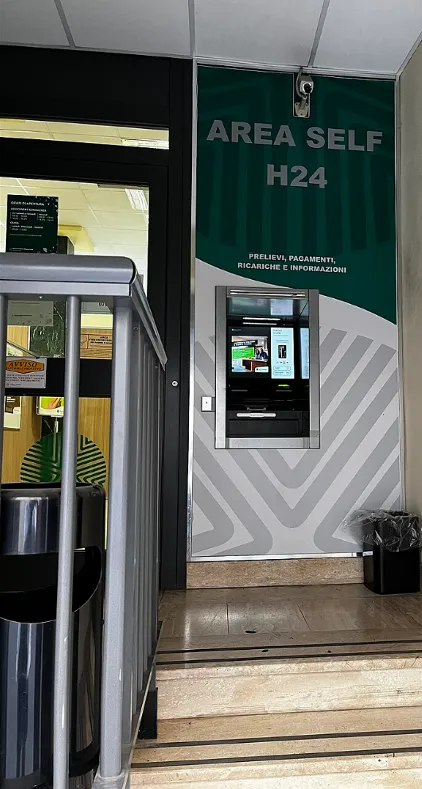
Your debit card works in shops, online and at cash machines, and with a traditional bank you'll draw cash on the Bancomat network [6]. UniCredit, N26 and Revolut support Apple Pay [6]. A Wise card can be added to Google Pay or Apple Pay [10]. A local number makes the bank's app and card set-up simpler, so sort your Italian SIM in the same week as the bank.
Getting paid before the account is open
Your first salary often comes before your account is fully running. Here's how to cover the gap.
- Don't take cash pay. Since 1 July 2018 employers who pay wages in cash face a fine of 1,000 to 5,000 euros [8]. The rule covers employees and coordinated freelance collaborators (co.co.co.) [9].
- Ask about a prepaid card. The labour inspectorate's note of 4 July 2018 says pay loaded onto a prepaid card in the worker's name counts as a traceable payment, even when the card has no IBAN [9]. If your bank account is held up, ask the office whether they can pay you that way.
- Use an app account as a bridge. Wise and Revolut don't need Italian residence or a codice fiscale to open at first [6]. Ask payroll whether they can pay into that IBAN before you rely on it.
- Give payroll your IBAN the day you have it. Ask on your first day when payday falls and which details the office needs.
- Bring savings. A card from home that works at Italian machines covers rent and food for the first weeks.
With your account sorted, take a look at English teaching jobs in Italy for your next contract.
Sources and photo credits
- 1.Ministero degli Affari Esteri e della Cooperazione Internazionale, codice fiscale for foreign citizens (read 5 November 2026)
- 2.PartitaIVA.it, codice fiscale for foreigners and the Agenzia delle Entrate's multilingual guide (10 August 2023)
- 3.Federconsumatori, guide to the conto di base, project funded by the Ministry of Enterprises and Made in Italy (read 5 November 2026)
- 4.Poste Italiane, information sheet for the Conto BancoPosta Base, standard version, no. 30 (in force from 1 October 2026)
- 5.MF Milano Finanza, Bankitalia says banks and Poste must promote the conto di base (5 August 2026)
- 6.Global Citizen Solutions, best banks in Italy for foreigners in 2026 (updated 29 September 2026)
- 7.The Local Italy, the documents you'll need to open an Italian bank account (updated 23 January 2025)
- 8.Assolombarda, paying wages in cash and the penalties (updated 16 July 2022)
- 9.Edotto, ban on paying wages in cash, new guidance from the labour inspectorate (6 July 2018)
- 10.Wise, how to open a bank account in Italy (updated 17 August 2026)
Photos
- A UniCredit branch under the arcades of Piazza Grande, Modena.: SIG SG 510, CC0, via Wikimedia Commons
- A Poste Italiane post office in Cuglieri, Sardinia.: Air fans, CC0, via Wikimedia Commons
- A 24-hour cash machine area at a Banco di Sardegna branch in Cuglieri.: Air fans, CC0, via Wikimedia Commons
Get new jobs in Italy by email
One email a week with the jobs added since the last one. Free, with no account.
Nothing is sent until you open the link we email you. Choose a role, a pay level or daily emails
We use your address only to send the alerts you ask for, and every email has a one-click unsubscribe link. The privacy notice says how long we keep it, and the terms of use cover the alerts.
We check this guide again by February 3, 2027. Rules change, so confirm visa steps with the embassy and your school before you go. First published November 5, 2026. Spotted something out of date? Tell us. How we write these guides.