Opening a bank account in Macau
Get your teaching salary into a Macau bank account and your phone wallet working soon after you arrive. Here's what the banks ask for, why your work card comes first and how to cover the weeks in between.
AbroadPin team7 min read
Contents
In Macau, the bank account usually comes after the work card, not before. The banks that publish their rules want to see your Non-resident Worker's Identification Card, the blue card, so the order of your first weeks is job, card, then bank. Once you know that, the rest is a short counter visit with the right papers in a folder.
This piece is about money once you've landed. For employers, pay and the work card itself, read the main guide to teaching in Macau.
Which bank to try
Most teachers end up at whichever bank is closest or the one their employer pays salaries through. Names you'll come across include Bank of China, BNU (Banco Nacional Ultramarino), ICBC (Macau) and Tai Fung, which also has a payment wallet, Tai Fung Pay [6] [8].
Bank of China Macau is the clearest about who can open an account. Its current account and its savings account are both open to residents of Macau, Hong Kong and mainland China, and to foreign residents who work or invest in Macau [1] [2]. You need to be 18 or older for the current account [1].
How to pick:
- Ask HR first. If the school or centre pays everyone through one bank, opening there can make your first payday simpler.
- Think about the counter. You'll go back for card problems, address changes and anything the app can't do, so a branch near your flat or your school matters more than a slightly better rate.
- Check the app in English. Before you commit, ask to see the bank's mobile app and whether it works with your phone and an English menu.
What to bring
Bank of China Macau lists the same papers for foreign residents on both its current and savings accounts [1] [2]:
- A valid identification document, which for most teachers means your passport.
- Your Non-resident Worker's Card (the blue card).
- An arrival card. Keep whatever entry record you were given at the border, and ask the branch which form of it they want.
- A certificate of employment, where it applies. A letter from your school on letterhead, with your job title, start date and salary, covers this.
- Proof of your home address, such as a lease or a utility bill in your name.
ICBC (Macau) gives a shorter general list: an ID such as a resident card or passport, and proof of address such as a home lease, a utility bill or a phone bill [3]. It doesn't say whether foreigners need anything more, so bring the full set anyway [3].
Expect some tax paperwork at the counter too. Banco Well Link's checklist for applicants from outside Macau, Hong Kong and the mainland includes a W-8 or W-9 form and a tax residence self-certification, both handed out by the bank [4]. The same checklist wants address proof issued within the past 3 months [4]. So if your lease is old, bring a recent bill as well.
None of the bank pages we read lists a local phone number as a requirement [1] [2] [3]. Still, buy your Macau SIM before the bank visit, since the app and card alerts will want a number you can actually receive messages on.
Why the blue card comes first
The bank asks for your blue card, and the card takes time [1] [2]. Your employer, an agency it appoints or their legal representative files the application with the police, not you [11]. For skilled workers the first check is done the same day, the formal check takes about 45 days, and the card costs MOP100 [11].
That means your first salary can land before you're able to open an account. Plan for it with HR before you fly (see the section on getting paid below).
When the card arrives, check its expiry date. It runs to the limit approved in your employer's work authorization, or a shorter term [11]. Your bank will likely ask for the new card each time you renew, so keep a scan.
At the branch, step by step
- Go on a weekday with time to spare. Bring originals and a photocopy of each page, since some banks keep copies.
- Ask for a personal savings account with an ATM card. At Bank of China Macau the savings account comes with a BOC Card for ATM use [2].
- Fill in the forms. That's the opening form, a signature card and the tax forms [4].
- Make your first deposit if the account needs one. Bank of China Macau's current account has a minimum deposit of MOP/HKD1,000 [1].
- Set up mobile and online banking before you leave. Ask staff to help you log in on your own phone while you're still at the desk.
- Ask for the fee sheet. Bank of China's account pages don't list charges, so get the current tariff in writing [1] [2].
Banco Well Link's checklist asks for copies certified by a notary or a correspondent bank [4]. Bring your originals so the branch can see them, and ask whether copies made at the counter are enough.
Fees, interest and cards
Published fees are thin. Bank of China Macau gives the MOP/HKD1,000 minimum for its current account and no fee list on either account page [1] [2]. Ask these questions at the counter:
- Is there a monthly charge if the balance falls below a set amount?
- What does an ATM withdrawal cost at another bank's machine, or abroad?
- What does an outgoing transfer to another country cost, and what exchange rate is used?
On savings, Bank of China Macau credits interest on pataca and Hong Kong dollar balances twice a year and on foreign currency balances monthly [2]. Bank of China Macau's accounts handle both patacas and Hong Kong dollars, so ask how the two are kept in your account [1] [2].
Your salary itself will be in patacas. The Labour Affairs Bureau has said that, under Article 63 of the Labour Relations Law, pay is due in Macau's legal tender [10].
Paying by phone
Macau runs on a few local wallets rather than one national app. MPay, run by Macau Pass, had more than 510,000 registered users in January 2021, and the other big local gateways then were Tai Fung Pay, BOC ePay and ICBC Macau ePay [6]. At many counters you'll see a shared terminal called Simple Pay, launched in 2021, which takes MPay, Macau Pass, Alipay, BOC Pay and Tai Fung Pay [5]. Local mobile payments reached 260 million transactions in 2022, worth about 26 billion patacas [5].
A practical order for your first months:
- Get a Macau Pass card for buses and the light rail. The card gives up to 50% off bus and light rail fares and works in shops and restaurants too [7].
- Add value from your phone. Since September 2025 you can top up an NFC-ready Macau Pass card through the MPay or Alipay apps after real-name registration, with a yearly cap of MOP 5,000 per Alipay account [7].
- Link your bank's own wallet once the account is open. Bank of China and ICBC both have their own wallets, so ask your branch how to connect yours [6].
Getting paid before the account is open
Because the blue card takes about 45 days after filing, your first payday can arrive while you still have no local account [11]. Sort this out in writing before you start:
- Ask how the first salary will reach you. Cash, a cheque or a delay until your account is open are all possibilities, so get the answer and the date from HR.
- Bring a home bank card that works abroad. Tell your bank you're moving, and check its foreign ATM charges before you go.
- Arrive with a cushion. Budget for rent, a deposit and food for your first month before any Macau pay arrives.
- Use the government app for your papers. Since May 2023, non-resident workers can open a Macao One Account online and view their own details, including their permission to stay [9]. That can help when the bank or landlord asks what your status is.
Sending money home
Use your bank's international transfer or a licensed remittance company, and keep your receipts. In 2025, several Macau banks closed accounts that local reporting linked to unlicensed remittance through middlemen [8]. Licensed remittance companies charged about MOP25 to MOP30 a transfer, depending on how the money was collected [8].
The Monetary Authority of Macao told the paper that banks may end a customer relationship with prior notice and must carry out customer checks under its anti-money laundering guideline [8]. In practice, that means your bank may ask where a large or repeated transfer came from, so keep pay slips and your contract handy.
When you're ready to look at schools and centres, browse the current openings in Macau.
See jobs in Macau
No live jobs in Macau right now. New pins go up every day.
Sources and photo credits
- 1.Bank of China Macau, current account (undated, read 5 November 2026)
- 2.Bank of China Macau, savings account (undated, read 5 November 2026)
- 3.ICBC (Macau), frequently asked questions, documents for opening a personal account (undated, read 5 November 2026)
- 4.Banco Well Link, documents required to open a personal account (undated, read 5 November 2026)
- 5.Macao News, Simple Pay and cashless payment in Macao (6 March 2023, updated 22 December 2023)
- 6.Macau Daily Times, MPay records half a million registrants (20 January 2021)
- 7.Macau Daily Times, Alipay and Macau Pass launch new top-up service (30 September 2025)
- 8.Macau Daily Times, Sudden closure of bank accounts may be related to unlawful remittances (3 March 2025)
- 9.The Macau Post Daily, NRWs can open accounts online on Macao One Account (30 May 2023)
- 10.Inside Asian Gaming, Employee salaries must be paid in cash: Labour Affairs Bureau (7 June 2022)
- 11.Public Security Police Force via the Macao SAR Government Portal, Non-resident Worker's Identification Card application (updated 11 February 2025)
Photos
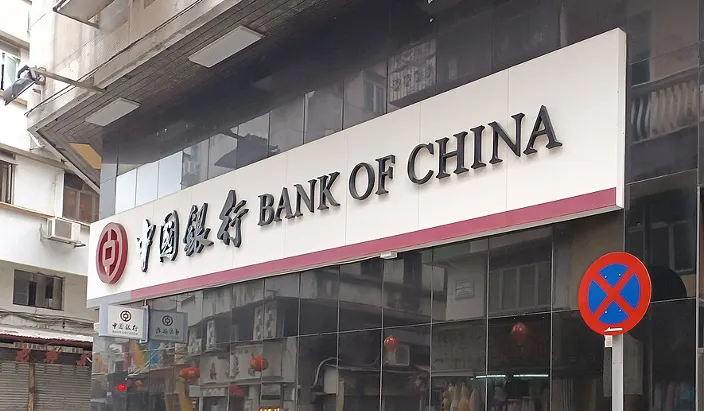
- A Bank of China branch on Rua de Cinco de Outubro, Macau.: Mama AXunLong08, CC0, via Wikimedia Commons
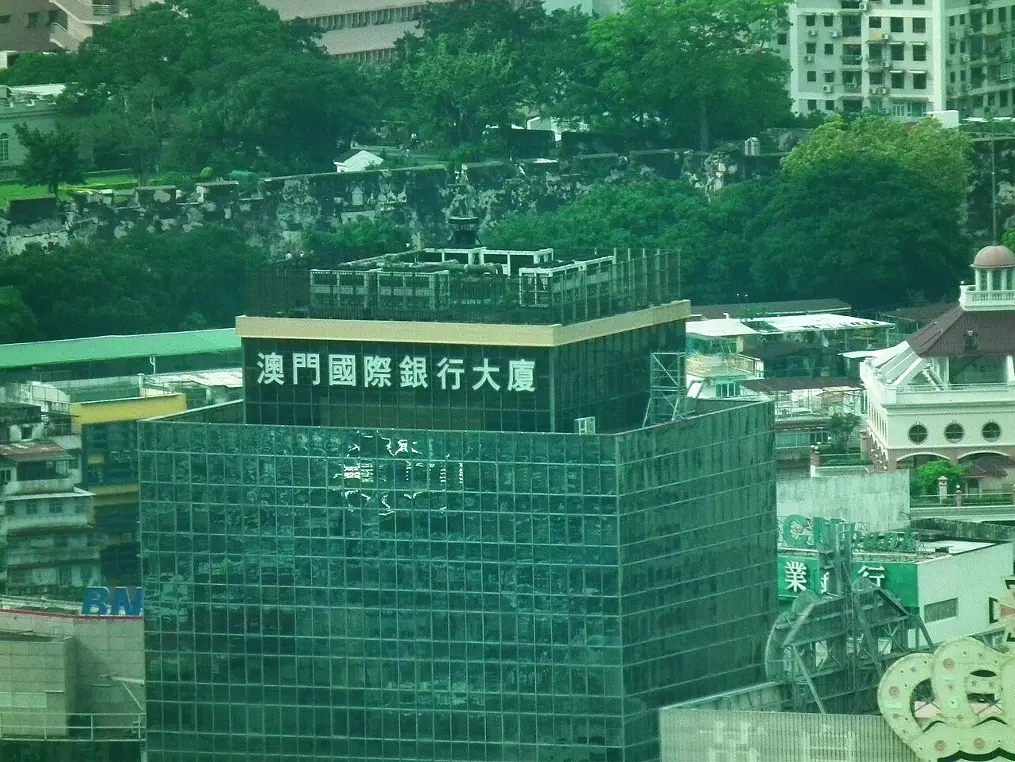
- The Macau International Bank building below the walls of Monte Fort.: lienyuan lee, CC BY 3.0, via Wikimedia Commons
Get new jobs in Macau by email
One email a week with the jobs added since the last one. Free, with no account.
Nothing is sent until you open the link we email you. Choose a role, a pay level or daily emails
We use your address only to send the alerts you ask for, and every email has a one-click unsubscribe link. The privacy notice says how long we keep it, and the terms of use cover the alerts.
We check this guide again by February 3, 2027. Rules change, so confirm visa steps with the embassy and your school before you go. First published November 5, 2026. Spotted something out of date? Tell us. How we write these guides.