Teaching English in Portugal
Teach English in Portugal knowing what academies pay, how the D1 work visa works and what rent costs. You'll also find the hiring calendar, the 2025 immigration changes and school fees for families.
AbroadPin team9 min read
Contents
Portugal at a glance
| Academy pay | 800 to 1,500 euros a month at private language schools (TEFL Ireland) [1] |
|---|---|
| Work visa | The D1 visa is valid for 120 days with up to two entries, then you get a residence permit from AIMA [3] |
| Visa decision | A residence visa application can take 60 days [3] |
| School year | Most public school classes start between 11 and 15 September 2026 [9] [10] |
| Rent, one-bed central Porto | About 1,166 euros a month (Numbeo) [6] |
| Bringing family | Usually after 2 years on a residence permit, with minor children exempt [5] |
Where the teaching jobs are
Portugal is a small market with steady demand, and most of it sits in a few cities. TEFL Ireland's 2026 overview covers Lisbon, Porto, Coimbra, the Algarve, and Braga with Guimarães as the main places to look [1]. Here's who does the hiring.
- Private language schools. The backbone of the market. Classes are mostly for children and teens after their school day, so a typical academy timetable runs from late afternoon into the evening, for example 4 pm to 9 pm [1].
- AEC programs in public primary schools. AEC stands for Atividades de Enriquecimento Curricular, the after-class enrichment activities in state primary schools. English is one of them. TEFL Ireland notes these contracts are often part-time [1].
- International schools. Lisbon alone has dozens, from British and American schools to French and German ones [8]. They hire qualified classroom teachers for subject and homeroom posts, not conversation classes.
- Universities. A small niche, usually through university language centres. One International TEFL Academy graduate in Braga teaches at a university-based language school [2].
- Private students and online work. Many teachers top up academy hours with one-to-one lessons or online classes [1] [2].
If you're a US citizen with a recent degree, TEFL Ireland also mentions the Fulbright English Teaching Assistant Program as a route into Portuguese classrooms [1]. Check its own pages for the current cycle.
Pay by employer type
Portuguese academies rarely publish pay, so these figures come from two TEFL course providers that track the market [1] [2]. Neither says whether the numbers are before or after tax, so ask each employer for the gross monthly figure in writing.
| Employer type | Pay as the source gives it | Source |
|---|---|---|
| Private language schools | 800 to 1,200 euros a month (salary table) and 900 to 1,500 euros a month (FAQ) | TEFL Ireland, Sep 2026 [1] |
| Language schools | 1,300 to 1,850 USD a month, higher in Lisbon and Porto | International TEFL Academy, Oct 2026 [2] |
| AEC public primary programs | 10 to 15 euros an hour, often part-time | TEFL Ireland, Sep 2026 [1] |
| International schools | 1,600 to 2,800 euros or more a month | TEFL Ireland, Sep 2026 [1] |
| Universities | 1,200 to 2,000 euros a month | TEFL Ireland, Sep 2026 [1] |
| Private tutoring | 10 to 20 euros an hour | International TEFL Academy, Oct 2026 [2] |
| Online teaching | 15 to 25 euros an hour (TEFL Ireland); 5 to 20 USD an hour (ITA) | [1] [2] |
What the table doesn't tell you:
- The two ranges for academies differ. TEFL Ireland gives one range in its table and a wider one in its FAQ, with the top end for experienced teachers or specialist roles [1]. Read both as a rough band.
- Expect to break even. International TEFL Academy calls Portugal a "break-even country" and says you shouldn't expect to save each month without extra tutoring or online work [2].
- Hourly rates can be higher outside the big chains. The Braga graduate mentioned above earns 22 euros an hour at a university-based language school [2].
- Your contract should list your allowances. The consulate's D1 visa checklist expects a contract to state pay, hours, holidays, and the food, Christmas and holiday allowances where they apply [3]. Ask how these are paid before you sign.
What the law and employers ask for
The visa rules and the hiring rules are two separate things.
On the legal side, the D1 visa checklist doesn't ask for a degree or a TEFL certificate. It asks for a professional certificate only when the job is a regulated profession in Portugal [3]. What it does require is a work contract or a promise of one, a recent criminal record certificate, insurance, proof of where you'll live and proof of money to live on [3].
Employers then add their own asks. Academies usually want a TEFL or CELTA-type certificate, and some want a degree. International schools want a recognised teaching qualification and classroom experience. Read each ad for its own list.
Getting the D1 work visa
This section is for teachers who aren't citizens of the EU, the EEA or Switzerland. If you are one, you don't need a work visa. You can live and work in Portugal on your passport or ID card, and you register your stay locally once you settle.
Portugal tightened its immigration rules in October 2025 [4]. The route where people entered as tourists, found work and applied for residence later was closed, and the old "manifestation of interest" pathway ended on 31 December 2025 [4]. Visa applications now go through a consulate from outside Portugal [4]. The usual order for a teacher with a job offer looks like this:
- Get a contract or a promise of one. It needs both parties' details and signatures, the job and pay, the place and normal hours, the start and end dates, and the allowances that apply [3].
- Order your criminal record certificate. It must be issued within the last 4 months by your country of nationality, or by a country where you've lived for over a year, with an apostille or legalisation [3].
- Buy insurance. Travel and health cover must run for 6 months from the date you apply and cover medical costs, urgent care and repatriation [3].
- Show where you'll live. You need a deed, a rental contract in your name or a host's signed statement covering your first 120 days [3].
- Show money to live on. That's your last 3 months of bank statements or a statement from the employer, and the checklist says income from the work contract can count [3].
- Apply at the consulate or its visa centre. Bring the form, 2 photos, a short personal statement and a passport valid for 3 months after the visa ends [3]. A decision can take 60 days [3].
- Travel and book AIMA. The visa is valid for 120 days with up to two entries [3]. During that time you attend an appointment with AIMA, the immigration agency, to get your residence permit [3]. The consulate has no control over AIMA appointments, so contact AIMA directly [3].
The old job seeker visa was also replaced in October 2025 [4]. Its successor is meant for highly qualified professionals, and in January 2026 applications could not yet be made [4]. Don't plan around it unless that changes.
Living costs in Lisbon and Porto
Rent is where Portugal gets expensive, and it eats a large share of an academy salary.
Porto. Numbeo's crowd-sourced averages, updated on 3 November 2026 [6]:
| Item | Porto |
|---|---|
| One-bed flat, centre, a month | About 1,166 euros |
| One-bed flat, outside the centre, a month | 874 euros |
| Utilities for an 85 m² flat, a month | About 143 euros |
| Cheap restaurant meal | 13.50 euros |
| Transport pass, a month | 40 euros |
| One person's costs without rent, a month | About 720 euros |
Lisbon. Portugalist, an expat site, updated its Lisbon guide on 4 August 2026 [7]. It doesn't name a data source, so treat these as one writer's estimates.
- A central one-bedroom flat averages about 1,000 euros a month, and flats from 600 to 700 euros are rare [7].
- A room in a shared flat starts around 200 euros a month and typically costs about 400 euros [7].
- Utilities for a small flat run 100 to 150 euros a month, and internet 20 to 60 euros [7].
- A monthly transport pass costs 30 to 40 euros, and a single ticket 1.50 euros [7].
On 800 to 1,500 euros a month of academy pay, a room in a shared flat is the realistic start in either city [1] [7]. Smaller cities cost less: one Braga teacher reported rent of about 350 euros a month [2].
The hiring calendar
Academies follow the school year, which runs from mid-September to late June [1]. Peak hiring is late May to July for September starts, with a smaller wave in January [1]. Summer camps recruit from March or April [1]. TEFL Ireland suggests sending CVs to academies in June, as many directors are away in August [1].
The state school year for 2026 to 2027 started with classes between 11 and 15 September 2026 for pre-school and the first three cycles, and on 21 September for years 10 to 12 [9] [10]. Christmas break is 16 to 31 December 2026, Carnival 8 to 10 February 2027 and Easter 22 March to 2 April 2027 [10]. Pre-school and primary end on 30 June 2027 [10]. International schools hire for a late August or September start and recruit months ahead.
Red flags and staying legal
- Working on a tourist stay. Since October 2025, people who stayed irregularly can be refused a visa later [4]. Working without the right status can cost you the work visa you actually want.
- No written contract. Without a contract that sets out pay, hours and allowances, you can't apply for the D1 at all [3].
- "We'll sort the visa when you arrive." The application now goes through a consulate before you travel [4].
- Part-time hours sold as a full job. AEC and some academy posts are part-time and hourly [1]. Ask for guaranteed weekly hours in writing.
- Pay that only works with side income. If the offer sits at the low end, check it against Lisbon or Porto rent before you say yes [2] [6] [7].
When your paperwork is in order, browse jobs in Portugal.
Moving with kids
Portugal can work well for families, but plan the visa timing first. The schooling and childcare choices are easier.
School options
Public schools are free [8]. Lessons are in Portuguese, and the year follows the national calendar above [10].
International schools in the Lisbon area list these yearly tuition ranges for 2026 to 2027, from the youngest to the oldest year group, as compiled by Portugal Buyers Agent in July 2026 [8]:
| School | Yearly tuition, 2026 to 2027 |
|---|---|
| St. Julian's School | 23,693 to 29,970 euros |
| TASIS Portugal | 13,007 to 24,308 euros |
| Carlucci American International School of Lisbon | 12,128 to 23,532 euros |
| United Lisbon International School | 11,564 to 23,520 euros |
| The British School of Lisbon | 13,633 to 22,230 euros |
Cheaper options exist. The same list gives 5,452 to 6,891 euros a year for Lycée Français Charles Lepierre and 8,141 to 8,364 euros for Deutsche Schule Lissabon, without naming the fee year [8]. In Porto, Numbeo puts a year of international primary school at about 10,292 euros [6].
Will your employer pay tuition?
Probably not at an academy. Neither pay guide we read lists tuition help for language school jobs [1] [2]. International schools are the place to ask, so check whether a staff discount exists, how many children it covers and whether it's in the contract.
Visas for your spouse and children
Law 61/2025 changed family reunification and came into force on 23 October 2025 [5]. The sponsor now generally needs to have held a Portuguese residence permit for at least 2 years before applying [5]. Minor children are exempt from that wait [5]. A partner who can show 18 months of living together before you arrived waits 15 months instead [5]. EU Blue Card and highly qualified worker permit holders are exempt as sponsors, so ask your employer which permit you'll hold [5].
AIMA has 9 months to decide a complete application [5]. Applications also face checks on housing, means of support and integration, and family members must have entered and stayed legally [4]. The note doesn't list a spouse as exempt, so ask your employer or AIMA how your partner can join you, and when [5].
Childcare
Numbeo puts a private preschool place in Porto at about 497 euros a month [6]. Pre-school in the public system follows the state calendar and ends on 30 June 2027 [10].
Healthcare
The D1 checklist asks for travel and health insurance with repatriation for your first 6 months [3]. Budget the same cover for your spouse and children. Once you hold residence, ask your employer and your local health centre about registering the family with the national health service (SNS).
See jobs in Portugal
Sources and photo credits
- 1.TEFL Ireland, best places to teach English in Portugal for 2026 (updated 20 September 2026)
- 2.International TEFL Academy, how much English teachers make in Portugal (updated 1 October 2026)
- 3.VFS Global for the Portuguese consulates in the UK, D1 residence visa for subordinate work checklist (March 2025 version, read 4 November 2026)
- 4.Fragomen, significant immigration reforms in effect in Portugal (26 January 2026)
- 5.MCS, family reunification after 22 April 2026 and the two-year rule (11 May 2026)
- 6.Numbeo, cost of living in Porto (updated 3 November 2026)
- 7.Portugalist, Lisbon cost of living (updated 4 August 2026)
- 8.Portugal Buyers Agent, international schools in Lisbon (updated 30 July 2026)
- 9.Caixa Geral de Depósitos, Saldo Positivo, school calendar 2026 to 2027 (30 June 2026)
- 10.RFM, back to school 2026 to 2027 dates and holidays (21 August 2026)
Photos
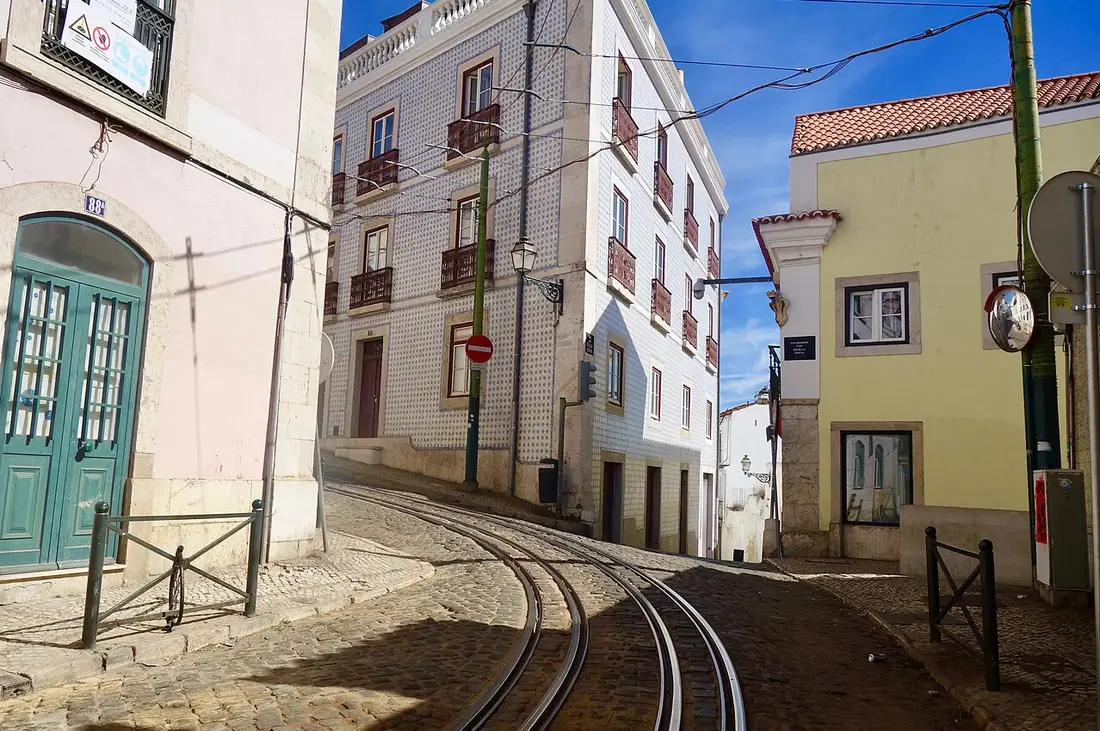
- Tram 28 tracks climbing through Alfama, Lisbon: Sonse, CC BY 2.0, via Wikimedia Commons
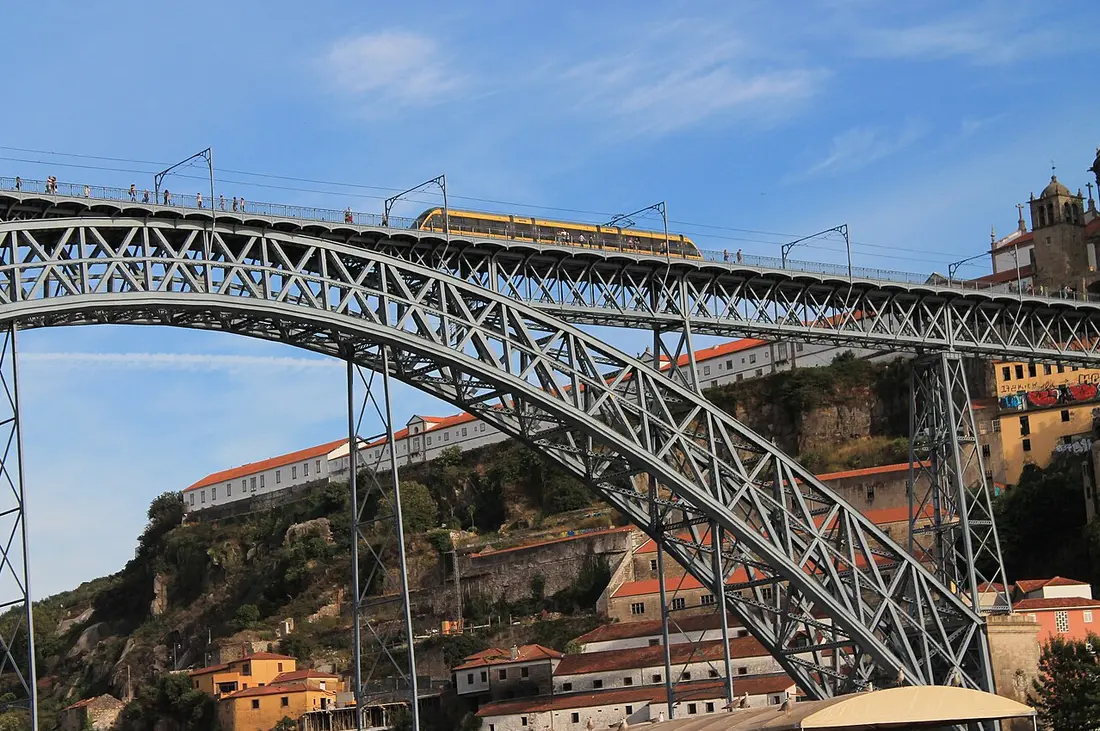
- A Porto Metro train crossing the Dom Luis I bridge: John Samuel, CC BY-SA 4.0, via Wikimedia Commons
Get new jobs in Portugal by email
One email a week with the jobs added since the last one. Free, with no account.
Nothing is sent until you open the link we email you. Choose a role, a pay level or daily emails
We use your address only to send the alerts you ask for, and every email has a one-click unsubscribe link. The privacy notice says how long we keep it, and the terms of use cover the alerts.
We check this guide again by February 2, 2027. Rules change, so confirm visa steps with the embassy and your school before you go. First published November 4, 2026. Spotted something out of date? Tell us. How we write these guides.