Opening a bank account in Portugal
Get a Portuguese account open in your first weeks, so rent and pay run smoothly. Here's the NIF, the papers to bring, which banks to try, what it costs, MB WAY and the wait for payday.
AbroadPin team7 min read
Contents
Most of daily life in Portugal runs through a local account. Your landlord will want rent paid by transfer, your phone and electricity bills come by direct debit, and friends will split a dinner bill on MB WAY. This page walks through the order that works for most new teachers: the tax number first, then the papers, then the bank, the card and the apps. For pay, the work visa and who hires, see the main guide to teaching in Portugal.
Step 1: get your NIF
The NIF (Número de Identificação Fiscal) is your Portuguese tax number, and banks treat it as the key that opens everything else. Santander Portugal lists a document showing the NIF of every account holder among the papers it asks for at the branch [2]. DECO PROteste, the national consumer association, says most banks require one [3]. You'll also need it for your work contract, your rental and your phone plan, so sort it first.
Anyone can ask for a NIF at any time, resident or not [7]. The tax authority (Autoridade Tributária, usually called Finanças) gives you two routes.
- In person. Go to a tax office (Serviço de Finanças) or a Loja do Cidadão, the government service centre. You must book the appointment first, online through the Portal das Finanças under Contactos, or by phone on +351 217 206 707 on working days from 9:00 to 19:00 [6].
- Through a representative. A lawyer, solicitor or other person holding your power of attorney can apply for you online through the e-balcão service [6]. This route opened in July 2025 for foreigners without a Portuguese citizen card [8].
Either way, bring your passport and a document with your address abroad, if your passport doesn't show it [6]. The NIF is first issued with that foreign address, so once you become tax resident in Portugal, ask Finanças to change it to your Portuguese address [6]. The government's own page counts you as resident if, among other tests, you stay over 183 days in a year or have a permanent home in Portugal [7].
DECO adds that a non-EU citizen without a fixed address in Portugal may need a tax representative with a Portuguese tax address [3]. If your school or academy offers to help with the NIF, take it up: they know the local office.
Step 2: gather your papers
Each bank has its own list, but the big ones ask for much the same things. Caixa Geral de Depósitos (CGD), the state-owned bank, wants originals or certified copies of these [4]:
- Identity. A valid photo ID with a signature, such as your passport [4].
- Residence authorisation. CGD asks foreign citizens living in Portugal for one [4]. Santander asks for it from nationals of countries outside the Schengen area, apart from the UK [2].
- Your NIF. Any public document that shows the number will do [4].
- Proof of address. CGD accepts, for example, an income statement, a bank statement or a certificate from your local parish council (junta de freguesia) [4]. DECO also lists an electricity or telecom bill [3].
- Proof of your job. A payslip, a professional card or another document [4]. DECO adds an employment contract or a letter from your employer [3].
For a teacher arriving on a work visa, that means the work contract and a rental contract or utility bill do a lot of the work. Bring a photocopy of each as well. Santander notes that banks can ask for more, so ask the branch for its list before you go [2].
Step 3: choose a bank
Portugal's high-street names include CGD, Millennium bcp and Santander, all of which publish their account rules online [2] [4] [5]. A few things to weigh:
- Branch or app. DECO says opening online usually needs a Portuguese citizen card, a residence permit or the Chave Móvel Digital, the government's digital login, and some banks keep online opening for Portuguese citizens only [3]. In your first weeks, plan on a branch visit with every holder present to sign, as CGD requires [4].
- Residents and non-residents. You can open an account before you're resident, as long as you meet the bank's rules, and Santander defines residence by where you usually live [2]. DECO warns that a non-EU non-resident may face extra steps that vary by bank [3].
- Language. The banks' forms and terms are written in Portuguese [4] [5], so a colleague who comes with you saves time.
Fees and the basic services account
DECO says accounts without a maintenance fee are getting rarer and are mostly found at digital banks, and that most banks ask for a first deposit [3]. Ask for the bank's standard information sheet, called the FIN, before you sign, and compare the monthly fee, card costs and transfer charges.
If you want low fees, ask for a conta de serviços mínimos bancários, the basic services account every bank must offer [3]. The Banco de Portugal's June 2026 guide sets out the rules [1]:
- You can have it if you hold no other current account in Portugal, or only one, which can be converted [1].
- You must be entitled to live in an EU country under EU or national law [1].
- All its fees together can't go over 1% of the social support index (IAS) a year, which is 5.37 euros in 2026 [1] [2].
- It includes a debit card no more limited than the bank's ordinary ones, plus access through ATMs in the EU, online banking and branches [1].
- Transfers inside the same bank and transfers to other banks at an ATM are unlimited, and you get 48 transfers to other banks a year through online banking or the bank's app [1].
- The bank must open the account, or refuse it in writing with reasons, within 10 working days of a complete request [1].
Millennium bcp's own terms for this account apply the same cap of 1% of the IAS a year and ask you to declare that you hold no other current account at a bank in Portugal [5]. The card is part of the service, but you sign a separate card agreement for it [5].
Cards, Multibanco and MB WAY
Your debit card works in shops, online and at Multibanco, the shared ATM network used by Portuguese banks. Once the card arrives, set up MB WAY. It's the payment app from SIBS, and it works with all the main Portuguese banks [9].
- Link your card. You link your bank card to MB WAY at a Multibanco machine [9].
- Activate the app. Download MB WAY and switch it on with your mobile number [9]. A Portuguese number makes this easier, so get your SIM the same week.
- Use it. You can send or request money by phone number, split bills, pay in shops by QR code or tap, pay online, make MB NET virtual cards and take cash at a Multibanco machine with a code [9].
- Bigger transfers. Sending over 2,000 euros needs MB WAY Verified, which checks your ID and your face [9].
The Banco de Portugal guide also covers transfers through payment apps, without naming any. Every client can make 25 transfers a month of up to 30 euros each, and 150 euros a month in total, without extra fees, and the basic services account adds 5 more a month of up to 30 euros each [1].
Getting paid before the account is open
Your first pay may come before your account is ready, especially if you're still waiting on a NIF appointment. Plan for the gap.
- Ask on day one. Find out when payday is, how the school pays, and what it needs from you: usually your NIF and your IBAN, the account number on your bank statement.
- Book the NIF before you fly if you can, through a representative, so the bank visit can happen in your first week [6] [8].
- Bring savings. A card from home covers rent and food until your local account is running. Check your home bank's foreign fees before you leave.
- Get the contract and an address early. The bank needs both, and so do your NIF change of address and your residence paperwork [4] [6].
Once your account is open and MB WAY works, you're set for daily life. If you're still choosing where to go, browse teaching jobs in Portugal.
With kids
Children can have accounts too. CGD asks for a birth certificate for a minor, and DECO notes that a legal representative opens the account for them [3] [4]. CGD also lets a spouse or a child without their own proof of address use a marriage or birth certificate to support the main holder's proof [4]. Bring those certificates with you when you move, as you'll need them for schools and residence paperwork too.
See jobs in Portugal
Sources and photo credits
- 1.Banco de Portugal, Serviços mínimos bancários, 17th edition (June 2026)
- 2.Santander Portugal, Salto, how to open a bank account in Portugal as a foreigner (22 October 2026)
- 3.DECO PROteste, opening a bank account in Portugal as a foreigner (21 January 2026)
- 4.Caixa Geral de Depósitos, documents for opening an account (undated, read 5 November 2026)
- 5.Millennium bcp, general conditions for the basic services account, model 10053051 01-23 (read 5 November 2026)
- 6.Portal das Finanças, Autoridade Tributária e Aduaneira, NIF for citizens (read 5 November 2026)
- 7.gov.pt, asking for a tax identification number for an individual (updated 1 September 2026)
- 8.Observador with Lusa, immigrants without a citizen card can now ask for a NIF on the Portal das Finanças (1 July 2025)
- 9.SIBS Forward Payment Solutions, MB WAY on the App Store, version 2.36.0 (read 5 November 2026)
Photos
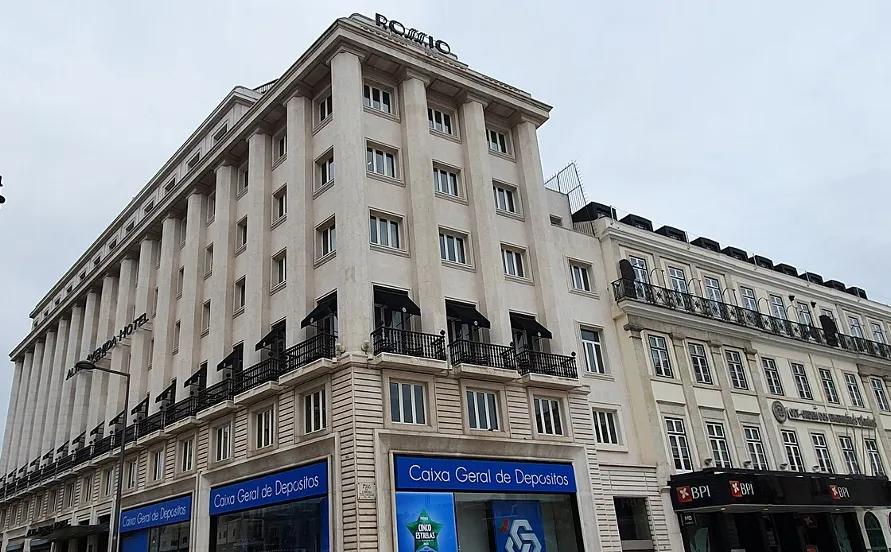
- Caixa Geral de Depósitos and BPI branches side by side in central Lisbon.: GualdimG, CC BY-SA 4.0, via Wikimedia Commons
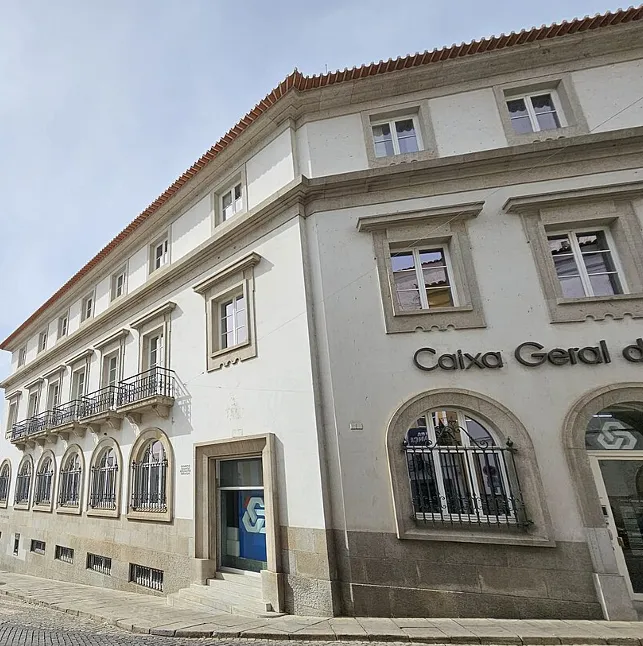
- A Caixa Geral de Depósitos branch on Rua da República in Évora.: GualdimG, CC BY-SA 4.0, via Wikimedia Commons
Get new jobs in Portugal by email
One email a week with the jobs added since the last one. Free, with no account.
Nothing is sent until you open the link we email you. Choose a role, a pay level or daily emails
We use your address only to send the alerts you ask for, and every email has a one-click unsubscribe link. The privacy notice says how long we keep it, and the terms of use cover the alerts.
We check this guide again by February 3, 2027. Rules change, so confirm visa steps with the embassy and your school before you go. First published November 5, 2026. Spotted something out of date? Tell us. How we write these guides.