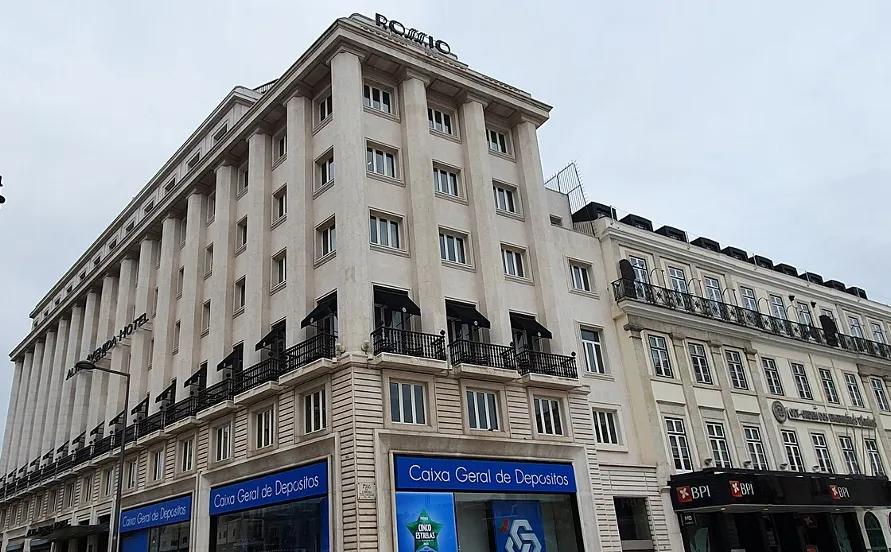
Getting a phone number and SIM in Portugal
Set up a Portuguese phone number in your first week so your school, landlord and bank can reach you. Here's where to buy a card, what ID to carry, what the main plans cost and how to keep your old number working.
AbroadPin team8 min read
Contents
Getting a Portuguese mobile line is one of the easier jobs on your arrival list. Most teachers start with a prepaid card in the first days, then think about a monthly plan once they have a NIF, a bank account and a settled address. This page covers where to buy, which ID to carry, the networks, current prices, eSIM and your number from home. For pay, visas and employers, see the main guide to teaching in Portugal.
Your first days in Portugal
How you get online when you land depends on where your current SIM comes from.
- A SIM from another EU country. Under the EU's roam-like-at-home rules, calls, texts and mobile internet cost the same as at home, and receiving calls or texts costs nothing extra [4]. Your operator can still cap how much you use at home prices under a fair use policy [4].
- A SIM from outside the EU. None of those rules cover you. Look up your carrier's roaming charges before the flight, or keep mobile internet switched off and rely on Wi-Fi until you have a local card.
- A Portuguese card straight away. A carrier's own shop in town is the simplest place to start, where staff can fit the card and check it works.
An EU SIM is fine for a few weeks but not as your only line once you live here. Roaming is meant for occasional use outside the country where you live, work, study or have other stable links [4]. Your operator can watch your use over 4 months, and if you've spent more time abroad than at home it can ask you to explain, with 14 days to reply [4]. If the pattern goes on, surcharges can follow, capped at 1.30 euros per GB of data in 2025 and falling to 1 euro per GB from 2027 [4].
What ID to bring
The crowd-edited Prepaid Data SIM Card Wiki says Portuguese SIM cards don't need to be registered [1]. A writer there reported ordering a MEO eSIM in 2025 with a US credit card and no passport, and being asked for a NIF that could be skipped [1].
Don't count on that everywhere. Digi, for example, asks for a copy of an identity document when you request its eSIM, and accepts a Portuguese citizen card, a passport, a residence permit or an older identity card [3].
So the safe plan is simple:
- Carry your passport whenever you go to buy a card.
- Bring your NIF if you already have one, since forms and accounts often ask for it.
- Have your residence permit with you once AIMA has issued it.
- Take an unlocked phone, or the shop can't put a Portuguese card in it.
The four networks and the cheaper brands
Portugal has four mobile networks. According to the wiki, MEO is the market leader with about 40% of customers and the widest coverage, Vodafone has about 33% and NOS about 20% [1]. Digi became the fourth network when it launched on 4 November 2024 [1]. Smaller brands that rent space on those networks share roughly 2% of the market [1].
The wiki pairs the main smaller brands with their host networks like this [1]:
| Brand | Runs on |
|---|---|
| UZO | MEO |
| Lyca Mobile | Vodafone |
| Nowo | Digi, since November 2024 |
Where the wiki says you can buy each one:
- MEO at its own stores, Phone House and Worten, or online with delivery to a Portuguese postal address [1].
- Vodafone and NOS at their own stores [1].
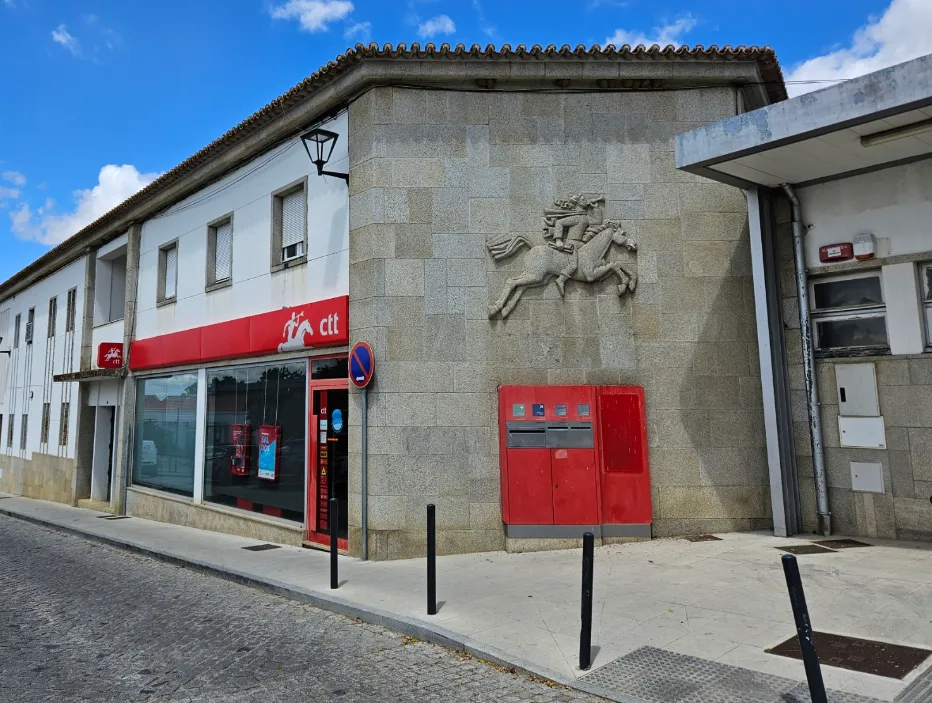
- UZO at CTT post offices, kiosks, Payshop agents and some petrol station shops, among other outlets [1].
- Lyca Mobile online, with delivery to a Portuguese address that can take a week or more, and at some Payshop outlets, post offices and service stations [1].
- Nowo at its own shops, which the wiki puts at about 20 [1].
The wiki still calls Digi postpaid only, but Digi's own page now lists prepaid plans too [1] [2].
What plans cost

Digi publishes simple prices and says customers aren't tied to multi-year loyalty periods [2]. These are its prepaid plans as listed on 5 November 2026, shown as final monthly prices [2]:
| Digi prepaid plan | Price a month | What you get |
|---|---|---|
| Móvel 50 GB | 4 euros | 50 GB that carries over, unlimited national calls |
| Móvel 150 GB | 5 euros | 150 GB that carries over, unlimited national calls |
| Móvel 200 GB | 7 euros | 200 GB that carries over, unlimited national calls, 400 international minutes |
On its postpaid side, Digi's ILIMITADO plan costs 6 euros a month for a single number, with unlimited data and national calls, 1,000 texts to Digi numbers, 5G and roaming included [2]. Lines on the same account cost less each: 5.50 euros with two numbers and 5 euros with three or more [2].
A few Digi details worth knowing:
- The SIM price becomes credit. For prepaid, Digi says 10 euros of balance is loaded from what you pay for the card [2].
- Plans renew from your balance. A prepaid plan renews by itself when there's enough credit, and you can stop the renewal without a penalty [2].
- Top up at least twice a year. Digi says a prepaid line needs a top-up at least every six months or it's switched off [2].
- Billing month. Digi's billing cycle runs from the 9th of one month to the 8th of the next [2].
MEO, Vodafone, NOS and the smaller brands. The wiki lists starter cards at these prices, but it shows no date for them and cites a price survey from August 2023 elsewhere on the page, so check in the shop [1]:
- MEO's prepaid card costs 9.99 euros and includes 5 GB, 10 GB for messaging apps and 1,000 minutes or texts for 30 days [1].
- Vodafone's Easy Total card costs 9.90 euros with 5 euros of credit [1].
- NOS sells a card for 9.90 euros with the same amount of credit [1].
- UZO and Lyca Mobile cards cost 5 euros each [1].
- Lyca lists a 30-day pack of 20 GB plus a 5 GB bonus for 10 euros, with EU roaming included [1].
Keeping a prepaid line alive
Unused prepaid lines can cost you fees or get switched off, which matters if you go home for the summer. The wiki gives these rules [1]:
- MEO charges a 1 euro maintenance fee each month once a line with credit has been inactive for a month [1].
- Vodafone charges 1.50 euros every 60 days [1].
- A Lyca Mobile card is switched off after 67 days without calls, texts or data use [1].
- UZO credit and the card stay valid for five months after each top-up [1].
You can top up at Payshop agents and at Worten, and the wiki says agents usually charge a fee of about 0.50 euros [1]. It also notes that some carriers' online top-ups don't take foreign bank cards, so a Payshop counter is a handy fallback in the early weeks.
eSIM or a plastic card
An eSIM saves swapping cards and leaves room for your home SIM in the tray. Digi says its eSIM is free, has no loyalty period, and that a replacement eSIM is free too [3]. You need to be a Digi mobile customer already and request it in the My DIGI account with a copy of your ID [3].
Digi describes the setup like this [3]:
- Check your phone is on its list of compatible devices.
- Connect to Wi-Fi and keep a second device nearby to show the QR code.
- Watch for an email with your PIN, PUK and the activation QR code.
- Scan it, knowing you get 3 attempts before you have to ask support for a new code [3].
- Use the activation link that arrives by text within 24 hours of approval, within 48 hours [3].
If you move from a Digi plastic card to an eSIM, the plastic card stops working once the eSIM is active [3]. The wiki also reports that MEO sold a short-term unlimited eSIM online in 2025, so ask the other carriers what they offer now [1].
Why a Portuguese number helps
Daily life in Portugal leans on a local number.
- MB WAY. The payment app built into Portuguese banking is linked to your phone number, and colleagues and flatmates use it to split bills.
- Bank codes. Your Portuguese bank sends security codes and alerts by text.
- Your academy. Timetable changes, cover requests and staff group chats run through your mobile.
- Flat hunting and deliveries. Landlords, agencies and couriers expect to call or text a local number.
- Appointments. Health centres and public offices often confirm times by text.
Keeping your home number
Banks, tax offices and online accounts back home may still send sign-in codes to your old number, so decide what to do with it before you fly.
- Run both on one phone. A dual-SIM handset, or a plastic card plus an eSIM, keeps your home line for codes and your Portuguese line for everything else.
- Find the cheapest way to keep it. Ask your home carrier about its lowest plan and what it charges to receive a text abroad.
- Switch codes to an app. Where a service lets you swap text codes for an authenticator app, change it while you still have the old SIM in hand.
If you later move between Portuguese carriers, ask the new one whether it can bring your number across before you cancel anything. ANACOM, the national telecoms regulator, runs a consumer portal with guidance on switching and on problems with an operator.
Your first month, step by step
- Before you fly, make sure your phone isn't locked to one carrier, check whether it takes an eSIM and sort out your home number.
- On arrival, use Wi-Fi or an EU SIM while you find a shop [4].
- Buy a prepaid card at a carrier's store with your passport in your pocket [1] [3].
- Give the new number to your academy, your landlord and your bank.
- Once your NIF and bank account are in place, compare monthly plans and keep an eye on the inactivity rules if you'll be away for long [1] [2].
When your phone's sorted, take a look at the open jobs in Portugal.
See jobs in Portugal
Sources and photo credits
- 1.Prepaid Data SIM Card Wiki, Portugal, crowd-edited, no edit date shown (read 5 November 2026)
- 2.DIGI Portugal, mobile tariffs, prepaid and postpaid (read 5 November 2026)
- 3.DIGI Portugal, eSIM (read 5 November 2026)
- 4.European Commission, Your Europe, mobile roaming costs in the EU (last checked 7 January 2026, read 5 November 2026)
Photos
- A CTT post office in Montemor-o-Novo.: GualdimG, CC BY-SA 4.0, via Wikimedia Commons
- Vodafone's headquarters building in Porto, photographed in 2011.: Francisco Restivo, CC BY 2.0, via Wikimedia Commons
Get new jobs in Portugal by email
One email a week with the jobs added since the last one. Free, with no account.
Nothing is sent until you open the link we email you. Choose a role, a pay level or daily emails
We use your address only to send the alerts you ask for, and every email has a one-click unsubscribe link. The privacy notice says how long we keep it, and the terms of use cover the alerts.
We check this guide again by February 3, 2027. Rules change, so confirm visa steps with the embassy and your school before you go. First published November 5, 2026. Spotted something out of date? Tell us. How we write these guides.