Teaching English in Saudi Arabia
Teaching jobs in Saudi Arabia pay a tax-free salary, often with housing and flights on top. The catch is a long paper trail before you fly. This guide covers who hires, what each kind of job pays, the visa and iqama, two cities' costs and what bringing children involves.
AbroadPin team9 min read
Contents
Saudi Arabia at a glance
| Full-time pay | SAR 8,430 to 18,044 a month to start (TEFL Org) [3] |
|---|---|
| University pay | Often USD 4,000 to 5,000 a month (Go Overseas, 2022) [1] |
| Work visa | Sponsor's authorisation, signed contract, embassy-stamped degree, police certificate, medical report [4] |
| Iqama | Your employer starts it within 90 days of your arrival [5] |
| Dependant fee | SAR 400 a month for each family member you sponsor [5] |
| University term | Classes at King Abdulaziz University start on 30 August 2026 [6] |
| Rent, one-bed central | About SAR 4,529 in Riyadh vs about SAR 2,547 in Jeddah (Numbeo) [7] [8] |
Where the English teaching jobs are
Saudi Arabia hires a lot of English teachers, but it mostly wants people with some classroom time behind them. Go Overseas puts it plainly: the country targets qualified, experienced teachers rather than brand new ones [1]. Here are the main kinds of employer.
- University English programmes. Universities run English courses, often a preparatory year before students start their degree. These are the most competitive jobs and usually want strong ESL experience plus a CELTA or TESOL certificate [1].
- Private language institutes. Adults and young learners, mostly in the big cities. Expect around 25 to 30 teaching hours a week [1]. International TEFL Academy says private institutes may hire all year round [2].
- Private international schools. British, American, IB and other curricula. These want a teaching licence or certificate and two to five years of classroom experience, on contracts of one to two years [1].
- Bilingual schools. Private schools teaching part of the day in English. ITA lists them with international schools and universities as the places where stronger credentials open doors [2].
- Private tutoring. One-to-one lessons on the side, usually once you're settled and only where your visa and contract allow it.
Go Overseas calls Arabic a huge asset in the language institutes [1].
What teachers earn
No public pay scale exists for foreign English teachers, so these figures come from TEFL course providers and teaching sites. They are rough bands, and some are older than others [1] [2] [3].
| Employer type | Pay as the source gives it | Source |
|---|---|---|
| Full-time TEFL teachers, starting out | SAR 8,430 to 18,044 a month | TEFL Org, Apr 2025 [3] |
| First-time teachers, all employers | USD 1,500 to 3,000 a month | ITA, Oct 2026 [2] |
| Language and international schools | USD 1,800 to 5,000 a month | ITA, Oct 2026 [2] |
| Language schools | USD 3,200 to 4,000 a month | Go Overseas, Apr 2022 [1] |
| Private international schools | USD 2,600 to 4,000 a month | Go Overseas, Apr 2022 [1] |
| Colleges and universities | USD 4,000 to 5,000 a month | Go Overseas, Apr 2022 [1] |
| Private tutoring | USD 20 to 50 an hour | ITA, Oct 2026 [2] |
All three sources describe salaries as tax-free [1] [2] [3]. The Go Overseas figures date from April 2022, so use them as a starting point for your own questions, not a promise [1].
TEFL Org says a new teacher with a bachelor's degree and a TEFL certificate can start around SAR 8,430 a month [3]. Teachers with a master's and a strong TEFL background earn the most, it adds [3].
What usually comes with the salary
The extras matter as much as the monthly figure. Go Overseas lists housing, airfare reimbursement, health insurance and contract completion bonuses as common [1]. Some schools give a housing allowance instead of a flat, and that allowance may have to cover rent in the area you're placed in [1]. TEFL Org adds performance bonuses, yearly raises and, at some international schools, schooling for your children [3].
ITA puts monthly living costs at about USD 500 to 1,000, and says teachers save USD 800 or more a month on average [2].
What you need to qualify
The visa rules come from the Saudi side, and each employer adds its own on top.
What the Saudi embassy's employment visa page asks for [4]:
- A passport valid for at least six months from your travel date, with two empty pages side by side [4].
- Your degree and transcripts. The page says foreign degrees must be stamped by the Saudi embassy in the country that issued them [4].
- Letters of experience from previous employers and a CV form [4].
- An original police certificate and an original medical report with its test results attached [4].
- A copy of your signed work contract and your sponsor's electronic authorisation [4].
- The same page states that employment age in the Kingdom must be over 22 [4].
What employers usually ask for:
- A bachelor's degree as the minimum, according to TEFL Org [3].
- A TEFL certificate of at least 120 hours [3]. Go Overseas says language schools will most likely want a TESOL or CELTA [1].
- An education degree for many posts, with teaching experience or a master's giving you an edge, according to ITA [2].
- A teaching licence for most international school posts [1].
Getting the work visa and iqama
Your employer is your sponsor and drives most of this. The order usually goes like this.
- Signed contract. Read it closely before you sign, because it travels with your visa file [4].
- Degree stamping. Get your degree notarised and certified at home, then stamped by the Saudi embassy [4]. Ask your employer whether the Saudi Cultural Bureau needs to see it too. Start early, because this is usually the slowest step.
- Sponsor's authorisation. The employer applies to the Saudi Ministry of Foreign Affairs for a visa authorisation and sends you a copy [4].
- Visa application. You apply through an approved agent where you live, with the documents above [4]. The visa is valid for 3 months from the day it's issued, so plan your travel inside that window [4].
- Arrival and medical. After you land you do a medical check at an approved health centre, and you need health insurance and a Saudi SIM card [5].
- Iqama. This is your residence permit. Middle East Briefing says employers start the application within 90 days of your arrival, with biometrics taken as part of it [5]. Renewals need to be done at least three days before it expires [5].
The embassy page also lists a temporary work visa with the same paperwork, and a person on it isn't a resident and holds no iqama [4]. If you're offered one, ask why and how long it lasts.
Who pays the government fees
Middle East Briefing says employers are generally responsible for iqama and work permit costs [5]. It gives the iqama renewal as SAR 650 a year and the work permit fee as SAR 800 a month [5]. Ask your school to confirm in writing that it pays these.
Cost of living: Riyadh and Jeddah
Rent is the number that moves most between cities, and the one a housing allowance has to beat. These are Numbeo's user-reported figures, read on 4 November 2026; the Jeddah ones come from Expatica's page built on Numbeo's 1 June 2026 snapshot [7] [8].
| Item, per month unless marked | Riyadh | Jeddah |
|---|---|---|
| One-bed flat, city centre | SAR 4,528.97 | SAR 2,547 |
| One-bed flat, outside centre | SAR 3,082.69 | SAR 1,828 |
| Basic utilities, 85 m2 flat | SAR 368.87 | SAR 377 |
| Home internet | SAR 281.12 | SAR 251 |
| Public transport pass | SAR 140.00 | SAR 205 |
| Cheap restaurant meal (one) | SAR 31.50 | SAR 20.49 |
Utilities in summer lean on air conditioning, so ask what your employer's flat includes. ITA suggests bringing USD 1,000 to 1,500 to cover your first month before the first payday [2].
When schools hire
The school year runs from about late August to June, and primary and high schools usually recruit in spring for an August start [2]. TEFL Org calls June to August the busiest hiring stretch and lists terms starting in August, November and March [3].
University calendars run on the same rhythm. At King Abdulaziz University in Jeddah, first semester classes start on 30 August 2026, the second semester starts on 17 January 2027, and the end of year break begins on 1 July 2027 [6]. Private institutes take people all year [2].
Red flags and staying legal
- No sponsor authorisation. A real work visa starts with your employer's authorisation from the Ministry of Foreign Affairs [4]. A job that asks you to fly in first and sort the paperwork later isn't following that route.
- A temporary visa sold as a residence visa. A temporary work visa doesn't make you a resident or give you an iqama [4].
- You paying the government fees. Iqama and work permit fees generally sit with the employer [5].
- A housing allowance that doesn't match local rents. Compare the allowance with the rents above before you accept [1] [7].
- No clear date for your iqama. Ask when the school will start it; Middle East Briefing gives 90 days from arrival as the window [5].
- Health insurance that runs short. Iqama renewals are checked against the health insurance platform, which looks for cover lasting the whole iqama term [5].
Keep copies of your contract, offer and every stamped document on your phone and in the cloud. They're slow to replace.
Moving with kids
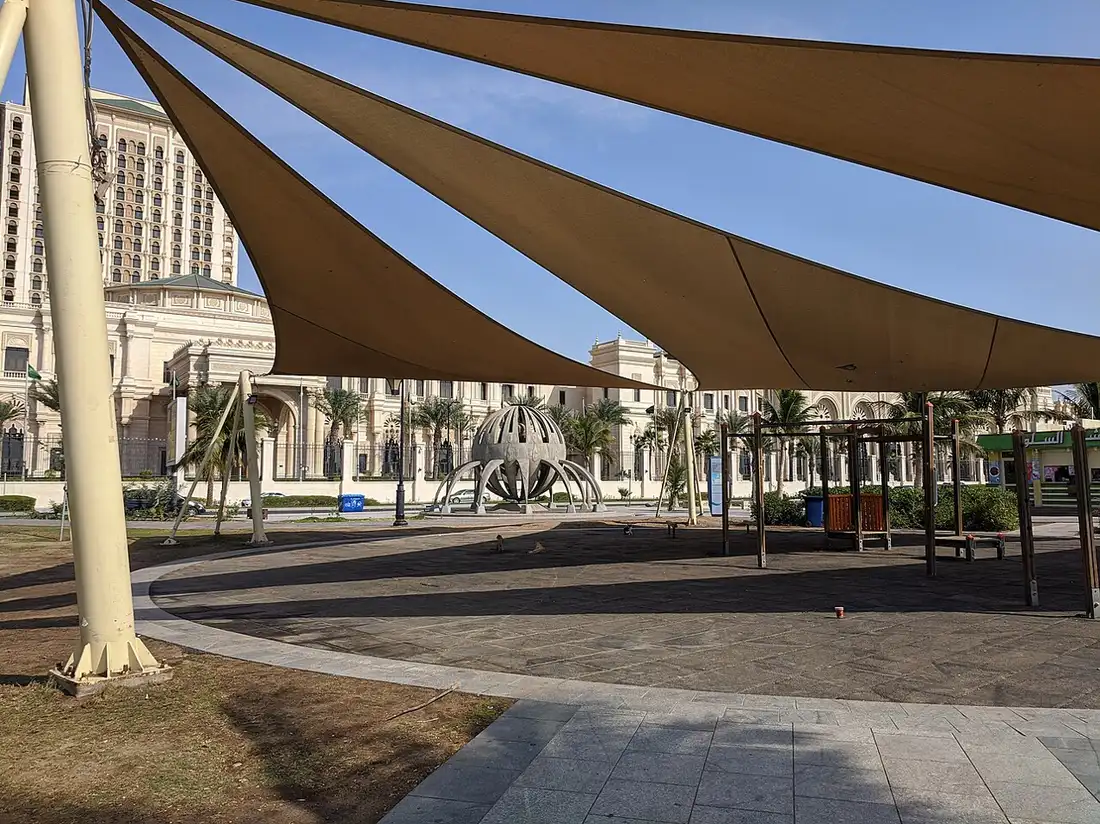
Many teachers bring families to Saudi Arabia, and international school tuition is what decides whether it works. Get the school's help with fees in writing before you sign.
Visas for your spouse and children
Once you hold an iqama you can sponsor your spouse and children. The application goes to the local Jawazat (passports) office with proof of the family relationship [5]. Each dependant carries a fee of SAR 400 a month [5]. Three dependants come to SAR 1,200 a month on top of school fees, so ask whether your employer covers it [5]. Dependants' iqamas can be renewed online through Absher or Muqeem, even while they're out of the country, as long as you're inside it [5]. Bring marriage and birth certificates and ask your employer early whether they need stamping like your degree.
Schools for your children
Most expat children go to private international schools, and fees climb steeply with each grade. Figures for 2026 to 2027 in Riyadh, for non-Saudi families [9]:
- OWIS Al Jazeera. SAR 27,800 a year for Pre-KG up to SAR 42,200 for Grades 4 and 5 [9].
- SEK International School Riyadh. SAR 58,075 a year for KG up to SAR 84,525 for Grades 11 and 12, including 15% VAT [9].
- American International School of Riyadh. SAR 106,496.90 a year for KG-II to Grade 5 up to SAR 120,756.90 for Grades 9 to 12, including VAT [9]. New families also pay application, capital and registration fees that come to SAR 40,210.90 per child below Grade 9 [9].
As a city average, Numbeo puts international primary school at about SAR 38,973 a year in Riyadh, and Expatica's Numbeo-based page gives about SAR 42,157 in Jeddah [7] [8]. At OWIS, uniforms, books and transport are charged separately, so ask every school what its fee leaves out [9].
Who pays the fees
This varies by employer type. TEFL Org says private international school jobs can include schooling for your kids, and lists tuition cover for children among common perks [3]. Neither Go Overseas nor ITA mentions tuition in its list of usual benefits for institute or university jobs [1] [2]. So if you'd teach at a language institute or university, assume nothing and ask. iSchoolAdvisor suggests asking your employer to list application, registration, capital, exam and transport fees in the contract, and to pay the school directly if it can [9].
Childcare
A private preschool place costs about SAR 1,338 a month in Riyadh for a full day, and about SAR 2,191 a month in Jeddah, on Numbeo's figures [7] [8]. If your school has an early years section, ask whether staff children get places there and at what rate.
Health cover for the family
Health insurance is required for residents, and iqama renewals are checked against the insurance platform [5]. Your employer's policy covers you, but don't assume it covers your spouse and children. Ask to see the policy and whether family cover is part of the package or extra.
Ready to look? See open teaching jobs in Saudi Arabia and apply to the school directly.
See jobs in Saudi Arabia
- Secondary English Teacher, KS3 and KS4, August 2027 (school in Al Khobar)Al Khobar · $2,748 to $3,298 a month
- Key Stage 1 Class Teacher, August 2027 (British school, Al Khobar)Al Khobar · $3,518 a month
- Early Years (EYFS) Teacher, August 2027 (British school, Al Khobar)Al Khobar · $3,518 a month
- Primary English Teacher, founding staff, August 2027 (international school, Riyadh)Riyadh · $3,188 a month
- EFL Instructor, Preparatory English Program (King Fahd University of Petroleum and Minerals, Dhahran)Dhahran
By city: Teaching jobs in Dhahran · Teaching jobs in Al Khobar · Teaching jobs in Riyadh
Sources and photo credits
- 1.Go Overseas, Teaching English in Saudi Arabia salary guide (published 15 April 2022, read 4 November 2026)
- 2.International TEFL Academy, How much do English teachers make in Saudi Arabia (updated 1 October 2026)
- 3.The TEFL Org, Teach English in Saudi Arabia: salary (last modified 18 April 2025, read 4 November 2026)
- 4.Royal Embassy of Saudi Arabia in Canada, Ministry of Foreign Affairs, employment visa requirements (no date shown, read 4 November 2026)
- 5.Middle East Briefing, Saudi Arabia iqama residence permit: what businesses need to know (updated 12 August 2025)
- 6.King Abdulaziz University, academic calendar for 2026/2027 (read 4 November 2026)
- 7.Numbeo, cost of living in Riyadh (read 4 November 2026)
- 8.Expatica, cost of living in Jeddah, from Numbeo's 1 June 2026 snapshot (read 4 November 2026)
- 9.iSchoolAdvisor, International school fees in Riyadh: 2026 cost breakdown (29 April 2026)
Photos
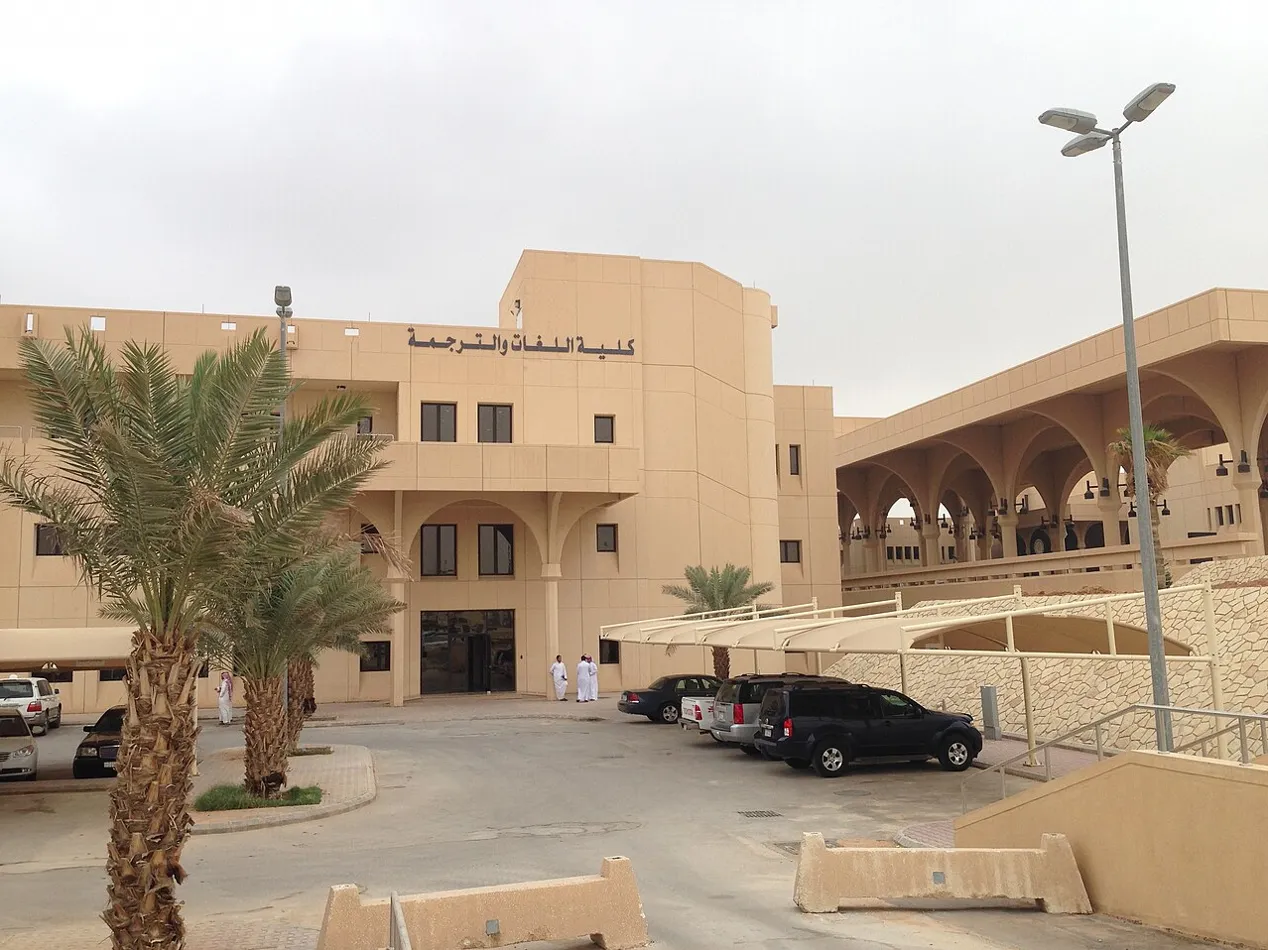
- College of Languages and Translation, King Saud University, Riyadh: Tflanagan (WMF), CC BY-SA 3.0, via Wikimedia Commons
- A playground on the Jeddah Corniche: Nick-D, CC BY-SA 4.0, via Wikimedia Commons
Get new jobs in Saudi Arabia by email
One email a week with the jobs added since the last one. Free, with no account.
Nothing is sent until you open the link we email you. Choose a role, a pay level or daily emails
We use your address only to send the alerts you ask for, and every email has a one-click unsubscribe link. The privacy notice says how long we keep it, and the terms of use cover the alerts.
We check this guide again by February 2, 2027. Rules change, so confirm visa steps with the embassy and your school before you go. First published November 4, 2026. Spotted something out of date? Tell us. How we write these guides.