Opening a bank account in Saudi Arabia
Start receiving your Saudi salary without delays by opening an account the week your iqama is issued. This page covers the papers, the apps, the fees and how to manage before your first payday.
AbroadPin team6 min read
Contents
A Saudi bank account is one of the first things your school will ask you about. Salaries in the private sector go through a government wage system, so payroll needs an account in your name. Most of the work is lining up the right ID, phone number and address before you start. Once those are ready, some banks will open an account on your phone in a few minutes. For pay, the work visa and city costs, see the main guide to teaching in Saudi Arabia.
Why your school needs your account details
Saudi Arabia brought in its Wage Protection System in 2013, and it has covered every private sector company, small ones included, since 31 December 2020 [1]. Under it, employers pay wages through banks, exchange centres or other government-authorised financial institutions [1]. The Mudad platform has been the system's official interface since 3 November 2020 [1].
For you, this means a private school, institute or university contractor will want an IBAN for you on file before its payroll run. Ask HR in your first week which details they need and the date they close the month's payroll.
Put these in place first
Banks check your identity against government systems, so a few pieces need to exist before the account can. Your school starts most of them as part of your residence.
- Your iqama. This is the residence ID that most banks open accounts against. Al Rajhi Bank lists the iqama, a national address and a government ID number as the core papers for an account [2]. The main guide explains how your employer applies for it after you arrive.
- A Saudi mobile number in your own name. SAB opens online accounts only for customers using their own mobile number registered under their ID [3]. A number on a colleague's or your school's ID won't pass that check.
- An Absher account. Absher is the Interior Ministry's online portal, and SAB requires an active account before it will open yours online [3].
- The Nafath app. SAB uses Nafath to confirm it's you: you pick the matching number in the app, then pass a face or fingerprint check [3].
- A national address. SAB asks for a valid national address and says you can register one through Saudi Post if you don't have one yet [3].
Your school's HR office deals with these steps all the time, so ask them to walk you through the first two.
Opening an account with your iqama
Once your iqama is issued, you have two routes: a branch or an app.
In an app
SAB's e-account service is open to Saudis and non-Saudis with a valid iqama who are over 18 and inside the Kingdom [3]. Here is what it asks for [3]:
- A valid iqama, an active Absher account and a valid national address [3].
- A mobile number registered under your ID, plus an email address [3].
- Approval in Nafath and a face or fingerprint check [3].
SAB says the account opens instantly, at any hour, and that it charges no fee to open it [3]. A virtual mada debit card is issued straight away [3]. You can print a physical card at one of its self-service kiosks, collect it at a branch, or have it mailed, which takes 3 business days [3]. Anything that needs a signature on paper, such as a cheque book, waits until you upgrade the account at a branch [3]. The online route is only for new customers, so it won't open a second account if you already bank with SAB [3].
Al Rajhi Bank says it also offers digital account opening for iqama holders [2].
In a branch
If the app route fails, often because your phone number isn't registered to your iqama yet, a branch visit works too. Al Rajhi suggests booking an appointment, though it says walk-ins are often accommodated [2]. At the counter, ask about the debit card, online banking and any credit card you might want later [2].
Which bank to pick
Ask HR which bank the school pays salaries from. A transfer inside one bank is free under the central bank's rules, while a transfer to another bank carries a small fee [4] [5]. Beyond that, compare the app, the branch near your flat and the fee page for each bank you're considering.
If your iqama isn't ready yet
You don't have to wait for the iqama at every bank. Al Rajhi lets new arrivals without one open an account in person at a branch [2]. Bring these [2]:
- A passport valid for six months [2].
- Your 90-day work visa [2].
- A letter from your company stating the purpose and length of your stay and your job title [2].
- Proof of a temporary address in Saudi Arabia [2].
- The bank's application form, which the branch can give you [2].
A bank officer enters your details and the bank tells you when the account is active [2]. When your iqama arrives, take it to the bank so your record is updated.
Fees you can expect
The Saudi Central Bank (SAMA) told banks in December 2025 to provide 25 core services free of charge [4]. These include [4]:
- Opening a current account or an e-wallet [4].
- Issuing, renewing and replacing mada debit cards, including a card an ATM keeps [4].
- Using mada for purchases in shops and online inside the Kingdom, and across the Gulf network [4].
- Cash withdrawals and deposits, balance checks and bill payments [4].
- Transfers between accounts at the same bank, and between e-wallets at licensed providers [4].
- Periodic statements and an IBAN certificate, which HR may ask you for [4].
Transfers to other banks are not on that list. A new SAMA fee guide reported in December 2025 sets SAR 0.5 for an electronic local transfer of up to SAR 2,500, and SAR 1 for one over SAR 2,500 up to SAR 20,000 [5]. The same guide caps fees on international mada card purchases at 2% of the amount, and international cash withdrawals at 3% with a maximum of SAR 25 [5]. Each bank publishes its own fee page, so check it before you choose.
Cards and paying with your phone
Your everyday card will be a mada debit card, the national debit scheme run by Saudi Payments [7].
- Apple Pay. mada cards have worked with Apple Pay since 2018 [6]. You add the card in the Wallet app and confirm it with a one-time code from your bank [6].
- Android phones. Al Rajhi customers with an NFC Android phone can use the mada Pay app from Google Play to tap and pay with their card [7]. You may sometimes be asked for your PIN [7].
- Digital banks. STC Bank launched as a digital bank under SAMA supervision in January 2025, building on the stc pay wallet [8]. Wallet users can upgrade to a full account in the STC Bank app and keep their balance and history [8].
Before you apply for a credit card, ask your bank what salary history it wants to see.
Getting by until your first payday
Your first payday can come weeks after you land, and later still if the iqama is slow. Plan for that gap.
- Bring enough cash or savings on your home card to cover food, transport and anything your flat needs. Al Rajhi's advice to new arrivals says the same [2].
- Ask HR at your first meeting whether the school gives a cash advance to new staff. Al Rajhi notes that some employers do [2].
- Ask HR for an IBAN form or certificate request the day your account opens, and send your details in writing [4].
- When the first salary arrives, check it against your contract, including any housing or transport allowance.
A short checklist
- Passport and iqama, or your work visa and a company letter if the iqama isn't ready [2].
- A Saudi mobile number registered to your own ID [3].
- Absher, Nafath and a national address [3].
- Your school's bank, so salary transfers stay within one bank [4].
- An IBAN certificate for HR, which banks must issue free [4].
When you're ready to look for a post, see teaching jobs in Saudi Arabia and contact the school directly.
See jobs in Saudi Arabia
- Secondary English Teacher, KS3 and KS4, August 2027 (school in Al Khobar)Al Khobar · $2,748 to $3,298 a month
- Key Stage 1 Class Teacher, August 2027 (British school, Al Khobar)Al Khobar · $3,518 a month
- Early Years (EYFS) Teacher, August 2027 (British school, Al Khobar)Al Khobar · $3,518 a month
- Primary English Teacher, founding staff, August 2027 (international school, Riyadh)Riyadh · $3,188 a month
- EFL Instructor, Preparatory English Program (King Fahd University of Petroleum and Minerals, Dhahran)Dhahran
By city: Teaching jobs in Dhahran · Teaching jobs in Al Khobar · Teaching jobs in Riyadh
Sources and photo credits
- 1.International Labour Organization, Wage Protection System in the Kingdom of Saudi Arabia (last modified 1 February 2024, read 5 November 2026)
- 2.Al Rajhi Bank, After arrival (no date shown, read 5 November 2026)
- 3.SAB, e-Account opening (no date shown, read 5 November 2026)
- 4.Arabian Business, SAMA orders banks to offer 25 core services free of charge (29 December 2025)
- 5.Saudi Expatriates, SAMA reduces banking service fees for transfer, cards, financing for individuals (23 December 2025)
- 6.mada (Saudi Payments), Apple Pay (no date shown, read 5 November 2026)
- 7.Al Rajhi Bank, mada Pay (no date shown, read 5 November 2026)
- 8.bne IntelliNews, STC Bank launches official digital banking services in Saudi Arabia (29 January 2025)
Photos
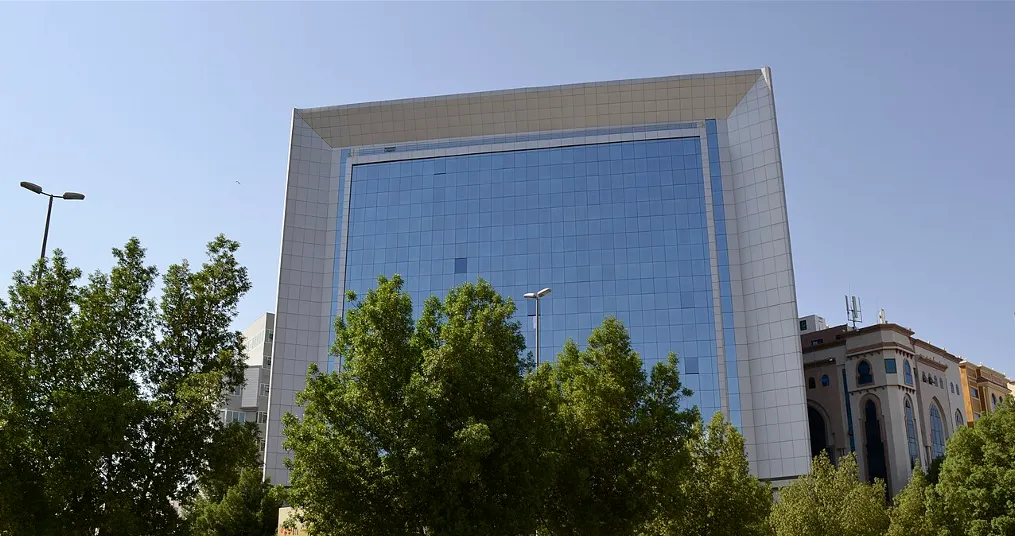
- Al Rajhi Bank's office building in Madinah.: Imam Khairul Annas, CC BY-SA 3.0, via Wikimedia Commons
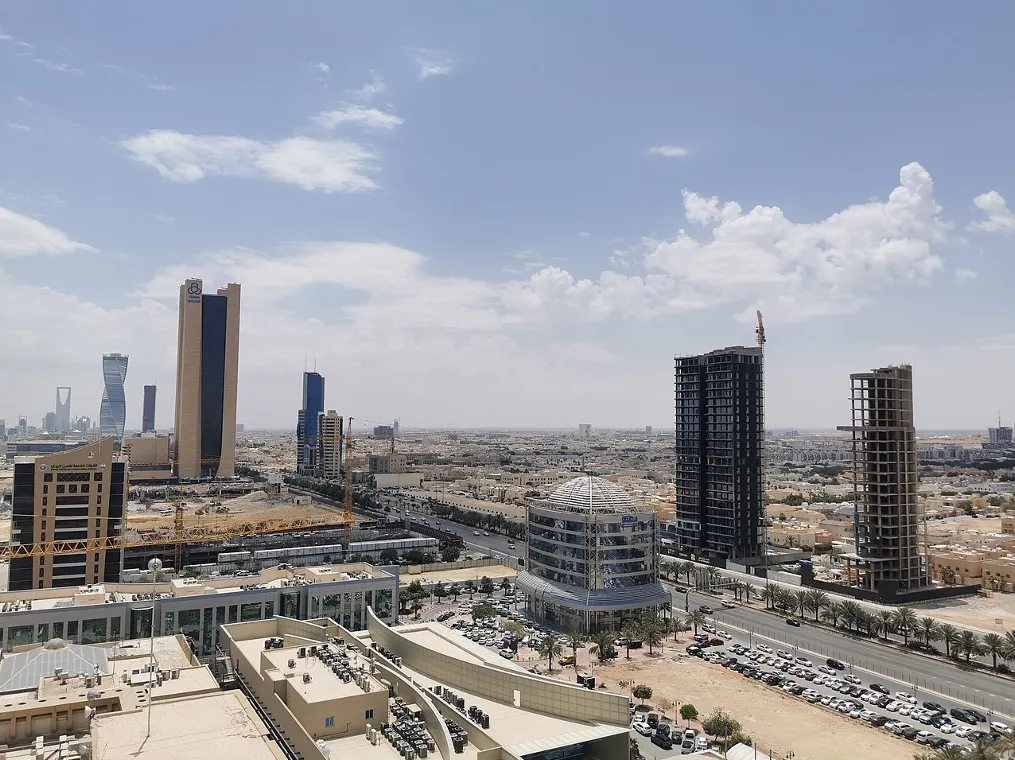
- A view over Riyadh from the King Abdullah Financial District.: Ahmed, CC BY-SA 4.0, via Wikimedia Commons
Get new jobs in Saudi Arabia by email
One email a week with the jobs added since the last one. Free, with no account.
Nothing is sent until you open the link we email you. Choose a role, a pay level or daily emails
We use your address only to send the alerts you ask for, and every email has a one-click unsubscribe link. The privacy notice says how long we keep it, and the terms of use cover the alerts.
We check this guide again by February 3, 2027. Rules change, so confirm visa steps with the embassy and your school before you go. First published November 5, 2026. Spotted something out of date? Tell us. How we write these guides.