Schools for teachers' kids in Saudi Arabia
Plan your children's schooling in Saudi Arabia before you sign, with real fees and the family visa steps. Most expat kids end up at a private international school, so the budget and the paperwork both start early.
AbroadPin team7 min read
Contents
Bringing children to Saudi Arabia shapes almost every part of your job search. The school fees are high, the family visa has its own paper trail, and your contract decides how much of it you pay yourself. This page goes through the options in the order you'll meet them: local schools, international schools, what your employer might cover, enrolment, nursery for the little ones, and the visa that lets your family live with you. For pay, the work visa and city costs, see the main guide to teaching in Saudi Arabia.
Local public schools
Government schools teach in Arabic and separate boys and girls, according to Expatica [2]. Government primary schools are free for citizens and for some expat residents, it says [2]. Many expat families pass on them, Expatica adds, partly because moving credits back to a home system can be hard [2].
If you want a public school place, know how places are shared out. The Ministry of Education caps children of non-Saudis at 15% across the three school stages, counted by district or governorate [1]. Non-Saudi children are offered seats only once Saudi registration is complete, and they need valid legal residency [1]. Within that cap, children of government-sector contractors come first, and children of parents working in the private sector are considered only if seats remain [1]. Most teachers at private institutes and schools fall in that last group, so treat a public school place as possible but not something to count on.
International and bilingual schools
Most teachers' kids go to a private international school. You'll find British, American, IB, French and German curricula, according to Expatica [2]. Fees rise with each grade, and VAT at 15% may or may not be inside the figure a school quotes [3].
What the fees look like
iSchoolAdvisor gives these indicative 2026 tuition bands for Jeddah, per year [3]:
| Stage | Yearly tuition in Jeddah |
|---|---|
| Kindergarten | SAR 20,000 to 45,000 |
| Grades 1 to 5 | SAR 28,000 to 62,000 |
| Grades 6 to 8 | SAR 35,000 to 72,000 |
| Grades 9 and 10 | SAR 42,000 to 82,000 |
| Grades 11 and 12, IB or A Level | SAR 50,000 to 95,000 |
To see one real school against those bands, here's Jeddah Prep and Grammar School for 2026 to 2027, for non-Saudi families with VAT included, as listed by International Schools Database [4]:
- Kindergarten 1: SAR 36,800 a year [4].
- Kindergarten 3 to Grade 5: SAR 54,050 a year [4].
- Grades 6 to 8: SAR 63,250 a year [4].
- Grades 11 and 12: SAR 79,925 a year [4].
- In the first year only, an application fee of SAR 403, an assessment fee of SAR 978 and a registration fee of SAR 13,800 [4].
- A 10% sibling discount for a third child and 20% for a fourth [4].
In Riyadh, iSchoolAdvisor gives OWIS Al Jazeera's 2026 to 2027 tuition as SAR 27,800 for Pre-KG, SAR 30,500 for KG1 and SAR 33,200 for KG2 [5]. Its one-off charges are a SAR 500 application fee and a SAR 3,000 registration fee [5].
The extras on top
Tuition isn't the whole bill. iSchoolAdvisor lists transport at SAR 4,000 to 9,000 a year, meals at SAR 2,500 to 6,000, and uniform, books and devices at SAR 1,500 to 5,000, mostly in the first year [3]. Some schools also charge a one-time capital fee of SAR 5,000 to 25,000 when you join [3]. It reckons the first year costs 20 to 30% more than tuition alone [3]. Ask every school for a full first-year quote in writing.
Who pays the tuition
This is the biggest money question in a Saudi family move, and the answer depends on the employer.
International schools are the most likely to help. As one example, International Schools Group (ISG), a group of schools in Saudi Arabia, lists tuition at an ISG school for dependent children among its benefits for overseas hires, along with a child care stipend [6]. For Saudi, GCC and dependent-status applicants, ISG lists a discounted rate for educators' children instead, which leaves out taxes and the new student enrolment fee [7]. So even within one employer, how you're hired changes what you get.
Language institutes and universities vary more, so ask direct questions before you sign:
- Is tuition paid in full, capped at a set amount, or not covered at all?
- How many children does it cover?
- Does the figure include VAT? iSchoolAdvisor notes that Saudi education allowances are often a gross yearly sum, so VAT outside it falls on you [3].
- Are application, registration, capital, exam and transport fees named in the contract? iSchoolAdvisor suggests listing them and having the employer pay the school directly where possible [5].
- Does it pay the family residence fees? Even ISG's overseas package covers dependants' iqama renewals but not the dependant levy [6].
Enrolling your child
International schools set their own admissions, but they move early in the year. In Riyadh, the American International School's seat deposit for the next year falls due on 9 April, and SEK International School asks returning families for a re-enrolment deposit before 1 February [5]. If you're signing a contract in spring for an August start, apply to schools at the same time, not after you land.
Have these ready:
- Your child's passport and, once issued, their iqama. Public schools require valid residency [1].
- Report cards and school certificates. The Ministry of Education asks for original documents from abroad so it can place your child in the right class, and lists which certificate each entry grade needs [1].
- Attested school records. For public schools, documents from abroad must be certified by the education authority where they were issued, or by the Ministry of Foreign Affairs, the Saudi embassy or the cultural attaché [1].
- A statement covering any gap in schooling, from the education authority or as a parent's declaration [1].
- Anything else each school asks for, such as vaccination records. Ask early so nothing holds up the start date.
Nursery and kindergarten
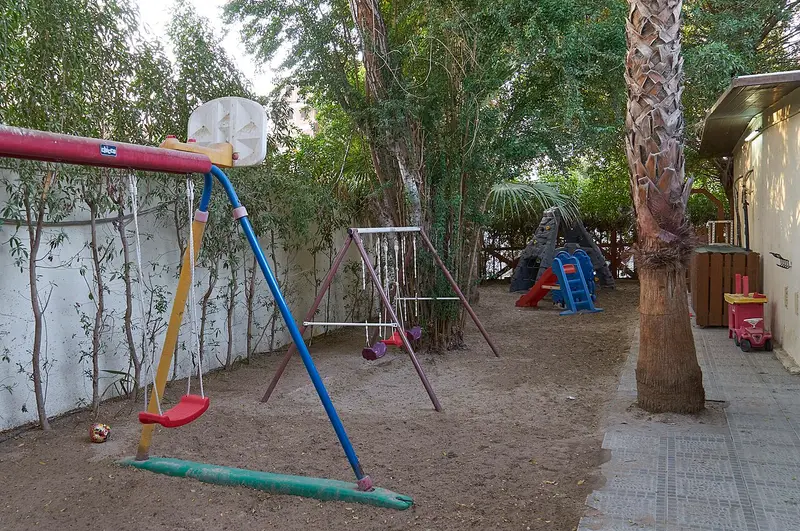
Expatica describes nursery as ages 0 to 3 and kindergarten as ages 3 to 5, and says preschool isn't compulsory [2]. It puts international preschool at SAR 10,000 to 65,000 a year [2].
For full-day private preschool, Numbeo's user-reported average in Riyadh is SAR 1,337.98 a month per child, with a range of SAR 500 to 2,083.33 [10]. Kindergarten at an international school costs more, as the fees above show, but it gives your child a place in the school they'll stay at. If your own employer has an early years section, ask whether staff children get a place and at what rate.
The family visa
Your family joins you on your residence once you hold an iqama. KSA Expats sets out how it works, and it's worth checking each point with your employer's government relations staff [8].
- Check you qualify. KSA Expats lists a valid iqama with at least 3 months left, a minimum monthly salary of SAR 3,500 on your GOSI certificate, and a profession on your iqama that allows family sponsorship [8].
- Attest your papers at home. Your marriage certificate, your children's birth certificates and your degree need attesting in your home country and at the Saudi embassy, then by the Saudi Ministry of Foreign Affairs, with an Arabic translation done in Saudi Arabia [8]. Do this while you're stamping your degree for the work visa.
- Apply. Eligible professions can apply online through Absher, and others go through the Istiqdam office [8]. The visa fee is SAR 2,000 per family [8].
- Your family arrives. Each person needs health insurance and a medical check, and their iqamas must be issued within 90 days of arrival [8].
- Budget the levy. The dependant fee is SAR 400 per dependant per month after the first 90 days, paid when the iqama is renewed [8].
KSA Expats gives the age rule as sons under 18 and unmarried daughters of any age [8]. If you have an older son, check his options before you commit.
A family visit visa is a separate, shorter route. The Saudi embassy in Canada asks for the sponsor's authorisation slip and iqama copy, plus a notarised marriage or birth certificate to prove the relationship, all through an approved agent [9]. Public schools ask for valid legal residency, so talk to your employer before you rely on a visit visa while your children start school [1].
Before you sign
Get the school fee help, the number of children covered and the dependant fees in writing. Then line up school applications alongside your contract, not after it. When you're ready, browse teaching jobs in Saudi Arabia and ask each school about family benefits in your first email.
See jobs in Saudi Arabia
- Secondary English Teacher, KS3 and KS4, August 2027 (school in Al Khobar)Al Khobar · $2,748 to $3,298 a month
- Key Stage 1 Class Teacher, August 2027 (British school, Al Khobar)Al Khobar · $3,518 a month
- Early Years (EYFS) Teacher, August 2027 (British school, Al Khobar)Al Khobar · $3,518 a month
- Primary English Teacher, founding staff, August 2027 (international school, Riyadh)Riyadh · $3,188 a month
- EFL Instructor, Preparatory English Program (King Fahd University of Petroleum and Minerals, Dhahran)Dhahran
By city: Teaching jobs in Dhahran · Teaching jobs in Al Khobar · Teaching jobs in Riyadh
Sources and photo credits
- 1.Saudi Ministry of Education, Conditions for accepting non-Saudi students in state and private schools (no date shown, read 4 November 2026)
- 2.Expatica, Education system in Saudi Arabia (updated 16 April 2025)
- 3.iSchoolAdvisor, International school fees in Jeddah: 2026 cost guide (31 August 2026)
- 4.International Schools Database, Jeddah Prep and Grammar School fees for 2026/2027 (read 4 November 2026)
- 5.iSchoolAdvisor, International school fees in Riyadh: 2026 cost breakdown (29 April 2026)
- 6.International Schools Group, International applicants: benefits (no date shown, read 4 November 2026)
- 7.International Schools Group, Saudi, GCC and dependent applicants: benefits (no date shown, read 4 November 2026)
- 8.KSA Expats, Permanent family visa in Saudi Arabia (last modified 16 April 2026)
- 9.Royal Embassy of Saudi Arabia in Canada, Ministry of Foreign Affairs, family visit visas with an authorization (no date shown, read 4 November 2026)
- 10.Numbeo, Cost of living in Riyadh (read 4 November 2026)
Photos
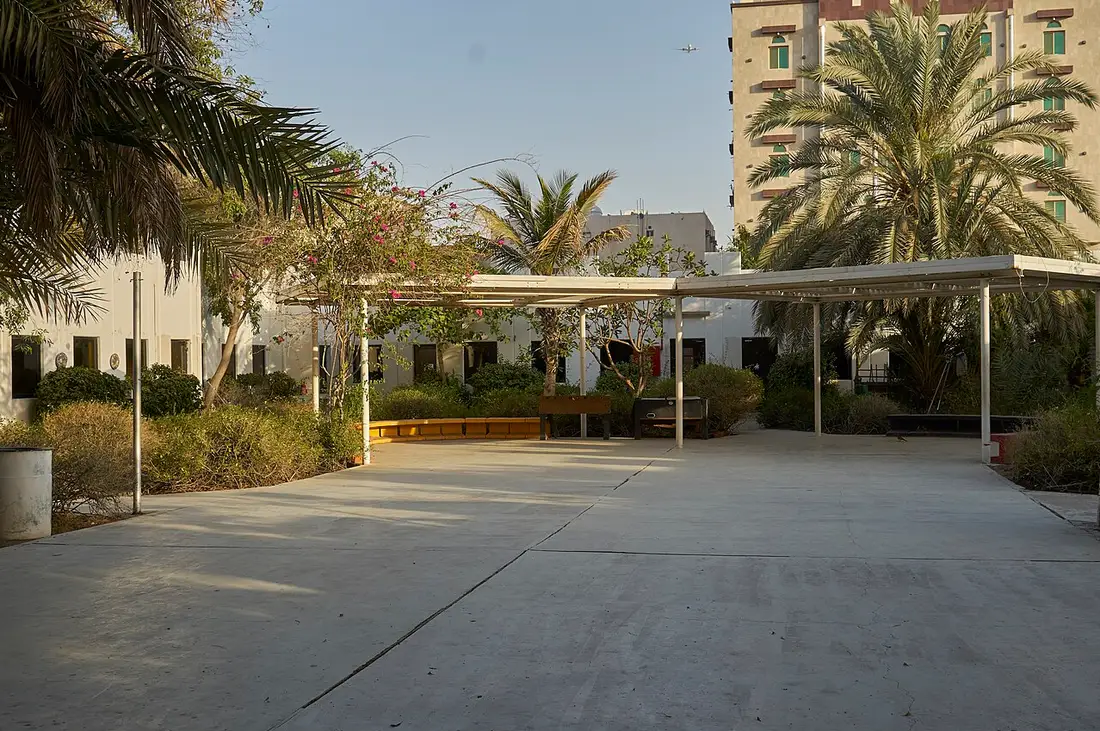
- The courtyard of the German International School in Jeddah: Wurzelgnohm, CC0, via Wikimedia Commons
- The kindergarten playground at the German International School in Jeddah: Wurzelgnohm, CC0, via Wikimedia Commons
Get new jobs in Saudi Arabia by email
One email a week with the jobs added since the last one. Free, with no account.
Nothing is sent until you open the link we email you. Choose a role, a pay level or daily emails
We use your address only to send the alerts you ask for, and every email has a one-click unsubscribe link. The privacy notice says how long we keep it, and the terms of use cover the alerts.
We check this guide again by February 2, 2027. Rules change, so confirm visa steps with the embassy and your school before you go. First published November 4, 2026. Spotted something out of date? Tell us. How we write these guides.