Teaching English in Indonesia
Teach English in Indonesia knowing the pay, the KITAS steps and what a month in Jakarta costs. Your employer does most of the permit work, but it takes weeks, so here's the order it happens in, plus visas and schools if your children come too.
AbroadPin team9 min read
Contents
Indonesia at a glance
| Language chain pay | IDR 11 to 15 million a month in recent EF franchise ads [1] [2] |
|---|---|
| Work visa | E23 work visa, then an ITAS (KITAS) for 6 months, 1 year or 2 years [4] [5] |
| Employer levy | US$100 a month per foreign worker (DKP-TKA), paid by the employer [4] |
| Time to process | Usually 6 to 10 weeks from the RPTKA filing to the KITAS [4] |
| Rent, one-bed central Jakarta | About Rp 6.5 million a month (Numbeo) [7] |
Who hires English teachers in Indonesia
Most foreign English teachers in Indonesia work for one of four kinds of employer.
- Language course chains. The biggest name is EF English First, which runs through regional franchise groups. One group advertises 10 centres around Greater Jakarta, in Jakarta, Tangerang and Bogor [1]. Another, EF English 1 under YHA Group, hires for Batam, Bengkulu, Jambi and Medan [2]. A third, EF Eduka Group, has hired for Surabaya, Sidoarjo, Malang and Mataram on Lombok [3]. Classes are mostly children and teenagers after school, plus adults in the evening.
- International schools. These hire qualified subject and class teachers. Jakarta schools with published fees include Jakarta Intercultural School, ACS Jakarta, British School Jakarta and Nord Anglia School Jakarta [10]. Most post openings on their own careers pages.
- National-plus and bilingual private schools. Private schools that teach part of the curriculum in English. Ask each one whether it sponsors the work visa.
- Universities. Indonesia's immigration list has separate work visa codes for lecturers, professors and teachers [5]. Each university sets its own entry bar, so read the advert closely.
If you're new to teaching, the chains are the usual way in. They offer training and housing help [1] [2], and the Jakarta ad lists a fully sponsored KITAS [1].
What it pays
Indonesian employers rarely publish pay, so this table uses the job ads that did [1] [2] [3].
| Employer | Published pay | Source and date |
|---|---|---|
| EF English First, Greater Jakarta | IDR 11,000,000 to 14,000,000 a month | Ad via The TEFL Academy, page dated March 2022 [1] |
| EF English 1 (YHA Group), Sumatra and Batam | IDR 15,000,000 a month | Ad via The TEFL Academy, April 2025 [2] |
| EF Eduka Group, East Java and Lombok | Up to IDR 15,000,000 a month | Expired ad on Teast, about 2024 [3] |
| International schools | Not published in the ads we read | Ask for the full package |
The benefits matter as much as the number:
- Housing help. The Jakarta ad lists a housing stipend or accommodation help [1]. The Sumatra ad has a monthly accommodation allowance that varies by city [2]. The East Java group offered a room in a subsidised shared house [3].
- Flights. The Sumatra group pays back your flight after 3 months [2]. The Jakarta ad lists a return ticket [1].
- Leave. 15 days paid leave in Jakarta [1], and 12 personal days plus public holidays and a week each at Christmas and Lebaran in Sumatra [2].
- Health cover. All three EF ads list medical or health insurance [1] [2] [3]. Many international schools include it in their packages too [11].
- A completion bonus. Two of the three ads mention a bonus at the end of the contract, without saying how much [2] [3].
The Jakarta ad is the oldest of the three, so treat its range as a floor and ask what the centre pays now [1].
The minimum you need
What the employers ask for. All three EF ads want a bachelor's degree in any subject and a TEFL certificate, and two of them ask for a Level 5 TEFL [1] [2] [3]. Applicants who aren't native speakers qualify with a test score, for example IELTS 7.5 overall with at least 7.5 in speaking [2] [3]. You'll also need a clean background check [1] [2]. Teaching experience helps but is listed as optional [1] [2].
What the work permit file asks for. Aniday, a relocation firm, reads the general rules as a degree that matches the job, at least 5 years' experience in the field shown by reference letters or a professional certificate, and health insurance [4]. It also says passport validity of about 18 months is needed for a one-year permit, or about 30 months for a two-year one [4]. Foreign documents should be apostilled [4]. Language chains still list experience as optional [1] [2], so ask your employer how it builds this part of your file before you resign from anything at home.
Aniday says there's no age limit or salary floor in the law, and that the Ministry of Manpower (Kemnaker) looks at each plan case by case [4].
Work permit and visa, step by step
Your employer files almost everything. Here's the usual order, as Aniday describes it for 2026 [4].
- The employer files an RPTKA. This is the foreign worker plan, filed with Kemnaker on the TKA Online system. Kemnaker checks the file and usually holds a video call to assess it [4].
- The employer pays the DKP-TKA levy. It's US$100 a month per foreign worker, paid up front for the whole period, so US$1,200 for one year [4]. Some employers are exempt, including organisations filling certain positions in educational institutions [6].
- Kemnaker ratifies the plan. The ratified RPTKA has replaced the old IMTA, so there's no separate work permit card [4].
- The employer applies for your E23 work visa. It goes through the immigration e-visa system, and you receive the e-visa abroad [4]. The immigration list has specific codes for teaching: E23P for teachers, E23Q for lecturers and E23L for work in the education sector [5].
- You enter Indonesia and get your ITAS. Most people still call it a KITAS. You go to the local immigration office for biometrics, and the permit is issued about 2 working days later [4].
- Local registrations. A report to the local manpower office, civil registration, a tax number (NPWP) and BPJS social insurance [4].
The government fees for a one-year E23 with a re-entry permit add up to about IDR 5,000,000 [4]. The whole process usually takes 6 to 10 weeks, and about 4 weeks when every document is ready [4].
How long it lasts
The E23 and the ITAS come in 6-month, 1-year and 2-year versions, and never run longer than the RPTKA [4]. Extensions can't be longer than the first permit, and the total stay on an ITAS can't pass 6 years [5]. Start an extension at least 60 days before the permit expires [4].
Cost of living: Jakarta and Yogyakarta
Jakarta figures are Numbeo's crowd-sourced averages, last updated 12 December 2025 [7].
| Item | Jakarta |
|---|---|
| One-bed flat, centre, a month | About Rp 6,530,000 |
| One-bed flat, outside the centre, a month | About Rp 3,917,000 |
| Utilities for a mid-size flat, a month | About Rp 1,511,000 |
| Broadband internet, a month | About Rp 410,000 |
| Cheap restaurant meal | Rp 42,500 |
| Transport pass, a month | Rp 210,000 |
| One person's costs without rent, a month | About Rp 8,208,000 |
On an EF salary of IDR 11 to 15 million a month [1] [2], a central one-bed flat plus Numbeo's living costs would take most of it [7]. That's why the housing allowance and shared housing matter.
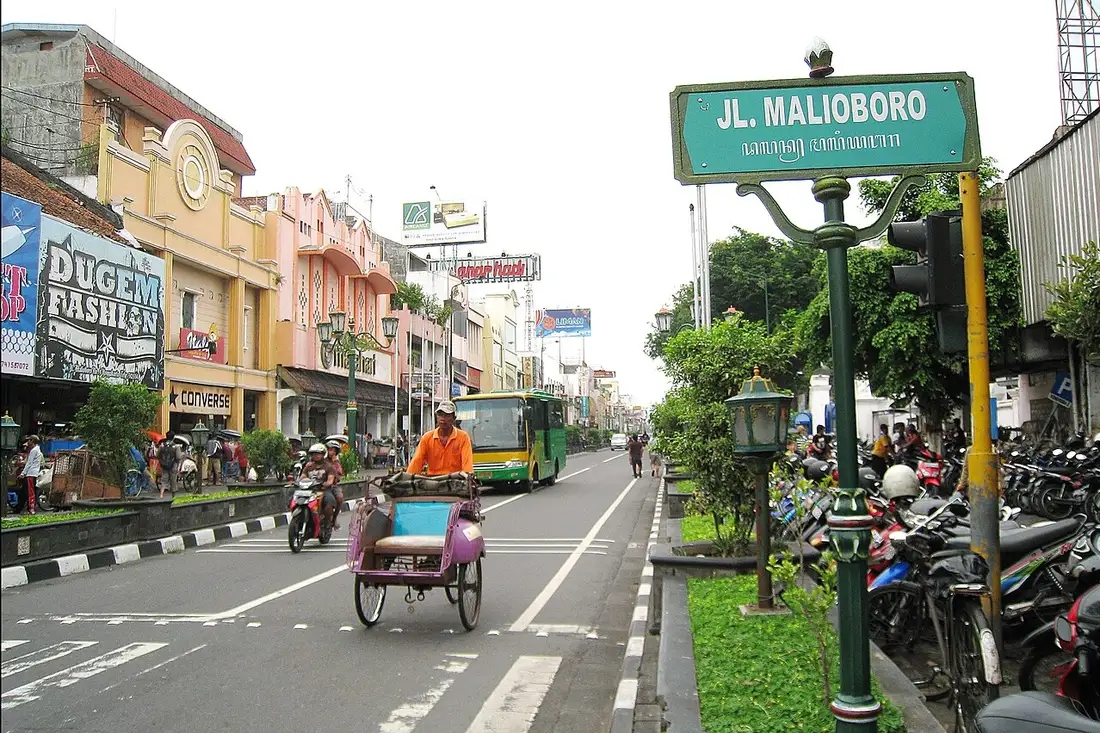
Yogyakarta, the university city on Java, is much cheaper. Numbeo's Yogyakarta page could not be read for this guide, so these figures come from two other sources. A remote work guide put a one-bed flat in central areas at about US$250 a month, and about US$150 in quieter suburbs, updated May 2026 [8]. It estimated a single person's budget at around US$600 a month [8]. Sanata Dharma University tells its international students to expect Rp1.500.000 to Rp2.500.000 a month for a boarding house room, and Rp20.000 to Rp40.000 a meal [9].
When schools hire
Indonesian state schools start their year in July, and international schools fill teaching posts months ahead of their start. EF's Jakarta ad offers a one-year contract that can be renewed [1], and the Sumatra group offers extensions [2]. The bigger planning point is the permit: allow 6 to 10 weeks from the RPTKA filing to your KITAS when you agree a start date [4].
Red flags and staying legal
Indonesia takes working on the wrong permit seriously. Aniday sets out the Immigration Law penalties: a foreigner who works outside the purpose of their stay permit faces up to 5 years in prison and a fine of up to IDR 500,000,000, plus deportation and an entry ban [4]. Anyone who arranges or allows it faces the same maximum [4].
Watch for these:
- "Start now on a visit visa." Working before the plan is ratified, on a visit visa or on someone else's KITAS, is the main example of that misuse [4].
- A remote worker visa used for a local job. Aniday says using the E33G for local employment is a misuse of the stay permit [4].
- A permit for a different employer. There's no transfer between employers: a new employer files a new RPTKA, visa and ITAS [4]. Your KITAS covers the employer and the position named in the plan [4].
- Being asked to pay the levy. The DKP-TKA is the employer's payment [4]. Ask before you sign who pays it and the visa fees.
Once your paperwork plan is clear, browse open jobs in Indonesia.
Moving with kids
International school fees in Jakarta are high, so plan schooling before you accept an offer [10].
School options
International schools teach in English and are the usual choice for expat children. The International Schools Database lists these yearly totals for Jakarta [10]:
| School | Yearly fees |
|---|---|
| Jakarta Intercultural School (2026 to 2027) | Rp 392,643,000 for Kindergarten 1 up to Rp 633,001,000 for Grades 9 to 12 |
| British School Jakarta | Rp 158,518,000 to Rp 561,064,000 |
| ACS Jakarta | Rp 262,600,000 to Rp 337,600,000 |
| Nord Anglia School Jakarta | Rp 278,452,000 |
At Jakarta Intercultural School, the first year adds a one-time application fee of Rp 5,543,800 [10]. The database says its prices are illustrative and can change, so check with each school [10]. Numbeo's average for an international primary school in Jakarta is about Rp 136,700,000 a year, which shows there are cheaper schools than the big names [7].
National-plus and bilingual schools mix English with Bahasa Indonesia, and are worth comparing against the international fees above. State schools teach in Bahasa Indonesia, which suits younger children and families staying several years.
Will your employer help with tuition?
None of the three language chain ads mentions tuition help [1] [2] [3]. None of the pages we read gave international school terms either. If it matters, ask how many children it covers and whether it's full or partial, and get it in writing.
Visas for your spouse and children
Family members get their own ITAS through you. The immigration list has E31B for joining a spouse who holds an ITAS or ITAP, and E31E for a child under 18 and unmarried joining a parent [5]. These are issued for 1 or 2 years, with the same 6-year total limit as yours [5]. Dependants' permits follow the length of yours, and dependants have no right to work [4].
Childcare
Numbeo puts a private full-day preschool in Jakarta at about Rp 2,992,000 a month per child [7].
Healthcare
BPJS, the national social insurance, becomes compulsory once a foreigner has worked in Indonesia for more than 6 months [4]. BPJS Kesehatan, the health part, costs 5% of salary up to a cap of IDR 12,000,000, with 4% paid by the employer and 1% by you [4]. The EF ads list health insurance for teachers [1] [2] [3], so ask whether it covers a spouse and children. If it doesn't, budget for private family cover before you arrive [11].
See jobs in Indonesia
- Lower Elementary Homeroom Teacher, K to Grade 2, July 2027 (Jakarta Intercultural School)Jakarta
- Early Years Homeroom Teacher, July 2027 (Jakarta Intercultural School)Jakarta
- International English Teacher (English 1 Swara Group, Jakarta)Jakarta
- Early Years Teacher, IB PYP, 2027-28 (Global Jaya School Jakarta)Jakarta
- IB PYP Classroom Teachers, 2027-28 (Global Jaya School Jakarta)Jakarta
By city: Teaching jobs in Jakarta
Sources and photo credits
- 1.EF English First Indonesia, ESL teacher vacancy in Jakarta via The TEFL Academy (page dated 15 March 2022, read 4 November 2026)
- 2.EF English 1 (YHA Group), teach English in Batam and Sumatra via The TEFL Academy (17 April 2025)
- 3.EF Eduka Group, teach in East Java and Lombok via Teast (expired ad posted about 2024, read 4 November 2026)
- 4.Aniday, Indonesia work permit 2026: RPTKA, E23 visa and KITAS steps (verified 7 September 2026)
- 5.UIN Alauddin Makassar International Office, temporary stay permit (ITAS) guide (August 2026)
- 6.NL Nusantara Legal Partnership via Mondaq, foreign workers under Government Regulation 34 of 2021 (6 September 2022)
- 7.Numbeo, cost of living in Jakarta (updated 12 December 2025)
- 8.Jobicy Remote Work Guide, cost of living in Yogyakarta (updated May 2026)
- 9.Sanata Dharma University International Office, living costs in Yogyakarta (undated, read 4 November 2026)
- 10.International Schools Database, Jakarta Intercultural School fees and other Jakarta schools (2026 to 2027, read 4 November 2026)
- 11.Schrole, becoming an international teacher in Indonesia (8 August 2023)
Photos
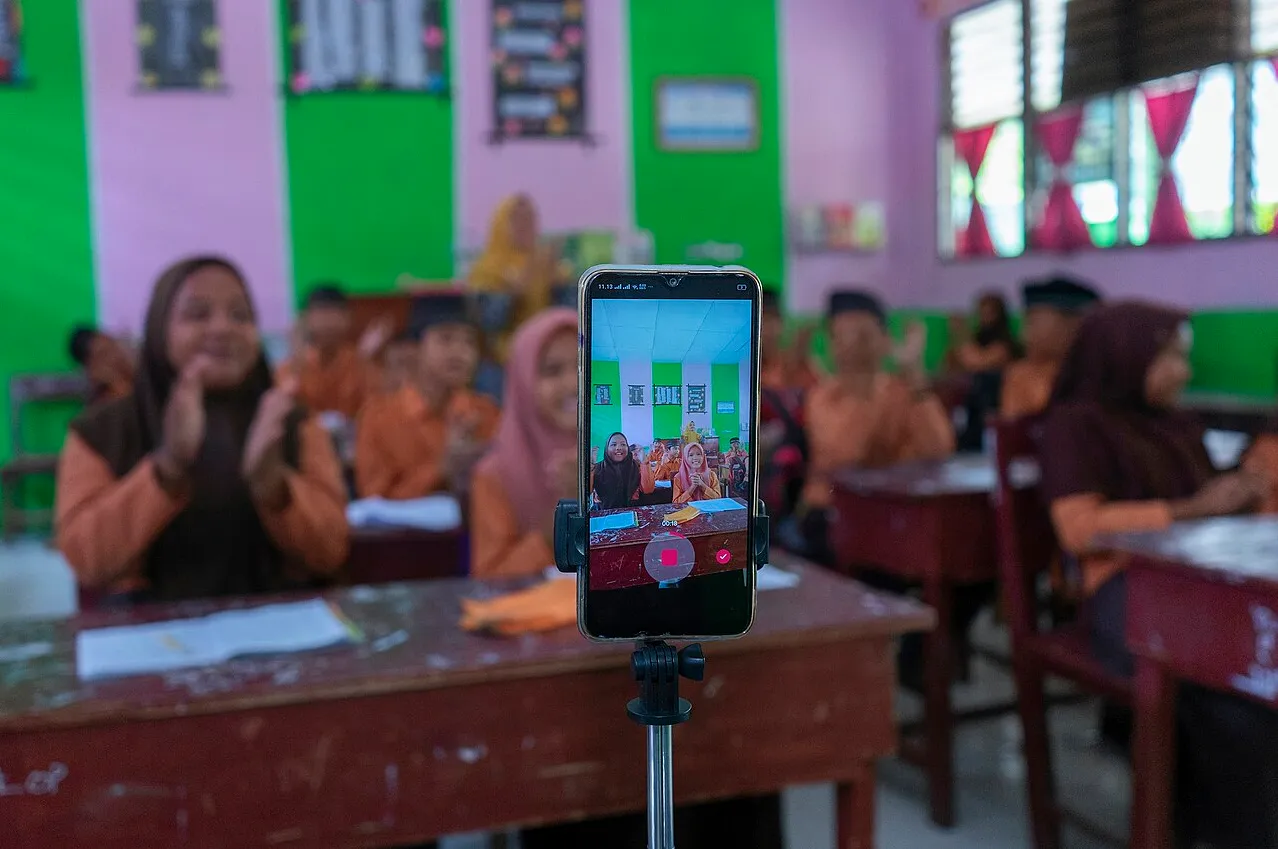
- Pupils in an Indonesian school classroom: Bisajunisa, CC BY-SA 4.0, via Wikimedia Commons
- Malioboro Street, Yogyakarta: Gunawan Kartapranata, CC BY-SA 3.0, via Wikimedia Commons
Get new jobs in Indonesia by email
One email a week with the jobs added since the last one. Free, with no account.
Nothing is sent until you open the link we email you. Choose a role, a pay level or daily emails
We use your address only to send the alerts you ask for, and every email has a one-click unsubscribe link. The privacy notice says how long we keep it, and the terms of use cover the alerts.
We check this guide again by February 2, 2027. Rules change, so confirm visa steps with the embassy and your school before you go. First published November 4, 2026. Spotted something out of date? Tell us. How we write these guides.