Teaching English in Brazil
Teach English in Brazil knowing what schools pay, how work papers go and what a month costs. Pay at language schools is modest, bilingual and international schools pay more, and a legal job means a sponsored work residence. Here's each step, plus schools if your kids come too.
AbroadPin team10 min read
Contents
Brazil at a glance
| Language school pay | USD 800 to 1,300 a month (International TEFL Academy, October 2026) [1] |
|---|---|
| Private lessons | USD 15 to 25 (BRL 85 to 140) an hour [1] |
| Work residence | Filed on MigranteWeb, fee R$ 168.13, decision due within 30 days of a complete file [4] |
| Length of stay | Up to 2 years on a work contract residence under RN 02/2017 [7] |
| Hiring seasons | February to March, and again in July and August [1] |
| Rent, one-bed central | R$ 2,233.33 in São Paulo vs R$ 3,335.71 in Rio de Janeiro (Numbeo) [9] [10] |
Who hires English teachers in Brazil
Brazil has a huge market for English, but it's spread across very different kinds of work. Most foreign teachers end up in one of these.
- Language schools. Franchise chains and small independent courses teaching kids, teens and adults. This is the usual way in, and the lowest paid.
- Private lessons and business English. Many teachers add private students, often adults learning for work. The International TEFL Academy calls Brazil "very much a break-even country" unless you add private or online classes on top of school hours (October 2026) [1].
- Online schools. Some teachers based in Brazil also teach online for companies such as Beyond English or Open English [1].
- Bilingual schools. Private schools that teach part of the day in English, often in early years and primary. Some belong to large groups. Centro Educacional Leonardo da Vinci in Vitória, for example, is part of Inspired Education and is hiring teachers for its bilingual program in preschool, kindergarten and first grade [2].
- International schools. Graded, The American School of São Paulo, is one example. Its openings page lists classroom posts such as a High School English Teacher for the current academic year [3]. These schools want qualified, experienced teachers, not new TEFL graduates.
- Universities and research. Brazil has separate residence rules for teaching and research at academic institutions, so this route works differently from a school job [5].
What it pays
Few employers publish pay in Brazil, so the table below uses what a TEFL course provider and one school's own posting put in writing [1] [2].
| Employer | Pay as the source gives it | Source |
|---|---|---|
| Language schools | USD 800 to 1,300 a month, more in Rio de Janeiro and São Paulo | ITA, October 2026 [1] |
| Private lessons | USD 15 to 25 (BRL 85 to 140) an hour | ITA, October 2026 [1] |
| Online teaching in general | USD 5 to 20 an hour | ITA, October 2026 [1] |
| Beyond English (online) | Starts at USD 17 per hour taught, for US teachers | ITA, October 2026 [1] |
| Open English (online) | Up to USD 15 an hour | ITA, October 2026 [1] |
| Bilingual school, Vitória (Leonardo da Vinci) | R$ 11,863.99 after taxes, on the school's salary scale; the posting doesn't state the period | Posting, 11 October 2026 [2] |
| International schools | Not published on the Graded openings page | Read 4 November 2026 [3] |
What sits behind those numbers:
- Language school pay is a living wage, not a savings plan. ITA puts a typical monthly budget at USD 800 to 1,300, the same as its language school pay range [1].
- Start-up money matters. ITA suggests having USD 1,200 to 2,000 for your first month, before the first pay day [1].
- Bilingual and international schools pay more but ask more. The Vitória posting wants a degree in education plus classroom experience, and it lists lunch and snacks at school as the perk [2]. It doesn't mention housing, flights or health cover [2].
- Ask whether pay is quoted before or after tax. The Vitória figure is after taxes, which is unusual, so compare like with like [2].
The minimum you need
Brazil's rules for a work residence come from the National Immigration Council (CNIg). For a job with an employment contract the Ministry of Justice lists Normative Resolution RN 02 of 1 December 2017 [5]. Schiefler Advocacia, a Brazilian law firm, reads its Article 2 as asking the employer to prove that your training fits the job, through any one of these (July 2019, updated February 2022) [7]:
- a master's, doctorate or higher degree in a field that fits the job [7];
- a postgraduate course of at least 360 hours, plus at least 1 year of experience in that area [7];
- a university degree plus at least 2 years of experience counted from graduation [7];
- technical training plus at least 3 years of experience [7];
- at least 12 years of schooling plus at least 4 years of experience, for a job that needs no technical or university training [7].
Those are the law's rules, and employers add their own. The Vitória bilingual program asks for 2 years of experience with a bachelor's degree or 1 year with a master's, plus 2 letters of recommendation [2]. Graded splits its applicants in two: people already allowed to work in Brazil apply through the school's local link, and people who need a Brazilian work visa apply through the Global Recruitment Collaborative or Search Associates, which Graded says are free for applicants [3].
You'll also need clean criminal record certificates from every place you've lived in the last 5 years, plus a signed declaration that you have no record in any country over the same period [7]. If your passport doesn't show your parents' names, the document that does must be legalised and translated by a sworn translator [7].
Work residence and visa, step by step
This is the order for a teacher hired from abroad.
- Find an employer that will sponsor you. When you're still abroad, the request for prior residence authorisation is made by the company or institution, not by you [6]. ITA says schools typically don't help with work papers and calls work visas very uncommon for English teachers [1].
- Gather your papers. Passport, degree, proof of experience, and criminal record certificates plus the declaration covering the last 5 years [7].
- Your employer files on MigranteWeb. The fee is R$ 168.13, paid by GRU [4]. A complete file is due a decision within 30 days, and one that needs corrections within 60 days, both extendable [4]. Filing needs a digital certificate, so employers often use a lawyer [7].
- Get the temporary work visa abroad. The Ministry of Justice says Brazilian consulates require the prior residence authorisation, save exceptions, before they issue a temporary visa for work [12]. This is the VITEM V, applied for at the consulate that serves you.
- Register with the Federal Police after you land. Registration gives you the national migration card, the CRNM, which costs R$ 204.77 [8]. Ask your employer for the deadline and book early.
A residence on a work contract runs for up to 2 years [7]. If you stay with the same employer after that, the employer adds a statement explaining why your work is still needed [7].
Cost of living: São Paulo and Rio de Janeiro
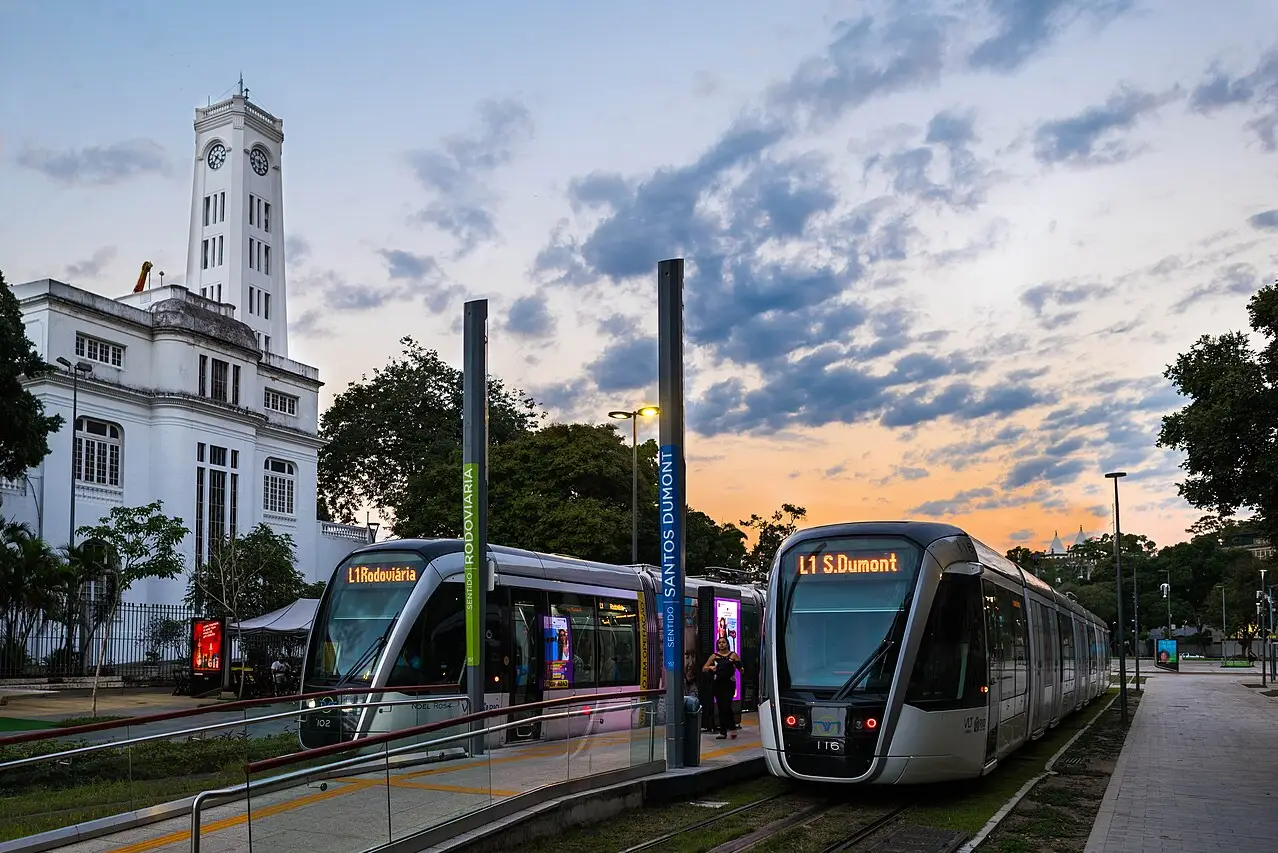
These figures are Numbeo's crowd-sourced prices. The São Paulo page was read on 4 November 2026 and counts 5,708 entries from the past 12 months, and the Rio de Janeiro page was last updated on 19 February 2026 [9] [10].
| Item | São Paulo | Rio de Janeiro |
|---|---|---|
| One-bed flat, centre, a month | R$ 2,233.33 | R$ 3,335.71 |
| One-bed flat, outside the centre, a month | R$ 1,564.71 | R$ 1,828.70 |
| Utilities for a mid-size flat, a month | R$ 337.30 | R$ 579.49 |
| Internet, a month | R$ 125.47 | R$ 105.15 |
| Cheap restaurant meal | R$ 30.00 | R$ 40.00 |
| Transport pass, a month | R$ 213.90 | R$ 282.00 |
On these numbers a central one-bed in Rio costs about R$ 1,100 a month more than one in São Paulo [9] [10]. Numbeo puts one person's monthly costs in Rio, before rent, at about R$ 3,215.80 [10]. The São Paulo page gives no single total, only item prices [9].
ITA quotes one Rio teacher's budget of USD 300 to 450 for rent and utilities, about USD 240 for food and about USD 120 for transport a month [1]. That's a shared or modest flat, so treat it as a floor.
When schools hire
ITA says the main time to arrive is February or March, after Carnaval, when many schools are closed [1]. A second, smaller hiring period runs in July and August [1].
Bilingual and international schools plan further ahead. The Vitória bilingual program was posted on 11 October 2026 for the 2027 year, with a closing date of 3 March 2027 [2]. Graded's openings page is headed with the 2026 to 2027 academic year, so its school year spans two calendar years [3]. If you want an international school post, start looking in the autumn before.
Red flags and staying legal
Working on a visit visa is a real risk in Brazil. ITA reports that since November 2017, employers can be fined BRL 1,000 to BRL 1 million and workers BRL 100 to BRL 10,000 [1]. It also says most nationalities need a tourist visa, which can be extended once for 90 days, with no more than 180 days a year in the country [1]. A tourist stay is not permission to work.
Watch for these:
- "You can work now and we'll sort the visa later." The work residence comes first, and the consulate wants the authorisation before the visa [12].
- No written contract. RN 02/2017 asks for an employment contract with set minimum clauses under Brazil's labour code, the CLT [7]. A school that won't put the job in writing can't sponsor you.
- Hourly pay with no minimum. Language school and private class income moves with your timetable, so ask for guaranteed hours in writing.
- Anyone offering to "fix" a criminal record certificate or degree. The file needs genuine certificates for the last 5 years and a signed declaration, and a file missing documents can be refused [7].
- A first salary that is far off. Bring enough for the first month; ITA suggests USD 1,200 to 2,000 [1].
When your paperwork is in order, have a look at open teaching jobs in Brazil.
Moving with kids
Brazil is a workable place to bring children, but yearly tuition at the São Paulo international schools below runs from R$ 75,000 to R$ 180,000. Plan the school before you sign [11].
School options
International schools teach in English and follow a foreign curriculum. International School Advisor's 2026 guide to São Paulo (posted 26 March 2026, reviewed September 2026) gives these yearly tuition ranges and says to confirm them with each school [11]:
| School | Curriculum | Yearly tuition, 2026 |
|---|---|---|
| St. Paul's School | British (IGCSE, A Level, IB) | R$ 110,000 to R$ 180,000 |
| Graded, The American School of São Paulo | American (AP, IB) | R$ 100,000 to R$ 160,000 |
| GIS, The International School of São Paulo | IB | R$ 90,000 to R$ 145,000 |
| Chapel School | American, IB | R$ 85,000 to R$ 130,000 |
| Pan American Christian Academy | American | R$ 75,000 to R$ 120,000 |
On top of tuition, the same guide lists a one-time enrolment fee of R$ 5,000 to R$ 25,000 and a building fund of R$ 10,000 to R$ 40,000, charged yearly or once [11]. School buses run R$ 800 to R$ 1,500 a month and lunches R$ 500 to R$ 1,200 a month [11]. For Rio de Janeiro, Numbeo's average for an international primary school is R$ 64,444.44 a year, against R$ 72,900.00 in São Paulo [9] [10].
Bilingual schools teach part of the day in English and the rest in Portuguese, so your child keeps up with English while learning the local language. They are the middle option between an international school and a local one; ask each for its fees directly.
Local schools teach in Portuguese and follow Brazil's own calendar. They suit young children best, or families staying several years.
Will your employer help with tuition?
Don't count on it at a language school. Neither the Vitória bilingual posting nor Graded's openings page mentions tuition for teachers' children [2] [3]. The generous packages in the guide above are corporate ones: it says full tuition is standard in oil and gas and at major banks, and that capped allowances commonly run R$ 80,000 to R$ 120,000 per child a year [11]. If a school offers a place for your child, get the number of children covered and the share of fees in your contract.
Visas for your spouse and children
Brazil grants residence for family reunion. The Ministry of Justice lists a spouse or partner, and the child of an immigrant who holds a residence authorisation, among the people who qualify [8]. Your family applies at the Federal Police, which registers them and issues each person a CRNM [8]. The file includes passports, two photos each, birth or marriage certificates proving the relationship, your own ID and a statement that you live in Brazil [8]. Criminal record certificates and a declaration covering the last 5 years are on the list too [8]. Where they apply, the fees are R$ 168.13 for the residence and R$ 204.77 for the card, and the ministry gives a general processing time of 130 to 180 days for residence requests [8].
Childcare
Numbeo puts a private full-day preschool at about R$ 1,838.89 a month in São Paulo and R$ 2,884.42 a month in Rio de Janeiro [9] [10].
Healthcare for the family
Brazil runs a public health system, the SUS, which the Ministry of Justice refers to on its residence page [8]. Most teaching posts don't promise private cover: the Vitória posting lists meals, not a health plan [2]. Ask each employer whether it provides a private health plan (plano de saúde) and whether your spouse and children can join it, and budget for family cover if they can't.
See jobs in Brazil
Sources and photo credits
- 1.International TEFL Academy, how much English teachers make in Brazil (1 October 2026)
- 2.Inspired Education careers, bilingual program teacher, preschool to first grade, Centro Educacional Leonardo da Vinci, Vitória (11 October 2026)
- 3.Graded, The American School of São Paulo, current openings (read 4 November 2026)
- 4.Gov.br, obtaining a residence authorisation for work for immigrants (updated 27 July 2026)
- 5.Ministry of Justice and Public Security, normative resolutions on labour immigration (read 4 November 2026)
- 6.Ministry of Justice and Public Security, labour migration questions and answers (read 4 November 2026)
- 7.Schiefler Advocacia, residence authorisation for work (5 July 2019, updated 22 February 2022)
- 8.Ministry of Justice and Public Security, residence authorisation, including family reunion (updated 23 July 2026)
- 9.Numbeo, cost of living in São Paulo (read 4 November 2026)
- 10.Numbeo, cost of living in Rio de Janeiro (updated 19 February 2026)
- 11.International School Advisor, international school fees in São Paulo in 2026 (26 March 2026, reviewed September 2026)
- 12.Ministry of Justice and Public Security, labour residence authorisation (read 4 November 2026)
Photos
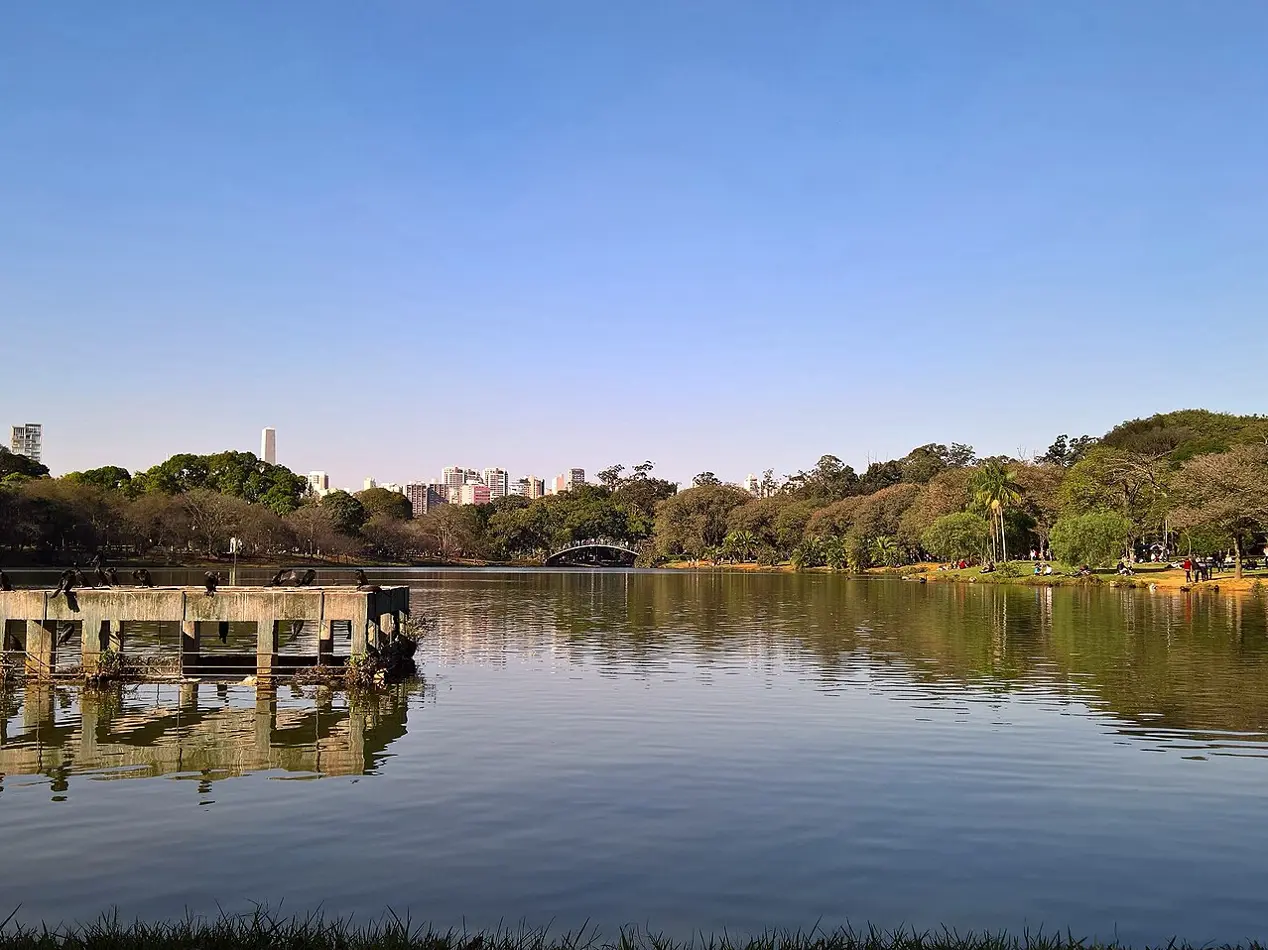
- The São Paulo skyline seen across the lake in Ibirapuera Park: Slyronit, CC BY-SA 4.0, via Wikimedia Commons
- VLT Carioca light rail trams at a stop in central Rio de Janeiro: Alex Ferro, Public domain, via Wikimedia Commons
Get new jobs in Brazil by email
One email a week with the jobs added since the last one. Free, with no account.
Nothing is sent until you open the link we email you. Choose a role, a pay level or daily emails
We use your address only to send the alerts you ask for, and every email has a one-click unsubscribe link. The privacy notice says how long we keep it, and the terms of use cover the alerts.
We check this guide again by February 2, 2027. Rules change, so confirm visa steps with the embassy and your school before you go. First published November 4, 2026. Spotted something out of date? Tell us. How we write these guides.