Getting a phone number and SIM in Brazil
Get a Brazilian number early so your bank, your school and everyday apps can reach you. Here's what to take to the store, what prepaid lines cost, and how to keep a number when you switch carriers.
AbroadPin team7 min read
Contents
Brazil at a glance
| Claro prepaid, 30 days | R$ 30.00 for 17GB plus 3GB of YouTube [1] |
|---|---|
| Without a CPF | Activate a Claro prepaid chip in a Claro store, with your passport [2] |
| eSIM at Claro | Free online, R$ 15.00 in a physical store [3] |
Most of Brazil runs on a mobile number. Your bank sends alerts to it, landlords and school coordinators message it, and plenty of shops and services ask for it at the till. Getting one is quick once you know which door to knock on, and the main catch for a new arrival is the CPF, Brazil's individual taxpayer number, which many sign-ups expect. This page covers a line for your first days, a line for the long term, what the plans cost, and what happens to the number you already have. For pay, work papers and employers, see the main guide to teaching in Brazil.
The three networks and how plans work
Brazil has three national mobile networks: Claro, Vivo and TIM. Each sells the same three kinds of line, and the Portuguese names are worth learning before you walk into a store:
- Pré-pago (prepaid). You top up (a recarga) and the credit buys a bundle of data and calls for a set number of days. No contract.
- Controle. A fixed monthly bill with a capped allowance, between prepaid and a full contract.
- Pós-pago (postpaid). A monthly contract billed after use, usually with the biggest allowances.
The figures below come from Claro's own pages, read on 5 November 2026 [1] [3]. We couldn't load Vivo's or TIM's sites that day, so compare their offers in a store or on their apps before you choose.
Your first days: a prepaid chip or an eSIM
For a teacher who has just landed, prepaid is the simple start. You can switch to Controle or a contract later without changing your number.
If you don't have a CPF yet
Claro's activation page is plain about this: a foreigner without a CPF has to activate a prepaid chip in one of Claro's own physical stores, and should bring a passport or RNE [2]. The page doesn't mention the newer CRNM card, so your passport is the safe document to carry [2]. Claro says the same for eSIM: foreign customers can activate a prepaid eSIM with a passport as their ID, but only in its physical stores [3].
So in practice:
- Find a Claro store, not a newsstand or reseller kiosk, since the passport route is store only [2].
- Take your passport and an unlocked phone.
- Ask for a prepaid chip or a prepaid eSIM, and top up there so the line works when you walk out.
If you already have a CPF
Some teachers get their CPF at a Brazilian consulate before they fly. With one, Claro lets you register a prepaid chip yourself: put the chip in, then start registration from the link sent by SMS or by dialling *552# [2]. You take a selfie to confirm who you are, and if the selfie can't be checked you photograph the front and back of your document [2]. If you didn't top up during activation, you have to add credit before the line works [2].
A visitor eSIM paid with a foreign card
Claro also sells Flex Pass, which it calls its digital plan for foreigners [4]. You download the Claro Flex app, choose "I'm an international visitor", and pay with an international credit card [4]. Claro says you need a temporary address in Brazil and your passport number, and no Brazilian ID [4]. The eSIM comes with a Brazilian number and is switched on within minutes, according to the page [4].
The plans are priced in US dollars with no commitment [4]. They come in 20GB, 30GB and 40GB sizes, run from 15 days up to 30 days, and include unlimited calls and SMS within Brazil [4]. The page we read didn't give the dollar price for each size, so check it in the app.
What a prepaid line costs
Claro's main prepaid offer is Prezão, where the top-up amount equals the days of validity, roughly R$ 1 a day [1]. These were the tiers on its page on 5 November 2026 [1]:
| Top-up | Data | Days |
|---|---|---|
| R$ 30.00 | 17GB plus 3GB for YouTube | 30 |
| R$ 25.00 | 10GB plus 2GB for YouTube | 25 |
| R$ 20.00 | 8GB plus 2GB for YouTube | 20 |
| R$ 15.00 | 5GB | 15 |
A few details from the same page [1]:
- WhatsApp is unlimited, with video calls, and the page also lists calls to anywhere in Brazil [1].
- The bundle renews by itself when your balance covers the next period [1].
- A low balance costs more per day. If your balance drops below R$ 15, Claro says it charges R$ 2.19 a day on any day you use a service [1].
- Digital top-ups earn short bonuses. Top-ups of R$ 20 or more made through Claro's digital channels add 1GB to 3GB, valid for 7 days [1].
- The FAQ and the table don't quite match. The FAQ lists 12GB for R$ 25 and 10GB for R$ 20, so confirm the allowance in the app before you top up [1].
If you'd rather have a fixed bill, Claro's home page advertised a Controle plan with 30GB, of which 10GB is a bonus, for R$ 59.90 a month [6].
eSIM or a physical chip
Claro offers eSIM on its prepaid, Controle, postpaid and Flex plans [3]. Getting one through its website or app is free, and getting one in a physical store costs R$ 15.00 [3]. Either way, you scan a QR code on the phone you'll use, ideally while it's on Wi-Fi [3]. Claro says a phone can hold up to two eSIMs, though only some models support that [3].
Bringing your phone from home is fine if it fits Claro's conditions. The eSIM page says a phone bought abroad can be used if it's compatible, not locked to a carrier, and approved by Anatel, the telecoms regulator [3]. Check your phone is unlocked before you leave, because your carrier at home is the one who can lift a lock.
Why a Brazilian number matters
- Your bank. Banks ask for a contact phone number to send account notifications; ZS Associados lists it as a required item when you open an account (March 2026) [7]. Your first weeks of banking go more smoothly with a number that works in Brazil.
- Pix. You can register your phone number as a Pix key, which lets people pay you without your bank details. Private students and flatmates will expect it.
- WhatsApp. Coordinators, landlords, doctors' offices and deliveries mostly use it. A Brazilian number makes you easy to add and easy to find.
- Deliveries and sign-ups. Shopping, ride and food apps verify you with a code by SMS, and couriers call when they can't find the door.
Moving to a contract and switching carriers
Once your CPF and CRNM are sorted, you can move to Controle or postpaid with your current carrier, or take your number to another one. Keeping the number is called portabilidade. Here's how Claro describes it [5]:
- Pick a plan and choose to bring your number, online, in a store, by phone or by WhatsApp [5].
- Reply within 24 hours to the confirmation SMS sent from 7678; the move only starts after you confirm, a step required since 24 April 2023 [5].
- Claro posts the new chip free, within 5 days of approval, and it works on a temporary number at first [5].
- The number moves within 72 hours of activating the new chip [5].
The CPF on the request must match the CPF your current carrier has on file [5]. So if you started on a passport-only line, ask your carrier whether it can add your CPF to the line before you try to move it. Make sure the old line isn't cancelled or suspended, and check for loyalty fines in your old contract [5]. Claro also says changing to a new number on its prepaid line needs the line to have been active for more than 10 days [1].
Keeping your home number
Your home bank, tax account and email may all send sign-in codes by text. If that number goes dead, you can be locked out at a bad time. A few steps help:
- Ask your home carrier about a low-cost plan that keeps the number live, and what an incoming text costs while you're abroad.
- Use both lines on one phone. With a dual-SIM or dual-eSIM phone you can keep the home line for texts and use the Brazilian line for data [3].
- Switch codes to an authenticator app where your accounts allow it, before you fly.
A short checklist
- Before you fly, check your phone is unlocked and supports eSIM, and decide what to do with your home number.
- On arrival, take your passport to a Claro store for a prepaid line, or buy a Flex Pass eSIM in the app [2] [4].
- Top up and give the number to your school, your landlord and your bank.
- Once you have a CPF, add it to your line, then move to Controle or a contract if you want one [5].
Settled in and planning your next year? Browse the open teaching jobs in Brazil.
See jobs in Brazil
Sources and photo credits
- 1.Claro, Prezão prepaid offers (read 5 November 2026)
- 2.Claro, how to activate and register a prepaid chip (read 5 November 2026)
- 3.Claro, eSIM (read 5 November 2026)
- 4.Claro, Flex Pass for international visitors (read 5 November 2026)
- 5.Claro, number portability (read 5 November 2026)
- 6.Claro, home page with the Controle offer (read 5 November 2026)
- 7.ZS Associados, bank accounts in Brazil for foreigners: requirements (1 March 2026)
Photos
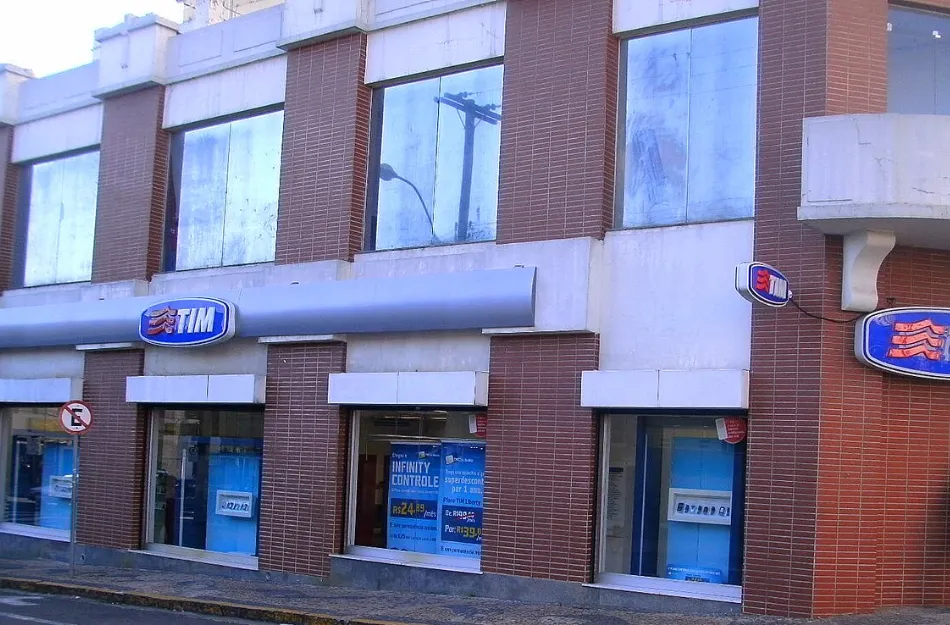
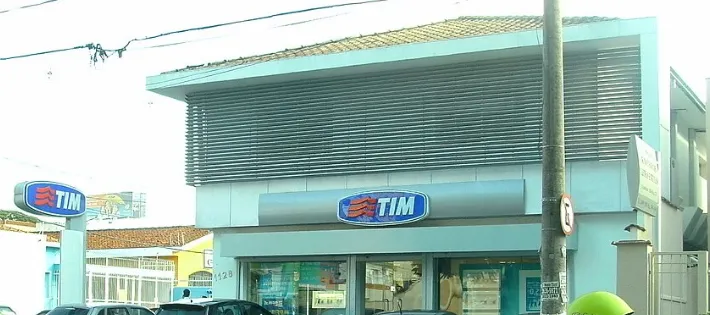
- A TIM store in Marília, São Paulo state.: Renato Patinhas, CC BY 3.0, via Wikimedia Commons
- A TIM store in Ribeirão Preto, São Paulo state.: Renato Patinhas, CC BY 3.0, via Wikimedia Commons
Get new jobs in Brazil by email
One email a week with the jobs added since the last one. Free, with no account.
Nothing is sent until you open the link we email you. Choose a role, a pay level or daily emails
We use your address only to send the alerts you ask for, and every email has a one-click unsubscribe link. The privacy notice says how long we keep it, and the terms of use cover the alerts.
We check this guide again by February 3, 2027. Rules change, so confirm visa steps with the embassy and your school before you go. First published November 5, 2026. Spotted something out of date? Tell us. How we write these guides.