Finding an apartment in Brazil
Rent a flat in Brazil without a local guarantor or a surprise bill. Here's what São Paulo and Rio cost, which guarantees landlords accept, and what the tenancy law says about deposits and leaving early.
AbroadPin team8 min read
Contents
Renting in Brazil has one hurdle that surprises most new teachers: the guarantee. Landlords want security beyond the first month's rent, and the classic form is a fiador, a local guarantor who owns property, which a newcomer rarely has. The good news is that the law offers other routes, and some rental platforms skip the guarantee altogether. This page covers where to live first, where to look, what rent costs in São Paulo and Rio de Janeiro, how guarantees and deposits work, and what to check before you sign. For pay, work papers and employers, see the main guide to teaching in Brazil.
School housing or renting yourself
Expect to find your own place. The International TEFL Academy's guide to teacher pay in Brazil doesn't mention schools providing housing or a housing allowance, and it lists a security deposit, the first month's rent and apartment supplies among your start-up costs [8]. Ask your employer anyway, in writing, before you accept: an international school may help, and a colleague may know a building with a free unit.
Sharing is common at language school pay. One Rio de Janeiro teacher quoted by ITA paid USD 300 to 450 a month in rent and utilities for a room in an apartment with a few roommates [8]. Another teacher in São Paulo lived with a host family to keep costs down [8].
For your first weeks, a short furnished let gives you time to learn the city and your commute. Brazil's tenancy law treats a stay of up to 90 days, furnished or not, as a holiday or temporary let (locação para temporada) [3]. For these short lets the landlord may take all the rent up front, plus a guarantee [3]. That rule is specific to short stays, so don't accept the same terms on a long lease (see below).
What kind of home
Expat Arrivals describes three main types in São Paulo [5]:
- Prédios. Apartment blocks of 10 to 30 storeys in central areas, with good security but limited space [5].
- Condomínios. Fenced blocks with shared facilities such as a pool, gym and outdoor area, usually in middle and upper class districts and popular with families [5].
- Houses. Rare in central areas and mostly found in the suburbs [5].
Most rentals in São Paulo come unfurnished, and across Brazil some even exclude light fittings and kitchen appliances [4] [5]. Ask exactly what stays, and budget for a fridge and stove if they're missing.
Where to look
- Rental platforms. QuintoAndar lists rentals in São Paulo, Rio de Janeiro, Belo Horizonte, Porto Alegre, Campinas and several other cities in São Paulo state, with visits booked online and contracts signed digitally [9]. It advertises renting with no guarantor and no cash deposit [9].
- Estate agents (imobiliárias). Agents know the neighbourhoods and sometimes hear of flats before they're advertised [5]. Under the tenancy law, administration and intermediation fees are the landlord's to pay, so ask up front what, if anything, you'll be charged [3].
- Word of mouth. Colleagues and the teacher you're replacing are often the quickest lead [5].
Many agents and landlords don't speak English, and Expat Arrivals suggests bringing a Portuguese speaker to viewings [4]. Rents are often negotiable, so it's worth asking, and Expat Arrivals puts the usual deposit at one to three months' rent [4].
What rent costs in São Paulo and Rio de Janeiro
These are Numbeo's crowd-sourced monthly averages. Both pages were last updated on 4 November 2026, with 1,718 entries from the past 12 months for São Paulo and 1,034 for Rio de Janeiro [1] [2].
| Monthly rent | São Paulo | Rio de Janeiro |
|---|---|---|
| 1-bedroom, city centre | R$ 3,266.67 | R$ 4,183.33 |
| 1-bedroom, outside the centre | R$ 2,141.67 | R$ 2,714.38 |
| 3-bedroom, city centre | R$ 7,443.53 | R$ 7,832.00 |
| 3-bedroom, outside the centre | R$ 5,130.44 | R$ 4,041.67 |
The spread behind each average is wide. A central one-bedroom ran from R$ 2,500 to R$ 5,000 in São Paulo and from R$ 2,500 to R$ 6,000 in Rio [1] [2]. Leaving the centre cuts the average one-bedroom by about a third in both cities [1] [2].
The guarantee: fiador, deposit or insurance
Brazil's tenancy law, the Lei do Inquilinato (Law 8.245 of 1991), lets a landlord ask for one of these guarantees [3]:
- Caução (deposit). A cash deposit can't be more than 3 months' rent, and the law says it goes into a savings account, with the returns going to you when it's paid back [3]. QuintoAndar says the usual amount is three months' rent [6].
- Fiança (a guarantor). A fiador agrees to pay if you don't. QuintoAndar says agencies typically want the guarantor's income to be three times the rent plus charges, which many people find hard to meet [6].
- Seguro fiança (rent guarantee insurance). An insurer covers the landlord. QuintoAndar puts the cost at about one and a half months' rent, sometimes payable in instalments, and you don't get it back [6].
- Investment fund shares. The law also allows assigning units of an investment fund to the landlord [3].
Two protections are worth knowing. A landlord may not ask for more than one type of guarantee on the same lease, and may not charge rent in advance except on a short let or a lease with no guarantee at all [3]. On a lease with no guarantee, the law lets the landlord ask for each month's rent by the sixth working day of that month [3].
Platforms that drop the guarantee run their own checks instead. QuintoAndar asks for a gross monthly income of 2.5 times the rent plus charges, which up to 4 people can combine, and no record with the SPC or Serasa credit bureaus [6].
What a lease asks of foreigners
Expect to show:
- Your CPF. Expat Arrivals says foreigners need one to sign a lease [4].
- Identity papers. QuintoAndar asks foreigners for their RNE, the older migration ID, alongside a CPF [6]. Ask whether your newer CRNM card is accepted. Expat Arrivals mentions copies of your passport and work permit too [5].
- Proof of income. QuintoAndar asks for the last 3 months [6]. If you've just arrived, your employment contract may be all you have, so ask the landlord or platform what they'll accept.
Then read the terms:
- Length. QuintoAndar says 30 months is the most common term for a home lease [7]. A written lease of 30 months or more ends at its term without notice [3].
- Rent rises. Rent is usually adjusted once a year, most often by the IPCA inflation index [7]. Check which index your contract names.
- Leaving early. The landlord can't take the flat back during the term, but you can leave by paying the penalty in the contract, scaled to the time you've already served [3]. QuintoAndar says this penalty is generally three months' rent, reduced in proportion to the months completed [7].
- If your employer moves you. You owe no penalty if your employer transfers you to work in another place, provided you give the landlord at least 30 days' written notice [3]. Keep that clause in mind if you might change campus or city.
- Receipts. The landlord must give you itemised receipts for what you pay [3].
Condo fees, IPTU and utilities
The rent is rarely the whole bill. QuintoAndar says the contract sets out what the tenant pays, such as IPTU (the municipal property tax), condomínio fees and fire insurance [7]. The law puts the building's ordinary running costs on the tenant and its extraordinary costs, such as major works, on the landlord [3]. Electricity and other utilities are usually on top of rent too [4].
| Monthly cost | São Paulo | Rio de Janeiro |
|---|---|---|
| Basic utilities, 915 sq ft flat | R$ 508.60 | R$ 684.42 |
| Broadband, 60 Mbps or more, unlimited | R$ 106.36 | R$ 115.00 |
Those are Numbeo's averages for electricity, heating, cooling, water and rubbish, and for home internet [1] [2]. Before you sign:
- Ask for the latest condomínio bill and the yearly IPTU amount, and add both to the rent.
- Ask whose name the electricity and water accounts are in, and read each meter on move-in day.
- Ask whether the building already has fibre, and test the speed if you'll teach online.
Scams and problems to avoid
- Never pay before you've seen the flat. Expat Arrivals advises against committing to a rental or paying any money before visiting in person [4].
- Check who you're paying. Pay the person or company named in the lease, and get an itemised receipt every time [3].
- Watch for a doubled guarantee. A landlord asking for both a guarantor and a deposit on one lease is asking for more than the law allows [3].
- Watch for rent in advance. On a long lease with a guarantee, a demand for months of rent up front isn't allowed [3].
- Record the condition. QuintoAndar says the contract should record the state of the flat at handover, to avoid problems when you return it [7]. Take dated photos of every room as well.
With kids
Families usually need three bedrooms. On Numbeo's averages, that's about R$ 5,130.44 a month outside the centre in São Paulo and R$ 4,041.67 in Rio, rising to R$ 7,443.53 and R$ 7,832.00 in the centres [1] [2]. Expat Arrivals points families to condomínios for their shared facilities, and suggests weighing commute times and the school run, since traffic is heavy [4] [5]. Choose the school first, then look for a flat near it.
Your first months, step by step
- Ask your employer in writing whether it helps with housing [8].
- Book a short furnished let of up to 90 days while you look [3].
- Get your CPF and gather your ID and proof of income [4] [6].
- Decide on a guarantee: a deposit of up to 3 months' rent, insurance, or a platform that needs none [3] [6].
- Read the lease for the term, the yearly rent index and the early exit penalty [7].
- Photograph the flat and the meters on move-in day, and keep every receipt [3].
Once you know the city you'd like to live in, browse teaching jobs in Brazil.
See jobs in Brazil
Sources and photo credits
- 1.Numbeo, cost of living in São Paulo (last updated 4 November 2026, read 5 November 2026)
- 2.Numbeo, cost of living in Rio de Janeiro (last updated 4 November 2026, read 5 November 2026)
- 3.Chamber of Deputies of Brazil, Law 8.245 of 18 October 1991, the tenancy law, updated text (latest amendment Law 12.744 of 19 December 2012, read 5 November 2026)
- 4.Expat Arrivals, accommodation in Brazil (undated, read 5 November 2026)
- 5.Expat Arrivals, accommodation in São Paulo (undated, read 5 November 2026)
- 6.QuintoAndar, renting without a guarantor (updated 16 April 2026)
- 7.QuintoAndar, the rental contract (updated 11 February 2026)
- 8.International TEFL Academy, how much English teachers make in Brazil (updated 1 October 2026)
- 9.QuintoAndar, home page (read 5 November 2026)
Photos
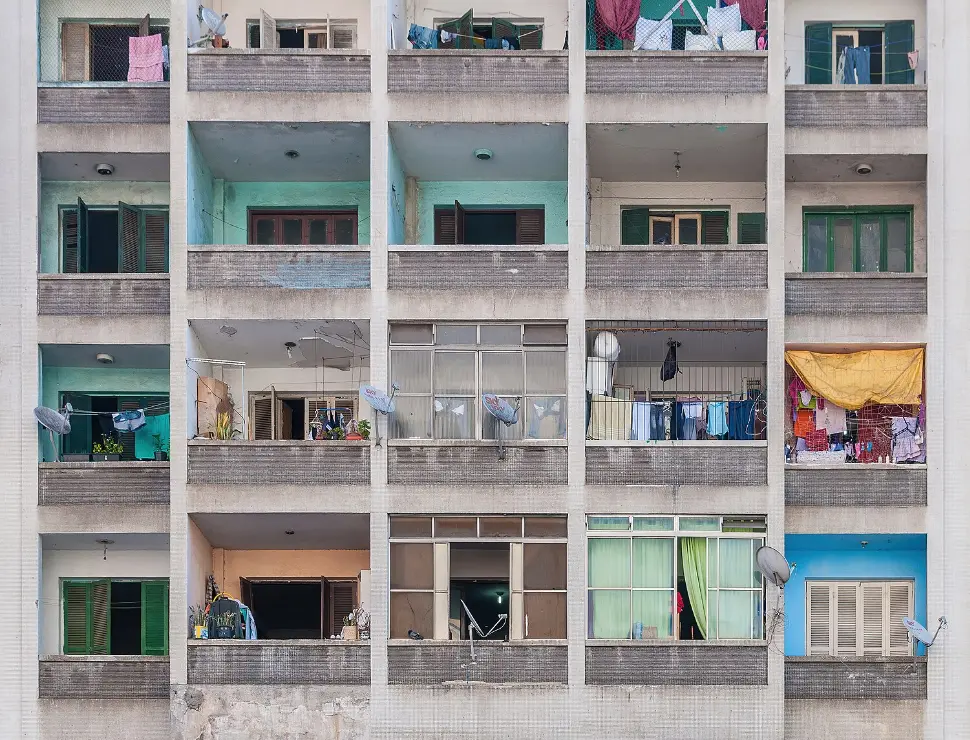
- Balconies on an older residential block in central São Paulo.: Wilfredor, CC BY-SA 4.0, via Wikimedia Commons
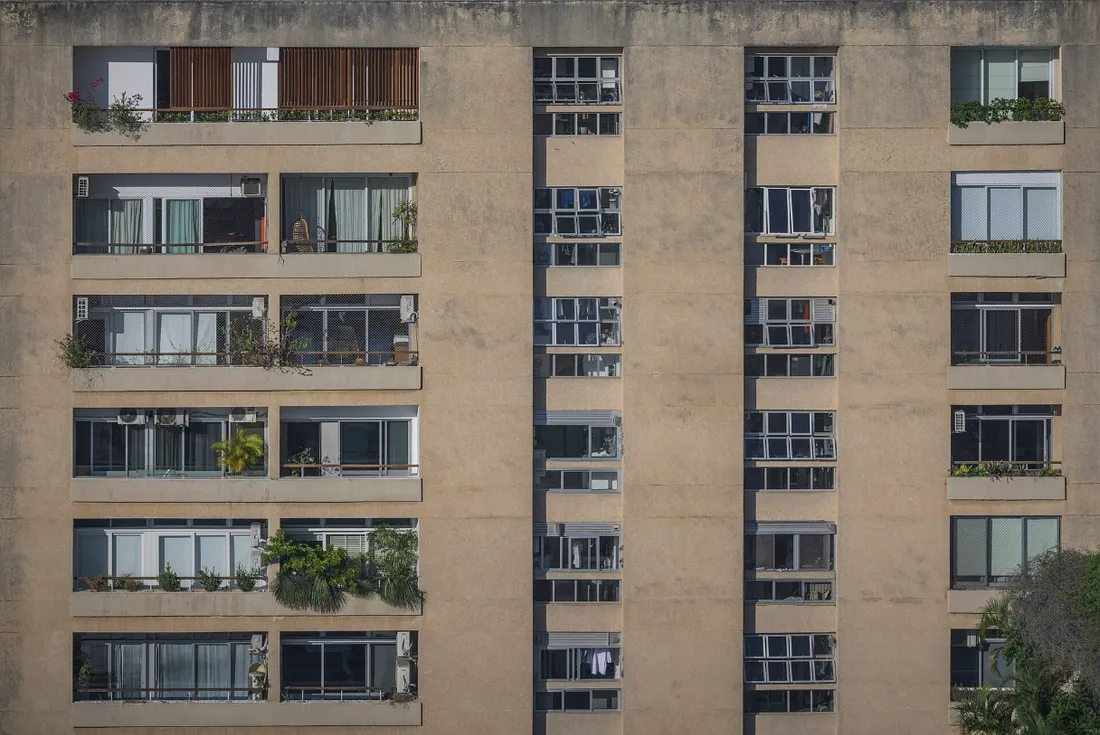
- An apartment building in Rio de Janeiro.: Wilfredor, CC0, via Wikimedia Commons
Get new jobs in Brazil by email
One email a week with the jobs added since the last one. Free, with no account.
Nothing is sent until you open the link we email you. Choose a role, a pay level or daily emails
We use your address only to send the alerts you ask for, and every email has a one-click unsubscribe link. The privacy notice says how long we keep it, and the terms of use cover the alerts.
We check this guide again by February 3, 2027. Rules change, so confirm visa steps with the embassy and your school before you go. First published November 5, 2026. Spotted something out of date? Tell us. How we write these guides.