Opening a bank account in China
Get your salary into a local account and your phone wallet working in your first weeks in China. Here's what banks ask for, how long it takes and what it costs.
AbroadPin team6 min read
Contents
A Chinese bank account is one of the first things you'll sort out after you land. Your school will almost certainly pay your salary into it, and once you have a local bank card, linking it to Alipay or WeChat Pay makes daily life a lot simpler. The process is done at a counter, in person, with paper forms, so it helps to turn up with everything ready.
This article covers the money side of settling in. For the jobs, the visa and what schools pay, see the main guide to teaching in China.
Which bank to choose
Harris Sliwoski, a law firm that writes about China, names Bank of China, Industrial and Commercial Bank of China (ICBC) and China Construction Bank as the major state-owned banks [5]. Shanghai's government advises expats to pick a larger bank with plenty of branches, and lists those three plus Agricultural Bank of China and Bank of Shanghai [1]. The State Council's English site also says foreigners can open accounts with a passport or other valid ID at major banks such as ICBC [2].
A few practical things decide it for most teachers:
- The bank your school uses. If your school pays its staff through one bank, opening there can make your first payday simpler. Ask HR before you go.
- A branch near home or work. You'll be back at the counter for things the app can't do, so close beats clever.
- Foreign banks. HSBC China says overseas visitors can book an account opening appointment through its online channels and then verify their identity at a branch [3].
Smaller regional banks sometimes offer better rates or more personal service, according to Harris Sliwoski [5].
What to bring
Requirements vary from bank to bank and even from branch to branch [1][5]. Shanghai's government guide says expats can generally use a valid passport, and lists the papers some banks ask for on top [1]:
- Your passport, with a visa or permit the bank accepts. The Shanghai guide names employment, residence, talent and trade visas among them [1].
- A Chinese mobile number registered in your real name. The bank keeps it on file as your contact number [1]. Get your SIM before you go to the bank.
- A work certificate from your employer. Some banks ask for it [1].
- Proof of address, such as your lease. Some banks ask for it [1][5].
- A tax identification number, if you have one [1].
You'll also sign a declaration of your tax residency status, which the bank uses to decide whether you count as a non-resident for tax purposes [1]. Some banks want a first deposit to activate the account [1][5].
Make sure the name on every form matches your passport exactly, in the same order. Harris Sliwoski describes a case where a name mismatch held up access to a salary for several months [5].
Ask your school's HR team when new teachers usually go to the bank, and whether someone can come with you. A Chinese speaker at the counter helps a lot if your Chinese is limited.
How the visit works
Go on a weekday during normal business hours [1]. Shanghai's government notes that opening an account as an expat can only be done with staff help at the counter, and the process is still fairly involved [1].
- Take a queue ticket and tell the staff you want to open a personal account with a debit card.
- Hand over your passport and papers, and fill in the application and the tax residency form.
- Confirm your real-name phone number with the staff.
- Set a PIN for the card.
- Ask the staff to set up mobile banking on your phone before you leave, and to turn on online payments for the card.
How long it takes depends on the bank. HSBC China says that once the details are approved, the account can be opened on the day of arrival [3]. Harris Sliwoski says the process typically takes one to two weeks and can run longer when there are delays [5]. A June 2024 story from the Beijing Foreign Affairs Office says Bank of Beijing has cut the extra ID papers it used to ask foreigners for, and one visitor in it got a card with just a passport [4].
Fees
The big banks don't publish one simple price list for foreigners, so ask at the counter. Harris Sliwoski gives these typical figures [5]:
- Account maintenance fees are often waived if you keep a minimum balance [5].
- Banks generally charge around RMB 20 to 30 per ATM withdrawal for international cardholders [5].
- International transfers typically cost 0.1% to 0.5% of the amount, with a minimum of around RMB 100 [5].
- Converting between currencies can add more charges [5].
Ask for the bank's fee sheet when you open the account, and check whether your home bank also charges for foreign withdrawals.
Alipay and WeChat Pay
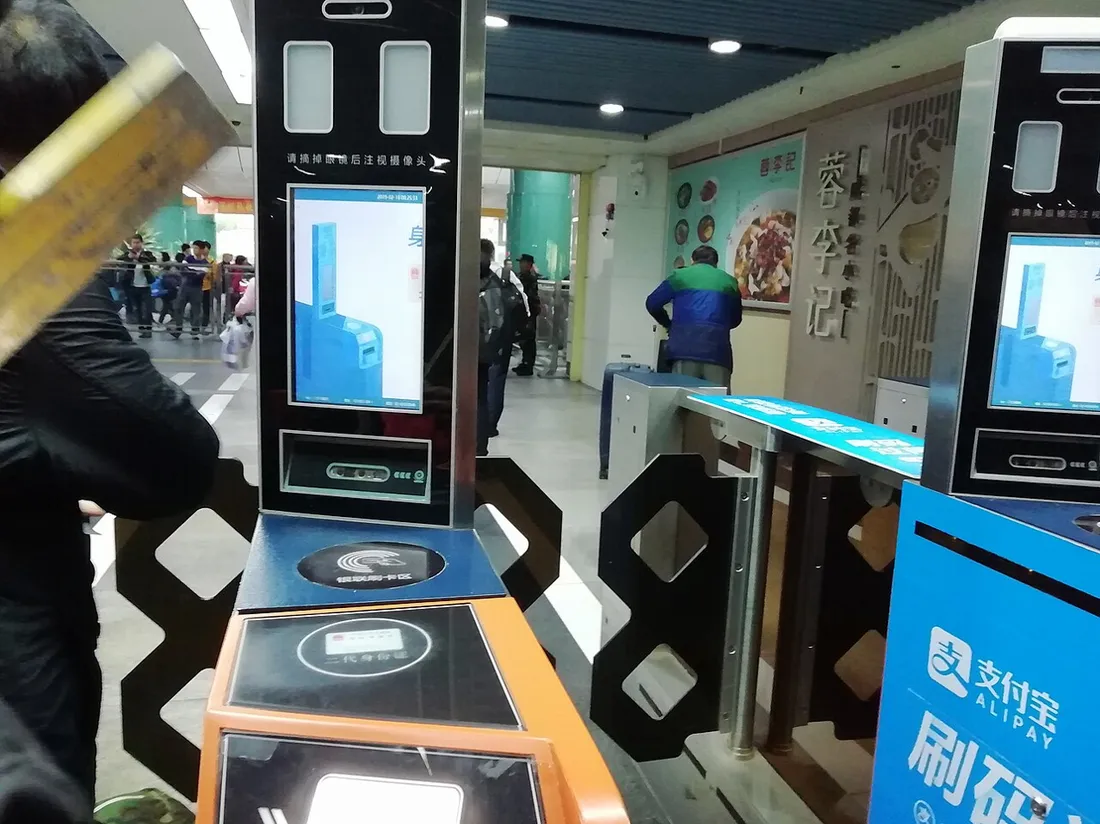
Alipay and WeChat Pay (called Weixin Pay in official sources) handle most day-to-day spending in China [5]. Linking your new account to them makes paying from your phone simpler [5].
You don't have to wait for the bank. Foreigners can sign up with a foreign or Chinese phone number [7]. Both apps accept international cards with the Visa, Mastercard, JCB, Diners Club and Discover logos, and the Ministry of Commerce adds American Express [7][8]. Your home bank has to approve the link, and some refuse [7][8].
The rules for international cards in the apps are [6][7]:
- A limit of USD 5,000 per transaction and USD 50,000 a year for overseas visitors with linked international cards, according to Shanghai's government in September 2026 [6].
- In February 2025, China Daily reported no extra fee for payments up to 200 yuan and a fee of 3% of the amount above that [7]. Shanghai's government now says fees may apply and to check the fee the app shows before you confirm [6].
Once your Chinese debit card arrives, you can add it to both apps. Chinese bank cards need the UnionPay logo to be linked [7], and Shanghai's guide says a local debit card connects with WeChat Pay and Alipay and lets you shop on Chinese websites [1]. Adding a card means the card's issuer verifies it [8].
Getting paid before the account is open
Your first payday can come before your account is ready, especially if your permit paperwork is slow. A few steps keep you covered:
- Ask HR how the first month is paid. Some schools wait until the account is open, others pay the first month another way. Get the answer in writing so there are no surprises.
- Bring a working home card. Tell your bank you'll be in China. HSBC China and Bank of Beijing both say their ATMs take foreign cards, and Bank of Beijing names Visa and Mastercard [3][4].
- Set up Alipay or WeChat Pay with that card on day one. It works for everyday spending while you wait, within the limits above [6][7].
- Carry some cash. The State Council says cash is still used a lot by foreigners and that the number of ATMs in China should not be reduced [2]. HSBC China and Bank of Beijing both offer small-note yuan for foreign customers [3][4].
Sending money home
If you plan to send savings home, ask your bank what it needs before your first transfer, since rules and paperwork vary. Harris Sliwoski notes an annual limit of USD 50,000 on foreign currency exchange for each person, and says larger transfers may need approval from the State Administration of Foreign Exchange [5]. Banks sometimes hold up large international transfers, so leave time [5].
Ready to look at schools? See the current openings on the China jobs page.
See jobs in China
- Beijing, International school positionsBeijing · $4,500 to $5,250 a month
- High School teaching PositionBeijing · $3,750 to $5,000 a month
- High school drama teacherHangzhou · $3,750 to $5,000 a month
- High school Economics teacherBeijing · $3,750 to $5,000 a month
- English Teacher, English for Science and Engineering (SWJTU-Leeds Joint School, Chengdu)Chengdu · $2,252 to $3,127 a month
By city: Teaching jobs in Shanghai · Teaching jobs in Beijing · Teaching jobs in Hangzhou · Teaching jobs in Chengdu
Sources and photo credits
- 1.Shanghai Municipal People's Government, Guide to opening a bank account (15 December 2023, updated 22 August 2025)
- 2.State Council of China, Payment guide seen as assisting opening-up (16 March 2024)
- 3.HSBC Bank (China), Instructions for services for foreigners entering China (25 March 2024)
- 4.Beijing Municipal Foreign Affairs Office, Bank of Beijing takes multiple measures to upgrade payment services (6 June 2024)
- 5.Harris Sliwoski, A guide to opening a bank account in China as a foreigner (29 April 2024, updated 1 October 2026)
- 6.Shanghai Municipal People's Government, How to use mobile payments in Shanghai (20 September 2026)
- 7.China Daily, Using foreign bank cards for mobile payments in China (25 February 2025)
- 8.Ministry of Commerce, Mobile payment, in A guide to working and living in China as business expatriates (24 April 2024)
Photos
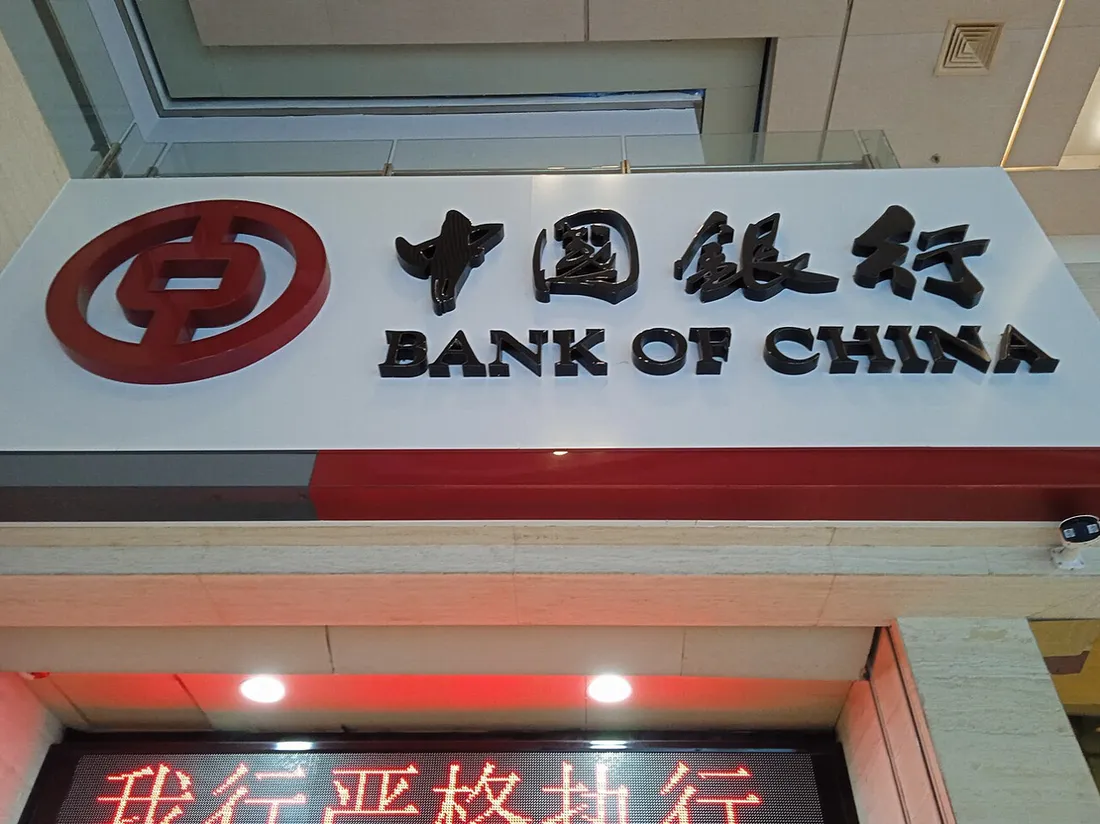
- The sign over a Bank of China branch in Guangzhou: 中少, CC BY-SA 4.0, via Wikimedia Commons
- Exit gates at Shenzhen Railway Station with an Alipay code scanner: Shwangtianyuan, CC BY-SA 4.0, via Wikimedia Commons
Get new jobs in China by email
One email a week with the jobs added since the last one. Free, with no account.
Nothing is sent until you open the link we email you. Choose a role, a pay level or daily emails
We use your address only to send the alerts you ask for, and every email has a one-click unsubscribe link. The privacy notice says how long we keep it, and the terms of use cover the alerts.
We check this guide again by February 2, 2027. Rules change, so confirm visa steps with the embassy and your school before you go. First published November 4, 2026. Spotted something out of date? Tell us. How we write these guides.