Getting a phone number and SIM in China
Get a working Chinese number in your first days, so your bank, payment apps and deliveries all work. Here's what carriers ask for and what plans cost.
AbroadPin team7 min read
Contents
A Chinese phone number is one of the first things to sort out after you land, and it's worth doing before almost anything else. The bank, your payment apps, the delivery driver and your school's group chats all expect one. The good news is that it's quick once you're at the right counter with the right papers.
This article is about getting connected. For the jobs, the visa and what schools pay, see the main guide to teaching in China.
Why a local number matters
Many apps in China need a phone number to register, so a Shanghai government guide for international students suggests you don't hand yours out to everyone [7]. In daily life, a local number is what you'll use for:
- linking Alipay and WeChat Pay, booking DiDi rides, ordering food on Meituan or Ele.me, and checking in at hotels [10]
- the text codes apps send when you sign up or log in [10]
- your bank, which links your account to your number [10]
That last one is why the SIM comes before the bank visit. Our guide to opening a bank account in China has the rest of that story. Trip.com also notes that virtual numbers only receive text codes and won't link to Alipay, WeChat Pay or banks [10].
The carriers
There are three big carriers, China Mobile, China Unicom and China Telecom, plus a fourth, China Broadnet [3][7]. Trip.com's quick take, as of January 2026 [10]:
- China Mobile has the widest coverage across the country [10].
- China Unicom has the cheapest prepaid plans [10].
- China Telecom has strong 5G in the south, around Guangzhou and Shenzhen [10].
A Mandarin lesson on Shanghai's government portal calls China Unicom probably the best fit for foreign visitors, because its network works with more foreign phones [9]. Whichever you pick, your phone must not be locked to your home carrier, and it has to support 3G or higher networks in China [7][9].
Before you fly
Two things are worth checking while you're still at home.
- Ask about a number before arrival. In Shanghai, foreigners holding a Notification Letter of Foreigner's Work Permit can apply for a number before they arrive, through an arrangement between the city's foreign experts affairs bureau and China Telecom's Shanghai branch [8]. Ask your school whether your city offers something similar.
- Know the online option. Shanghai's government guide describes Nihao Mobile, a company that sells SIMs for the three main carriers with English service. You order in its app and activate by sending photos of your passport photo page, visa page and entry stamp page, plus a video selfie. Orders finished before 6 pm on working days ship the same day, with free delivery within 48 hours [1].
Buying a SIM when you land
You can get connected at the airport, but you don't have to. Trip.com says airport kiosks charge a little more than city stores [10].
In Shanghai, China Mobile has an outlet near the international arrivals exit of Terminal 2 at Pudong airport. It offers a free one-day SIM with 3 GB to get you started, plus short-term cards for 7, 15 or 30 days [5]. China Telecom launched short-term cards for foreigners in Shanghai in March 2024, at 23 outlets across the city's 16 districts [4]:
| China Telecom short-term card, Shanghai (March 2024) | Price |
|---|---|
| 7 days | 85 yuan |
| 15 days | 125 yuan |
| 30 days | 195 yuan |
These prices are from the city's announcement at launch [4]. A short-term card covers your first weeks while the work permit and residence permit are processed. After that, a long-term plan on your own number makes more sense.
The ID rules for registering a number
Every mobile number in China needs real-name authentication [7]. In practice that means:
- Your passport, or a Foreign Permanent Resident ID Card if you have one [2]. Trip.com says you also need a current Chinese visa in the passport, and that the store scans the passport and takes your photo [10].
- A passport with time left on it. The Shanghai portal's Mandarin lesson includes the line "valid for 6+ months" among the things to check [9].
- A quick call first. Shenzhen's foreign affairs office suggests ringing the store to confirm what to bring [3].
Stay away from SIMs that skip the ID step. City News Service says supermarkets generally don't sell SIM cards and that cards sold at groceries or online stores may be counterfeit [8]. The Shanghai students' guide warns that online services offering to register a SIM for you may leave you with a card that doesn't work [7]. Trip.com says "no-ID" SIMs from street sellers get cut off within days [10].
At the counter
- Find a carrier store, called a 营业厅 (yíng yè tīng). Shenzhen's guide suggests searching 中国移动 in a map app to find a China Mobile one [3][9].
- Take a ticket and wait: 取号排队 (qǔ hào pái duì) [9].
- Say 我要办SIM卡 (wǒ yào bàn SIM kǎ), "I'd like to sign up for a SIM card," then pick a package (套餐, tào cān) or point to one in the brochure [1][9].
- Hand over your passport and say which SIM size you need: normal, micro or nano [1].
- Fill in the forms. The SIM can be activated right there, or later by phone or in the carrier's app [8].
If your Chinese is limited, bring someone who speaks it, since staff English can be thin [8]. A downtown store is more likely to handle foreign passports than a small branch [9]. In Shanghai's Hongqiao area, the One-Stop Service Center for Overseas Talents works with China Telecom: you book online, then bring your passport or permanent residence permit, and choose a long-term or short-term plan [6].
What plans cost
Long-term prices change often, and the government guides tell you to check each carrier's own website for current tariffs [7]. As a rough guide, Trip.com gave these monthly ranges in January 2026 [10]:
| Monthly plan (Trip.com, January 2026) | What you get |
|---|---|
| RMB 19 to 49 | 5 to 30 GB, plus 100 to 500 calls, pitched at stays of 1 to 4 weeks |
| RMB 49 to 99 | 30 to 100+ GB of 5G and unlimited calls, pitched at stays of 3 months or more |
| China Unicom eSIM, RMB 29 to 49 | 10 to 30 GB |
Prices are from Trip.com's guide [10]. A few habits keep the bill down:
- Most plans renew by themselves each month unless you change or cancel them, so know what you signed up for [7].
- Data beyond your allowance can be expensive. Track it in the carrier's app or official WeChat account [7].
- If your allowance is small, the Ministry of Commerce suggests turning mobile internet off when you're not using it [2].
Topping up is easy: through Alipay or WeChat, the carrier's app or WeChat mini-program, or at a shop or self-service terminal [1]. Trip.com says carrier apps also take a foreign Visa or Mastercard [10].
eSIM
If your phone supports eSIM, Trip.com says China Unicom and China Mobile eSIMs come with a standard +86 number, and it lists phones from the iPhone 12, Samsung S21 and Pixel 6 onward [10]. Be careful with travel eSIMs bought online: Trip.com warns that some don't include a number at all [10]. A plan without a Chinese number won't help with payment apps, banking or text codes, so check before you buy.
Switching carriers
If you're unhappy with coverage where you live, you don't have to start over. Most operators let you move to another carrier and keep your number [7].
Keeping your home number
Your home bank and other accounts probably send sign-in codes to your home number, so think about this before you leave.
- If your phone takes two SIMs, or a SIM plus an eSIM, you can keep both numbers in one phone.
- Ask your home carrier what it costs to keep the number on a basic plan while you're away, and whether texts reach you abroad.
- Going the other way, for long holidays or after you leave China, Trip.com says you can ask for a RMB 8 monthly plan that only keeps the number, with no data or calls, and turn on international roaming so Chinese text codes still reach you [10]. It adds that using data or calls abroad is expensive [10].
If you lose your phone
Your number is tied to your money, so act fast. Shanghai's government lists these steps [1]:
- Call your number, in case someone found the phone [1].
- Report the loss to your carrier [1].
- Call the police, then call your bank to freeze banking services [1].
- Change the passwords for mobile banking, email and social media, and warn friends about strange messages from your number [1].
City News Service adds that you should freeze Alipay and WeChat Pay straight away [8]. The carrier hotlines are 10086 for China Mobile, 10010 for China Unicom and 10000 for China Telecom, with 021 in front in Shanghai [1].
Once you're connected, see the current openings on the China jobs page.
See jobs in China
- Beijing, International school positionsBeijing · $4,500 to $5,250 a month
- High School teaching PositionBeijing · $3,750 to $5,000 a month
- High school drama teacherHangzhou · $3,750 to $5,000 a month
- High school Economics teacherBeijing · $3,750 to $5,000 a month
- English Teacher, English for Science and Engineering (SWJTU-Leeds Joint School, Chengdu)Chengdu · $2,252 to $3,127 a month
By city: Teaching jobs in Shanghai · Teaching jobs in Beijing · Teaching jobs in Hangzhou · Teaching jobs in Chengdu
Sources and photo credits
- 1.Shanghai Municipal People's Government, A guide to setting up mobile services (updated 22 August 2025, read 5 November 2026)
- 2.Ministry of Commerce, Mobile phone services, in A guide to working and living in China as business expatriates (24 April 2024)
- 3.Shenzhen Foreign Affairs Office, A foreigner's guide to Shenzhen: getting a SIM card (3 April 2024)
- 4.Shanghai Municipal People's Government, Shanghai launches short-term SIM cards for foreigners (15 March 2024)
- 5.Shanghai Municipal People's Government, Shanghai enhances communication services for international visitors (9 July 2024)
- 6.Shanghai Municipal People's Government, Streamlined telecom services for overseas talent at Shanghai Hongqiao (May 2025, read 5 November 2026)
- 7.Shanghai Municipal People's Government, Guide to using a mobile SIM card for international students (20 September 2024)
- 8.City News Service, Ke Jiayun, Mobile SIM card guide for foreigners or visitors to Shanghai (11 March 2024)
- 9.Shanghai Municipal People's Government and That's Mandarin, How to get a mobile SIM card in China (30 January 2024)
- 10.Trip.com, How to get a local China phone number as a foreigner (6 January 2026)
Photos
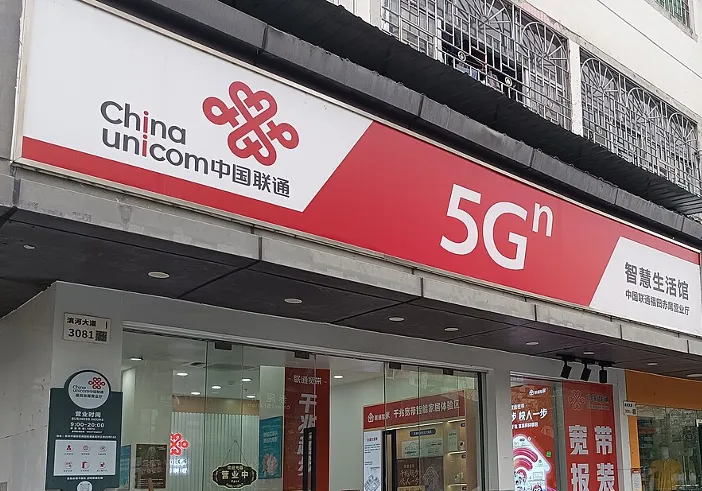
- A China Unicom shop on Binhe Boulevard in Shenzhen.: Haxyatamngu Luuo, CC0, via Wikimedia Commons
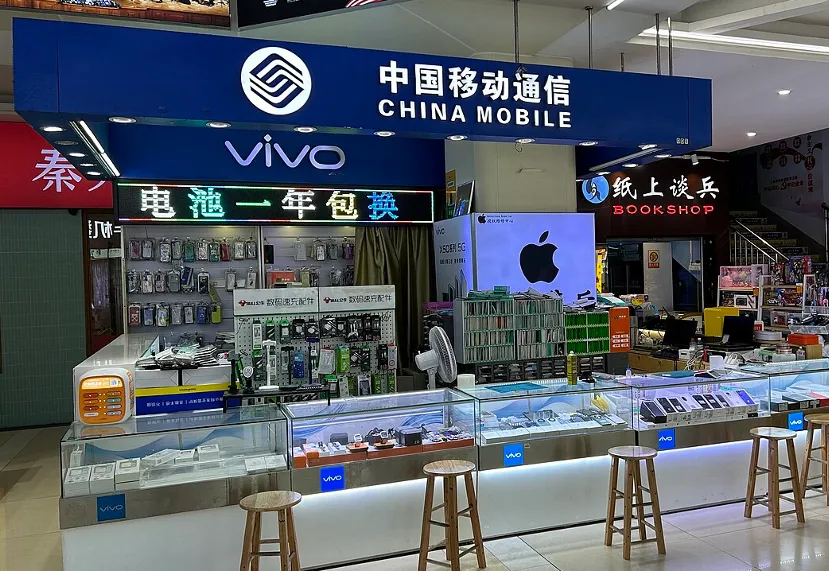
- A China Mobile counter in a shopping centre. Bring your passport when you register a number.: 茅野ふたば, CC BY-SA 4.0, via Wikimedia Commons
Get new jobs in China by email
One email a week with the jobs added since the last one. Free, with no account.
Nothing is sent until you open the link we email you. Choose a role, a pay level or daily emails
We use your address only to send the alerts you ask for, and every email has a one-click unsubscribe link. The privacy notice says how long we keep it, and the terms of use cover the alerts.
We check this guide again by February 3, 2027. Rules change, so confirm visa steps with the embassy and your school before you go. First published November 5, 2026. Spotted something out of date? Tell us. How we write these guides.