Finding an apartment in Indonesia
Find a room or flat in Indonesia knowing what Jakarta and Surabaya rents cost before you sign. Here's how kos rooms, apartments and houses compare, what to ask before you pay, and how to register your address.
AbroadPin team7 min read
Contents
Where you live will shape your first months in Indonesia more than almost anything else, and the choices are wider than in many countries. You can take a furnished room in a kos, rent a flat in an apartment tower or share a house with other teachers. This page explains how each one works, what rent looks like in Jakarta and Surabaya, what to settle before you hand over money, and the address registration that follows. For pay, permits and the main employers, see the main guide to teaching in Indonesia.
School housing or renting on your own
Start with your contract, because it decides how much of this you do yourself. Some employers give you a place to live, some give money towards one, and some leave it all to you. One EF franchise group hiring for Batam, Bengkulu, Jambi and Medan lists a monthly accommodation allowance whose value depends on the city, without giving the amounts [1].
Get the answers to these questions in writing before you sign:
- Is it a room or an allowance, and if it's an allowance, how much is it each month?
- If the school finds the place, whose name goes on the rental agreement?
- Who pays the money due before you move in, and is any of it taken from your pay later?
- What happens to rent paid in advance if your contract ends early?
- Will someone from the school come to viewings and help you read the agreement?
If you're renting on your own, a short first stay buys you time. A kos room taken by the month, or a guesthouse for your first weeks, lets you try the commute and see a few neighbourhoods before you commit to anything longer.
Kos, apartments and houses
Most teachers end up in one of three kinds of home.
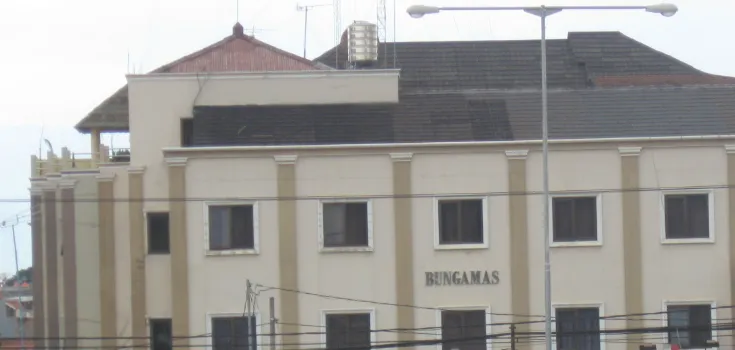
- Kos (also written kost). A rented room in a building shared with other tenants, often with a shared kitchen and sometimes a shared bathroom. Some are for men only (kos putra), some for women only (kos putri) and some are mixed (kos campur). What the price covers varies a lot, so ask about furniture, air conditioning, electricity, water, wifi and cleaning one by one. As a guide to price, a Yogyakarta university puts a kos room at about Rp1.500.000 to Rp2.500.000 per month for its foreign students [2].
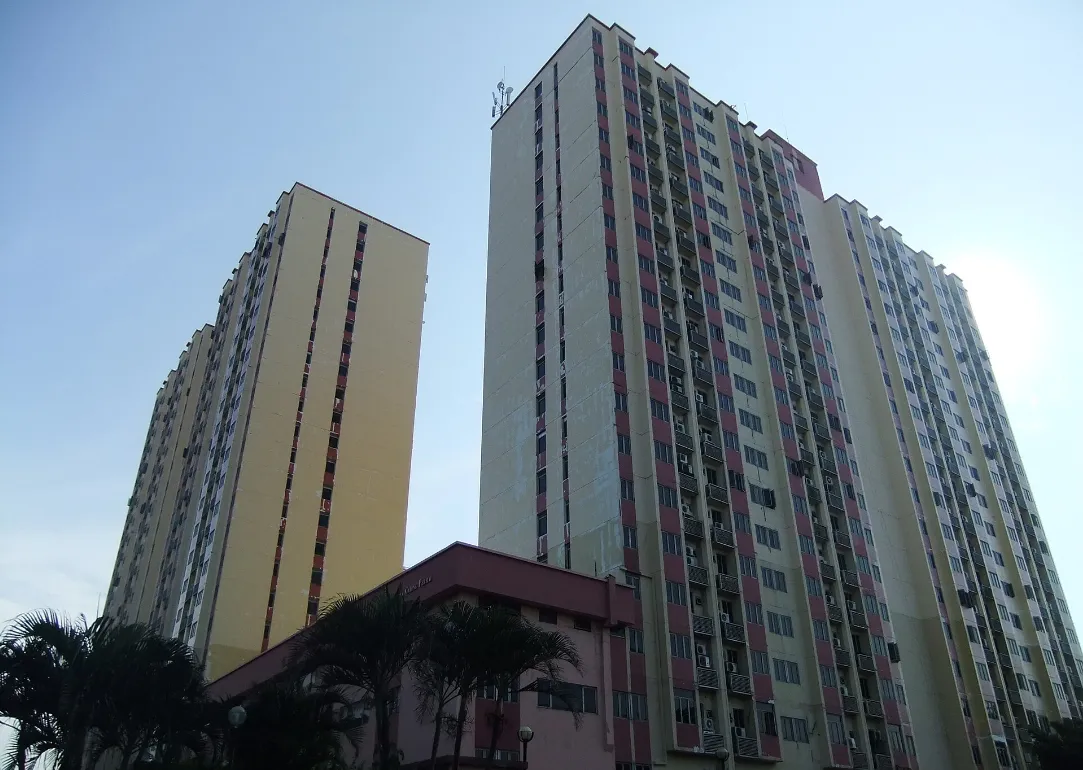
- Apartments (apartemen). Flats in residential towers, usually with building security and shared facilities. Ask whether the unit comes furnished and what the building's monthly service charge covers.
- Houses (rumah). A whole house suits a family or two or three teachers sharing. Check who looks after the garden, the water pump and repairs before you agree.
A kos is the simplest start for a single teacher on a language school salary. An apartment gives you more privacy and a kitchen of your own, at a higher monthly cost, as the rent table below shows [3].
Where to look
- Mamikos. A site for searching, paying for and renting kos rooms online [4].
- Rumah123. A property site with houses, apartments and land for sale and for rent; choose "Disewa" for rentals [5].
- Your school and colleagues. Ask the teacher you're replacing whether their place will be free, and ask local staff which areas teachers usually live in.
A few words help when you read adverts: sewa or disewakan (for rent), per bulan (a month), per tahun (a year), furnished or kosongan (unfurnished), and listrik (electricity).
What rent costs in Jakarta and Surabaya
These are Numbeo's crowd-sourced averages, rounded to the rupiah; both pages were last updated on 4 November 2026 [3] [6].
| Monthly cost | Jakarta | Surabaya |
|---|---|---|
| 1-bedroom flat, city centre | Rp 6,532,857 | Rp 5,022,301 |
| 1-bedroom flat, outside the centre | Rp 3,604,615 | Rp 2,628,000 |
| 3-bedroom flat, city centre | Rp 20,604,545 | Rp 22,225,000 |
| 3-bedroom flat, outside the centre | Rp 10,060,000 | Rp 10,897,500 |
| Basic utilities, 915 sq ft flat | Rp 2,167,511 | Rp 1,552,308 |
| Internet, 60 Mbps or more | Rp 334,333 | Rp 349,281 |
Surabaya's averages rest on far fewer entries than Jakarta's (377 against 1,190 in the past 12 months), so treat them as a rough guide [3] [6]. Outside the centre, a 1-bedroom flat in Jakarta costs about 55% of a central one in Numbeo's figures [3].
Yogyakarta, the student city on Java, costs less again. A remote work guide updated in May 2026 gives average rents for a one-bedroom flat of about US$300 a month around Malioboro, US$220 in Seturan, US$200 in Kotagede and US$180 in Sleman [7]. The same guide says fibre is available in newer buildings [7].
Paying rent and the deposit
Terms differ a lot between landlords, so don't assume anything from the last place you rented. Before you agree, get clear answers to these:
- Is the advertised price per month or per year?
- How many months of rent must be paid before you move in?
- Is there a deposit, how much is it, and what has to happen for you to get it back in full?
- What's included: furniture, the building service charge, water, electricity, internet, cleaning?
- Is electricity on a monthly bill, included in the rent, or on a prepaid meter that you top up?
- How much notice do you give to leave, and what happens to rent you've already paid if you go early?
Get the agreement in writing, with the rent, the period paid, the deposit and the landlord's name and phone number. If it's only in Bahasa Indonesia, ask a colleague to go through it with you before you pay.
On moving day, walk through with the landlord or kos manager. Photograph every room, the meters and anything broken, and send the photos to the landlord so you both have a dated record.
Utilities and internet
In a kos, utilities are often part of the price, so the question is only what's covered. In an apartment or house, ask the landlord or the last tenant what a typical month of electricity and water costs, especially if you'll run air conditioning. Numbeo's Jakarta average for basic utilities in a mid-size flat is about Rp 2,167,511 a month, and broadband is about Rp 334,333 [3]. If fast internet matters for lesson planning, ask whether the building already has a fibre line, since newer buildings are more likely to have one [7].
Reporting where you live
Two kinds of address reporting apply to foreign residents.
- Your landlord's report to immigration. Indonesia's immigration authorities run APOA, an online system for reporting foreign nationals. Its page says that owners or managers of lodging must report the foreigners who stay with them to immigration officers [8]. Ask your landlord or kos manager whether they have done this for you.
- Registering with the civil registry. After you get your ITAS, registering your temporary residence with the local civil registry office (SKTT) is one of the local registrations, alongside the manpower office report and your tax number [9]. Aniday lists it as a step for both the employer and the worker, so tell your employer your address as soon as you have one [9].
If you move during your contract, tell your employer and your new landlord early, so both reports can be updated.
Scams to avoid
A few habits protect your money while you're new:
- Don't pay for a place nobody has seen. Pay nothing until you, or a colleague you trust, have stood inside the unit.
- Check who you're dealing with. Ask whether the person is the owner or an agent. If it's an agent, ask to meet the owner or see the owner's written permission to rent it out.
- Match the payment to the paperwork. Pay into an account in the same name as the landlord on the agreement, and get a signed receipt for every payment.
- Check it's the same unit. Photos online can be old or from another flat, so confirm the unit number at the viewing.
- Be wary of a price far below the table above. A rent well under the going rate, plus pressure to pay a deposit today to hold it, is a reason to slow down.
- Keep your passport with you. Show it if asked, but don't leave the original with a landlord or agent.
With kids
A single kos room rarely suits a family, so most families look at apartments or houses. Family-size flats are expensive in both cities: Numbeo puts a central 3-bedroom flat at about Rp 20,604,545 a month in Jakarta and Rp 22,225,000 in Surabaya [3] [6]. Moving outside the centre roughly halves that, to about Rp 10,060,000 in Jakarta and Rp 10,897,500 in Surabaya [3] [6]. Choose your school before your flat, since the daily school run will matter more than an extra room. The main guide covers school options and fees.
When you know what housing your pay will stretch to, look through English teaching jobs in Indonesia and compare the housing help each employer offers.
See jobs in Indonesia
- Lower Elementary Homeroom Teacher, K to Grade 2, July 2027 (Jakarta Intercultural School)Jakarta
- Early Years Homeroom Teacher, July 2027 (Jakarta Intercultural School)Jakarta
- International English Teacher (English 1 Swara Group, Jakarta)Jakarta
- Early Years Teacher, IB PYP, 2027-28 (Global Jaya School Jakarta)Jakarta
- IB PYP Classroom Teachers, 2027-28 (Global Jaya School Jakarta)Jakarta
By city: Teaching jobs in Jakarta
Sources and photo credits
- 1.EF English 1 (YHA Group), teach English in Batam and Sumatra via The TEFL Academy (17 April 2025)
- 2.Sanata Dharma University International Office, living costs in Yogyakarta (undated, read 5 November 2026)
- 3.Numbeo, cost of living in Jakarta (updated 4 November 2026)
- 4.Mamikos, find, pay for and rent kos rooms online (read 5 November 2026)
- 5.Rumah123, houses, apartments and land for sale and rent (read 5 November 2026)
- 6.Numbeo, cost of living in Surabaya (updated 4 November 2026)
- 7.Jobicy Remote Work Guide, cost of living in Yogyakarta (updated May 2026)
- 8.Ministry of Immigration and Corrections, APOA foreigner reporting application (read 5 November 2026)
- 9.Aniday, Indonesia work permit 2026: RPTKA, E23 visa and KITAS steps (verified 7 September 2026)
Photos
- A kos building named Bungamas in Jatinangor, West Java.: Nur Cholis, CC BY-SA 3.0, via Wikimedia Commons
- Apartment towers in Kelapa Gading, North Jakarta.: Midori, CC BY 3.0, via Wikimedia Commons
Get new jobs in Indonesia by email
One email a week with the jobs added since the last one. Free, with no account.
Nothing is sent until you open the link we email you. Choose a role, a pay level or daily emails
We use your address only to send the alerts you ask for, and every email has a one-click unsubscribe link. The privacy notice says how long we keep it, and the terms of use cover the alerts.
We check this guide again by February 3, 2027. Rules change, so confirm visa steps with the embassy and your school before you go. First published November 5, 2026. Spotted something out of date? Tell us. How we write these guides.