Finding an apartment in Peru
Rent a flat in Lima or Arequipa knowing what it costs and what you pay up front. Here's where teachers search, what the deposit and lease look like, which bills come on top and how to pick a safe building.
AbroadPin team7 min read
Contents
Most English teachers in Peru pay for their own housing out of their wage, so the flat you pick sets how comfortable your year feels. The good news is that renting here is fairly simple once you know what to expect: a deposit, a written contract, and bills that usually sit on top of the rent. This page goes through each step with current rents for Lima and Arequipa. For pay, the worker visa and your carné de extranjería, start with the main guide to teaching in Peru.
School housing or renting yourself
Ask about housing before you accept any offer, because the answer differs a lot by type of employer.
- Volunteer programs. Go Overseas says volunteer placement organizations usually put teachers with host families, which is also a chance to practise Spanish [1]. Some programs charge a fee that covers housing, food and local support [1]. Read what the fee includes before you pay it.
- Language institutes and business English. International TEFL Academy counts monthly rent among the living costs teachers budget for, and doesn't mention employers providing housing [2]. Plan on finding your own place.
- International schools. Housing, if any, is part of the package each school sets. Ask whether there's a flat, an allowance or nothing, and get the answer into the contract.
If you're renting yourself, a short stay for your first weeks gives you time to learn the commute to your school and to view flats in person instead of picking one from photos.
Where to look
Expat Arrivals says apartments are the most common choice for expats in Peru's larger cities, while houses are rare in town and cost more when you do find one [3]. It also mentions residential complexes on the edge of cities, with fairly modern amenities [3].
Ways teachers find a place:
- Property portals. Expat Arrivals names online property sites as a main route [3]. Search in Spanish: departamento en alquiler is a flat for rent.
- Newspapers. Local papers and their websites still carry rental listings [3].
- Estate agents. An agent can take you through the whole rental process [3]. Many landlords don't speak English, so Expat Arrivals suggests either a bilingual agent or a trusted Spanish-speaking friend at your side [3].
- Colleagues. The teacher you're replacing and your school's office staff often know a landlord with a free flat.
Location drives price. Expat Arrivals says homes close to the centre and to public transport cost more, and areas popular with expats tend to be the dearest [3]. In Lima it names Miraflores, Barranco and San Isidro as the most expensive districts [6]. Go Overseas makes the same point by comparing tourist Miraflores with residential San Borja, which costs less [1].
What rent costs in Lima and Arequipa
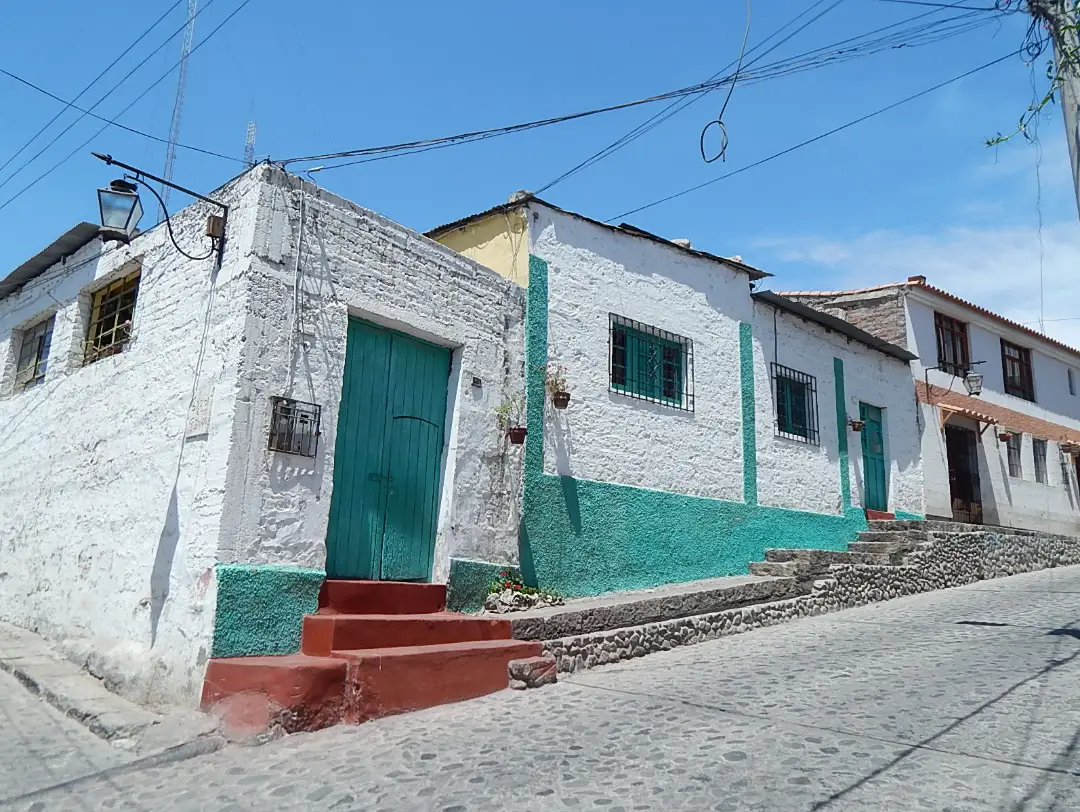
These are Numbeo's crowd-sourced monthly averages in soles. The Lima page was last updated on 4 November 2026 from 1,051 entries by 78 contributors, and the Arequipa page on 2 October 2026 from 242 entries by 23 contributors [4] [5]. Treat them as a guide rather than today's asking prices.
| Monthly cost | Lima | Arequipa |
|---|---|---|
| One bedroom, city centre | S/ 2,570.77 | S/ 1,218.00 |
| One bedroom, outside the centre | S/ 1,312.68 | S/ 812.17 |
| Three bedrooms, city centre | S/ 4,367.31 | S/ 2,488.00 |
| Three bedrooms, outside the centre | S/ 2,601.38 | S/ 1,440.00 |
| Basic utilities, 915 sq ft flat | S/ 231.50 | S/ 81.67 |
| Broadband, 60 Mbps or more | S/ 92.39 | S/ 80.00 |
Individual entries spread widely around those averages. A central one-bedroom in Lima ranged from S/ 2,000.00 to S/ 3,120.00, and one outside the centre from S/ 900.00 to S/ 2,200.00 [4]. In Arequipa, central one-bedroom entries ran from S/ 700.00 to S/ 2,290.00 [5].
Expat Arrivals' own price chart for Lima, dated July 2025, gives similar numbers: PEN 1,350 a month for a one-bedroom outside the centre and PEN 3,800 for a three-bedroom in the centre [6].
Compare those rents with your offer. International TEFL Academy suggests budgeting USD 500 to 1,000 a month for all living costs, and says Lima costs more than smaller cities and towns [2]. On institute pay, many teachers rent a room in a shared flat or live further out along a bus line to work.
Furnished, semi-furnished or empty
Flats in Peru come furnished, semi-furnished or unfurnished, and Expat Arrivals says unfurnished is the most common [3]. A furnished flat may have basic furniture and appliances, while an unfurnished one probably has no appliances at all [3].
For a one-year contract, a furnished flat usually saves you buying a fridge, a cooker and a bed in your first month. If you plan to stay several years, an empty flat may make more sense. Either way, ask the landlord for a list of exactly what stays.
The deposit and money up front
Expat Arrivals says landlords often ask for a security deposit of up to three months' rent [3]. You get it back at the end if there's no damage; otherwise the cost of repairs comes out and the rest is returned [3]. Its cost of living page warns that deposits can be substantial and that you should expect sizeable costs at the start [6].
International TEFL Academy lists a security deposit and the first month's rent among start-up costs, and suggests arriving with USD 1,000 to 1,500 to cover that early period [2]. If a Lima landlord asks for three months' deposit plus a month in advance on a central one-bedroom, that alone would come to about S/ 10,283 at Numbeo's average [3] [4].
Get a signed receipt for every payment, and make sure the contract states the deposit amount and when it comes back.
What the lease says
Expat Arrivals describes two kinds of lease in Peru [3]:
- Fixed term. Both sides are bound for the period in the contract, which can run for up to 10 years [3]. A one-year term fits most teaching contracts.
- Open-ended. Either side can end it by giving the notice agreed in the contract, usually one month, though it can be longer or shorter [3].
Expat Arrivals advises a properly signed contract that sets out who is responsible for what, with an inventory and the utilities that are included [3]. Before you sign, read it with a Spanish speaker and check:
- the rent, the day it's due and how you pay
- the deposit and the conditions for getting it back
- which bills and building fees are in the rent
- who pays for repairs
- the notice you must give to leave, and what happens if your job ends early
Walk through the inventory with the landlord on move-in day and photograph every room.
Utilities, internet and your address
Water, electricity and other utilities are not always in the rent, and when they aren't, the tenant pays them [3]. Expat Arrivals' cost of living page says utilities and wifi are typically left out of the monthly rent [6]. Numbeo's averages give a fair budget: about S/ 231.50 a month for basic utilities and S/ 92.39 for broadband in Lima, and about S/ 81.67 and S/ 80.00 in Arequipa [4] [5].
A bill matters for your paperwork too. LimaEasy lists a recibo, a water or electricity bill showing your address, among the documents for the worker visa [7]. Ask the landlord early whether you can have a recent bill for the flat, so this step doesn't hold you up.
Safety and scams to avoid
Expat Arrivals says crime is a concern in Peruvian cities and that house break-ins happen often [3]. It suggests secure accommodation, ideally with security staff around the clock and an alarm, and notes that upper-floor flats are more secure [3].
Other things to watch:
- A flat you haven't seen. Don't send a deposit for a place that you, or someone you trust, hasn't visited.
- Signing in a language you can't read. Because many landlords don't speak English, take a Spanish speaker to viewings and to the signing [3].
- Foreigner prices. Check Numbeo's ranges and a few local listings before you agree on rent [4].
- Cash with no paper. Pay by bank transfer to the person named on the contract, or get a signed receipt every time.
- The wrong person. Ask to see that whoever rents you the flat owns it or acts for the owner.
With kids
Families usually need two or three bedrooms. Numbeo's averages for a three-bedroom flat are S/ 4,367.31 a month in central Lima and S/ 2,601.38 outside the centre, against S/ 2,488.00 and S/ 1,440.00 in Arequipa [4] [5]. Pick your children's school first and look for a flat close to it, since a short school run makes every weekday easier. When you compare buildings, keep in mind Expat Arrivals' point that upper-floor flats are more secure [3]. School fees and family visas are in the main guide.
Your first months, in order
- Ask each employer whether housing or a host family is included, and get it in writing [1].
- Arrive with savings for a deposit and the first month's rent [2].
- Stay somewhere short term while you view flats in the districts near your school [3].
- Read the lease with a Spanish speaker and agree the inventory [3].
- Keep a recent water or electricity bill for your worker visa file [7].
When you know which city suits you, browse teaching jobs in Peru and ask each school about housing at the interview.
See jobs in Peru
Sources and photo credits
- 1.Go Overseas, teach abroad in Peru (undated, read 5 November 2026)
- 2.International TEFL Academy, how much English teachers make in Peru (updated 1 October 2026)
- 3.Expat Arrivals, accommodation in Peru (undated, read 5 November 2026)
- 4.Numbeo, cost of living in Lima in soles (updated 4 November 2026)
- 5.Numbeo, cost of living in Arequipa in soles (updated 2 October 2026)
- 6.Expat Arrivals, cost of living in Peru (prices for Lima in July 2025, read 5 November 2026)
- 7.LimaEasy, the Peruvian work visa (undated, read 5 November 2026)
Photos
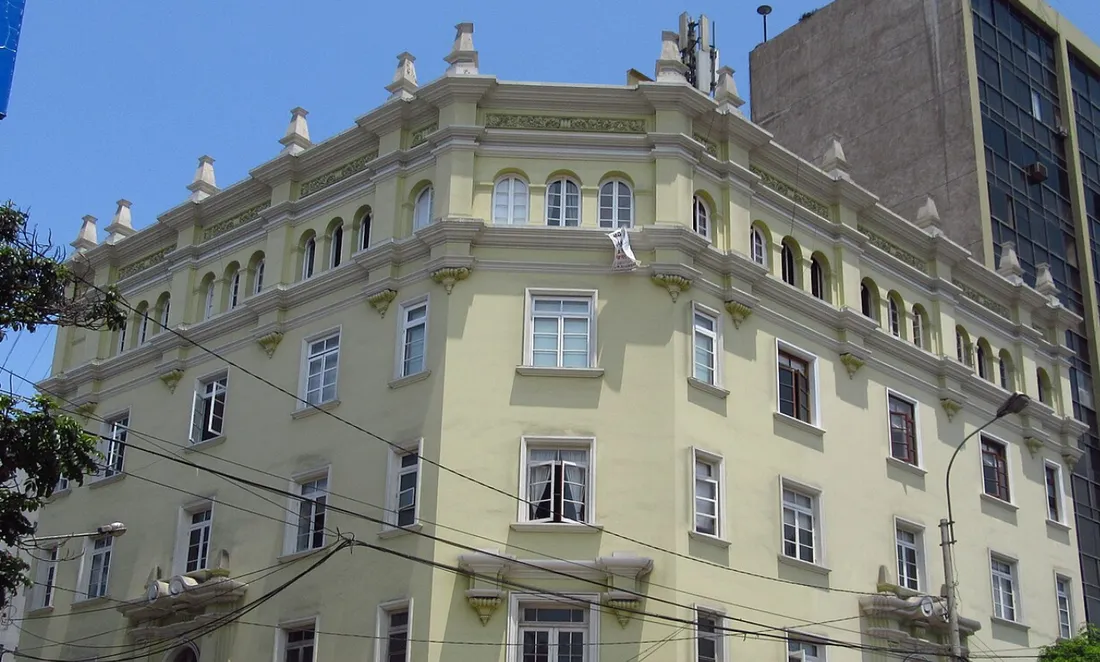
- An older apartment building in Miraflores, Lima.: Felipe Restrpo Acosta, CC BY-SA 4.0, via Wikimedia Commons
- Houses on a cobbled street in Arequipa.: Yoli Marcela Hernandez, CC BY 4.0, via Wikimedia Commons
Get new jobs in Peru by email
One email a week with the jobs added since the last one. Free, with no account.
Nothing is sent until you open the link we email you. Choose a role, a pay level or daily emails
We use your address only to send the alerts you ask for, and every email has a one-click unsubscribe link. The privacy notice says how long we keep it, and the terms of use cover the alerts.
We check this guide again by February 3, 2027. Rules change, so confirm visa steps with the embassy and your school before you go. First published November 5, 2026. Spotted something out of date? Tell us. How we write these guides.