Getting a phone number and SIM in Peru
A Peruvian number lets your bank app, school and landlord reach you. Here's how to buy a prepaid chip, register a phone from home, pick a carrier and hold on to your old number.
AbroadPin team8 min read
Contents
In Peru a SIM card is usually called a chip, and a pay-as-you-go line is prepago. Most teachers buy a prepaid chip in their first days, live on it while the worker status and carné de extranjería are processed, and only look at a monthly plan later. The one rule that surprises newcomers is about the handset rather than the SIM: a phone bought outside Peru has to be declared to your carrier before it can stay on the network. For visas, pay and rent, read the main guide to teaching in Peru.
Get the phone ready at home
Do these before you pack. They're much harder to sort out from Lima.
- Ask your home carrier to remove any lock. A locked handset won't read a Peruvian chip. In Peru a phone free of carrier locks is called liberado.
- Note your IMEI. Dial *#06# and the phone shows it. OSIPTEL, Peru's telecoms regulator, describes the IMEI as a 15-digit code that works like an ID number for the handset [1]. Write it down with the model name.
- Check for eSIM. If your phone takes an eSIM, you can later run a Peruvian line beside your home SIM.
- Move sign-in codes off your home number. Banks and email accounts that text a code to your old number are a nuisance abroad. Switch what you can to an authenticator app first.
Your first days: a prepaid chip
Prepaid is the easy start. You buy the chip, top up with credit, and spend it on packages of data, calls and social apps. There's no credit check and no contract.
Where to buy
The four big networks are Claro, Movistar, Entel and Bitel [8]. Go to a carrier's own store, not a kiosk or a street seller. The Prepaid Data SIM Card Wiki notes that some street sellers offer chips that are already registered, and says those lines risk being suspended [8]. A line in your own name is the one your bank and your school can rely on.
What ID to bring
Bring your passport. The wiki says foreigners can activate a prepaid chip with a passport, though some shop staff don't know the rule, and that Claro handles foreigners only in its own company stores [8]. It also says Entel takes your fingerprint during the paperwork [8]. The carriers' own prepaid pages don't spell out what a foreigner should bring, so ask at the counter before you pay.
Once your carné de extranjería arrives, ask the carrier whether you should update the line to that document.
What a chip costs
Claro's prepaid help section puts its chip at S/5 [2]. Ask staff to put the chip in, make a test call and open a web page before you walk out, and keep the receipt.
The phone from home: declaring it to your carrier
Peru keeps a list of phones that are allowed to work on its networks. OSIPTEL's page on blocked phones says that only devices on the list of valid equipment can operate [1].
Here's what that means for a phone you bring with you:
- Declare it at your carrier. Since 22 April 2024, someone who brings a phone bought abroad for personal use goes to their mobile operator and signs a sworn statement, the Declaración Jurada de Ingreso de Equipo Adquirido en el Extranjero para Uso Personal [1]. Do it on the day you get your chip.
- Let the carrier check the IMEI. Staff confirm the IMEI is valid before you sign, and the operator then adds the phone to the list of valid devices [1].
- Stay within the limit. One person can link no more than 5 phones bought abroad in a year [1].
- Watch your texts. A phone with an altered, cloned or duplicated IMEI is blocked within 2 business days [1]. Phones missing from the list and linked to users with a history of IMEI tampering get a text warning 2 business days before a block [1].
- Check a second-hand phone first. A phone reported lost or stolen is blocked straight away on every network [1]. Claro's prepaid page links to OSIPTEL's public IMEI lookup, so run any used phone through it before you pay [2].
OSIPTEL's page doesn't list a fee for the declaration [1]. If a phone you bought legally in Peru is blocked anyway, the page says you can take it to an OSIPTEL office with your ID, the phone, proof of purchase and a sworn statement that you bought it legally [1].
The main carriers and what prepaid costs
Prices change often and packages come and go, so treat these as a guide to the scale of things and check the app before you buy.
Movistar
Movistar sells its prepaid packages through the Mi Movistar app or by text message to 515 [5]. A few from its list on 5 November 2026 [5]:
| Package | Price | Lasts |
|---|---|---|
| 600 MB | S/ 5.00 | 2 days |
| Unlimited internet | S/ 6.00 | 1 day |
| 3 GB with unlimited WhatsApp | S/ 10.00 | 7 days |
| 3.5 GB with unlimited WhatsApp | S/ 30.00 | 30 days |
| Unlimited minutes to any operator | S/ 5.00 | 3 days |
Movistar also runs Preplan, where a top-up from S/ 5 to S/ 30 switches on a set of benefits [5].
Claro
Claro's prepaid page leans on top-up bonuses and short packages offered by pop-up message after you recharge, and it doesn't print a full price list [2]. Its rate table for the Prepago TUN plan lists national calls at S/0.250 a minute and 20 MB of data at S/1.00 [2]. Some promotion terms on that page refer to top-ups made up to 30 April 2025, so ask what's running now [2].
Bitel and Entel
Bitel and Entel both sell prepaid chips in their own stores [8]. Their current package prices aren't confirmed here, so compare them in the store or in each carrier's app.
eSIM
An eSIM lets you keep your home SIM in the tray and add a Peruvian line in software. Both Claro and Bitel set it up in person.
- Claro. You go to a Claro service centre, show ID and give your details, then scan the QR code staff give you [3]. Claro's page mentions only the DNI, the Peruvian ID card, so ask what a foreigner can use [3]. It says activation takes about 4 hours [3]. If you bought an iPhone abroad, staff check it before activating, and it mustn't have regional or carrier locks [3]. A number you've just moved to Claro starts on a physical chip, and you can switch it to eSIM after 24 hours [3].
- Bitel. You go to an authorised store, verify your fingerprint to get the QR code, scan it and wait for a confirmation message [7]. Bitel says a phone bought abroad can be used if it's compatible and has no regional restrictions [7].
Neither page gives a price for the eSIM itself [3] [7]. Because both carriers check ID in person, many teachers find it simpler to start on a physical chip and move to eSIM once they have their carné.
Monthly plans later on
A postpaid plan, called postpago, bills you each month and usually gives far more data. Movistar's new-line page listed its Máximo plans at S/ 39.90 for 125 GB and S/ 49.90 for 250 GB a month [6]. Claro's switching page advertised Max plans from S/29.90 [4].
Before you sign, know that Movistar says its plans are subject to a credit check [6]. Its general conditions mention a DNI or a RUC 10 tax number, while some plan terms on the same page accept a passport or a carné de extranjería [6]. Ask which document the store will take for you. Several of those promotions carried terms running to 30 April 2026, so the price you're quoted today may differ [6].
Why a Peruvian number matters
A data-only travel eSIM keeps you online, but you'll soon want a real local number for:
- Banking. Yape and Plin, the phone payment apps used across Peru, both run on a Peruvian mobile number. Our guide to opening a bank account in Peru explains the rest.
- Your school and your landlord. Both will message you on WhatsApp, and a rental contract often asks for a local number.
- Deliveries and taxis. Couriers and drivers call when they can't find the door.
- Private students. Parents and adult learners book and pay by message.
Moving or keeping a number
Switching carrier in Peru
Moving your number to another carrier, called portabilidad, is free under OSIPTEL's rules, according to Claro [4]. You need to have been with your current operator for at least 30 days and owe it nothing [4]. The new carrier can also run its own check on which plan you qualify for [4]. Ask what happens to any prepaid credit before you move.
Keeping your number from home
Your old number is the one your bank, tax office and family know. A few ways to keep it alive:
- Ask your home carrier for its cheapest plan to hold a number, and what it charges for texts received abroad.
- Run two lines on one phone. Keep the home line on one SIM slot or eSIM and the Peruvian line on the other, and turn off data roaming on the home line.
- Check its inactivity rule. Some carriers close numbers that go unused for months, so send a text now and then if yours does.
Your phone checklist
- Before you fly, get the phone free of carrier locks and note its IMEI.
- In your first days, buy a prepaid chip in a carrier's own store with your passport.
- Sign the declaration for your foreign phone at the same counter [1].
- Give the number to your school, landlord and bank.
- When your carné arrives, update the line and think about eSIM or a monthly plan.
Once your phone works, have a look at open teaching jobs in Peru.
See jobs in Peru
Sources and photo credits
- 1.OSIPTEL, blocking of invalid IMEIs and phones bought abroad (undated, 2024 rules, read 5 November 2026)
- 2.Claro Perú, prepaid lines and packages (read 5 November 2026)
- 3.Claro Perú, eSIM (read 5 November 2026)
- 4.Claro Perú, moving your number to Claro (read 5 November 2026)
- 5.Movistar Perú, prepaid top-ups and packages (read 5 November 2026)
- 6.Movistar Perú, new lines and postpaid plans (read 5 November 2026)
- 7.Bitel, eSIM (read 5 November 2026)
- 8.Prepaid Data SIM Card Wiki, Peru (undated, read 5 November 2026)
Photos
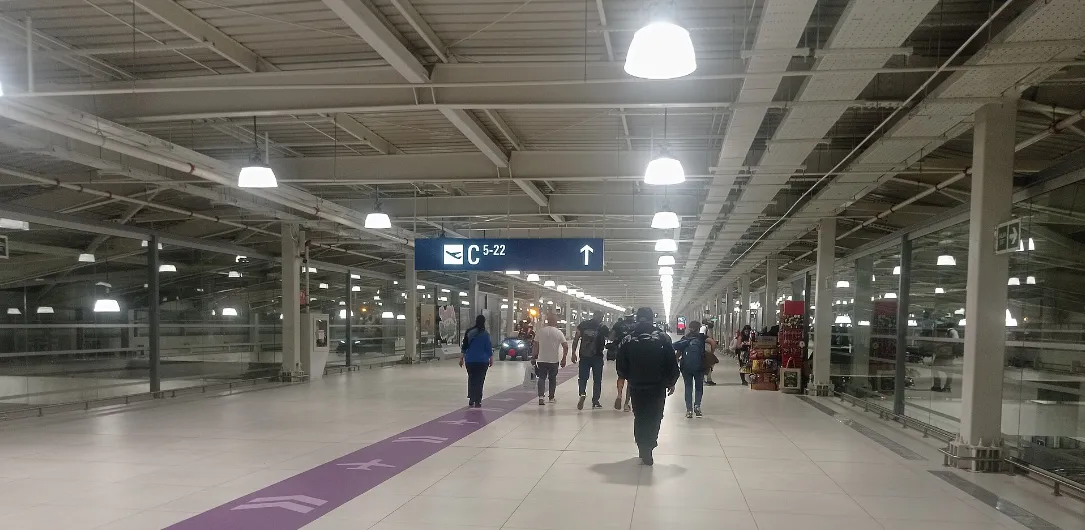
- A walkway to the gates at Jorge Chávez International Airport in Lima.: Entorpeditt, CC0, via Wikimedia Commons
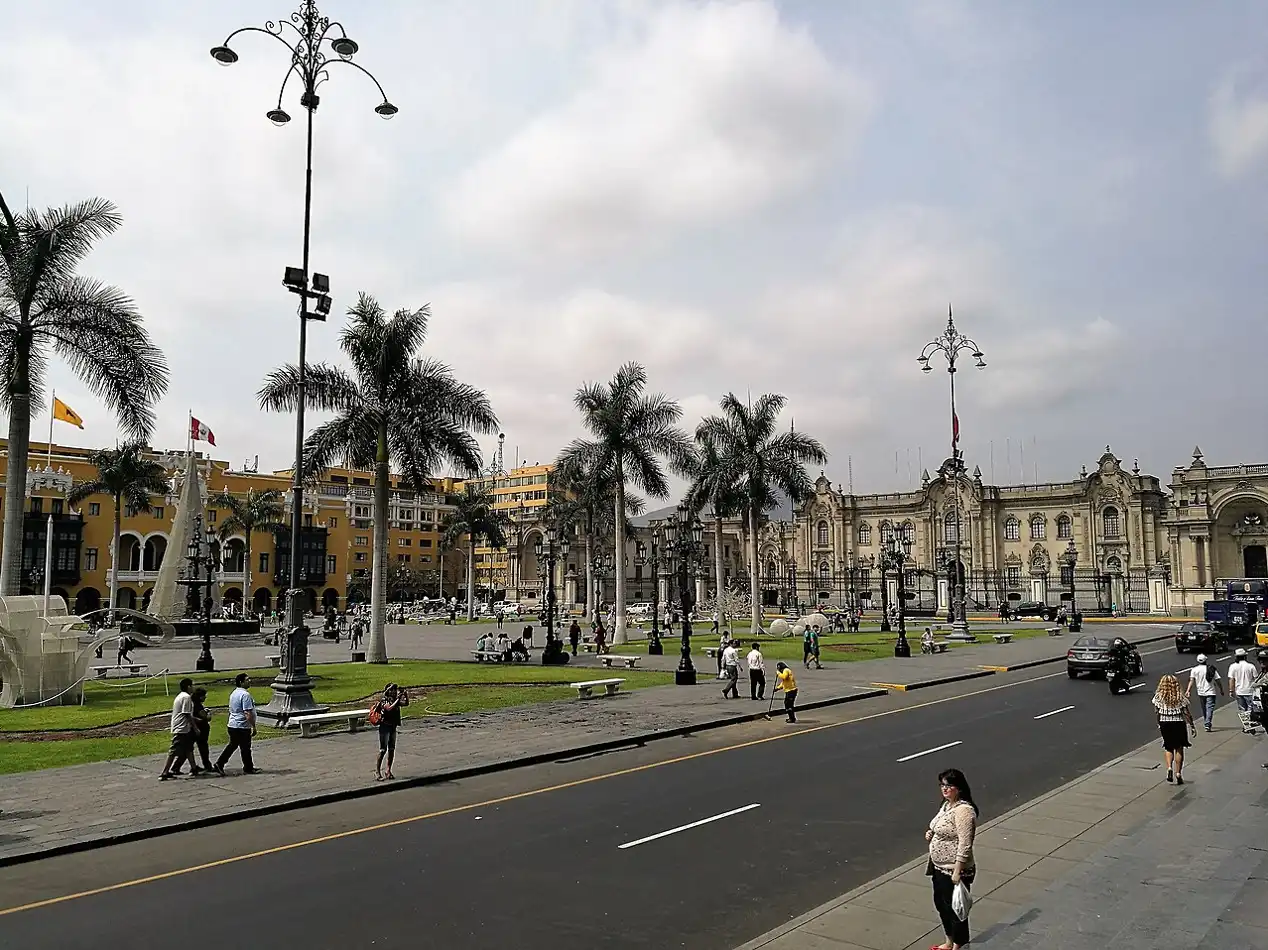
- Balconies and flags on a building along Jirón de la Unión in central Lima.: McKay Savage, CC BY 2.0, via Wikimedia Commons
Get new jobs in Peru by email
One email a week with the jobs added since the last one. Free, with no account.
Nothing is sent until you open the link we email you. Choose a role, a pay level or daily emails
We use your address only to send the alerts you ask for, and every email has a one-click unsubscribe link. The privacy notice says how long we keep it, and the terms of use cover the alerts.
We check this guide again by February 3, 2027. Rules change, so confirm visa steps with the embassy and your school before you go. First published November 5, 2026. Spotted something out of date? Tell us. How we write these guides.