Opening a bank account in Peru
Get your teaching pay into a Peruvian account, with a debit card and Yape or Plin. Here's which banks to try, what to bring to the branch, and how to manage in your first months until your carné arrives.
AbroadPin team6 min read
Contents
Banking in Peru gets much simpler once you hold a carné de extranjería, the foreigner ID card that Migraciones issues after your worker status is approved. LimaEasy says the card is what lets residents open bank accounts and sign up for a postpaid phone plan [9]. Before that, a small basic account on your passport is now possible, though staff can still ask for more [1] [3]. The visa steps and timing are in the main guide to teaching in Peru. This page is about the money side.
Which banks open accounts for foreign teachers
Four big banks are the ones most foreigners deal with: BCP (Banco de Crédito del Perú), Interbank, BBVA Perú and Scotiabank Perú [3] [4]. Wise names the same four [4].
- BCP. The largest retail bank, and the owner of the Yape app [3]. The Rio Times reports that BCP's own site lets foreigners open its digital savings account at a branch with a carné de extranjería and a passport, with no maintenance fee and no minimum balance [3]. That makes it a sensible first stop if you want Yape.
- Scotiabank Perú. Its digital account opens online with a DNI, the ID card Peruvians carry [5]. Foreigners usually finish the process in a branch instead [3].
- Interbank and BBVA. Both connect to Plin, the payment app shared by several banks [3]. The Rio Times found a BBVA page asking for a visa, proof of residence and bank references [3].
- Cajas municipales and cajas rurales. These smaller regional lenders are another option, but what they ask for depends on the institution and even the branch [3].
Ask your school first
Before you choose, ask the school's office which bank it pays salaries into. If most staff bank in one place, opening there can make the first payday simpler, and the office may already know which branch handles foreigners well.
What papers banks ask for
For a standard account
For a full savings account, expect to bring [3] [4]:
- your passport
- your carné de extranjería
- proof of a Peruvian address, such as a utility bill or a lease
Some banks also ask where your money comes from or for proof of income, such as your work contract [3] [4]. Wise lists a Peruvian tax number for people who are employed, while the Rio Times says a RUC (the tax registration) isn't normally needed for a personal account and is more likely to come up for freelance or business work [3] [4]. Bring originals and copies, since a branch can ask for more than the website lists [3].
Wise says most banks turn away applicants who don't have a carné, even though no law bars non-residents [4].
The address can be a catch: a lease or a utility bill in your name often needs a bank account first [3]. Ask your landlord for a signed rental contract early, and keep any bill that comes in your name.
For a basic account on your passport
Since 16 June 2025, a rule from the SBS, Peru's banking regulator, lets foreigners open a basic account (cuenta básica) with a passport, a carné de extranjería or another ID the authorities recognise [1] [2]. The customer declares their own address, and the bank can check the ID with Migraciones or the foreign ministry after the account is open [1].
A basic account is a savings account with caps. The Rio Times gives the limits as S/3,300 per transaction, S/10,450 as a total balance and S/15,400 of movements in a month, reset in March 2026 [3]. It's in soles only and can only be opened or topped up inside Peru [3]. That's small for a full salary, but it can tide you over while the carné is on its way.
The Rio Times couldn't confirm how consistently branches apply the passport rule [3]. If one branch says no, try another.
Opening the account, step by step
- Get a local SIM first. Yape and Plin both run on a Peruvian mobile number, so have one before the bank visit [3].
- Go to a branch. Fast online opening is mostly for DNI holders, so foreigners open in person [3].
- Hand over your papers. Staff review your documents and run compliance checks, and you sign the contract [3].
- Pay the opening deposit if there is one. Scotiabank's digital account needs no minimum deposit online, but S/500 at a branch [5]. The Rio Times says applicants without a DNI face that branch figure [3]. Wise says opening deposits are usually modest and opening itself is usually free [4].
- Get your card. Some banks hand the debit card over at the branch, and others send it later [3]. Wise says it can take a few days [4].
- Set up the bank's app before you leave, so staff can help if the login trips up.
How long does all this take? No bank or regulator publishes a standard waiting time, and the Rio Times says compliance checks can take longer if you have no local work or credit record [3].
Fees and the ITF

Monthly and card fees
There's no national fee table, so ask each bank for its fee sheet before you sign [3]. Standard accounts may charge a maintenance fee when your balance drops below a set amount, plus card, withdrawal and transfer fees [3]. Wise adds ATM withdrawals, international transfers and the margin on changing soles to dollars to the list [4].
Scotiabank's digital account is one example with low costs: no monthly maintenance fee, free and unlimited withdrawals at Scotiabank cash machines, one free withdrawal a month at the counter, and free Plin and Yape payments [5]. Before you travel, Scotiabank asks you to tell the bank or switch on card use abroad [5].
Most banks offer accounts in both soles and US dollars [4].
The ITF
The ITF (impuesto a las transacciones financieras) is a tax on money moving through accounts. SUNAT, the tax office, sets it at 0.005% of each operation it applies to [8]. On S/1,000 that comes to about five céntimos, and it shows as its own line on your statement [3] [8].
Deposit insurance
Peru's deposit insurance covered up to S/123,000 for September to November 2026, and the figure is reset every quarter [3]. Savings cooperatives aren't covered [3].
Cards, transfers and payment apps
Yape
Yape is the payment app that belongs to BCP [3]. To sign up with a carné de extranjería or a passport, Yape says you need a BCP debit card [6]. The sign-up asks for your phone number, sends a code by text message, and then asks you to link your BCP card [7]. So if Yape matters to you, open your account at BCP.
Plin
Plin links accounts at banks such as BBVA, Interbank and Scotiabank [3]. Since March 2023, under Central Reserve Bank rules, Yape and Plin users can pay each other [3]. You'll need a Peruvian bank account and a local number for either app [3].
Transfers inside Peru and from abroad
For a transfer from another Peruvian bank, people need your CCI, a 20-digit interbank account code [3]. Find it in your app and keep it handy for rent and private students. For a wire from abroad, the sender needs your bank's SWIFT code as well [3]. Scotiabank's digital account sends transfers to other banks free from the app or website [5].
Getting paid before the account is open
Your first wages may be due before the carné and the account are ready. Some ways to manage:
- Ask the school how it'll pay you meanwhile. Get the answer in writing, along with the date your first pay is due.
- Try a basic account. If a branch accepts your passport, it gives you a local account while you wait, within its limits [1] [3].
- Keep a home card that works. The Rio Times says many newcomers lean on a home bank card and a multi-currency online account at first, but those rarely connect to Yape or Plin [3].
- Bring savings. Rent, a deposit and the first weeks of food will come from money you bring until the first payday clears.
- Check the first payslip. Once your account is open, give the school its details and the CCI in writing, and check the first deposit arrives in full.
When the banking is sorted, look at open teaching jobs in Peru.
See jobs in Peru
Sources and photo credits
- 1.SBS, Resolución SBS N° 00908-2025 on basic accounts and electronic money, in El Peruano (7 March 2025, published 18 March 2025)
- 2.El Peruano, from June 2025 foreigners can open accounts with more documents (18 March 2025)
- 3.The Rio Times, open a bank account in Peru as a foreigner in 2026 (18 September 2026, modified 20 September 2026)
- 4.Wise, how to open a bank account in Peru as a foreigner (updated 30 December 2025)
- 5.Scotiabank Perú, Cuenta Digital (read 5 November 2026)
- 6.Yape, how to register with a carné de extranjería or passport (undated, read 5 November 2026)
- 7.Exitosa, how to create a Yape account with a carné de extranjería or passport (updated 4 September 2023)
- 8.SUNAT, the ITF rate (undated, read 5 November 2026)
- 9.LimaEasy, the carné de extranjería, Peru's ID card for foreigners (undated, read 5 November 2026)
Photos
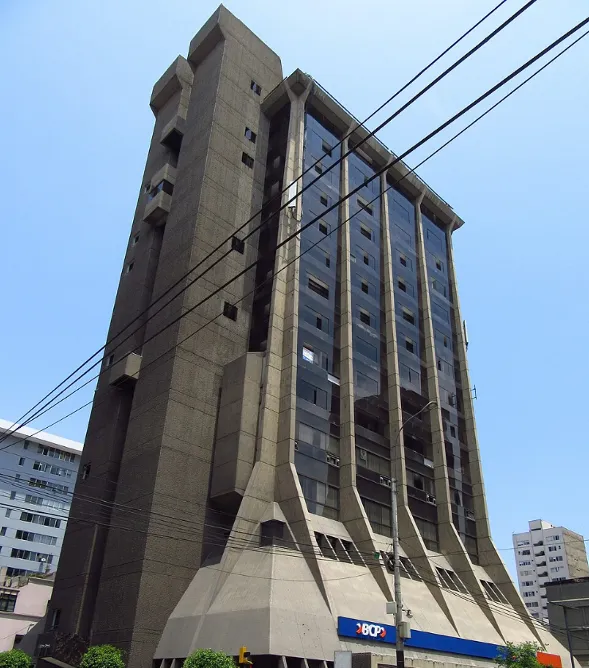
- A BCP branch in Miraflores, Lima.: Felipe Restrpo Acosta, CC BY-SA 4.0, via Wikimedia Commons
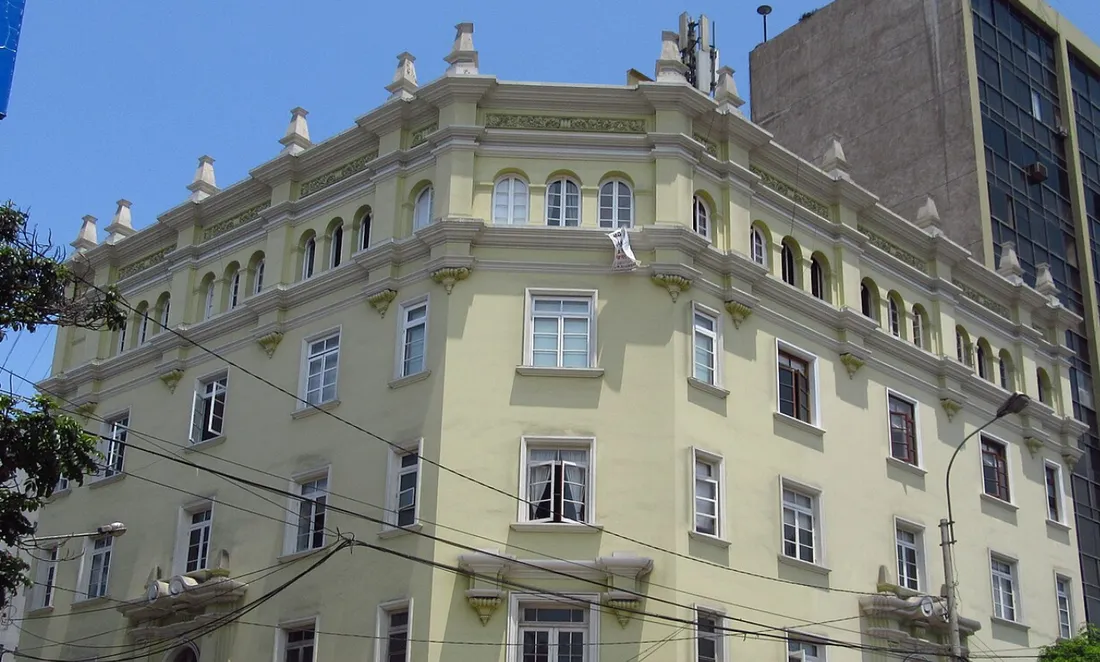
- The old Banco de Crédito building in Lima's historic centre.: Wasiwatana, CC BY-SA 4.0, via Wikimedia Commons
Get new jobs in Peru by email
One email a week with the jobs added since the last one. Free, with no account.
Nothing is sent until you open the link we email you. Choose a role, a pay level or daily emails
We use your address only to send the alerts you ask for, and every email has a one-click unsubscribe link. The privacy notice says how long we keep it, and the terms of use cover the alerts.
We check this guide again by February 3, 2027. Rules change, so confirm visa steps with the embassy and your school before you go. First published November 5, 2026. Spotted something out of date? Tell us. How we write these guides.