Teaching English in Spain
Teach English in Spain as a language assistant, at an academy or in a school. This covers the visa routes, the stipend by region, the new November start, Madrid and Valencia costs, and schools if you bring your kids.
AbroadPin team9 min read
Contents
Spain at a glance
| Assistant stipend | At least 800 euros a month, more in some regions [1] [2] |
|---|---|
| Assistant hours | A minimum of 14 hours a week, up to 16 in some regions [1] |
| Program year | 1 November 2026 to 31 May 2027 [1] |
| Assistant age range | 18 to 45 for new candidates, up to 60 for renewals [1] |
| Academy pay | 1,000 to 1,600 euros a month for 20 to 25 teaching hours (TEFL Ireland) [10] |
| Rent, one-bed central | About 1,389 euros in Madrid vs about 1,063 euros in Valencia (Numbeo) [8] [9] |
Who hires English teachers in Spain
Spain has a lot of English teaching, but the jobs split into a few clear types. Which one is open to you depends mostly on your passport and your plans.
- The Auxiliares de Conversación program. The Ministry of Education places language assistants in state schools across the regions. You help a teacher in class rather than run your own, and the ministry's guide describes the role as a collaboration of fourteen hours a week [5].
- Private language academies. Evening and weekend classes for children, teens and adults, plus exam preparation. This is where most full-time English teaching sits.
- BEDA and other assistant programs. BEDA places assistants in Catholic schools, mostly around Madrid, and adds a university course [11]. Other private programs run on similar lines.
- Bilingual, private and international schools. These hire qualified teachers for full classroom posts and pay more than academies [10].
- Private tutoring and business English. Usually a top-up beside one of the above [10].
What it pays
Assistants get a monthly allowance for housing and living costs, not a salary [1]. Other employers pay a wage, and the ranges below come from the ministry's own conditions and from TEFL providers that publish them [1] [2] [3] [10] [11].
| Employer | Pay as the source gives it | Source |
|---|---|---|
| Auxiliares, most regions, 2026 to 2027 | 800 euros a month for 14 hours a week | Ministry [1] [2] |
| Auxiliares, Comunidad de Madrid, 2025 to 2026 | 1,000 euros a month for 16 hours | Ministry [3] |
| Auxiliares, Comunitat Valenciana, 2025 to 2026 | 1,000 euros a month for 16 hours | Ministry [3] |
| BEDA (Catholic schools, Madrid) | 870 to 1,165 euros a month | The TEFL Academy [11] |
| Private language academies | 1,000 to 1,600 euros a month for 20 to 25 hours, or 10 to 20 euros an hour | TEFL Ireland [10] |
| Bilingual and international schools | 1,600 to 2,200 euros or more a month | TEFL Ireland [10] |
| Private tutoring | 15 to 25 euros an hour | TEFL Ireland [10] |
Assistant stipends by region
The ministry sets a floor and each region adds its own terms. The regional sheet for 2026 to 2027 lists these [2]:
- Baleares: 875 euros for 15 hours, one of them for coordination [2].
- Extremadura: 935 euros for 16 hours [2].
- Castilla y León: 800 euros, or 935 euros where hours are extended in shared schools [2].
- Cantabria: 800 euros for 14 hours or 914.29 euros for 16, depending on the post [2].
- Catalonia, Aragón, Castilla-La Mancha and the Basque Country: 800 euros for 14 hours [2].
Madrid doesn't appear on that sheet. In 2025 to 2026 Madrid paid 1,000 euros for 16 hours, made up of 800 euros from the ministry and 200 euros from the region on the ministry quota [3]. Madrid's own regional quota ran to 30 June that year, a month longer than most [3].
A few things the numbers hide:
- The first payment can be slow. Payments come at the end of each month, and the first one may not arrive until late December [1].
- There are seven payments in total for 2026 to 2027 [1]. Bring savings to cover your first two months.
- Academy pay depends on hours. An hourly rate in a quiet month pays less, so ask how many hours are guaranteed.
The minimum you need
For the assistant program, the 2026 to 2027 conditions set an age range of 18 to 45 for new candidates and up to 60 for people renewing [1]. The tutor guide describes the typical assistant as a recent graduate or a university student in their last or second-to-last year [5]. Each country office publishes its own call with the exact entry rules, so read the one for the country where you apply.
Academies and schools set their own asks. Expect a degree and a TEFL certificate for academy jobs, and a teaching qualification for international schools. A recognised course with observed teaching practice is the safer choice.
Visas: EU and non-EU routes
If you hold an EU passport
EU citizens have freedom of movement and need no work visa to take a job in Spain [11]. You register as a resident and get a foreigner's identity number (NIE) once you arrive. Any employer type above is open to you.
If you don't
Spain's immigration rules are in the Reglamento de Extranjería, Real Decreto 1155/2024, which came into force on 20 May 2025 [6]. Most non-EU teachers come in one of two ways.
- A study stay. The TEFL Academy says non-EU teachers in Spain typically need a student visa, and the assistant program is open to many nationalities [11]. Under the regulation, a study stay lasts as long as the course or program you are enrolled in [7].
- A residence and work permit from an employer. For an ordinary teaching job the employer has to show that no suitable candidate from Spain or the EU could fill it, and The TEFL Academy describes sponsorship by academies as very rare [11].
What students may do while studying is set out in article 57 of the regulation. Students in higher education, vocational training or specialised medical training may work up to 30 hours a week, and that permission now comes with the stay itself [7]. Stays for language courses, volunteering and mobility programs need an express work authorisation instead [7]. The assistant program also has a list of activities participants may not do, in annex III of the yearly call [5].
Step by step for an assistant
- Apply through Profex. New applications usually open in late January or early February [11]. Renewals also go through Profex [5].
- Accept your placement and get your appointment letter (carta de nombramiento) from your region.
- Apply for the visa at the Spanish consulate for where you live, with that letter.
- Arrive and sort your NIE. Your school tutor is asked to help with the NIE, a bank account and an appointment at the foreigners' office (Extranjería) [5].
Cost of living: Madrid and Valencia
These are Numbeo's crowd-sourced averages. Madrid's page was updated on 1 November 2026 and Valencia's was read on 4 November 2026 [8] [9].
| Item | Madrid | Valencia |
|---|---|---|
| One-bed flat, centre, a month | 1,388.74 euros | 1,062.65 euros |
| One-bed flat, outside the centre, a month | 1,093.04 euros | 802.62 euros |
| Basic utilities, a month | 161.45 euros | 136.50 euros |
| Cheap restaurant meal | 17 euros | 13 euros |
| Public transport pass, a month | 33 euros | 30 euros |
Set those against a 1,000 euro stipend and a central one-bed is out of reach on assistant pay alone in either city [3] [8] [9]. Most assistants share a flat. TEFL Ireland puts a room in a shared flat at 400 to 700 euros a month in Madrid and about 300 to 500 euros in Valencia [10]. Numbeo puts a single person's monthly costs without rent at about 816 euros in Madrid [8].
When schools hire
The assistant year has moved. In 2025 to 2026 most regions started on 1 October [3]. For 2026 to 2027 the program runs from 1 November 2026 to 31 May 2027 [1] [5]. Castilla-La Mancha's notice to its schools gives the same dates and allows a later start only for justified reasons [4].
Some regions take late arrivals on fixed dates. The sheet's first block, which covers the ministry's own quota and regions such as Asturias, Canarias and Navarra, lists joining on the 1st or 15th of a month up to a final deadline of 15 January 2027 [2]. Castilla y León and La Rioja take no December starts [2].
The usual calendar looks like this:
- January to February: assistant applications open on Profex [11].
- Spring and summer: placements and appointment letters go out, then visa appointments.
- Late summer and early autumn: the main hiring season for academies [10].
- Through the winter: international schools recruit for the following September.
Red flags and staying legal
- An academy offering work on a tourist stay. A visit without a visa doesn't give you permission to work, and being paid cash doesn't change that.
- Extra work on a study stay. Check whether your stay carries work permission before you take a second job; stays for language courses and similar programs need an express authorisation [7].
- No contract in writing. Ask for the hours, the monthly pay and the end date before you start.
- Assuming the insurance covers everything. The policy for non-EU assistants covers health care, repatriation and civil liability, but not pre-existing chronic conditions or medicine costs [1].
- Arriving with no savings. The first assistant payment may not come until late December [1].
When you know which route fits, have a look at open jobs in Spain.
Moving with kids
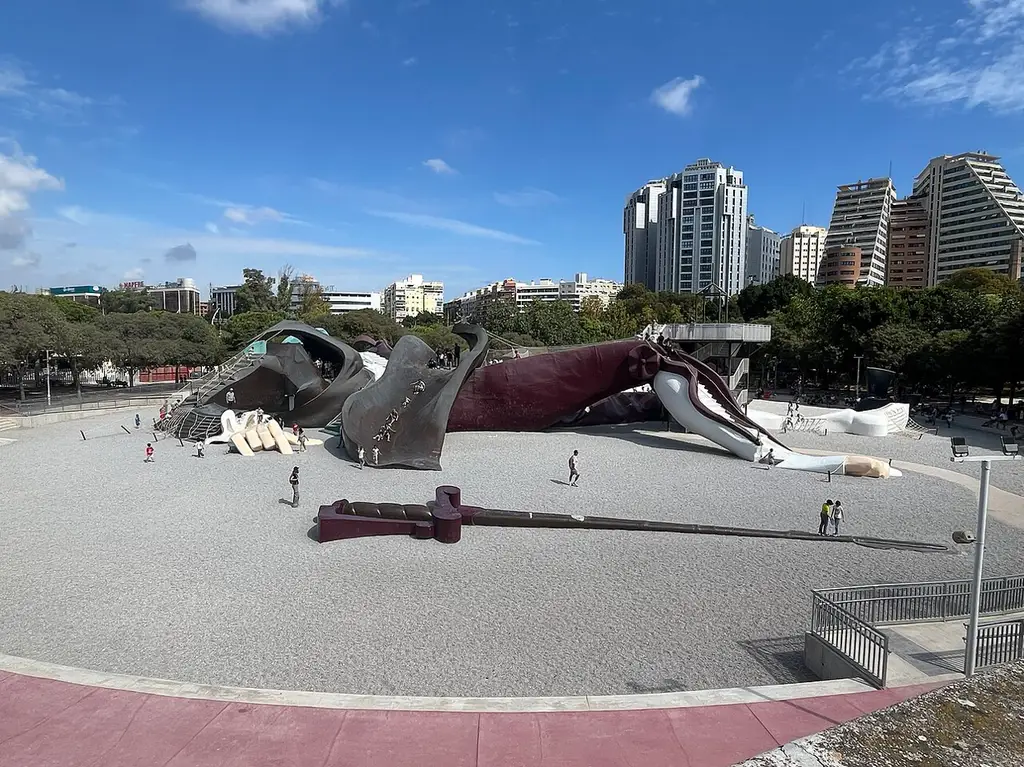
Spain is a workable place to bring children, but school fees and visas need planning, and assistant pay alone won't cover a family [3] [8].
School options
State schools are free to attend and take children who live in the area, whatever their nationality. Lessons are in Spanish, or in Catalan, Valencian, Basque or Galician in regions with their own language, and many schools run bilingual English programs. Young children usually adapt fastest.
Concertado schools are privately run but state funded, often religious, and may ask for voluntary contributions on top. Ask each school what it charges for meals, materials and extra activities.
International schools teach in English and cost the most. The American School of Madrid lists yearly tuition from 12,173 euros for early childhood to 25,072 euros for grades 9 to 12 [12]. On top of that it charges a 2,000 euro registration fee, an 8,100 euro capital fee and a 950 euro yearly matriculation fee [12]. Numbeo's average for an international primary school is about 16,002 euros a year in Madrid and about 9,284 euros in Valencia [8] [9].
Will your employer help with tuition?
Assistant programs don't. The ministry conditions list a stipend and insurance, and nothing for family members [1]. TEFL Ireland notes that bilingual and international schools sometimes add benefits to pay, so ask any school whether staff children get a place or a discount, and get it in the contract [10].
Visas for your spouse and children
Your family's papers follow yours. The regulation lets the partner and dependent children of a student apply for a stay of their own, under article 56 [7]. The government's guidance (Instruction SEM 3/2025) says those family members are not authorised to work during the stay [7]. A spouse who wants a job needs their own permission. EU citizens' family members follow the EU free movement rules instead.
Childcare
Numbeo puts a private full-day preschool at about 613 euros a month in Madrid and about 470 euros in Valencia [8] [9].
Healthcare and insurance
Teachers on an employment contract pay into Spain's Social Security, which gives access to the public health system. Assistants are covered differently. EU assistants use the European Health Insurance Card, UK assistants the GHIC, and non-EU assistants get a policy from the ministry or region [1]. A few regions, such as Aragón, register assistants with Social Security instead [2]. None of the assistant policies mention a spouse or children, so budget for private family cover before you arrive [1].
See jobs in Spain
- Senior School English Teacher, August 2027 (King's College School Alicante)Alicante
- Middle School English Teacher, August 2027 (King's College School Alicante)Alicante
- Secondary English Teacher, GCSE and IGCSE, August 2027 (British School of Madrid)Madrid
- Pre-Prep School Teacher, September 2027 (Runnymede College, Madrid)Madrid
- Teacher of English, senior school (from September 2027) (Runnymede College, Madrid)Madrid
By city: Teaching jobs in Madrid
Sources and photo credits
- 1.Ministerio de Educación, Formación Profesional y Deportes, Condiciones generales del programa de auxiliares de conversación, curso 2026 to 2027 (read 4 November 2026)
- 2.Ministerio de Educación, Formación Profesional y Deportes, Condiciones específicas por comunidad autónoma, curso 2026 to 2027 (read 4 November 2026)
- 3.Ministerio de Educación, Formación Profesional y Deportes, Condiciones específicas por comunidad autónoma, curso 2025 to 2026, version 2 (read 4 November 2026)
- 4.Junta de Comunidades de Castilla-La Mancha, information on the language assistant program for schools, 2026 to 2027 (August 2026)
- 5.Ministerio de Educación, Formación Profesional y Deportes, Auxiliares de conversación extranjeros en España, guía para el personal tutor 2026 to 2027 (July 2026)
- 6.Boletín Oficial del Estado, Real Decreto 1155/2024, Reglamento de la Ley Orgánica 4/2000, consolidated text (published 20 November 2024, in force 20 May 2025)
- 7.Máchelin Díaz, study stays under the 2024 immigration regulation (27 June 2025, revised 2 November 2026)
- 8.Numbeo, cost of living in Madrid (updated 1 November 2026)
- 9.Numbeo, cost of living in Valencia, Spain (read 4 November 2026)
- 10.TEFL Ireland, Spain TEFL salary guide 2026 by job type and city (updated 12 March 2026)
- 11.The TEFL Academy, can non-EU residents teach in Spain (updated 29 June 2026)
- 12.American School of Madrid, tuition and fees (read 4 November 2026)
Photos
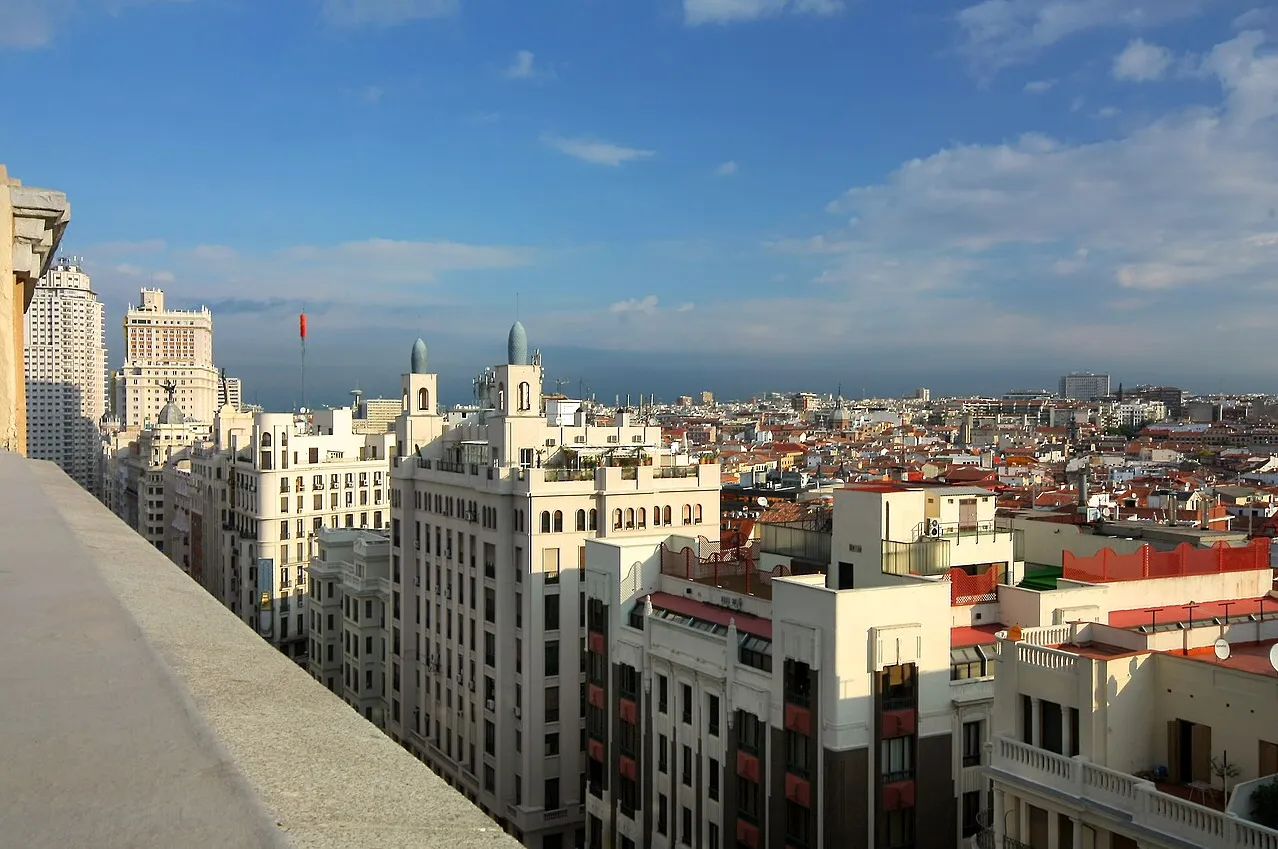
- Rooftops along the Gran Vía in central Madrid: Tomás Fano, CC BY-SA 2.0, via Wikimedia Commons
- The Gulliver playground in the Turia Gardens, Valencia: MCAE Consulting, CC0, via Wikimedia Commons
Get new jobs in Spain by email
One email a week with the jobs added since the last one. Free, with no account.
Nothing is sent until you open the link we email you. Choose a role, a pay level or daily emails
We use your address only to send the alerts you ask for, and every email has a one-click unsubscribe link. The privacy notice says how long we keep it, and the terms of use cover the alerts.
We check this guide again by February 2, 2027. Rules change, so confirm visa steps with the embassy and your school before you go. First published November 4, 2026. Spotted something out of date? Tell us. How we write these guides.