Opening a bank account in Japan
Get your first Japanese salary paid without a hitch by opening the right account in your first weeks. Here's which banks say yes to new arrivals, what to bring, and what happens to your pay until the account is ready.
AbroadPin team7 min read
Contents
Your school will almost certainly want to pay you by bank transfer, and in Japan the bank is the one thing that depends on everything else being done first: your residence card, your registered address and often a local phone number. Get those in order and the account itself is usually quick. This page covers the banks, the paperwork, the fees and what to do about your pay in the meantime. For pay, visas and employers, see the main guide to teaching in Japan.
Before you go to any bank
Banks check your status from your residence card, so everything starts there. Sort these out in this order.
- Your residence card. You're issued one when you arrive on a work visa. If your period of stay ends within 3 months of the day you apply, Japan Post Bank won't open an account until you've renewed [1]. SMBC Trust Bank (PRESTIA) applies the same 3-month rule [5].
- Your address. Register it at your city or ward office. Tree Global Partners notes this is due within 14 days and that banks won't open an account until it's done [4].
- A Japanese phone number. Some banks require one, though Japan Post Bank often doesn't [4]. PRESTIA's online application asked for a phone in Japan that can receive text messages [6].
- Proof of your job. Some banks ask you to confirm your employment, so keep your contract and, once you have one, a payslip [4].
- Your My Number. Some banks ask for a My Number Card or a residence certificate showing the number, and the card itself usually takes about 1 to 2 months to arrive [4]. Not every bank needs it: SBI Shinsei Bank says My Number is not a required document for its postal application [7].
A personal seal (hanko) is often optional now. Japan Post Bank accepts a signature from foreign customers, and a basic seal costs about ¥500 to ¥3,000 if you want one anyway [4]. PRESTIA also lets you register a signature instead of a seal [6].
The six-month question
You'll hear that you can't open an account until you've been in Japan for six months. The real picture is more mixed, and having a job here helps.
- Japan Post Bank (Yucho) opens accounts for foreign customers who have a residence in Japan, and you can open one with a zero yen deposit [2]. It turns away people who entered for 3 months or less and have no residence card [1].
- PRESTIA asks that at least 6 months have passed since you entered Japan; if not, you need an extra document showing you're employed in Japan, such as an employee ID card [5].
- SBI Shinsei Bank, for postal applications, asks for a passport copy showing at least six months in Japan only when your residence card doesn't show a "Date of Permission" [7].
- The big city banks. Tree Global Partners says MUFG, SMBC, Mizuho and Resona are likely to decline a regular savings account for someone in Japan under 6 months, though branches differ [4].
For foreign exchange purposes, people in Japan under 6 months who aren't employed at an office in Japan may be treated as non-residents, which can limit international transfers [4]. If you count as a non-resident under the Income Tax Act or the Foreign Exchange Act, Japan Post Bank asks you to file a non-resident declaration form [2].
Which bank to start with
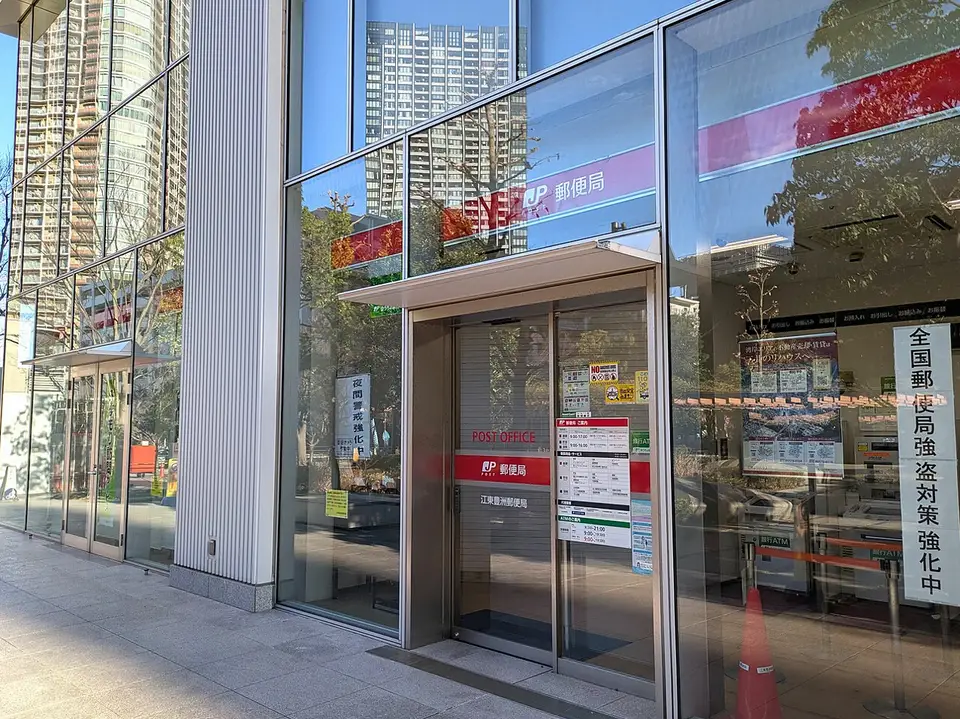
Tree Global Partners calls Japan Post Bank (Yucho) the first bank for many newcomers, and it's the one most teachers hear about first [4]. It has a call centre for non-Japanese customers in English, Chinese, Korean, Vietnamese, Indonesian, Nepali and Burmese [3]. Call it first: if you walk into a post office without contacting the call centre, you may not be able to apply that day and may need to book and come back [3]. The bank also says that if you can't follow the explanations in Japanese, it may ask you to bring someone who can [1]. Your passbook may be posted to your home rather than handed over on the day, and the bank can decline an application [1].
Once you have a first account, these are the names other foreign residents mention most, from Tree Global Partners' May 2026 overview [4]:
- SBI Shinsei Bank (PowerFlex): English-friendly and good for sending money abroad [4].
- Sony Bank: multi-currency accounts and transfers abroad [4].
- Rakuten Bank: online banking that ties in with payment services [4].
- SBI Sumishin Net Bank: low fees, but services and phone support are mostly in Japanese [4].
- SMBC: phone support in several languages on weekdays, with limited hours [4].
- MUFG and Mizuho: mostly Japanese-only support [4].
PRESTIA is worth knowing about because it runs in English, but check its page before you plan around it. As of 23 October 2026 it had suspended online account applications, so accounts now open at a branch by appointment [6].
How long it takes
Neither bank promises a fixed date, so leave room before your first payday. Japan Post Bank posts the cash card to your registered address later, and the timing depends on its checks and the post [4]. PRESTIA says a branch opening takes several business days as a general rule [6]. Its online route, before the pause, sent results in about 3 to 5 business days and the card by registered mail about 5 business days after opening [6]. The card goes by registered mail with no forwarding, so keep your name on your mailbox [6].
Fees and cards
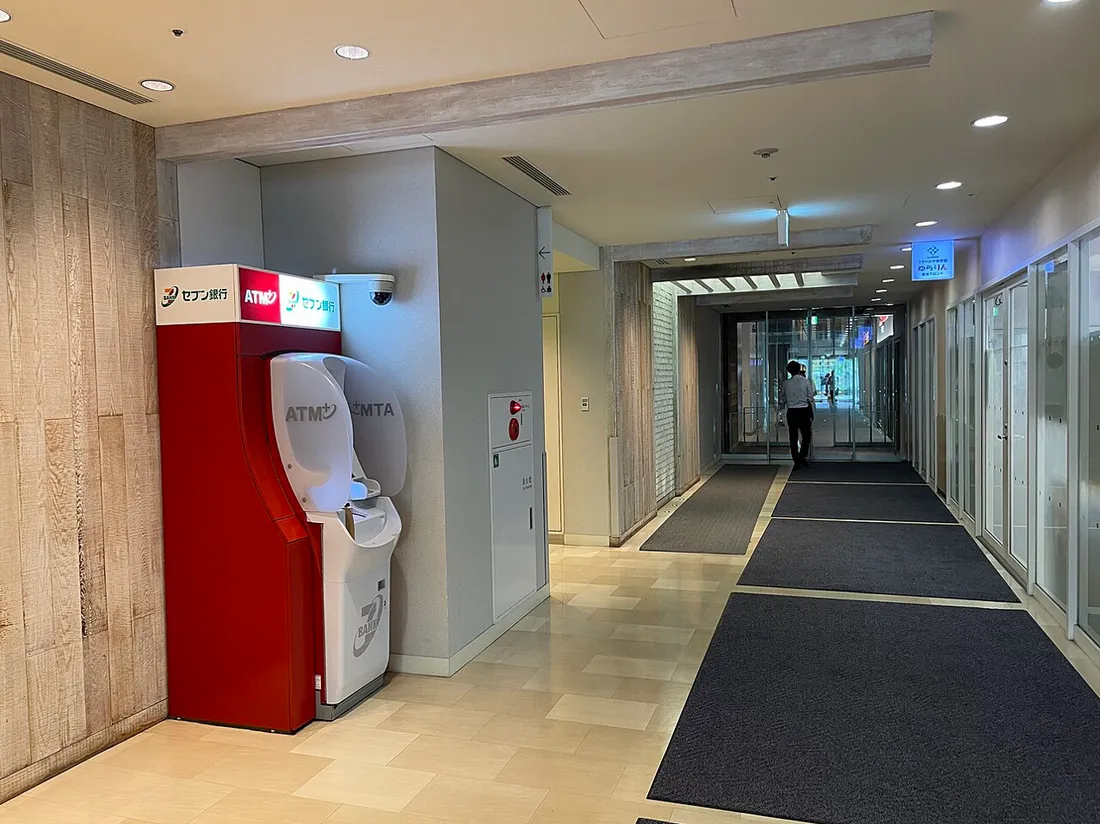
Fees vary a lot, so read your bank's own fee page once your account is open. A few examples:
- Japan Post Bank ATMs. Many withdrawals are free at post offices and the bank's own branches, while other ATMs may charge typically ¥110 to ¥330 [4].
- PRESTIA's monthly fee. The account costs 2,200 yen a month including tax [6]. It's waived for a month if, the month before, your average total balance was 500,000 yen or more, or your foreign currency balance was worth 200,000 yen or more [6]. Every new customer gets the first 3 months free, counting the opening month [6].
- Debit cards. PRESTIA's GLOBAL PASS is a multi-currency Visa debit card that doubles as your cash card [6].
Cards, apps and paying for things
Cards and apps cover more of daily spending than many newcomers expect. The trade ministry put cashless payments at 58.0% of consumer spending in 2025 [10]. Credit cards made up 82.7% of that cashless total, QR code payments 10.2%, electronic money 3.7% and debit cards 3.4% [10].
If you plan to use a QR code app such as PayPay, note that its salary feature is only open to users who have completed identity verification in the app [9]. Carry some cash for your first weeks while your cards arrive.
Getting paid before your account is open
Under the Labor Standards Act, wages are in principle paid in cash, and paying them into a bank account needs your consent [8]. So if your first payday comes before your account is ready, ask your school early how they'll handle it, and get the answer in writing. Don't hand over someone else's account. Selling or passing a passbook or cash card to someone else for their use is a crime [1].
Since April 2023, employers may also pay wages into a digital account run by a funds transfer provider that the labour ministry has designated [8] [9]. PayPay was designated on 9 August 2024, as provider number 00001 [9]. Three things to know before you rely on it:
- Your employer needs a labour-management agreement in place first, and you must give your own consent [8].
- The account balance is capped at ¥1,000,000 or less, and anything over the cap goes to a bank account you've named in advance [8].
- Your employer can't make you accept digital pay; you can still be paid by bank deposit [8].
In other words, digital pay sits beside a bank account rather than replacing it.
Keeping the account in good standing
- Renewals and moves. When you renew your residence card or change address, update Japan Post Bank through its app or at a counter, or your transactions may be restricted for a while [1].
- Leaving Japan. Close the account before you leave for good. Japan Post Bank asks this of foreign customers, and PRESTIA asks the same before departure [1] [5].
- Your documents. Banks keep copies of what you show them, and SBI Shinsei doesn't return forms or ID copies sent by post [1] [7].
A simple order for your first month
- Collect your residence card on arrival and register your address at the city office within 14 days [4].
- Get a Japanese phone number, so the bank can reach you by text.
- Call Japan Post Bank's call centre for non-Japanese customers and book a visit [3].
- Open the account with your residence card, signature and job papers, and give payroll the details.
- Once the cash card arrives, set up a payment app and, later, a second bank if you need English service or cheaper transfers home.
When you're settled and thinking about your next contract, have a look at the open jobs in Japan.
See jobs in Japan
- English Teacher, Central Japan district, based in Nagoya area (ECC Foreign Language Institute)Nagoya · $1,773 a month
- English Literature and Culture Faculty, April 2028 (Sophia University, Tokyo)Tokyo · $2,632 to $3,421 a month
- First-Year Writing Lecturer or Professor, Fall 2027 (Temple University Japan, Tokyo and Kyoto)Tokyo · $2,632 a month
- English Teacher, East Japan district, based in Tokyo area (ECC Foreign Language Institute)Tokyo · $1,773 a month
- English Teacher, West Japan district, based in Osaka area (ECC Foreign Language Institute)Osaka · $1,773 a month
By city: Teaching jobs in Tokyo · Teaching jobs in Chiba · Teaching jobs in Nagoya · Teaching jobs in Koshigaya
Sources and photo credits
- 1.Japan Post Bank, for foreign customers opening an account (read 4 November 2026)
- 2.Japan Post Bank FAQ, can foreigners open an account (4 March 2020)
- 3.Japan Post, support for non-Japanese customers opening an account (read 4 November 2026)
- 4.Tree Global Partners, bank accounts in Japan for foreigners (12 May 2026)
- 5.SMBC Trust Bank (PRESTIA) FAQ, foreign nationals opening an account (updated 15 September 2026)
- 6.SMBC Trust Bank (PRESTIA), open an account (notice of 23 October 2026, read 4 November 2026)
- 7.SBI Shinsei Bank, identification documents for opening an account (last modified 28 October 2026)
- 8.Ministry of Health, Labour and Welfare, digital wage payments for workers and employers (read 4 November 2026)
- 9.PayPay, press release on digital salary payments (21 August 2024)
- 10.Ministry of Economy, Trade and Industry, 2025 cashless payment ratio (31 March 2026)
Photos
- A Japan Post office in Toyosu, Tokyo, with Japan Post Bank ATMs inside: Suikotei, CC BY 4.0, via Wikimedia Commons
- A Seven Bank ATM in an office building lobby in Toyosu, Tokyo: Nori Norisa, CC BY 4.0, via Wikimedia Commons
Get new jobs in Japan by email
One email a week with the jobs added since the last one. Free, with no account.
Nothing is sent until you open the link we email you. Choose a role, a pay level or daily emails
We use your address only to send the alerts you ask for, and every email has a one-click unsubscribe link. The privacy notice says how long we keep it, and the terms of use cover the alerts.
We check this guide again by February 2, 2027. Rules change, so confirm visa steps with the embassy and your school before you go. First published November 4, 2026. Spotted something out of date? Tell us. How we write these guides.