Schools for teachers' kids in Japan
Your children can go to a Japanese public school for free, and international schools post their fees openly. Here's how enrolment, daycare and the family visa fit around a teaching job.
AbroadPin team6 min read
Contents
Teaching English in Japan with kids comes down to three choices: a local public school, a private international school, or daycare and kindergarten for the little ones. Each one has its own paperwork and its own timetable, and the costs are very different. This page walks through all three, plus the visa your family needs. If you haven't picked an employer yet, start with the main guide to teaching in Japan.
Local public schools
Japanese public schools accept foreign children whose parents want to enrol them [1]. Lessons are in Japanese, so they suit younger children, or families staying a few years who want their kids to pick up the language.
Elementary school lasts six years and junior high three, and a child can start elementary school in the April after turning six [1]. The school year starts in April, but you can enrol partway through the year as a transfer [2].
What it costs
Tuition and textbooks at public elementary and junior high schools are free [1]. You still pay for things like school supplies, and your city may help with those costs if money is tight [1].
How to enrol
The steps vary a little by city, but they usually run like this [2]:
- Register your address at the city or ward office after you arrive, and tell them you have a school-age child.
- Apply to the local board of education. It sends a school notice for the school that serves your address.
- Visit that school. It confirms your child's grade and sets a start date.
Bring your child's residence card and passport, proof of your address, the school notice, health and vaccination records if you have them, and earlier school reports, translated if you can [2]. The education ministry publishes a guidebook on starting school in seven languages, English among them, which is handy to read before your first visit [8].
International schools and their fees
International schools teach in English, follow foreign or IB curriculums, and charge private fees. Two schools outside Tokyo show the range: Fukuoka International School and Yokohama International School, both with fees for the 2026 to 2027 year [3] [4].
| Grade | Fukuoka International School, yearly tuition [3] | Yokohama International School, yearly tuition [4] |
|---|---|---|
| Preschool | ¥1,855,000 (ages 3 and 4) | ¥2,120,000 half day, ¥2,610,000 full day |
| Kindergarten to Grade 5 | ¥1,891,000 | ¥3,210,000 |
| Grades 6 to 8 | ¥2,044,000 | ¥3,345,000 (Grades 6 to 11) |
| Grades 9 and 10 | ¥2,195,000 | ¥3,345,000 (Grades 6 to 11) |
| Grades 11 and 12 | ¥2,286,000 | ¥3,345,000 for Grade 11, ¥3,440,000 for Grade 12 |
Tuition is only part of the bill, so add the one-off and yearly fees:
- Fukuoka International School charges a ¥52,000 application fee, a ¥350,000 acceptance fee and a ¥500,000 development fee, then a ¥200,000 facility fee each year [3].
- Yokohama International School charges a ¥50,000 application fee and a ¥1,480,000 registration fee, due within 14 days of acceptance, plus a ¥399,000 campus development fee each year [4].
- Yokohama splits tuition into two payments, due on 17 July and 7 December 2026 [4].
- At Fukuoka, lunch is optional and charged extra, and the Week Without Walls trip is invoiced at about ¥50,000 to ¥120,000 [3].
Set next to typical ALT and eikaiwa pay, a full international school fee takes a large share of one salary, so weigh it against the free public option. Bilingual schools and Japanese private schools sit in between; ask each one for its current fee sheet before you apply.
Will your employer pay tuition?
Don't assume so. The JET Programme's own guidelines say that a participant who brings a spouse or family is completely responsible for all the arrangements and costs, including travel and living [5]. They say nothing about help with school fees [5].
Some international schools have their own routes for company help. Yokohama International School offers scholarships when a parent's employer takes part in its Corporate Contribution Program [4]. If a school or university hiring you mentions tuition support, get the amount, the number of children it covers and how long it lasts written into your contract.
Daycare and kindergarten
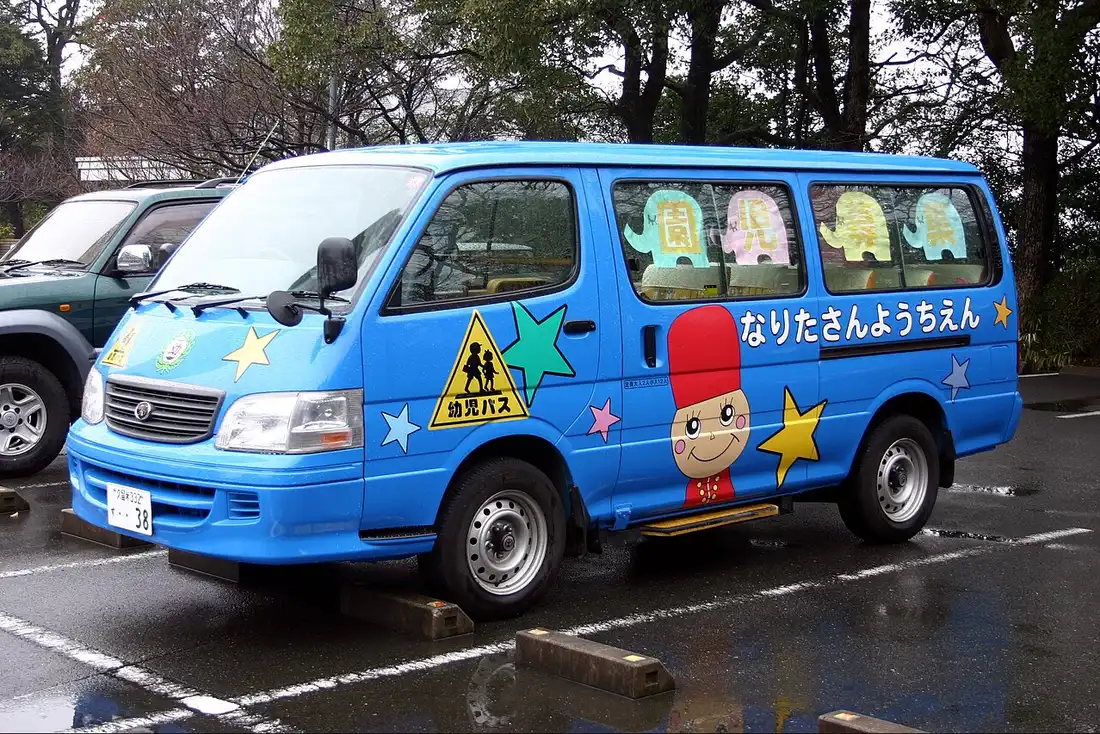
For children under school age, Japan has licensed nursery schools (hoikuen), which are for children whose parents work or can't care for them in the day, and kindergartens (yochien), which are educational [7]. Your city office handles nursery places, and each city runs its own system, so check your city's page once you know where you'll live.
Yokohama's rules give a good idea of how it works [7]:
- Ages 3 to 5 are free. There's no usage fee for the 3 to 5 year old classes at kindergartens and daycare centres, though lunch and extended hours cost extra [7].
- Ages 0 to 2 are charged by income. A licensed nursery place costs from ¥0 to ¥77,500 a month for this age group, and it's free for households that don't pay municipal residents' tax [7].
- Apply early for April. Applications for an April start open in early October of the year before [7].
- Other months. Applications open at the start of the month two months before your child starts and close at the start of the month before [7].
- Kindergarten is open to children from the day before their third birthday [7].
The October window lines up badly with a JET or ALT contract that starts in April or August, so ask your city office about mid-year places as soon as you have an address.
Visas for your spouse and children
Spouses and children of people working in Japan get the Dependent status of residence [6]. Your employer can apply for your family's Certificates of Eligibility at the same time as yours, or your family can apply after you already have your work status [6].
A few rules to know:
- Legal family only. JET says only legal spouses and children can get a Dependent visa, and a fiancé or common-law partner can't [5]. Family members applying alongside a JET participant show the embassy official papers proving the marriage or the parent and child relationship [5].
- Proof of the relationship. For a child, that means a birth certificate or family register, plus your residence card, an employment certificate and income or tax papers [2].
- Work for your spouse. Paid work on a Dependent visa is not allowed in principle, but with permission for activities outside the status your spouse can work up to 28 hours a week [6].
- Babies born in Japan. A child born here needs to apply for a status of residence within 30 days of birth [2].
Health cover for the family
Check who your health insurance covers before you fly. JET's guidelines make its mutual aid insurance compulsory for the participant, but don't mention family members [5]. Ask your employer in writing whether your spouse and children can join your plan as dependents, or whether they'll need to join the National Health Insurance at the city office.
Your first months, in order
- Before you sign, ask your employer about family housing, tuition help and health cover for dependents.
- Have your family's Certificates of Eligibility filed with yours, so you can travel together [6].
- In your first week, register your address and tell the city office about your children [2].
- Apply to the board of education for a public school place, or contact international schools, whose fees and deadlines you've already compared [2] [3] [4].
- For under-sixes, ask the city office about nursery places and the free 3 to 5 classes [7].
When you're ready to look for work that fits family life, browse jobs in Japan and apply straight to the school.
See jobs in Japan
- English Teacher, Central Japan district, based in Nagoya area (ECC Foreign Language Institute)Nagoya · $1,773 a month
- English Literature and Culture Faculty, April 2028 (Sophia University, Tokyo)Tokyo · $2,632 to $3,421 a month
- First-Year Writing Lecturer or Professor, Fall 2027 (Temple University Japan, Tokyo and Kyoto)Tokyo · $2,632 a month
- English Teacher, East Japan district, based in Tokyo area (ECC Foreign Language Institute)Tokyo · $1,773 a month
- English Teacher, West Japan district, based in Osaka area (ECC Foreign Language Institute)Osaka · $1,773 a month
By city: Teaching jobs in Tokyo · Teaching jobs in Chiba · Teaching jobs in Nagoya · Teaching jobs in Koshigaya
Sources and photo credits
- 1.Tokyo Metropolitan Government, enrollment in public elementary and junior high schools (2 December 2024)
- 2.Tree Global Partners, Dependent visa and enrolling your child in a Japanese school (23 June 2026)
- 3.Fukuoka International School, tuition and fees for 2026 to 2027 (published 29 January 2026)
- 4.Yokohama International School, tuition and fees for 2026 to 2027 (last modified 27 February 2026)
- 5.JET Programme 2026 guidelines, sections 2, 8 and 11 (Embassy of Japan in Malaysia, read 4 November 2026)
- 6.JETRO, family members accompanying working foreign nationals (read 4 November 2026)
- 7.City of Yokohama, childcare and nursery schools (updated 1 October 2026)
- 8.Ministry of Education (MEXT), guide for foreign students to start school (30 June 2016)
Photos
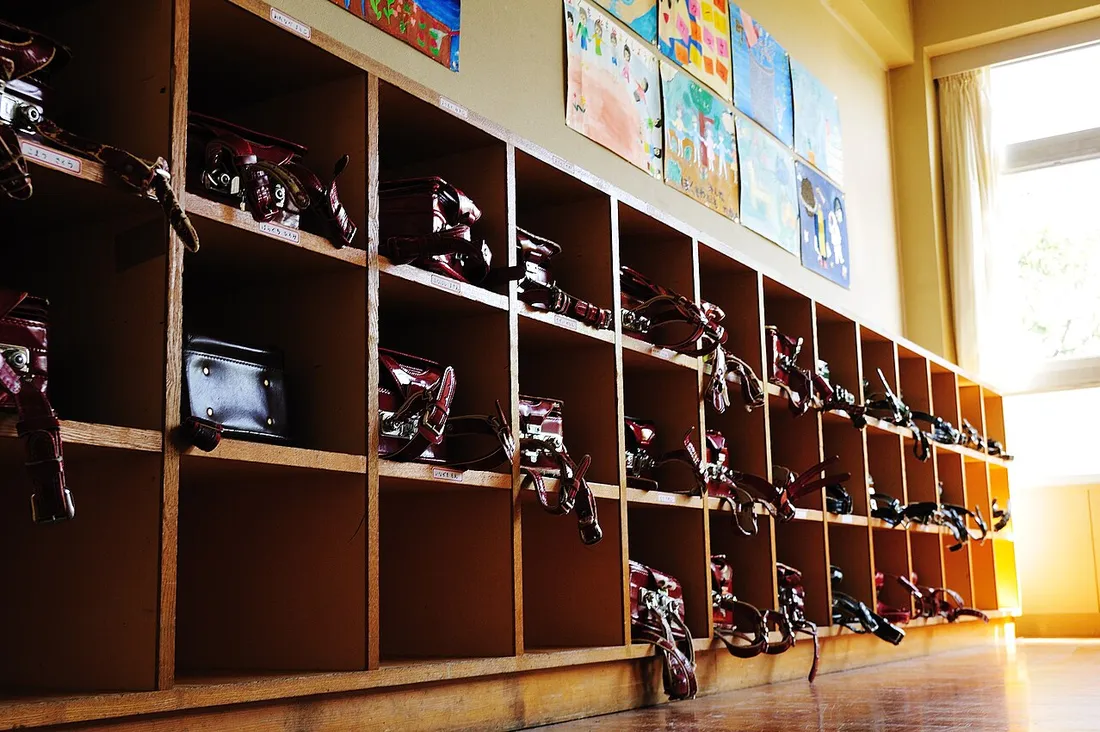
- Randoseru school bags in the cubbies of a Japanese elementary school classroom: ajari, CC BY 2.0, via Wikimedia Commons
- A kindergarten bus in Japan; many yochien collect children from near home: Timothy Boscarino, CC BY 2.0, via Wikimedia Commons
Get new jobs in Japan by email
One email a week with the jobs added since the last one. Free, with no account.
Nothing is sent until you open the link we email you. Choose a role, a pay level or daily emails
We use your address only to send the alerts you ask for, and every email has a one-click unsubscribe link. The privacy notice says how long we keep it, and the terms of use cover the alerts.
We check this guide again by February 2, 2027. Rules change, so confirm visa steps with the embassy and your school before you go. First published November 4, 2026. Spotted something out of date? Tell us. How we write these guides.