Teaching English in South Korea
Teach English in South Korea with a clear picture of pay, housing and the E-2 visa. Public school and academy jobs usually come with a studio flat, so the main questions are which employer suits you and what papers to start on now.
AbroadPin team9 min read
Contents
South Korea at a glance
| EPIK pay | 2.2 to 2.8 million KRW a month for levels 2 to 1+, depending on region (Fall 2026 scale) [2] |
|---|---|
| Academy ads | 2.3 to 3.4 million KRW a month, mostly for March 2027 starts [5] |
| Visa | E-2, granted for the contract plus 1 month, up to 2 years at a time [8] |
| Degree | A bachelor's degree or higher for the E-2 [8] |
| Rent, one-bed central | About 1,167,000 KRW in Seoul vs 997,500 KRW in Busan (Numbeo) [10] [11] |
Who hires English teachers in Korea
Most teaching contracts in Korea run for a year, and many include a flat. The jobs come from four main kinds of employer.
- EPIK public schools. The English Program in Korea places English teachers from abroad in state schools across the country. It started in 1995 and has been run since 2007 by NIIED, an institute under the Ministry of Education [1]. EPIK takes teachers for spring and fall terms each year [1].
- City and provincial offices of education. Each office of education sets its own pay within EPIK. Seoul's office, SMOE, uses a separate pay scale of its own [2]. Gyeonggi province once recruited through its own program, GEPIK, and Teach Away said in 2023 it had stopped taking GEPIK applications [3]. Gyeonggi now has a column on EPIK's current pay table [2]. Jeollanam-do runs an EPIK Plus option [1].
- Hagwons. Private academies, from big chains to single-branch schools. Most foreign teachers teach kindergarten and primary-age children in the afternoon and evening [5] [7]. Recruiter Korvia's current board has ads from Seoul, Gyeonggi, Busan, Incheon, Daegu, Gwangju and Gyeongnam [5].
- Universities. Conversation and general English courses, often with fewer class hours and long breaks. Seoul Start puts the load at about 10 to 16 teaching hours a week plus office hours [7].
International schools hire as well, mostly qualified classroom teachers, and they recruit separately from the ESL market.
What it pays
EPIK publishes its pay scale. Hagwons and universities don't have one, so the table mixes the official EPIK scale with recruiter ads and teaching sites [2] [4] [5] [6] [7].
| Employer | Pay as the source gives it | Source and date |
|---|---|---|
| EPIK, levels 2 to 1+ | 2.2 to 2.8 million KRW a month, by region and level | EPIK, updated 4 May 2026 [2] |
| EPIK, Chungbuk top levels | 2.9 million (S) and 3.0 million (S+) KRW a month | EPIK, updated 4 May 2026 [2] |
| EPIK, via a recruiter ad | 2.05 to 2.8 million KRW a month, based on experience | The TEFL Academy, 16 Oct 2026 [4] |
| Hagwons, current recruiter ads | 2.3 to 3.4 million KRW a month, most with a single studio | Korvia, read 4 Nov 2026 [5] |
| Hagwons, first-year teachers | About 2.3 to 2.5 million KRW a month | Seoul Start, read 4 Nov 2026 [7] |
| Universities | 2.5 to 4.0 million KRW a month | Seoul Start, read 4 Nov 2026 [7] |
| Universities, 2022 starts | 2.3 to 3.5 million KRW a month | Go Overseas, 2022 figures [6] |
Some points behind the table:
- Level 3 is closed for now. EPIK says offices of education are not currently hiring level 3 applicants [2]. Your level depends on your degree, certificates and experience [3].
- Region matters. Gyeonggi's level 1+ rate is 2.5 million KRW, the lowest on EPIK's table, though it adds a 1++ level at 2.6 million [2]. Gyeongbuk, Jeonbuk, Chungbuk, Chungnam and Jeju pay 2.8 million at level 1+ [2].
- The top of the university range is the exception. Seoul Start says 4.0 million KRW is for well-funded schools and strong candidates, not a typical start [7].
The extras EPIK pays
EPIK's benefits are set out on its own pay page [2]:
- Settlement allowance: 300,000 KRW once, in your first month [2].
- Entrance allowance: 1,800,000 KRW at the end of your first month (1,300,000 KRW in Chungbuk). It's treated as a loan if you leave within six months, and five regions pay it after six months instead [2].
- Contract completion bonus: 1,300,000 KRW per contract, or 1,800,000 KRW in Chungbuk [2].
- Renewal bonus: 700,000 KRW per renewed contract, 2,000,000 KRW in Gyeonggi [2].
- Housing: A leased flat or studio, with utilities and maintenance fees paid by you [2].
- Severance: About one month's salary when you finish the contract [2].
An October 2026 EPIK recruitment ad lists 26 paid vacation days plus national holidays [4]. Seoul Start gives a maximum of 22 teaching hours a week for EPIK [7].
Hagwon packages vary more. Most of the 24 ads on Korvia's board offer a single studio, and one offers a housing allowance instead [5]. Seoul Start says Korean law gives severance of about one month's average wage per year to anyone who works a year or more on a formal contract, paid within 14 days of the last day [7].
The minimum you need
These are the E-2 visa's rules, set by Korea's immigration authorities, plus what employers ask on top [8].
- A passport from a listed country. For English conversation teaching, the E-2 rules name nationals of the United States, the United Kingdom, Canada, South Africa, New Zealand, Australia and Ireland [8]. EPIK also accepts applicants who meet the F-4 visa requirements [3].
- A bachelor's degree or higher. The degree certificate needs an apostille or consular legalisation [8].
- A criminal record check. It must be a national-level check from your government, with an apostille [9]. The consular page says online or emailed records aren't valid [9].
- A health check with a drug test. The medical certificate must include a drug test, and KLAWGURU says HIV results are no longer required [8].
- A TEFL certificate or a teaching licence. Not a visa rule, but EPIK asks for one, and certificates of 100 hours or more count towards a higher pay level [3] [4].
The rules change, so check the current list on HiKorea or with your nearest Korean mission before you order documents. KLAWGURU makes the same point [8].
E-2 visa, step by step
- Sign a contract. Your employer has to be the school you'll actually work for, because the visa ties you to it [8].
- Order your documents. Get the criminal record check and degree apostilled at home. If you've been away from Korea for over 3 months between E-2 jobs, the consular page says you need a new check [9].
- Your employer applies for a Certificate of Confirmation of Visa Issuance. This is the document that lets the consulate issue your visa [8].
- Apply for the visa at a Korean mission. KLAWGURU says the E-2 can't be done through the online visa portal [8]. The consular page lists 50 USD for a single-entry visa and 80 USD for multiple entry, dated 2013 [9].
- Arrive and finish the paperwork. That means the medical check and registering as a resident, and your school or EPIK office usually walks you through both.
- Extend before it runs out. The first stay is the contract length plus 1 month, up to 2 years, and each extension can be up to 2 years [8]. You can apply from 4 months before your current stay ends [8].
Cost of living: Seoul and Busan
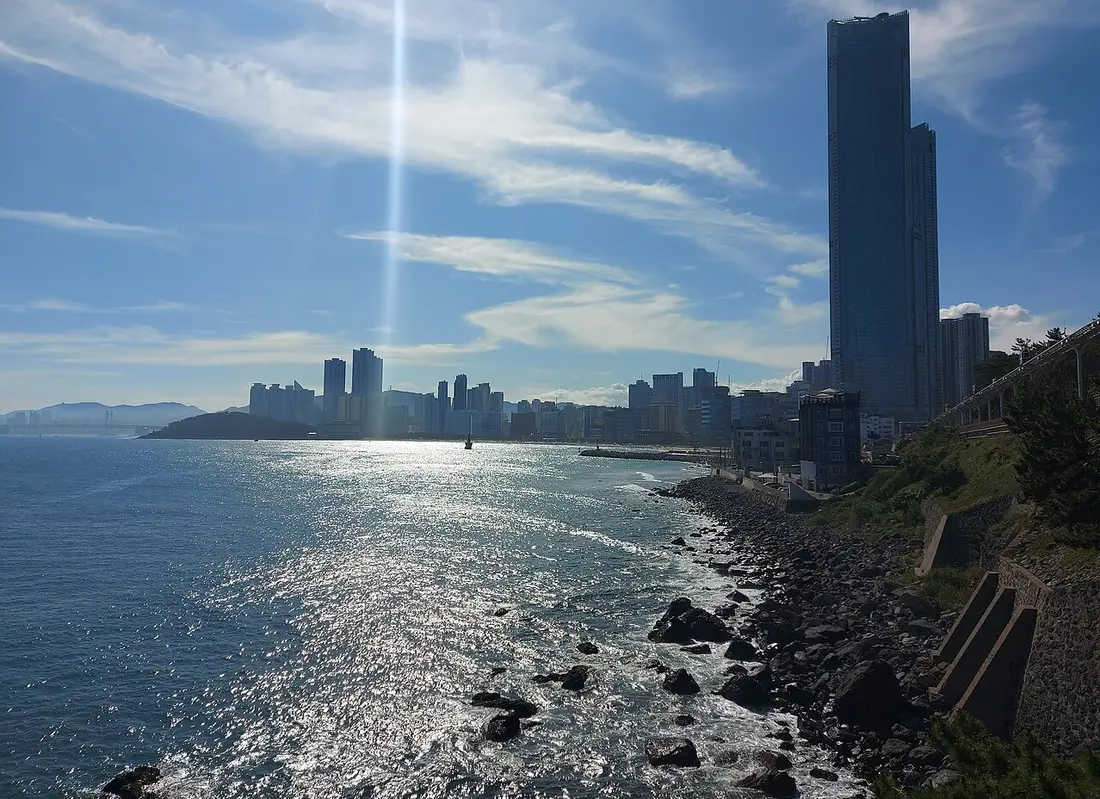
If your job comes with housing, rent drops out of your budget and the rest is food, transport and bills. If you get an allowance instead, these numbers matter more. Numbeo's crowd-sourced figures were read on 4 November 2026 for Seoul and updated on 1 November 2026 for Busan [10] [11].
| Item | Seoul | Busan |
|---|---|---|
| One-bed flat, centre, a month | About 1,167,000 KRW | 997,500 KRW |
| One-bed flat, outside the centre, a month | About 705,000 KRW | About 768,000 KRW |
| Utilities for an 85 m2 flat, a month | About 245,000 KRW | About 268,000 KRW |
| Home internet, a month | About 32,000 KRW | 36,250 KRW |
| Cheap restaurant meal | 11,000 KRW | 10,000 KRW |
| Transport pass, a month | 61,000 KRW | 93,000 KRW |
| One bus or metro ride | 1,450 KRW | 1,550 KRW |
Numbeo puts one person's monthly costs in Busan at about 1.54 million KRW without rent [11]. A central one-bed in Seoul runs about 170,000 KRW a month more than one in Busan [10] [11].
When schools hire
EPIK has two intakes. Seoul Start says spring placements start in February or March and fall placements in August or September, and applications close several months before [7]. The October 2026 EPIK ad also gives February and August as the main intakes [4].
Hagwons hire all year, and many want someone who can start soon [7]. Even so, 19 of the 24 ads on Korvia's board in early November 2026 were for March 2027 starts [5]. If you want a March job, start your criminal record check and apostilles now.
Red flags and staying legal
Your E-2 covers foreign language conversation teaching for the employer named on it. Changing or adding a workplace needs permission first under Article 21 of the Immigration Act [8]. Teaching at another place without that permission is a violation, and KLAWGURU says private tutoring or teaching outside the permitted scope may be one too [8]. Breaches can lead to criminal penalties, a departure order or deportation, and employers who hire outside the rules can be punished as well [8].
Seoul Start lists these hagwon warning signs [7]:
- Unpaid "lesson prep" that is really extra teaching time.
- No national health insurance or pension enrolment.
- Vague vacation wording instead of set dates or a minimum number of days.
- Housing described as "provided" with no address or allowance amount in writing.
- A severance clause that cuts what the law gives you.
- Deductions from pay that the contract doesn't list.
- A recruiter who asks you for a placement fee.
Ask to speak to a current foreign teacher at the school before you sign. A good hagwon will usually say yes.
If the job looks right, see open jobs in South Korea.
Moving with kids
Most ESL jobs in Korea are set up for a single teacher in a studio, so a family move takes more planning. Ask early about housing size, and read EPIK's FAQ, which has its own entries on bringing a dependent and on married couples [15].
School options
International schools teach in English and cost the most. Seoul Foreign School's 2026 to 2027 fees show how they're charged, in won plus dollars [12]:
| Grade | Yearly tuition, 2026 to 2027 |
|---|---|
| Kindergarten to Grade 5 | 27,285,000 KRW plus 13,500 USD |
| Middle school, Grades 6 to 8 | 27,930,000 KRW plus 14,625 USD |
| High school, Grades 9 to 12 | 33,370,000 KRW plus 14,955 USD |
New students there also pay a 450,000 KRW application fee, a 650,000 KRW registration fee and a 5,500,000 KRW entrance fee [12]. Numbeo's average for international primary school is about 27.7 million KRW a year in Seoul and about 29.2 million KRW in Busan [10] [11].
Korean public schools teach in Korean. They tend to suit younger children, or families who plan to stay several years and want their kids to learn the language. Ask your local office of education how enrolment works for foreign residents.
Will your employer help with tuition?
Don't count on it at a public school or hagwon. EPIK's benefits page lists housing, allowances, severance and health cover, but no tuition help [2]. If a school does offer it, get the amount and the number of children it covers in the contract.
Visas for your spouse and children
Family members of E-2 holders come on the F-3 dependent visa. Yonsei University's visa page says it covers spouses and children under 20 of E-2 holders [13]. You'll need proof of the relationship, such as a marriage or birth certificate, plus proof of your job and tax payments [13]. That page lists the fee as 50 USD single entry or 80 USD multiple entry [13]. It doesn't say whether F-3 holders may work, so check that with immigration before your spouse plans on a job.
Childcare
Numbeo puts a private full-day preschool at about 518,000 KRW a month per child in Seoul and 850,000 KRW in Busan [10] [11]. Many hagwon kindergartens teach in English, but they're academies, not licensed childcare, so ask what you're signing up for.
Healthcare for the family
You join national health insurance through your job. EPIK says premiums are about 5.89% of salary, and your office of education pays half of that, about 2.945% [2]. EPIK says the office of education also pays 50% of the premiums for dependents living in Korea [2]. Since 3 April 2024, most foreign dependents need six months in Korea before they can be added to a subscriber's insurance, but a spouse and children under 19 are exempt from that wait [14]. Seoul Start counts a hagwon that skips health insurance enrolment as a red flag, so check your enrolment before you rely on it for your family [7].
See jobs in South Korea
- Kindergarten and Elementary English Teacher, March 2027 (English academy Munjeong Songpa Seoul)Seoul
- Kindergarten English Teacher, March 2027 (immersion kindergarten Sinsa Gangnam Seoul)Seoul
- Kindergarten English Teacher, three posts, March 2027 (English kindergarten Gangnam Seoul)Seoul
- Pre-K Homeroom English Teacher, March 2027 (Hillside Collegiate Songdo Incheon)Incheon
- Primary and Secondary English Teacher, March 2027 (private school Gangnam Seoul, 3.0M to 3.5M won)Seoul
By city: Teaching jobs in Seoul · Teaching jobs in Incheon · Teaching jobs in Seongnam · Teaching jobs in Suwon
Sources and photo credits
- 1.EPIK (English Program in Korea), overview and history (read 4 November 2026)
- 2.EPIK, salary and benefits (updated 4 May 2026 for the Fall 2026 intake)
- 3.Teach Away, EPIK public school jobs in Korea (updated 6 September 2023)
- 4.The TEFL Academy, EPIK public school job ad (16 October 2026)
- 5.Korvia Consulting, hagwon teacher job ads (read 4 November 2026)
- 6.Go Overseas, what you'll earn teaching English in South Korea (2022 figures, read 4 November 2026)
- 7.Seoul Start, teaching English in Korea: EPIK, hagwon and university jobs (read 4 November 2026)
- 8.KLAWGURU (Juwon Kang), the Korean E-2 foreign language instructor visa (9 June 2026)
- 9.Korean consular service, foreign language teaching (E-2) visa (26 September 2013)
- 10.Numbeo, cost of living in Seoul (read 4 November 2026)
- 11.Numbeo, cost of living in Busan (updated 1 November 2026)
- 12.Seoul Foreign School, tuition and fees 2026 to 2027 (read 4 November 2026)
- 13.Yonsei University, F-3 family dependency visa (read 4 November 2026)
- 14.Korea JoongAng Daily, dependents to need six months' residency to join health insurance (24 January 2024)
- 15.EPIK, frequently asked questions (read 4 November 2026)
Photos
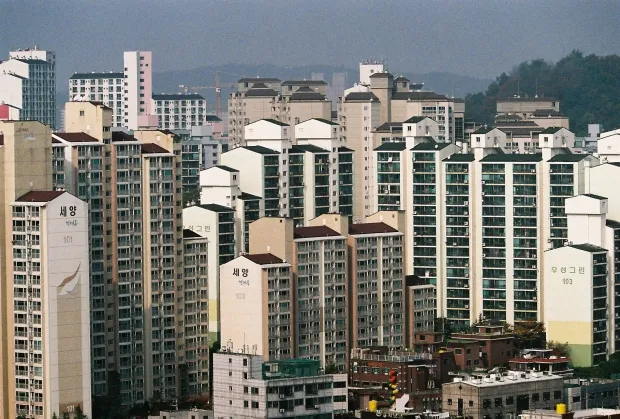
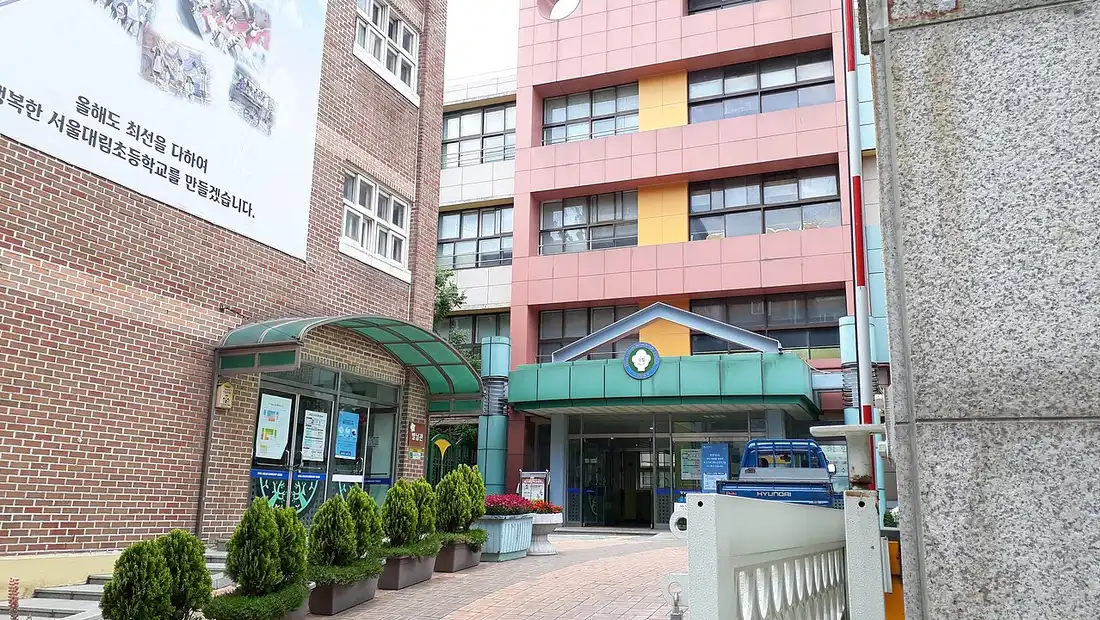
- A public elementary school in Seoul: Aspere, CC0, via Wikimedia Commons
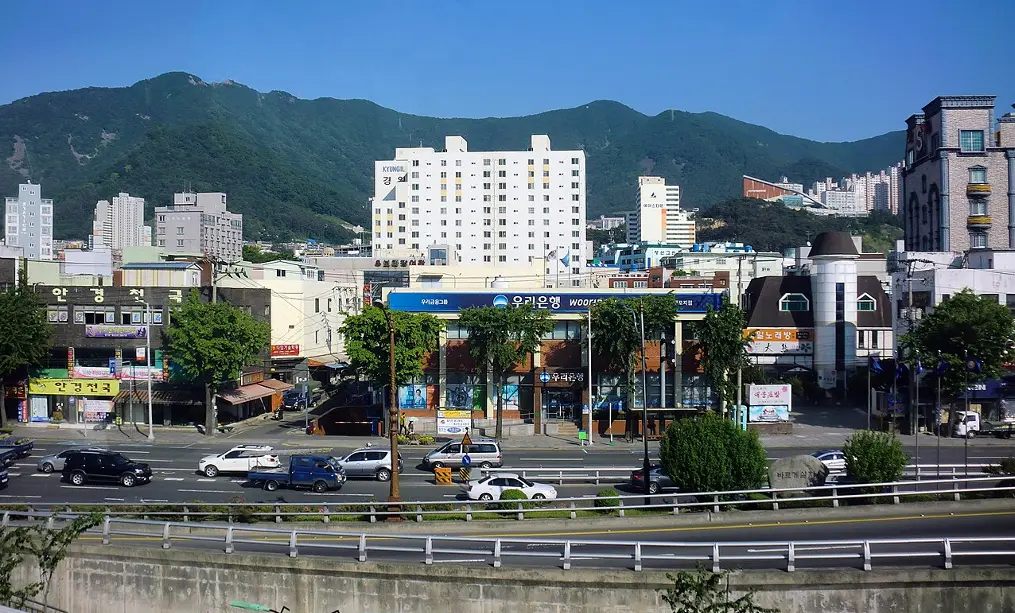
- Haeundae, Busan: Masterhatch, CC BY-SA 4.0, via Wikimedia Commons
Get new jobs in South Korea by email
One email a week with the jobs added since the last one. Free, with no account.
Nothing is sent until you open the link we email you. Choose a role, a pay level or daily emails
We use your address only to send the alerts you ask for, and every email has a one-click unsubscribe link. The privacy notice says how long we keep it, and the terms of use cover the alerts.
We check this guide again by February 2, 2027. Rules change, so confirm visa steps with the embassy and your school before you go. First published November 4, 2026. Spotted something out of date? Tell us. How we write these guides.