Schools for teachers' kids in South Korea
Korean public schools can take foreign children, and many international schools put their fees online. This page covers the papers, the term dates, kindergarten support and the F-3 visa for your family.
AbroadPin team6 min read
Contents
Moving to Korea to teach with children means settling three things early: where your kids will learn, what it will cost, and which visa lets them live with you. The answers depend a lot on your job, your city and how long you plan to stay. If you're still choosing between EPIK, a hagwon or a university, read the main guide to teaching in South Korea first, then come back here.
Korean public schools
Korean schools run from March to February. The first semester starts on 1 March, and the second runs from the end of the first until the end of February [1]. That calendar matters if your contract starts in August, because your child joins halfway through a school year.
Foreign children can generally go to local schools, but Incheon's guide for foreign residents says they need to be fluent in Korean [1]. Under the Elementary and Secondary Education Act, each school's principal approves admissions and transfers under the school's own rules [1].
Children are placed by the grade they finished abroad. Incheon maps overseas grades 1 to 6 to elementary school, 7 to 9 to middle school and 10 to 12 to high school [1].
You have to ask for a place
Korean families get an official enrolment notice in the post, but foreign families usually don't [2]. Foreign children are not covered by compulsory education in Korea and aren't in the resident registration system, so the official notice never arrives [2]. Gyeonggi Province has started mailing guidance anyway: for the 2026 school year it reached 3,629 registered foreign six-year-olds, with guides in 20 languages [2]. Elsewhere, plan on contacting the school or your local office of education yourself.
Papers to bring
For a child who has studied at a school abroad, Incheon lists [1]:
- A transcript for the last school year, issued by the overseas school's principal.
- Proof of enrolment at that school, plus a government certificate from your home country that does the job of a Korean family register.
- A certificate showing you live in Korea.
- Your child's alien registration certificate, the original and 2 copies [1].
Get the transcript and proof of enrolment before you leave home. They're much harder to request from the other side of the world.
Help in other languages
Some cities run multicultural schools. Incheon Hannuri School takes elementary, middle and high school students and teaches in English, Chinese, Japanese and Russian [1]. In Gyeonggi, families who need an interpreter can get help through the Gyeonggi Migrant Integration Support Center and the Danuri Call Center [2].
International school fees
International and foreign schools teach in English or another home language and follow a foreign curriculum. You apply to each school directly. Incheon says most take applications all year and hold admissions about four times a year, usually with a document review and an interview [1].
There's an entry rule to know. Where at least one parent is a foreigner, Incheon lists passports, citizenship certificates, alien registration and an immigration certificate as the papers foreign schools ask for [1]. Each school sets its own list, so check before you apply [1].
Here are three schools' fees for the 2026 to 2027 year, as each school publishes them [3] [4] [5]:
| School | Yearly tuition, 2026 to 2027 |
|---|---|
| Daegu International School, Kindergarten | 22,900,000 KRW [3] |
| Daegu International School, Grades 1 to 5 | 24,800,000 KRW [3] |
| Daegu International School, Grades 6 to 8 | 27,000,000 KRW [3] |
| Daegu International School, Grades 9 to 12 | 31,900,000 KRW [3] |
| Chadwick International (Songdo), Village School | 28,590,000 KRW plus 16,230 USD [4] |
| Chadwick International, Middle School | 30,770,000 KRW plus 17,420 USD [4] |
| Chadwick International, Upper School | 33,670,000 KRW plus 19,090 USD [4] |
| Deutsche Schule Seoul, Kindergarten | 21,110,000 KRW [5] |
| Deutsche Schule Seoul, School | 27,680,000 KRW [5] |
The fees on top of tuition
- Daegu International School: a 250,000 KRW application fee and a 3,000,000 KRW entrance fee, both one-off [3]. Lunch is 6,600 KRW a meal up to Grade 5, and the optional bus is 1,300,000 KRW a semester [3].
- Chadwick International: a 400,000 KRW application fee, then a 1,000,000 KRW matriculation fee and a 5,000,000 KRW capital development fee on acceptance [4]. Meals are 7,250 KRW each for the youngest grades [4].
- Deutsche Schule Seoul: a 350,000 KRW processing fee per child and a 3,000,000 KRW admission and membership fee per family [5].
Numbeo's crowd-sourced average for an international primary school in Seoul is about 27,650,000 KRW a year per child, which sits inside the range above [6].
Arriving mid-year can cost less
If you start in the second half of the school year, ask about late entry discounts. Daegu International School takes 25% off tuition for students accepted from 27 October 2026 to 22 January 2027, and 50% off from 23 January to 1 April 2027 [3]. Chadwick International gives 35% off for entry between 30 November and 12 March [4]. Discounts apply to tuition only, not to the one-off fees [3].
Will your employer pay?
Plan as if it won't. EPIK's salary and benefits page doesn't mention tuition, school fees or an education allowance for teachers' children [7]. Hagwons set their own packages, so any help is something to negotiate rather than expect.
If you're offered tuition support, ask for it in writing with the yearly amount, how many children it covers and whether it continues if you renew. Ask about family housing in the same email.
Kindergarten and childcare
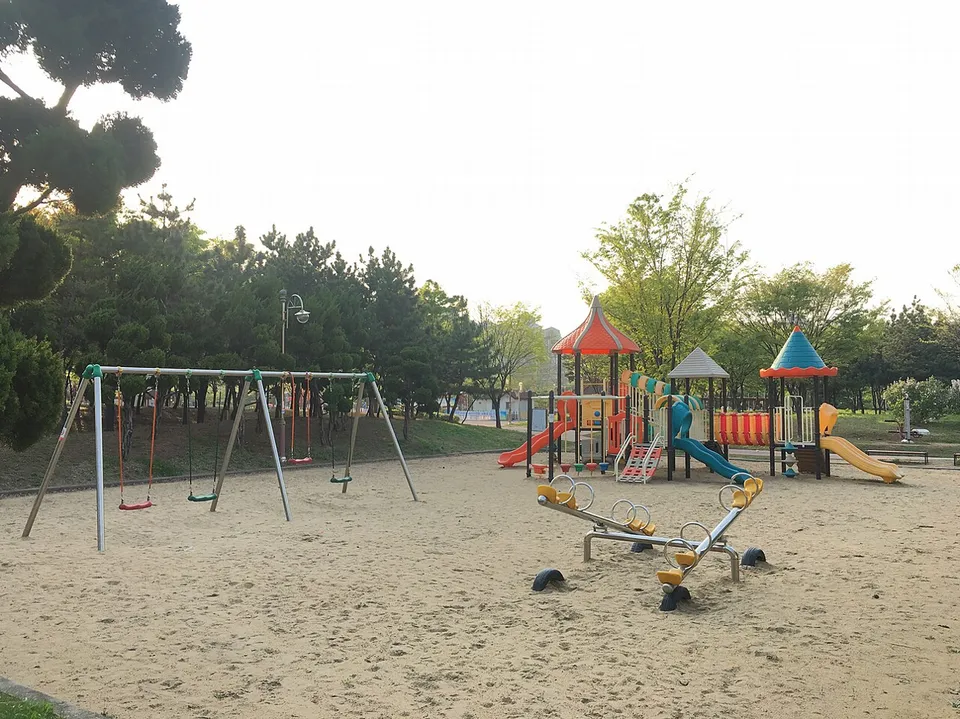
For children too young for school, you'll choose between kindergartens and daycare centres, which Incheon lists as the two kinds of education before elementary school [1].
Seoul has helped foreign families with kindergarten costs. From March 2022, the Seoul education office offered children aged 3 to 5 with foreigner registration the same fee support Korean children get [8]:
- Public kindergartens: up to 150,000 won a month, made up of 100,000 won for daytime classes and 50,000 won for after-school classes [8].
- Private kindergartens: up to 350,000 won a month, 280,000 won for daytime and 70,000 won for after-school [8].
Parents applied at the kindergarten, with documents including the alien registration card [8]. That report is from 2022, so ask your kindergarten or district office whether the support still runs and at what rate.
For a private full-day preschool in Seoul, Numbeo's average is about 517,833 KRW a month for one child [6].
The F-3 visa for your family
Your spouse and children usually come on the F-3 family dependent visa. The Korean embassy in London says it covers spouses and unmarried children under 19 of people on several long-stay visas, including the E-2 for foreign language teaching [9]. Other pages give a different age limit for children, so confirm it with the mission where you'll apply.
The embassy lists these documents [9]:
- A completed visa application and a recent passport photo.
- The original passport.
- A visa issuance confirmation number from a Korean immigration office, or, instead, family relationship papers, copies of your passport and Korean visa, an invitation letter with an employment certificate from your school, and your tax payment certificate.
- The visa fee.
Seoul Start says F-3 applications go through a Korean embassy or consulate abroad, and that the F-3 stay matches the sponsor's visa, up to 3 years and renewable [10]. It also says F-3 holders can't work without separate permission from immigration [10]. If your partner hopes to work, check that before you plan the household budget around two incomes.
Your first months, step by step
- Before you sign, ask the school about family housing, tuition help and whether your dependents can join your health insurance.
- At home, collect transcripts, proof of enrolment and birth or marriage certificates for everyone.
- Apply for your family's F-3 visas at the Korean mission once your E-2 paperwork is moving [9].
- After you arrive, get each child's alien registration done, since public schools and kindergartens ask for it [1] [8].
- Contact the local school or office of education for a public place, or send international school applications with their fees and late entry dates in hand [1] [3].
When you're ready to look for a job that suits family life, browse jobs in South Korea and apply straight to the school.
See jobs in South Korea
- Kindergarten and Elementary English Teacher, March 2027 (English academy Munjeong Songpa Seoul)Seoul
- Kindergarten English Teacher, March 2027 (immersion kindergarten Sinsa Gangnam Seoul)Seoul
- Kindergarten English Teacher, three posts, March 2027 (English kindergarten Gangnam Seoul)Seoul
- Pre-K Homeroom English Teacher, March 2027 (Hillside Collegiate Songdo Incheon)Incheon
- Primary and Secondary English Teacher, March 2027 (private school Gangnam Seoul, 3.0M to 3.5M won)Seoul
By city: Teaching jobs in Seoul · Teaching jobs in Incheon · Teaching jobs in Seongnam · Teaching jobs in Suwon
Sources and photo credits
- 1.Incheon Metropolitan City, education for foreign residents (read 4 November 2026)
- 2.Gyeonggi Provincial Government, elementary school enrolment guidance for all registered foreign children (24 December 2025)
- 3.Daegu International School, tuition and fees SY2026-27 (published 15 July 2026)
- 4.Chadwick International, tuition and fees 2026 to 2027 (published 3 September 2026)
- 5.Deutsche Schule Seoul, tuition and fees 2026/2027 (June 2026)
- 6.Numbeo, cost of living in Seoul, childcare (read 4 November 2026)
- 7.EPIK, salary and benefits (read 4 November 2026)
- 8.The Korea Times, foreign children in Seoul to receive education fee support from March (17 January 2022)
- 9.Embassy of the Republic of Korea in the UK, F-3 dependent family visa (29 April 2021)
- 10.Seoul Start, F-3 dependent visa (read 4 November 2026)
Photos
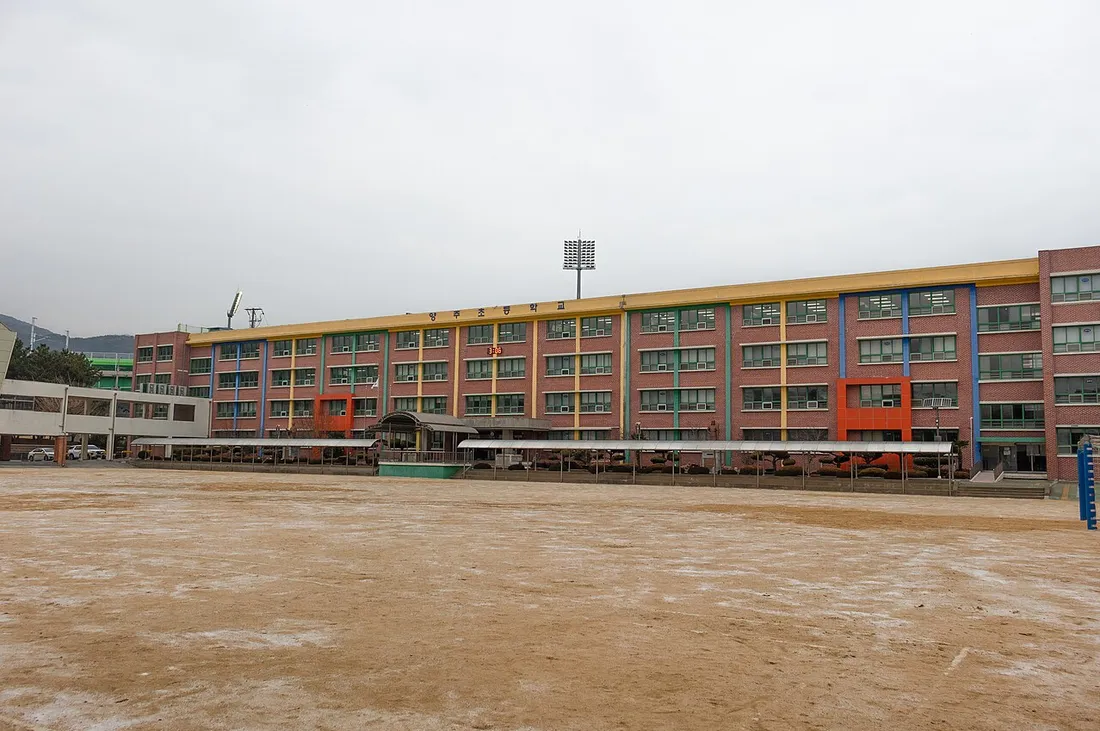
- Yangju Elementary School, a Korean public primary school with its dirt sports ground: Nt, CC0, via Wikimedia Commons
- A public playground in Seok-ho Park, South Korea: Yeoncong323, CC BY-SA 4.0, via Wikimedia Commons
Get new jobs in South Korea by email
One email a week with the jobs added since the last one. Free, with no account.
Nothing is sent until you open the link we email you. Choose a role, a pay level or daily emails
We use your address only to send the alerts you ask for, and every email has a one-click unsubscribe link. The privacy notice says how long we keep it, and the terms of use cover the alerts.
We check this guide again by February 2, 2027. Rules change, so confirm visa steps with the embassy and your school before you go. First published November 4, 2026. Spotted something out of date? Tell us. How we write these guides.